The credit for the invention of the vaccine is often given to Western scientists. However, historical records from Cambridge University and the writings of early researchers show that the foundation of vaccination was learned from India — particularly from Bengal in South India, near Kolkata.
The Smallpox Vaccine and Its Ancient Roots
The earliest reference to the principle of vaccination can be found in the Charaka Samhita, written by the great sage Maharshi Charaka. From the Vedic period to the Buddhist era, the study of disease prevention and immunization was taught in ancient Gurukuls and universities such as Nalanda, Vallabhi, and Takshashila. During the Mughal period, these institutions gradually declined. In the British era, traditional systems of medicine survived only in limited forms.
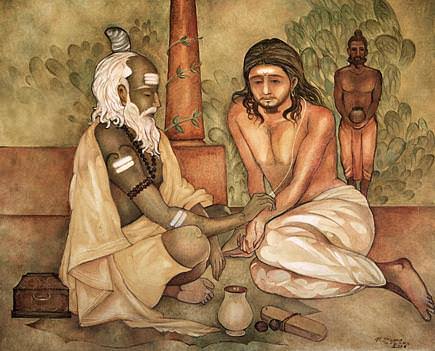
By the 1700s, smallpox had become a deadly epidemic throughout England and across the world. Many scientists were searching for ways to combat it. That’s when a British doctor named Dr. Oliver discovered that in colonial India, traditional healers had long been using an effective preventive method against smallpox.
In 1710, Dr. Oliver traveled to India and toured Bengal. In his diary, he wrote:
“For the first time in my life, I saw how easily the people of India cure a disease as dangerous as smallpox.”
At that time, smallpox was a devastating epidemic in Europe, killing millions. He continued:
“Here in India, people receive something like an inoculation. A fine needle-like instrument is used, and the person develops a mild fever for three days. Cool water compresses and herbal medicines are given, and within a few days, the person recovers. Once vaccinated, they remain immune for life.”
After witnessing this, Dr. Oliver returned to London and presented his findings to a gathering of doctors. When the others doubted his claims, he brought them to India to see for themselves.
When they asked the Indian healers what the vaccine was made of, the vaidyas (Ayurvedic physicians) explained:
We take a small amount of pus from a person infected with smallpox and insert just a tiny droplet — as small as the tip of a needle — into a healthy person’s skin. This helps the body develop natural resistance to the disease.”
Dr. Oliver further wrote:
“When I asked them who taught them this process, they said, ‘Our teachers did — and their teachers before them.’ I estimate that this vaccination method has been practiced in India for at least 1,500 years.”
He concluded his diary with the following tribute:
“We must honor the Indian physicians who go door to door, freely giving this life-saving vaccine to people. They taught us this knowledge without asking for any payment. We British owe them immense gratitude.”
Today, the world credits Dr. Oliver as the father of the smallpox vaccine — yet, in his own writings, he acknowledged India’s ancient scientists and healers as the true pioneers of vaccination.
Long before telescopes, microphones, or brain scans, the Vedas declared that sound is the foundation of creation. That primordial vibration the sound that began it all is ॐ (Oṃ). Modern science now recognizes that the universe itself vibrates. From the smallest atom to the largest galaxy, everything is in motion — everything hums with energy. The sages of India heard this cosmic hum thousands of years ago and called it “Oṃ” the sound of the universe.
The Three Sounds — AA, UU, and MMAA
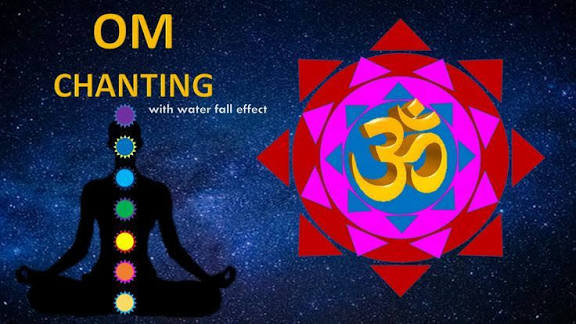
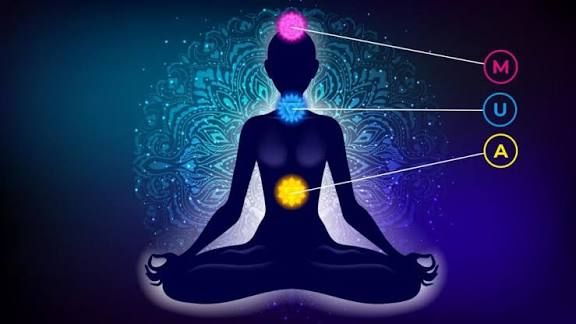
When we chant Oṃ slowly and consciously, it unfolds in three parts:
Sound Pronunciation Symbolic Meaning Physical Resonance
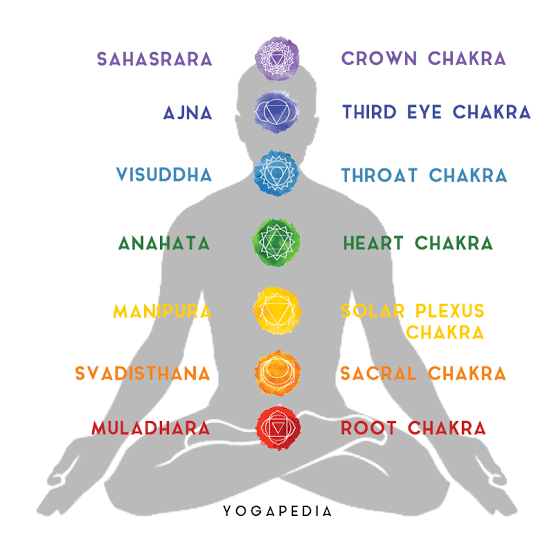
AA (अ) As in “father” (Waking state) material world, body consciousness Vibrates in navel and chest — activates lower chakras
UU (उ) As in “put” (Dream state) inner world, mental awareness Vibrates in throat and heart — harmonizes the middle chakras
MMAA (म्) As in “hum” (closed lips) Deep sleep state — merging into silence Vibrates in head and crown — awakens higher centers
When the sound fades into silence, that silence is called “Turiya” — the fourth state, pure consciousness beyond sound.
The Science Behind Oṃ
🧠 1. Brain Synchronization and Calm
Modern neuroscience confirms that chanting Oṃ produces measurable changes in the brain:
fMRI and EEG studies (IIT Delhi, 2018; Frontiers in Human Neuroscience, 2011) show that Oṃ chanting deactivates the amygdala — the brain’s fear center. → This reduces stress, anxiety, and anger.
Oṃ increases alpha and theta brain waves, which induce deep relaxation, creativity, and meditation.
The vibration stimulates the vagus nerve, activating the parasympathetic system, the body’s natural “rest and heal” mode. In essence, Oṃ acts like a natural neural reset button.
💓 2. Heart and Breath Coherence
When you chant Oṃ, your breathing slows to about 6 breaths per minute — the body’s resonant frequency for maximum oxygen efficiency.
Heart rate, blood pressure, and respiration become synchronized — a state known as cardiorespiratory coherence.
The result: calm mind, balanced emotions, and improved immunity.
3. Cellular Healing and Vibration
Recent studies in sonocytology show that each cell emits sound frequencies. When exposed to rhythmic vibrations like Oṃ, these micro-oscillations come into harmonious alignment — restoring cellular balance and promoting self-repair.
In Ayurveda, this state is called Sattva — the natural harmony of body and mind.
🌠 4. Frequency of the Cosmos
The tone of Oṃ (≈ 136.1 Hz) corresponds to the frequency of Earth’s orbit around the Sun — known as the “AUM tone” in Indian classical music (Sa note).
Chanting Oṃ therefore synchronizes your body’s vibration with the planet’s resonance — aligning you with the cosmic rhythm of nature.
🔮 5. The Pineal Gland and Inner Light
The humming “M” sound creates vibration in the skull, gently stimulating the pineal gland, the ancient “third eye.” This gland regulates melatonin, the hormone that governs sleep, biological rhythm, and intuition. Regular Oṃ chanting enhances clarity, emotional stability, and inner luminosity.
⚛️ The Quantum Connection
Physics tells us that the universe emerged from a primordial vibration — the Big Bang. The Upanishads said the same:
“From Oṃ the universe expands, by Oṃ it exists, and into Oṃ it dissolves.” This means Oṃ is not just a sound — it is the blueprint of existence itself. Every particle, every heartbeat, every breath carries that same sacred rhythm.
OM — The Supreme Name of the Divine
OM (AUM) is not merely a sound — it is the essence of the entire universe. This sacred syllable is the vibration through which the Vedas, Upanishads, and Bhagavad Gita revealed the highest truth of existence. The chanting, remembrance, and meditation of OM purify the soul, stabilize the mind, and sharpen the power of memory.
🌸 OM in the Vedas
Every Vedic mantra begins and ends with OM. The Manusmriti (2/74) declares that a Brahmachari (spiritual student) should begin and conclude his study with OM, for:
If OM is not uttered at the beginning, learning gradually fades away, and if not uttered at the end, it does not remain stable.Thus, OM is both the seed and the seal of divine knowledge.
🔺 Nachiketa’s Question in the Kathopp Upanishad
The Kathopp Upanishad narrates how Nachiketa, the young seeker, asked Yama, the Lord of Death:
“O Revered One, tell me — what is the most essential truth in this universe?”
Yama replied:
> “That sacred name which the Vedas glorify, which ascetics uphold through celibacy and discipline, that supreme name is OM — the highest name of the Divine.”
He further said:
“OM is indeed Brahman itself. Whoever realizes this sacred syllable, all their noble desires are fulfilled.”
— Kathopp Upanishad 2/16
The Path of OM in the Yajurveda
The Path of OM in the Yajurveda
The Yajurveda proclaims:
“There is no path to conquer death and attain liberation other than the path of OM.” This makes it clear — OM is not just a spiritual practice, it is the gateway to moksha (liberation).
The Vision of the Rigveda
The Rigveda (6/45/26) beautifully expresses:
“O Divine Lord! Your friendship is eternal and unbreakable. You are the giver of cows to the one who desires cows, and horses to the one who desires horses.”
to the one who meditates upon OM, all rightful desires and needs are fulfilled in due harmony.
🔆 OM Meditation in the Prashna Upanishad
Sage Pippalāda reveals:
“He who constantly meditates on the Supreme Being through the threefold sound of OM becomes radiant like the sun.”
— Prashna Upanishad 5/5
✨ The Chhandogya Upanishad’s Vision
Even the Devas (celestial beings) attained immortality through OM:
“Those who took refuge in the imperishable, fearless sound of OM themselves became immortal and fearless.”
— Chhandogya Upanishad 2/4/4
Lord Krishna’s Teaching in the Bhagavad Gita
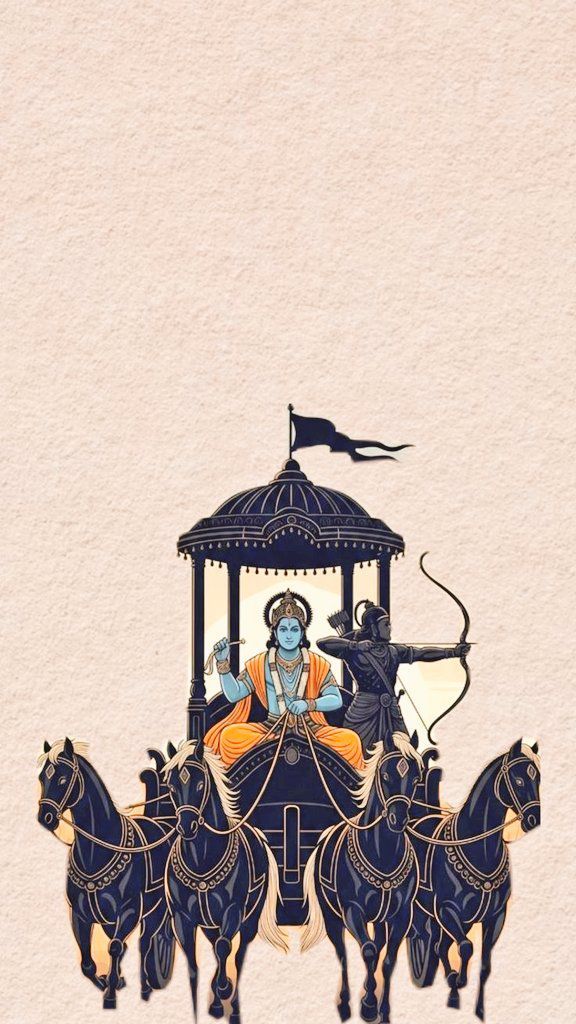
In the Bhagavad Gita, Lord Krishna tells Arjuna:
“He who, at the time of death, remembers the one-syllabled Brahman OM attains the supreme state of liberation.”
— Bhagavad Gita 8/13
🌺 The Mundaka Upanishad on OM
“Through the chanting of OM, the knots of the heart are loosened, all doubts are destroyed, and all karmas are dissolved.
— Mundaka Upanishad 2/28
🌕 OM — The Eternal Among the Ephemeral
The Katha Upanishad (5/13) declares:
“OM is the eternal among the transient, the One among the many. It fulfills the highest desires of those who perceive it within their own soul. Only such wise ones attain supreme peace.”
⚛️ OM — The Primordial Cause
In the Yajurveda (40/8) it is said:
“This OM is eternal, all-pervading, subtle, and imperishable. It is the cause of all living beings. It has no body, no lineage, no organs. It is pure, stainless, self-existent, and its own master.”
Om as a medicine
“Oṃ” heals by resonance, not reaction. It doesn’t fight disease — it restores harmony.
Unlike external medicines that act chemically, Oṃ heals energetically — through vibration, coherence, and awareness.
Just a few minutes of chanting daily can:
1. Reduce stress and anxiety
2. Improve concentration and memory
3. Balance hormonal activity
4. Enhance emotional well-being
5. Deepen spiritual awareness
A. How to Practice Oṃ Meditation
1. Sit comfortably with your spine straight.
2. Take a deep breath.
3. Inhale gently and exhale chanting Aaaa…Uuuu…Mmmm… slowly.
4. Feel the vibration rising from navel → chest → head.
5. After “M,” rest in silence for a few seconds — that is Turiya, the space of pure consciousness.
6. Repeat 9–21 times.
Oṃ is not a religion it is pure vibration, the sound of life itself. It unites the physical, mental, and spiritual dimensions of being into a single, harmonious resonance. Chanting Oṃ is not about sound — it is about becoming the silence from which all sound arises. Through Oṃ, the ancient rishis offered us not just a mantra, but a cosmic medicine one that heals the body, steadies the mind, and awakens the soul. “In every heartbeat, in every breath the universe whispers Oṃ.”
Ayurveda and the Puranas are both eternal expressions of the Vedas — timeless and divine. As Acharya Charaka stated,
“Brahma Himself first imparted the knowledge of Ayurveda to Prajapati.” Thus, both the Puranas and Ayurveda, composed in the sacred words of Brahma, are heard (Shruti) and not merely remembered (Smriti). They are divine revelations — not human creations.
From Lord Brahma, we received the Vedas and also two monumental texts, each consisting of one hundred thousand verses — the Purana and Ayurveda. While both are eternal, there is a distinction: the Vedas are Apaurusheya (not of human origin), having no creator, no author, and no limitation. Hence, they are considered one with Brahman itself — the supreme cosmic consciousness. Ayurveda, being an extension of the Vedas, is therefore a manifestation of Lord Vishnu Himself.
The Divine Emergence of the Nectar of Life
After several primordial ages (Manvantaras), during the Chakshusha Manvantara, a great divine event occurred. At that time, due to the curse of Sage Durvasa, Lord Indra and the Devas (gods) lost their strength, wealth, and splendor. Defeated by the Asuras (demons), they wandered powerless and sorrowful.
The distressed Devas approached Lord Brahma seeking help. Seeing their plight, Brahma meditated upon Lord Vishnu for guidance. Moved by their devotion, Lord Vishnu revealed Himself to Brahma and Lord Shiva, instructing them that the Devas should form an alliance with the Asuras to churn the ocean of milk (Ksheer Sagar).
From this churning, said Vishnu, would emerge the divine elixir — the Amrita, a medicine so powerful that it would restore vitality, immortality, and cosmic harmony.
The (Samudra Manthan)
The Devas and Asuras gathered countless sacred herbs and cast them into the Ocean of Milk. Mount Mandara was used as the churning rod, and the serpent Vasuki served as the rope. Yet the effort alone was not enough. Lord Vishnu Himself took the Kurma (Tortoise) Avatar, supporting Mount Mandara upon His back to stabilize the churning.
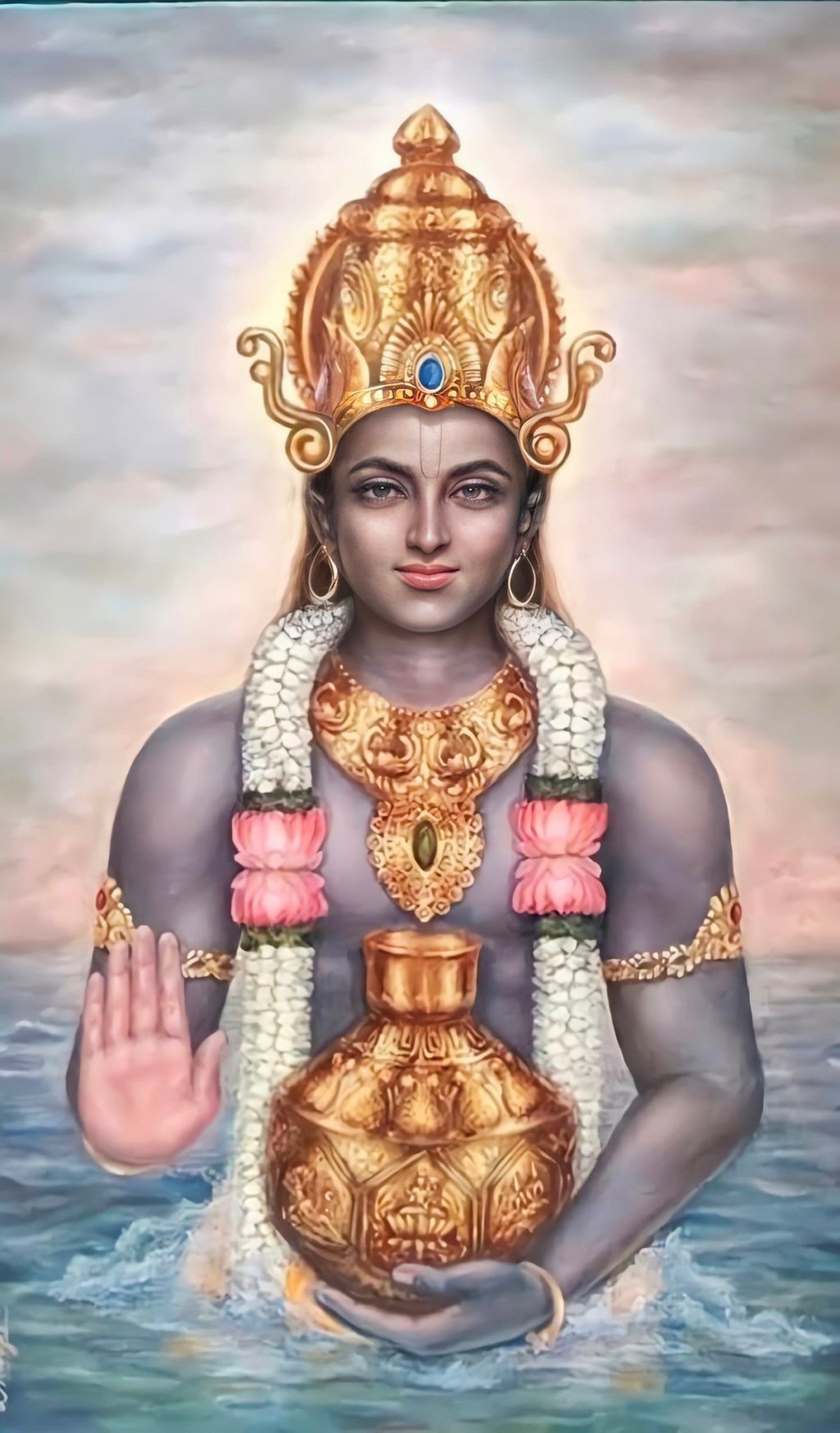
Seeing that even this was insufficient to extract the Amrita, Lord Vishnu manifested again — as Lord Dhanvantari, the Divine Physician, descending into the ocean in an unseen form.
There, He meticulously blended the essence of all the herbs in perfect proportion, concentrating their healing power into the form of Amrita — the nectar of life. When He finally emerged from the ocean, holding five golden pots of divine nectar, His five mouths were chanting the names of Lord Vishnu and the sacred herbs that cure all diseases.
Such was His state of perfect devotion and absorption in divine purpose.
The Struggle for the Nectar
The Asuras, driven by greed, seized the nectar from Lord Dhanvantari. The Devas, filled with despair, prayed again to Lord Vishnu. Then, through His divine illusion (Maya), Vishnu appeared as the enchanting Mohini and tricked the Asuras, ensuring that the nectar was distributed among the gods.
Once the Devas regained their strength and vitality, the entire cosmos returned to balance — the Sun, Moon, planets, and stars resumed their orderly paths, and life on Earth flourished once again.
The Descent of Lord Dhanvantari on Earth
The knowledge of medicinal use passed to the Ashwini Kumaras, the celestial healers. But when disease once again began to afflict humanity, Lord Vishnu reincarnated as Dhanvantari, born to King Dhanva through divine grace, as a result of the king’s deep penance.
Even while in the womb, the divine child possessed great yogic powers. Upon birth, Lord Dhanvantari divided Ayurveda into eight branches, known as the Ashtanga Ayurveda:
1️⃣ Kaya Chikitsa – Internal Medicine 2️⃣ Bala Chikitsa – Pediatrics 3️⃣ Graha Chikitsa – Psychiatry 4️⃣ Urdhvanga Chikitsa – ENT & Ophthalmology 5️⃣ Shalya Chikitsa – Surgery 6️⃣ Damshta Chikitsa – Toxicology 7️⃣ Jara Chikitsa – Geriatrics 8️⃣ Vrisha Chikitsa – Rejuvenation & Fertility
Through these branches, He restored divine knowledge of healing to humanity — transforming Ayurveda into a sacred path to longevity, balance, and enlightenment.
Thus, Ayurveda is not merely a system of medicine — it is a divine revelation, a spiritual science rooted in the eternal Vedas and manifest through the compassion of Lord Vishnu as Dhanvantari.
Let us remember this divine origin on Ayurveda Day, Dhanteras, and Diwali, and offer our prayers to Lord Dhanvantari with sacred herbs, pure intent, and a heart full of gratitude.
Dakshinamurthy Ayurveda Pvt. Ltd.
celebrates this sacred occasion with devotion and pride, reaffirming our mission to bring the timeless wisdom of Ayurveda to every home.
✨ Ārogyam Paramam Bhāgyam — Health is the Greatest Fortune. ✨
By Spirituality is Beyond Science | Dakshinamurthy Ayurveda Pvt. Ltd.
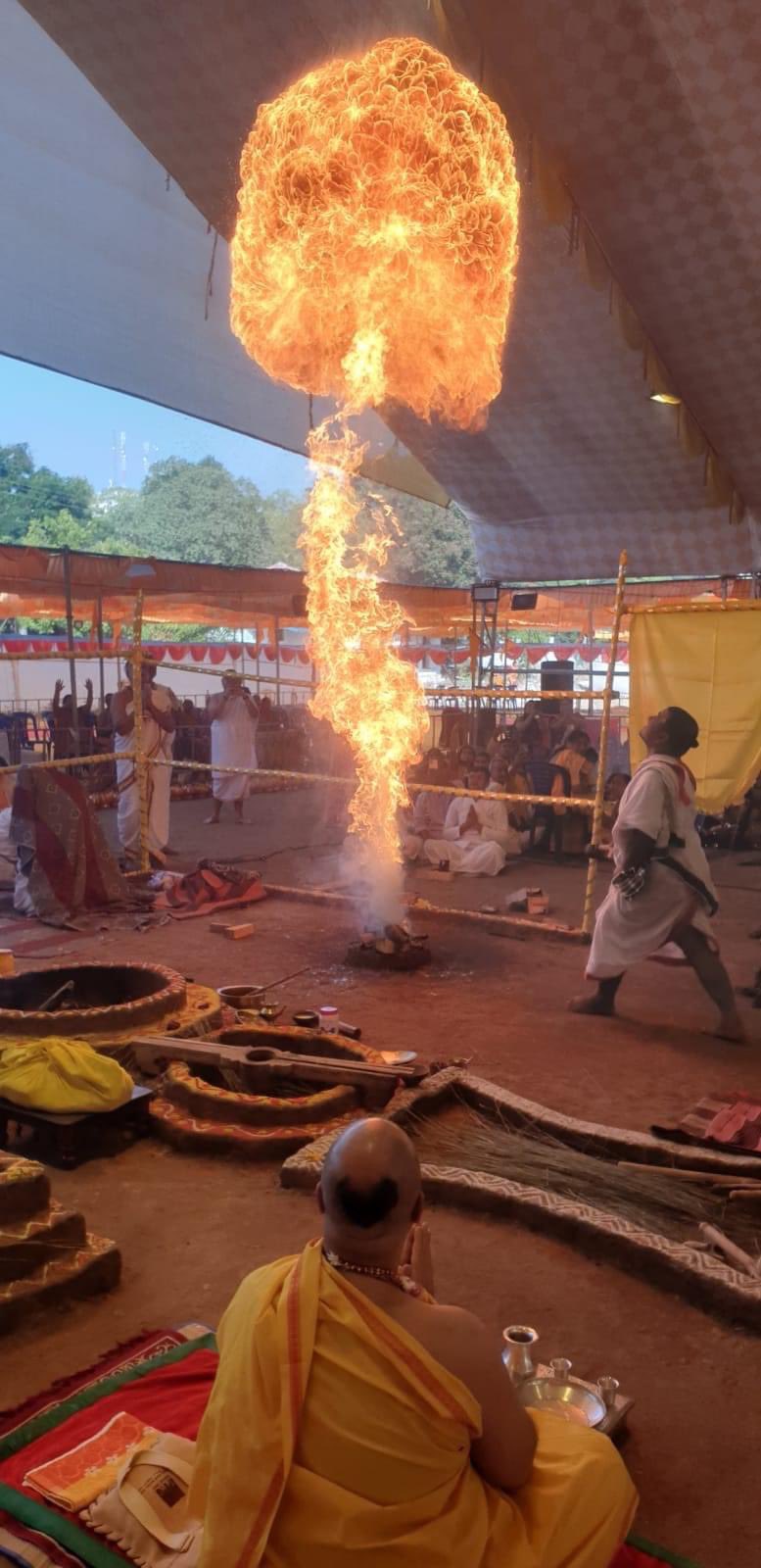
Since ancient times, Havan or Yagna has been regarded as a sacred ritual to purify the environment and elevate human consciousness. What was once understood only through spiritual wisdom is now being rediscovered by modern science.
A French scientist named Trelle conducted deep research on the Havan process. He discovered that the ritual primarily uses mango wood, and when mango wood burns, it releases a gas called Formic Aldehyde — a natural compound that destroys harmful bacteria and purifies the air. Interestingly, this same gas is also produced when jaggery (gur) is burned.
Another researcher, Tautik, studied the effects of Havan smoke on health and found that sitting near the fire or being exposed to its smoke for just 30 minutes can kill bacteria that cause dangerous diseases like Typhoid, thus cleansing and strengthening the body naturally.
Recognizing the spiritual and ecological importance of Havan, scientists from the National Botanical Research Institute (Lucknow, India) conducted their own controlled experiments. They wanted to verify — does Havan really purify the atmosphere and destroy microbes?
Their findings were remarkable. Burning 1 kg of mango wood alone caused minimal change, but when combined with half a kilogram of traditional Havan samagri, the bacterial count in the air dropped by 94% within one hour.
Even more surprising, when the room was ventilated and all smoke cleared, the air remained 96% cleaner even after 24 hours. Repeated tests showed that the purifying effect lasted for nearly 30 days, keeping microbial levels significantly lower than normal.
These groundbreaking results were published in the Research Journal of Ethnopharmacology (December 2007). The study concluded that Havan not only purifies human surroundings but also destroys harmful microbes that affect plants and crops — reducing the need for chemical fertilizers and supporting ecological balance.
At Dakshinamurthy Ayurveda Pvt. Ltd., we see this as a powerful union of spiritual tradition and scientific truth. Havan is more than a ritual — it’s an ancient environmental therapy, a bridge between human consciousness and nature’s healing power.
Because in the end, Spirituality is Beyond Science.
Share this article to help others rediscover the healing science of our sacred traditions.
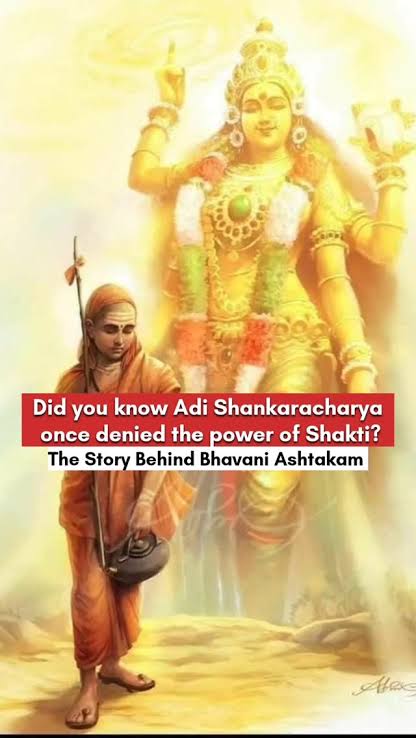
When Shankaracharya Discovered the Power of Shakti
Adi Shankaracharya is known as the master of Advaita Vedanta. But there’s a story from his life that shows us true wisdom is only complete when it embraces Shakti, the divine energy.
During his travels in Kashmir, Shankaracharya set out to refute the Shakta tradition. But soon his health broke down. With no strength left, he lay beneath a tree. At that moment, a cowherd woman passed by, carrying a pot of curd.
Thirsty and weak, Shankaracharya asked her for some curd. She replied: “Come and take it yourself.”
He answered: “I have no strength left to walk to you.”
Smiling, the woman said: “Without Shakti, you cannot even move a single step. And yet you came here to deny Her?”
In that instant, Shankaracharya realized that this was not an ordinary woman—it was the Divine Mother Herself. His pride melted away, and with deep devotion he cried: “Gatistvam gatistvam tvameka Bhavani” (“O Mother, You alone are my refuge, my only path.”)
From this moment came the beautiful hymn Bhavani Ashtakam.
Shiva and Shakti are not separate.
Shiva is stillness; Shakti is movement.
The sun is nothing without its rays; the moon is nothing without its light.
Shiva is incomplete without Shakti.
This is the essence of Advaita—the oneness of Shiva and Shakti.
The Secret of the Sun’s Rays (Savitṛ’s Power) – An Esoteric Explanation
The Radiant Path: Exploring the Esoteric Power of the Sun The Sun is more than just a celestial body; it is the Savitṛ the stimulator of life and the source of higher consciousness. From the ancient verses of the Rigveda to the lines on our palms, the Sun’s influence permeates every aspect of our physical and spiritual existence.
In this guide, we explore the “Secret of the Sun’s Rays,” the significance of the ring finger in palmistry, and the transformative power of Sun worship. The Seven Rays of Savitṛ: Beyond Visible Light In the Rgveda (1.115.1), Surya’s rays are described as sevenfold (Sapta Asva). These are not merely wavelengths of light, but seven layers of cosmic energy that sustain the soul
Ring Finger and the Sun Planet in Palmistry
Ray Esoteric Name Spiritual Significance 1. Physical Light Rupa Jyoti Sustains the material world and nature. 2. Life Force Prana Śakti The vital energy that animates all living beings. 3. Intellect Buddhi Tejas Bestows clarity and the power of discernment. 4. Higher Mind Manas The bridge to universal awareness. 5. Intuition Vijnana Direct perception; the awakening of the “Third Eye.” 6. Divine Will Iccha Śakti The creative impulse of the “Golden Womb” (Hiranyagarbha). 7. Pure Consciousness Cit Śakti The eternal radiance of Brahman; unity of existence.
The Path of the Gayatri Mantra: By chanting this sacred invocation, we align ourselves with these seven rays, moving from outer physical light to the inner radiance of pure consciousness.
Palmistry: The Sun in the Palm of Your Hand In Vedic Palmistry, the Ring Finger (Anamika) is directly governed by the Sun. It acts as an antenna for creativity, fame, and social standing. What Your Ring Finger Reveals: Long & Straight: A sign of immense creativity, the potential for fame, and a desire to stand out. Short: Suggests a more reserved nature, shyness, or a struggle with self-expression. Thick & Strong: Indicates a bold, risk-taking personality with high vitality. Distance from Index Finger: A wide gap suggests independent thinking and a unique perspective on life.
Sun Worship: The Importance of Aditya Hridaya Stotra and Solar Eclipse
The Aditya Hridaya Stotra: The Hymn of Victory The Sun is the ultimate Guru. One of the most powerful tools for connecting with Solar energy is the Aditya Hridaya Stotra, found in the Valmiki Ramayana. The Origin: This hymn was revealed by Sage Agastya to Lord Rama during a moment of fatigue in the battle against Ravana. Upon reciting it, Rama regained his strength and achieved victory. Benefits of Recitation: Mental Fortitude: Eradicates fear and builds unshakeable confidence. Vitality: Provides physical healing and wards off lethargy. Success: Helps in overcoming obstacles and achieving legal or professional triumphs.
The Spiritual Alchemy of the Solar Eclipse
The Spiritual Alchemy of the Solar Eclipse While science views a Solar Eclipse as an astronomical alignment, Vedic tradition views it as a profound spiritual window. Intensified Energy: Mantras chanted during an eclipse are believed to be a thousand times more potent. Purification: Ritual bathing and charity (Daana) after an eclipse help clear karmic debts. Mindfulness: It is a time for inward contemplation, protecting one’s energy, and seeking spiritual growth. Conclusion: Aligning with the Solar Rhythm The Sun is the eternal teacher that illuminates the path of spiritual awakening. Whether it is through the study of the Seven Rays, the analysis of our own hands, or the chanting of the Aditya Hridaya Stotra, we can all tap into this infinite source of energy.
What personality trait in people raises a red flag with you?
How spirituality Raises pain barrier ??
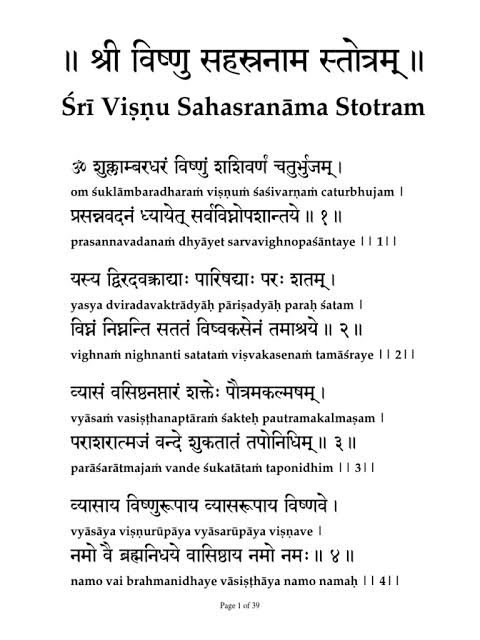
The Vishnu Sahasranamam contains 1,000 names of Lord Vishnu, describing His infinite forms, qualities, and cosmic functions. Each name carries deep philosophical and spiritual meaning.
Traditionally, it is recited in the morning or evening for maximum benefit.
Opening Meditation Verse.
Before beginning the recitation, this shloka is chanted to meditate upon Lord Vishnu:
1. Sound & Vibrations : Every syllable in Sanskrit produces a unique vibration. Continuous chanting of these thousand names creates healing frequencies that affect the mind and body. Studies show chanting activates Alpha & Theta brain waves, linked to deep relaxation and meditation.
2. Mental Health : Regular recitation reduces Cortisol (stress hormone), eases anxiety, and brings emotional stability—working like powerful positive affirmations for the subconscious mind.
3. Heart & Breathing : The rhythmic pace of chanting regulates breathing, calms the heartbeat, and stabilizes blood pressure, improving cardiovascular health.
4. Neuroscience & Memory : Chanting engages both hemispheres of the brain—left (logic) and right (creativity). This improves memory, focus, and learning abilities.
5. Collective Chanting Effect : When chanted in a group, it creates a field of resonance energy. This positive vibration uplifts the environment, promoting unity, harmony, and peace.
Vishnu Sahasranamam : Mantra for Complete Healing
Sanskrit mantras harmonize the body, mind, and soul. One of the most powerful is the Mahamrityunjaya Mantra:
Low Immunity: Frequent infections, fatigue A blend of Ayurveda, chanting, and meditation can prevent and heal these issues effectively.
The Impact of Spirituality
Spirituality is not just ritual—it’s a bridge between psychology and neuroscience.
✨ Benefits of spiritual practice:
Increases mindfulness and awareness
Strengthens emotional balance
Enhances harmony in relationships
Accelerates natural healing and immunity
The Vishnu Sahasranamam is not only a sacred hymn—it is a perfect synergy of Sound Therapy, Meditation, Neuroscience, and Ayurveda. Incorporating it into daily life leads to mental clarity, emotional stability, physical wellness, and spiritual growth.
Cosmic Medicine & Mantra Healing: The Science of Inner Transformation
What is Cosmic Medicine?
Cosmic Medicine is the ancient wisdom that recognizes the universe (cosmos) and the human body as reflections of each other. Just like the cosmos is made of vibrations, energies, and elements, the human body is also composed of the same five elements (Panchamahabhutas – Earth, Water, Fire, Air, and Space).
When the body and mind fall out of harmony, diseases arise.
Mantras act as cosmic codes that realign us with universal vibrations, restoring health and balance.
In simple terms: Cosmic Medicine = Healing through universal energy + sound vibrations + consciousness.
How Do Mantras Heal Every Organ of the Body?
Mantras are not just words—they are vibrational frequencies. When chanted with devotion and rhythm, each syllable resonates with specific parts of the body.
✨ Mechanism of Mantra Healing ✨
1. Vibration Resonance
Every organ has a natural frequency.
Mantra vibrations entrain (synchronize) these frequencies, helping restore balance.
2. Nervous System Activation
Chanting stimulates the vagus nerve, regulating heartbeat, breath, digestion, and emotional balance.
3. Hormonal Balance
Mantras calm the hypothalamus and pituitary glands, reducing stress hormones and promoting healing hormones like oxytocin, melatonin, and serotonin.
4. Cellular Healing
Modern research shows sound waves can influence DNA repair and cellular regeneration. Sanskrit mantras work as “sonic medicine.”
Impact of Chanting on the Body
1. Brain 🧠 – Activates alpha and theta waves → peace, creativity, deep focus.
Name the professional athletes you respect the most and why.
Astrology has always offered fascinating insights into how cosmic forces influence our daily lives. One such ancient system is the Hora, a method of dividing the 24 hours of a day among the seven principal planets — Sun, Moon, Mars, Mercury, Jupiter, Venus, and Saturn.
What is Hora ??
The word Hora comes from Sanskrit, meaning “hour.” According to astrology, each hour of the day is ruled by a specific planet, and its qualities influence human activities during that time. This planetary cycle repeats continuously throughout the day and night.
The Ruling Planets of Each Day
Every day of the week is ruled by one main planet, which determines the first Hora of that day:
1 Sun Moon Mars Mercury Jupiter Venus Saturn 2 Venus Saturn Sun Moon Mars Mercury Jupiter 3 Mercury Jupiter Venus Sun Moon Mars Venus 4 Moon Mars Mercury Venus Sun Moon Mercury 5 Saturn Sun Moon Mars Venus Sun Moon 6 Jupiter Venus Saturn Sun Mercury Venus Saturn 7 Mars Mercury Jupiter Venus Moon Saturn Jupiter … (sequence continues in the same order)
Ayurveda & Hora: Healing Through Time
Ayurveda, the science of life, also emphasizes natural rhythms and timing. By combining Hora (cosmic timing) with Ayurveda (body balance), we can align our health practices for maximum benefit.
Hora (Planet) Effect on Doshas Best Ayurvedic Herbs Recommended Therapies / Uses Best Activities
The Hora system is especially used in choosing auspicious timings (muhurat) for starting new ventures, making important decisions, or performing spiritual rituals. Each planet’s influence brings unique energies, so aligning activities with the right Hora is believed to increase success and harmoy . The Hora system is a simple yet powerful tool in astrology that reminds us of the constant rhythm of cosmic energies. By understanding which planet governs a particular hour, we can align our actions more harmoniously with the universe.
If you had to give up one word that you use regularly, what would it be?
Surya: The Cosmic Beehive and the Forgotten Wisdom of Our Ancestors
Human existence is directly connected to the word “Savita” (Savitu). Within this connection lies the very purpose of our birth. The expansion of consciousness within us is infinite, and the most essential truth is this: returning to light is our original nature. This light exists in the form of knowledge and energy. The expansion of consciousness is what leads us toward wholeness, and the simplest link between knowledge and energy is found in Savita.
To live in harmony with nature, to accept it, is sattva-jnana—true knowledge. The radiant manifestation of this knowledge and light is Surya (the Sun). The common meaning of Savita is indeed the Sun.
The Sun appears to us directly. It is both a symbol and a blazing representation of that Supreme Divine which pervades all, moving and unmoving. In the language of spirituality, Savita is the luminous, radiant principle—the creator, sustainer, and dissolver of the universe. Its power is infinite, manifesting in countless forms, and this radiant power is what we call Savita.
In this awareness, the divine is meditated upon and remembered so that its divine energies may be drawn into us. Just as through a voice call we connect instantly with someone, in the same way remembrance and invocation connect us with the divine powers. If we wish to receive the energy of God, we must consciously remember and attune ourselves to that force. That is why sadhana (spiritual practice) and dhyana (meditation) have been established as essential disciplines—not mere customs, but practices with profound scientific significance.
These practices provide the mind with direction, ensuring we walk the path of success.
Awakening the Inner Mind
The subconscious mind is always awake; it is a reservoir of unlimited energy. The purpose of spiritual science lies in giving direction to this mind. When this mind is concentrated on a particular sound, rhythm, or focal point, its latent powers awaken.
For this reason, the spiritual world prescribes the use of mantras to focus the mind. Among all, the Gayatri Mantra is the supreme Vedic mantra—the Mahamantra. It has the power to awaken energy centers within the body and to connect us to the infinite power of the cosmos.
Gayatri is the sacred channel that connects us with Savita, the Supreme Radiant One. Through this mantra, one invokes the divine brilliance of Savita. The practitioner ignites the flame of prayer and surrenders to Savita, drawing into themselves spiritual, intellectual, physical, and even material energy. This completeness makes life beautiful and prosperous.
With this divine radiance, one walks life’s path with positivity, clarity, and divine purpose.
Savita in the Vedas and Upanishads
The Vedic mantras repeatedly affirm Savita as the source of creation and dissolution, of truth and energy:
“Savita is the origin of everything that exists and the eternal source of energy.” (Krishna Yajurveda)
“The face of truth is hidden by a golden vessel; the being within the Sun is that very Purusha, and I am He.” (Maitri Upanishad 6.35)
“Meditate upon the Supreme within the solar orb.” (Shaunaka tradition)
“From the Sun are beings born, by the Sun are they sustained, and in the Sun they dissolve.” (Suryopanishad)
The eternal hum of Om reverberates within the Sun—a fact acknowledged by modern NASA research, yet written thousands of years ago in the Vedas.
The Gopatha Brahmana further affirms: “The Sun, the Moon, the vital breath, and even lightning—all are Savita.”
The food that sustains life, produced by the Sun’s energy through plants, is Amrit, divine nectar. Thus the Sun not only gives energy but also shapes our very thoughts, as food becomes the foundation of consciousness.
Surya as the Visible Divine
For Sanatana Dharma, Surya is the visible form of Savita, the Supreme Consciousness. The hymns of the Rigveda, Yajurveda, Samaveda, and Atharvaveda acknowledge this blazing orb as the representation of Brahma, Vishnu, and Mahesh—the trinity of creation, preservation, and dissolution.
Meditation on the Sun awakens the energy centers within the human body. This is why Surya Namaskar (salutations to the Sun) has been practiced—to express gratitude to Savita and to attune with its power.
Savita’s energy reminds every human: “You are my child. You are luminous. You are radiant. You are not alone.”
Ancient Wisdom, Modern Science
The Rigveda describes the Sun’s surface as resembling a beehive. Thousands of years later, with the world’s largest telescope—the Daniel K. Inouye Solar Telescope in Hawaii—scientists captured images of the Sun’s surface. For the first time, humanity witnessed patterns of golden, honeycomb-like structures, expanding and contracting across the Sun’s fiery surface.
These cells, each the size of Texas, release immense heat at their cores. Every 14 seconds, a violent turbulence occurs on the Sun’s surface. Researchers celebrated this as humanity’s greatest leap in solar observation.
But the Vedas had already described it. The imagery of the beehive in the Rigveda is a timeless testimony—modern science only confirms what ancient rishis revealed.
The Eternal Message of Savita
From creation to dissolution, from the nourishment of plants to the breath within humans, all life depends on Savita. The Sun is not merely a star—it is the visible, radiant face of the Divine, the eternal reminder that truth is light, and light is life.
The challenge for us today is to move beyond borrowed narratives and awaken to the wisdom our ancestors left for us. Thoughts are medicine. Pure thoughts uplift us, fuel us, and make us creators of our own destiny.
By embracing Savita—the infinite source of light, knowledge, and consciousness—we align ourselves with the eternal rhythm of the cosmos.
The Sun is Savita. Savita is the Divine. And within each of us, that same radiance lives, waiting to be awakened.
When Modern Science Confirms the Ancient
In the vast expanse of human civilization, the Sun has always been more than just a celestial body—it is life itself. For millennia, our sages perceived Aditya not merely as a burning sphere of fire but as a cosmic mystery holding truths far beyond ordinary human perception.
The Vedic Way of Understanding Mantras
In Vedic wisdom, every mantra carries three layers of meaning:
Adhidaivika (Divine/Universal plane)
Adhibhautika (Physical/Natural plane)
Adhyatmika (Inner/Spiritual plane)
This triadic vision reveals how deeply our rishis understood the interconnectedness of existence. They believed that whatever is present in the universe is also reflected within the human body—the body is, in fact, the blueprint of the cosmos. Whoever deciphers the secrets within, touches the mysteries of galaxies spread across infinite space.
Insights from the Upanishads
The Chandogya Upanishad offers a beautiful metaphor:
> “The Sun (Aditya) is like a beehive, and its rays are the bees.” (Chandogya Upanishad, 3.1)
It further describes the Sun as entirely golden, radiating life and knowledge. This imagery was not poetic fancy—it was a profound scientific and spiritual realization, revealed through the inner meditations of our sages.
Recently, international headlines celebrated a breakthrough in solar research, describing it as humanity’s “greatest leap in studying the Sun from Earth.” While modern scientists are undoubtedly making discoveries, one cannot ignore the uncanny alignment between their findings and descriptions preserved in Vedic texts thousands of years ago.
This raises a vital question: Are they discovering something new, or are they rediscovering what was already known to our ancestors?
The Forgotten Legacy
It often feels as though modern researchers are not always uncovering fresh truths but rephrasing age-old Vedic insights under their own names. If tomorrow’s science announces that “the Sun is like a beehive,” many would be astonished—yet our Upanishads declared the same ages ago.
The irony? The world reveres Indian knowledge and philosophy—while we, its heirs, often wait for validation from outside.
The Call of the Present
This is not about dismissing science. Science is the method of verification, and it is essential. But we must stop undermining the vast treasure of knowledge our ancestors left us. Instead of blindly following borrowed theories, let us return to the roots, re-examine the wisdom of the Vedas, Upanishads, and Shastras, and integrate them with modern inquiry.
In doing so, we will not only honor our rishis but also carve new milestones for humanity—built on both spiritual insight and scientific rigor.
The Sun is not merely a star; it is a teacher. Our ancestors recognized its mysteries through inner exploration, while modern science seeks it through external tools. The true progress lies in bridging both—science and spirituality, observation and intuition.
Shiva damru: perfect embodiment of this universal law.
Damru – The Pulse of Creation, Destruction, and Balance
Between creation and destruction lies the most powerful truth of existence: Balance. And the Damru, the sacred drum of Lord Shiva, is the perfect embodiment of this universal law.
The Symbolism of the Damru
The Damru is no ordinary instrument—it is Shiva’s favorite companion and a timeless spiritual symbol. Its two ends reflect the dualities of life:
One end: Creation, expansion, birth.
The other end: Dissolution, destruction, return to the source.
At the center lies the knot, the present moment, reminding us that life is about balance in the now.
It is believed that from the Damru’s vibrations, the sacred sound “Om” was born—the very first sound that set the cosmos into motion.
Shiva, Nataraja, and the Dance of the Damru
Shiva is known as Nataraja—the Cosmic Dancer. His dance, the Tandava, is the eternal rhythm of the universe, where creation and destruction flow seamlessly.
With every beat of the Damru, the cycle of life spins—birth, growth, death, and rebirth.
Maheshwara Sutras – The Divine Blueprint of Language
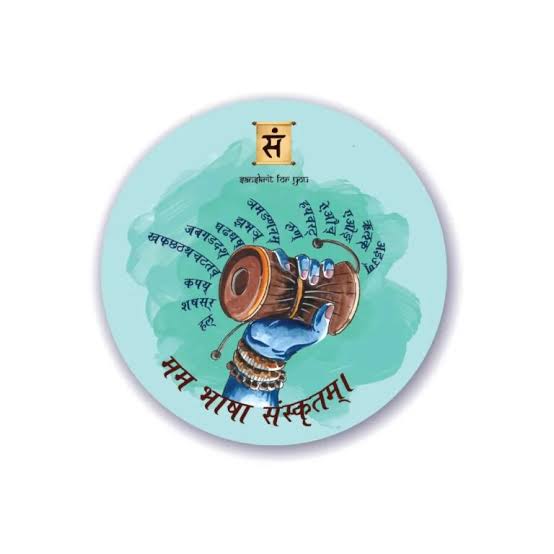
When Lord Shiva played the Damru during the cosmic dance, 14 sound patterns (sutras) emerged. These are known as the Maheshwara Sutras, considered the foundation of Sanskrit grammar (Panini’s Ashtadhyayi).
The 14 Maheshwara Sutras
1. अ इ उ ण (a i u ṇ)
2. ऋ ऌ क (ṛ ḷ k)
3. ए ओ ङ (e o ṅ)
4. ऐ औ च (ai au c)
5. ह य व र ट (ha ya va ra ṭ)
6. ल ण (la ṇ)
7. ञ म ङ ण न म (ña ma ṅa ṇa na ma)
8. झ भ ञ (jha bha ña)
9. घ ढ ध ष (gha ḍha dha ṣa)
10. ज ब ग ड द श (ja ba ga ḍa da śa)
11. ख फ छ ठ थ च ट त व (kha pha cha ṭha tha ca ṭa ta va)
12. क प य (ka pa ya)
13. श ष स र (śa ṣa sa ra)
14. ह ल (ha la)
Spiritual Essence
These Sutras are not just linguistic sounds—they are cosmic vibrations.
They carry the energetic blueprint of speech, mantra, and sound.
Each sutra resonates with a different aspect of creation, consciousness, and energy flow.
Just as Beej Mantras unlock hidden powers, the Maheshwara Sutras form the DNA of all Sanskrit mantras and Vedic chants.
The Power of Beej Mantras
Every vibration of the Damru is a seed of sound—what the Vedas call Beej Mantras.
Om – the seed of creation, ultimate vibration of existence.
Hreem – the seed of divine energy, Shakti.
Shreem – the seed of abundance and prosperity.
Kleem – the seed of attraction, love, and harmony.
When combined, these Beej sounds awaken higher consciousness, cleanse negative energies, and channel divine power into daily life.
Thus, the Damru is the source of all mantra-shakti.
Damru in Scriptures and Traditions
The Shiva Purana and Natya Shastra describe the Damru as Nada Brahma—the Sound of the Divine. In Yoga and Tantra, its vibrations are revered as tools for awakening, energy flow, and inner balance. It is consciousness in motion, guiding us from the ordinary to the cosmic.
Lifestyle & Vedic Wisdom – Living the Damru
In today’s fast-paced world, the Damru offers timeless wisdom:
Time Keeping – Honor life’s natural cycles. Rest when needed, act when inspired.
Energy Flow – Align with nature’s rhythm to stay vital and balanced.
Mindfulness – Live in the knot—the present moment.
By tuning into the Damru’s message, we embrace a balanced lifestyle rooted in Vedic wisdom. It teaches us that real power is not in extremes but in living harmoniously between them.
The Eternal Message
The Damru is more than a musical instrument—it is:
The heartbeat of the cosmos
The rhythm of our breath
The source of mantras and language
The reminder that beyond chaos and calm, balance is life’s ultimate truth
Next time you see Shiva holding the Damru, remember It is not just sound. It is creation, destruction, mantra, and the cosmic balance within you.



You must be logged in to post a comment.