What sacrifices have you made in life?
In Shri Gita Ji, Lord Krishna has said,
आकिञ्चन्ये न मोक्षोऽस्ति किञ्चन्ये नास्ति बन्धनम्।
किञ्चन्ये चेतरे चैव जन्तुर्ज्ञानेन मुच्यते।।
This verse inspires a person to attain salvation through knowledge. It states that only by attaining knowledge can a person recognize his soul and have the means to attain salvation. “Nothing is adoptable, and nothing is bondage.” And man can be liberated only by knowledge. That is, he gets true knowledge of the ultimate motion. Only then does that man’s confusion, fear, sleep, and laziness disappear. This verse stimulates a person to attain salvation through knowledge and shows him the path of liberation from bondage. It states that only by attaining true knowledge can a person recognize his soul and have the means to attain salvation
Knowledge has an important place in the pursuit of the salvation of the soul of a person. It is through knowledge that a person comes to know the ideal of his selfishness and the universal truth. In Indian culture, knowledge is considered the path to salvation, which makes a person feel free from bondage. Knowledge makes a person introverted, leads him to the truth, and makes him feel his true nature. With the attainment of knowledge, a person feels complete, due to which he gets freedom from worldly bondage and attains the height of self-reliance. Therefore, we should always be engaged in the search for knowledge, because knowledge gives us the feeling of true freedom and leads us towards salvation. Therefore, we have established that Spirituality is Beyond Science which keeps giving you the right knowledge on time
The Concept of Matter: A Create Your Zone
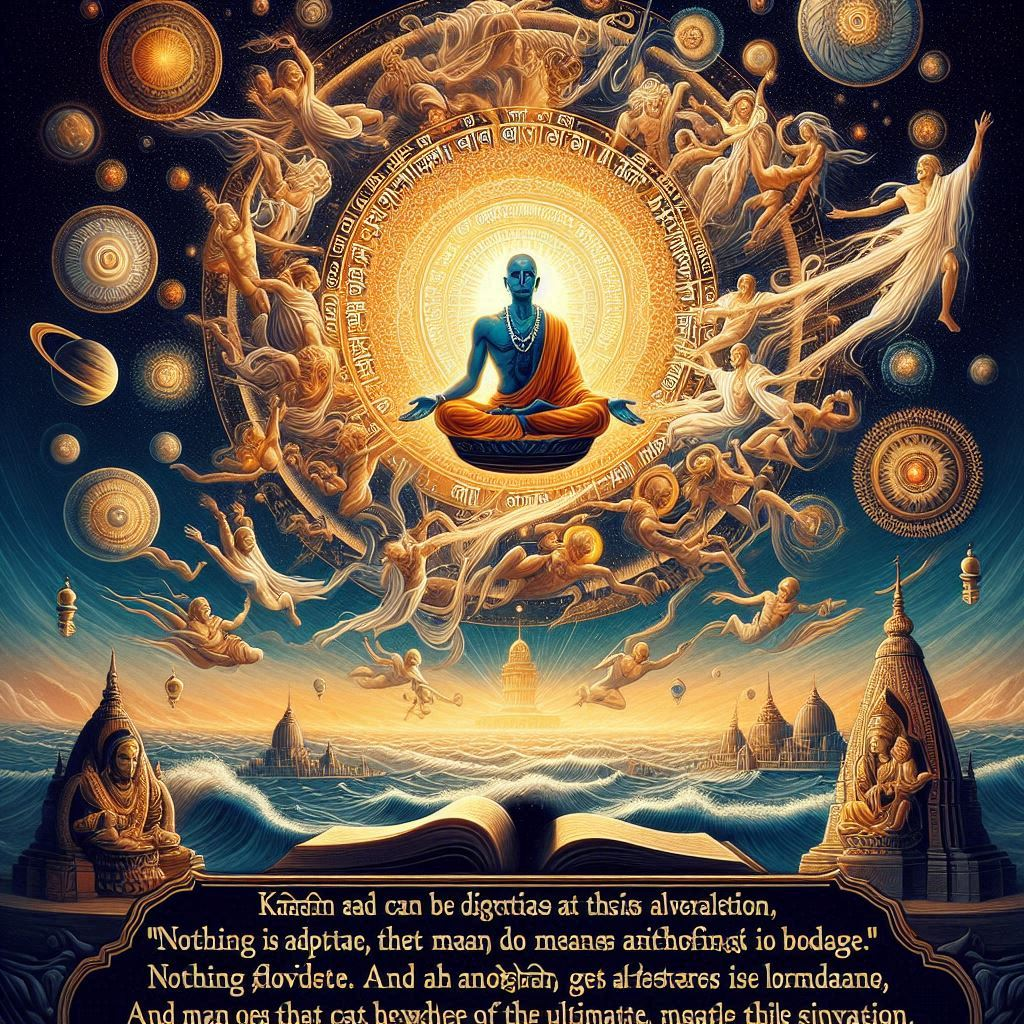
The debate between spiritualists and materialists about the nature and supremacy of matter and Aatma (Energy) is a longstanding one. This discussion intersects with both philosophical and physical perspectives.
1. The Philosophical Divide:
Spiritualists argue that Aatma, or energy, is the true reality, considering matter as an illusion or unreal. On the other hand, materialists assert that matter is the true reality and dismiss Aatma or spiritual energy as unreal.
2. Dynamic Character of Matter:
In the realm of Bhartiya (Indian) thought, some philosophers have postulated that matter is not static but dynamic. This perspective holds that matter possesses the capability to create, sustain, and destroy the universe, a view that aligns with the principles of modern physics.
3. Vaiśeṣika Darshan and Quantum Physics:
The Vaiśeṣika school of philosophy presents a view similar to quantum physics, proposing that the world originated from the combination of atoms, known as Paramāṇukāraṇatāvāda. This contrasts with the Advaita Vedānta belief in Brahmākaraṇatāvāda, which posits Brahman as the ultimate cause.
4. Atomic Combination:
Vaiśeṣika explains that initially, two atoms (paramāṇus) combine to form a dyadic compound (dvyaṇuka). Three dyadic compounds then form a triadic one (trasareṇu), leading to the creation of gross objects. This raises the question: how do unconscious atoms combine without a conscious force?
5. Sānkhya Perspective:
The Sāṁkhya philosophy offers an answer by suggesting that atoms possess intrinsic energy, enabling them to combine. This self-contained energy leads to the natural conjunction and disjunction of atoms, facilitating both creation and dissolution.
In essence, both philosophical and scientific traditions explore the dynamic and self-organizing nature of matter, albeit from different perspectives. This interface between philosophy and physics reveals a profound dialogue on the nature of reality.
 Spirituality is Beyond Science
Leave a comment