What alternative career paths have you considered or are interested in?
Spirituality is beyond science.
Mother Nature has created this world 432 million years ago. There is a catastrophe of the same number of years. It has been 1,96,08,53,125 years since the creation was created. This is the time it has been since the Vedas were born. All the religious texts of the world are within 5000 years but the Vedas are the oldest. Other opinions also believe this. This is Sanatan’s unique heritage. Therefore, Sanatan is considered eternal
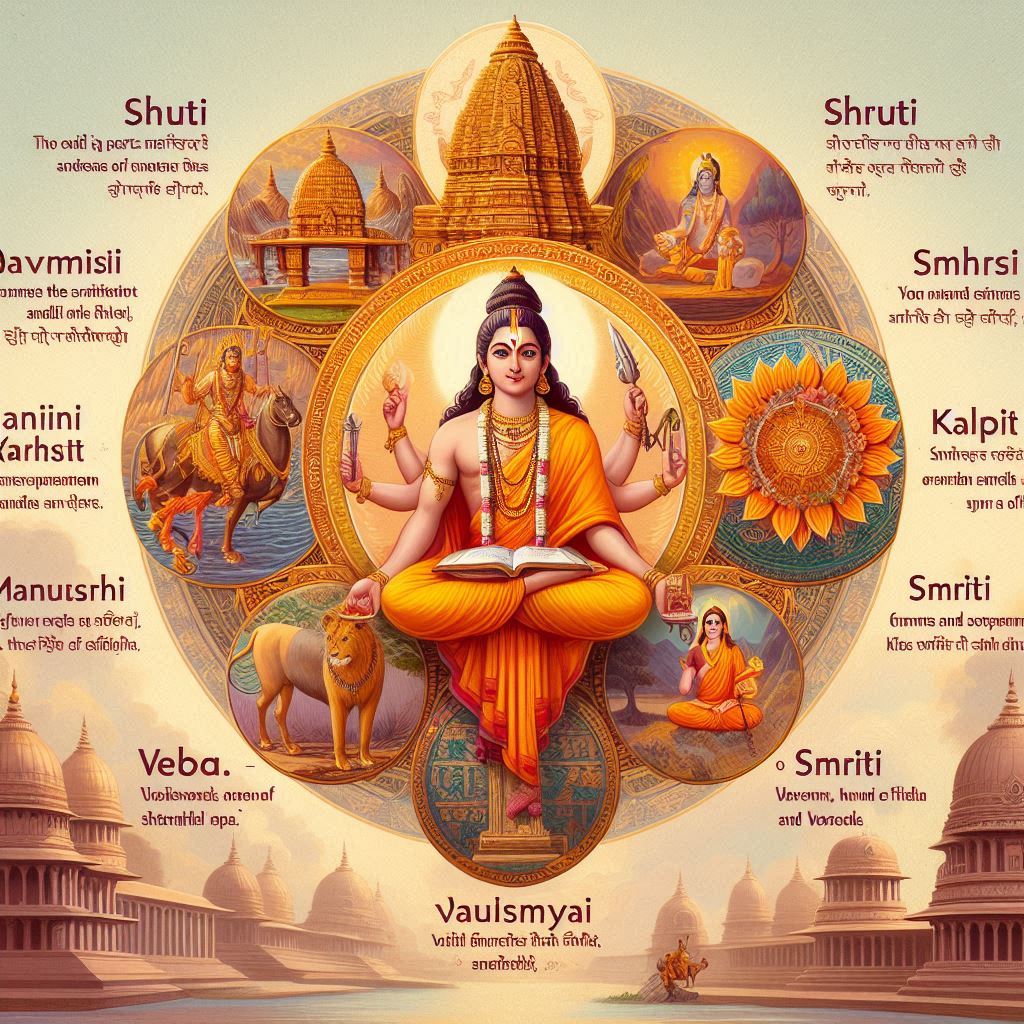
To understand Indian scriptures and Vedic knowledge, the scriptures are divided into two parts: Shruti and Smriti. Shruti includes the scriptures Vedas and Smriti includes books of history and interpretation of the Vedas, Manusmriti, Yajnavalkya Smriti, etc. The Vedas are the symbols of eternal and eternal truth. The Vedas have 6 अंग and 6 उपांग . Which helps in knowing the Vedas. The 6 limbs of the Vedas are Varna Shiksha, Panini Krita व्याकरण (Ashtadhyayi), Kalpa, Maharishi Yaska Krita Nirukta, Maharishi Pingal Krit Chhanda and Jyotish etc. This is explained to you in just a few words. This is to be understood
6 उपांग Philosophy:
(1) Yoga Darshan (Maharishi Patanjali)
(2) Sankhya Darshan (Maharishi Kapil)
(3) Nyaya Darshan (Maharishi Gautam)
(4) Vaisheshikadarshan (Maharishi Kanada)
(5) Mimamsa Darshan (Maharishi Jaimini)
(6) Vedanta Darshan (Maharishi Vyasa)
Although more than 100 Upanishads are found in the spiritual field of Indian culture, it is necessary to read 11 Upanishads before studying Vedanta philosophy. Those Upanishads are as follows –
1. ईशोपनिषद
2. केनोपनिषद
3. कठोपनिषद
4. प्रश्नोपनिषद
5. माण्डूक्योपनिषद
6. मुण्डकोपनिषद
7. ऐतरेयोपनिषद
8. तैत्तिरीयोपनिषद
9. बृहदारण्यकोपनिषद
10. छांदोग्योपनिषद
11. श्वेताश्वतरोपनिषद .
There are only 4 interpretation books of the Vedas – (Brahmin texts)
(1) Aitareya Brahmins
(2) Shatapatha Brahmins
(3) Tandya Brahmins
(4) Gopatha Brahmins.
Case-ending showing possession or relation
Is complete knowledge hidden in the Vedas?
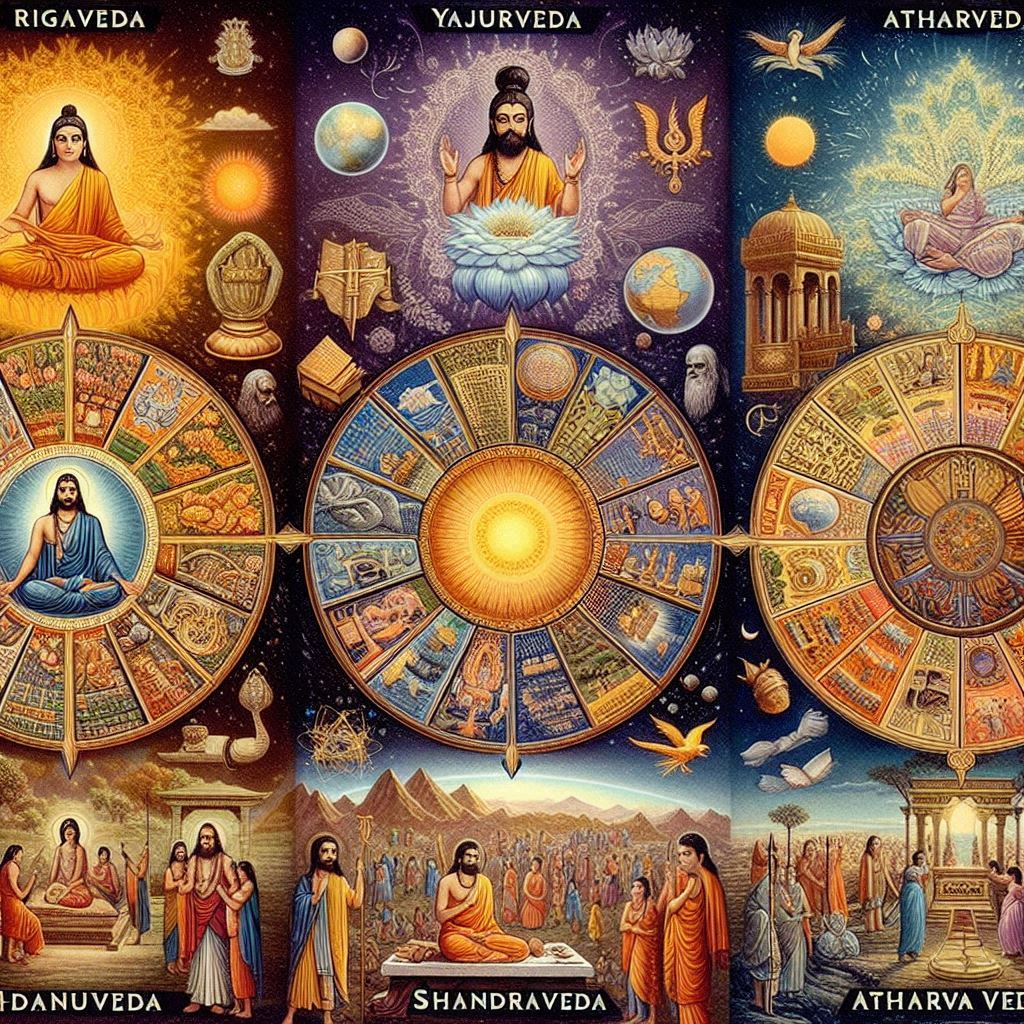
The Vedas are full of knowledge related to almost all subjects, like God, the universe, astrology, mathematics, chemistry, medicine, nature, astronomy, geography, religious rules, history, rites, customs, etc. The four Vedas are Rigveda, Yajurveda, Samaveda and Atharvaveda. There are only 4 upavedas. Ayurveda of Rigveda, Dhanurveda of Yajurveda, Gandharva Veda of Sama Veda and Atharva Veda
Rigveda:
ऋक means status and knowledge. It has a lot to do with geographical location and mantras invoking the deities. The hymns of the Rig Veda contain prayers, praise of the gods and descriptions of their position in Devlok. It also provides information on water therapy, air therapy, solar medicine, psychiatry and healing by Havan. The description of substances ranging from nature’s smallest atom to God is found in the Rigveda. It has 10522 mantras. The knowledge of Rigveda was received in the soul of Maharishi Agni
Yajurveda –
यजु means moving sky and action. Yajurveda contains the methods of sacrifice and the mantras used in sacrifices. We can understand the 16 rituals properly from Yajurveda. Apart from sacrifice, philosophy is described. Element knowledge means mystical knowledge. Knowledge of the universe, soul, God and matter. There are two branches of this Veda, Shukla and Krishna. There are 1075 mantras in Yajurveda. The knowledge of Yajurveda was received in the soul of Maharishi Vayu
Samaveda:
साम means transformation and music. Gentleness and worship. This Veda has a musical form of many hymns of the Rig Veda. It mentions about the gods Savita, Agni and Indra. It also makes references to classical music and dance. This Veda is considered to be the origin of music science. It has 1875 mantras. The knowledge of Samaveda was received in the soul of Maharishi Aditya
Atharva Veda:
अथर्व means vibration and Atharva means vibration. This Veda mentions mystical sciences, herbs, miracles and medicines of Ayurveda etc. It also provides knowledge of Indian tradition and astrology. By studying it, all doubts are solved and the vibration of the mind ends. It has 5977 mantras. The knowledge of Atharva Veda was received in the soul of Maharishi Angira.
6 limb of Sanatan.
 Spirituality is Beyond Science
Leave a comment