

Who are your favorite artists?
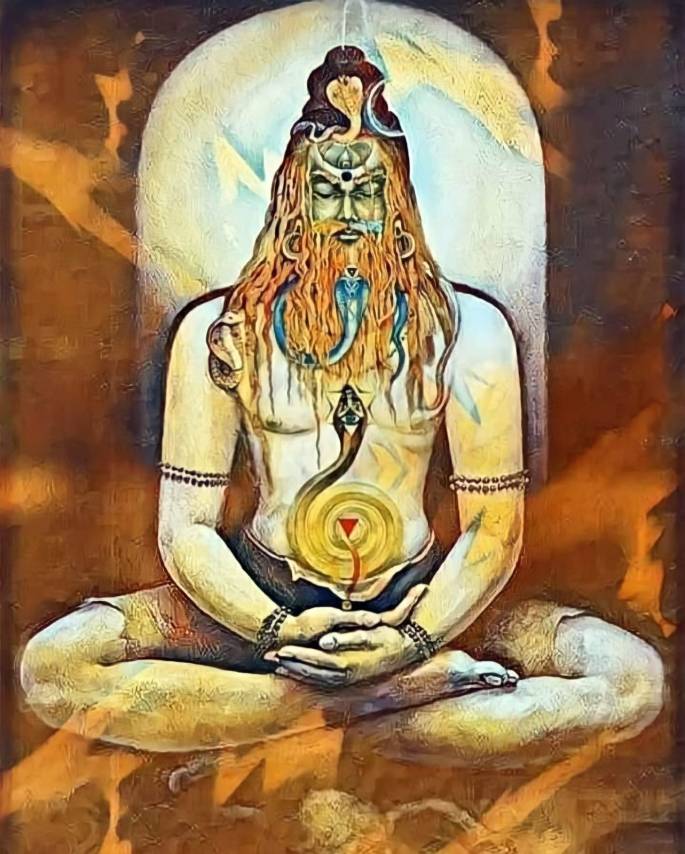
The Adiyogi
Lord Shiva is the ideal of Indian art. Adiyogi Shiva is the main basis of India’s culture and spiritual practice and is the guide. Various forms of art and learning arise from them, while sound and beej mantras have also originated from their damru. Mythology is the medium for you to understand. If you want to learn the code language, then it is very important to study the Upanishads Shiva is benevolent. Many aspects of his infinite and immense nature have emerged in many ways in Indian art. Artists have depicted him in various postures and limbs since time immemorial. Even his truth, Shivam, Sundaram form has manifested itself as beauty in Indian art. The presence of Shiva in Indian art is seen since the Harappan period. Historians have proved through archaeological evidence that Shiva worship was prevalent in the mass society in the era of the Indus Valley Civilization Archaeologists have found a seal in Mohenjodaro in which a deity is seated in the form of a yogi, just like we put Padmasana in a picture of Shiva in a meditative posture.
Let’s see. Eminent archaeologist, Marshall has firmly considered this Harappan deity as ‘Adi Shiva’. Other historians have also accepted Marshall’s view.
Lord Shiva is accepted as the linga representative. The infinite form of Lord Shiva is most commonly seen in the form of “Shivalinga”. There is a mention of Linga worship in the discipline festival and other Puranas of Ramrajya Ramayana, but its clear description is found in Matsya Purana. Initially, these forms of Shiva were installed in the main sanctum of the temples, but later the practice of installing only the linga in the temple developed According to Shiva Mahapuran, it is only an external Shiva form. According to this book, Shiva is not located outside but in Shambhavi inside. That’s why he is Shambhu. His appearance gives a sense of art. Lord Shiva has been described as having four faces, that is sweet truth speech, four Vedas. Shiva’s two hands inspire us to maintain balance and support in every situation in life. They have control and discipline in their lives.
In spiritual sciences, Shiva is considered to be a great knower of knowledge, yoga, and dance. Lord Dakshinamurti imparts this knowledge to his devotees. For this reason, the idols depicting Shiva as a great knowledgeable person are called ‘Dakshinamurti’. In a ‘Dakshinamurti’, Shiva appears to be a universal teacher. One of his feet is on the ground and the other is raised on the throne as if he is explaining something In Indian art, Shiva is considered as Nataraja i.e. the emperor of dance. It is said that he composed 108 types of dances. Of these, Tandav dance is the most popular. There are many sculptures showing this Tandav dance. Shiva taught this dance to his disciple Tund. That is why it got the name Tandav. The skill that the artists have displayed in sculpting the idols of Nataraja Shiva in dance pose is 😍 amazing.
 Spirituality is beyond science