Describe a positive thing a family member has done for you.
The atomic habits.
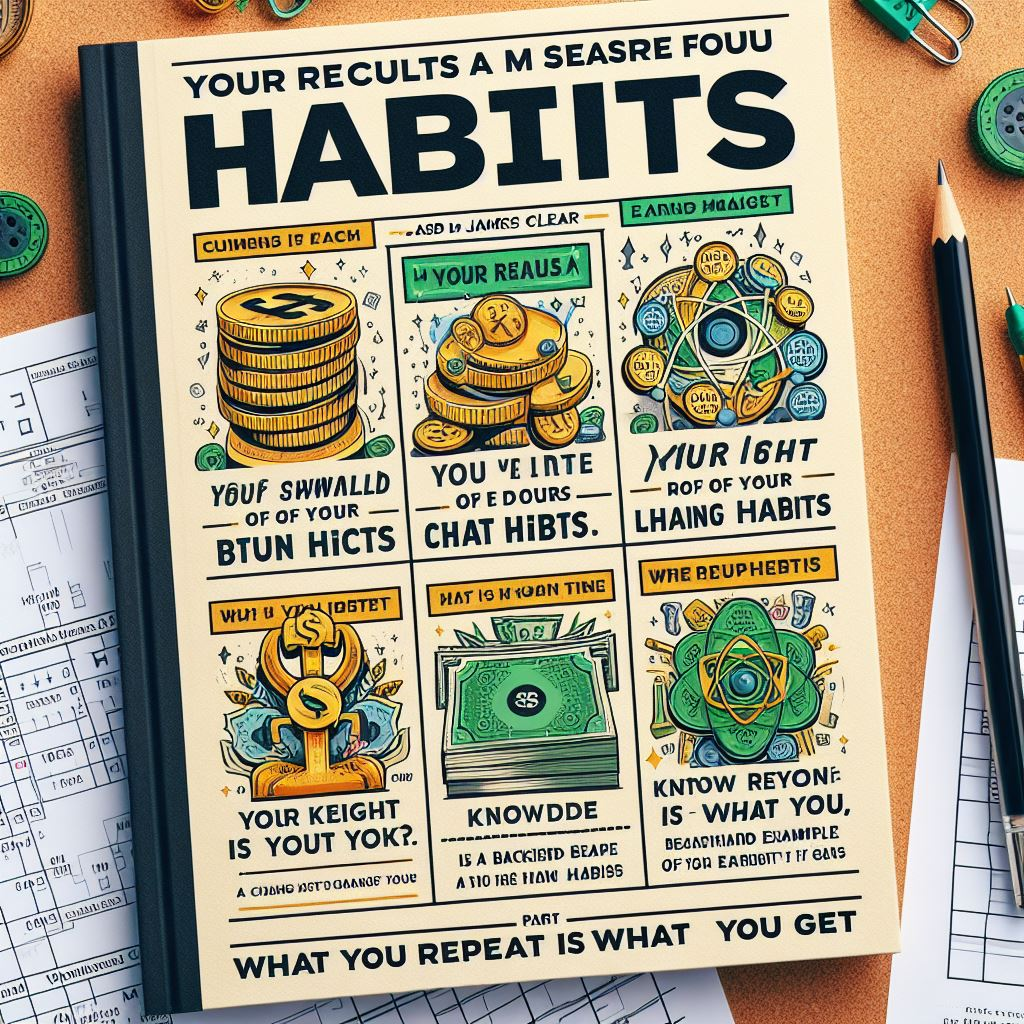
Your results are a measure of your habits. Your earned wealth is a backward measure of your financial habits. Your weight is proof of your eating habits. Your knowledge is a backward example of your learning habits. What you repeat is what you get. Atomic Habits, a successful book by James Clear, is the most comprehensive guide on how to change your habits and get better every day. This brief note based on the book is written in two parts. Part one helps us understand the importance of our habits and why they matter. More importantly, it provides answers to a series of how to Which naturally come in terms of forming good habits and breaking bad habits. In the second part of the note, six important ideas, concepts, and principles are summarized that will help the reader form the habits he wants
Part One – What? Why? How come
Part One – What? Why? How come
– What is a habit?
– Why do habits matter?
– How do habits work?
How to start a new habit?
– How to create better habits?
– How to break bad habits?
– How to enjoy habits that are hard?
What is a habit?
Habits + Deliberate Practice = Perfect”

Habits are mental shortcuts. A habit is a routine or behavior that is performed repeatedly and most of the time automatically. When you face a problem repeatedly, your brain starts doing the process of solving it. Your habits are a set of automated solutions that solve the problems you face regularly. The ultimate aim of habits is to solve life’s problems with as little energy and effort as possible. A habit is a behavior that has been repeated enough times to become automatic. If you find yourself struggling to form a good habit or break a bad habit, it’s not because you’ve lost your ability to improve. This is often because you have not yet crossed what James Clear calls the plateau of latent potential. When you finally break the plateau of latent potential, people will call it an overnight success. Habits are the compound interest of self-improvement The advantage of habits is that we can do anything without thinking. The downside is that we stop paying attention to small mistakes. Reflection and review is a process that allows you to be mindful of your performance over time. The more firmly we hold on to an identity, the harder it becomes to move on.
Why do habits matter?
Identification -> processes -> results
Habits form our identity. Our actions define who we are. Our habits are a reflection of our identity. The more we repeat a behavior, the more we strengthen the identity associated with that behavior.
1. Changes in your results. This means changing your results, for example, losing weight.
2. Edit your processes. This means changing your habits and systems: for example, developing a daily exercise routine and diet
3. Change your identity. It means changing your beliefs: changing the way you see yourself and those around you. For example, if you exercise regularly, you are reinforcing the identity of someone fit and healthy
With outcome-based habits, the focus is on what you want to achieve. With identity-based habits, the focus is on who you want to be. James Clear argues that the best way to change your identity is to focus on changing your habits. By starting with small, easy habits, we can gradually create a new identity that is more aligned with our goals. True behavior change is identity change. You can choose and start a habit because of motivation, but you will stick to it only when it becomes a part of your identity. The real reason habits matter is not because they can give you better results (although they can), but because they can change your perceptions of you
How do habits work?
Hints -> longing -> feedback -> rewards
The main components of habit formation are:
1. Signal: It prompts your brain to start a behavior. It’s a little bit of information that predicts the reward.
2. Craving: It is the motivation behind every habit. Without the will, we have no reason to act.
3. Feedback: It’s the same habit you play; It can take the form of a thought or action.
4. Reward: The ultimate goal of every habit
Habit formation is the process by which a behavior becomes progressively more automatic through repetition. How long you’ve been doing a habit isn’t as important as how many times you’ve done it. You can do something three times in thirty days or three hundred times. Frequency will always make a difference. Habits are attractive when we associate them with positive emotions and unattractive when we associate them with negative emotions
How to start a new habit?
‘After [current habit], I will take [new habit].’
One of the best ways to create a new habit is to identify the current habit you already do every day and then top your new behavior on top. This is called habit stacking. The two most common signs are time and place. Creating an intention to implement is a strategy you can use to associate a new habit with a specific time and place. Habit stacking is a strategy you can use to associate a new habit with an existing habit
The formula for adding a habit is:
‘After [the present habit], I will take [the new habit].’

The environment plays a crucial role in shaping human behavior. By making small changes in the context, significant changes can be observed in behavior over time. The key to creating new habits is to pay attention to the signs in your environment that promote good habits. Gradually, your habits become associated with the entire context, making it easier to form new habits. If you’re trying to change your habits, consistency is key. Taking small steps, even if they aren’t significant, will help you reach your goal eventually. It’s essential to choose small, healthy options that will help you achieve your goals in the long run. Goals are good for setting direction, but systems are best for making progress. Systems focus on the mechanisms that lead to the desired outcomes, making it easier to achieve the desired results.

 Spirituality is Beyond Science
Leave a reply to Dr. Prakash ✍ Cancel reply