
What is your favorite form of physical exercise?
Journey from Thought to Destiny:
Journey from Thought to Destiny:
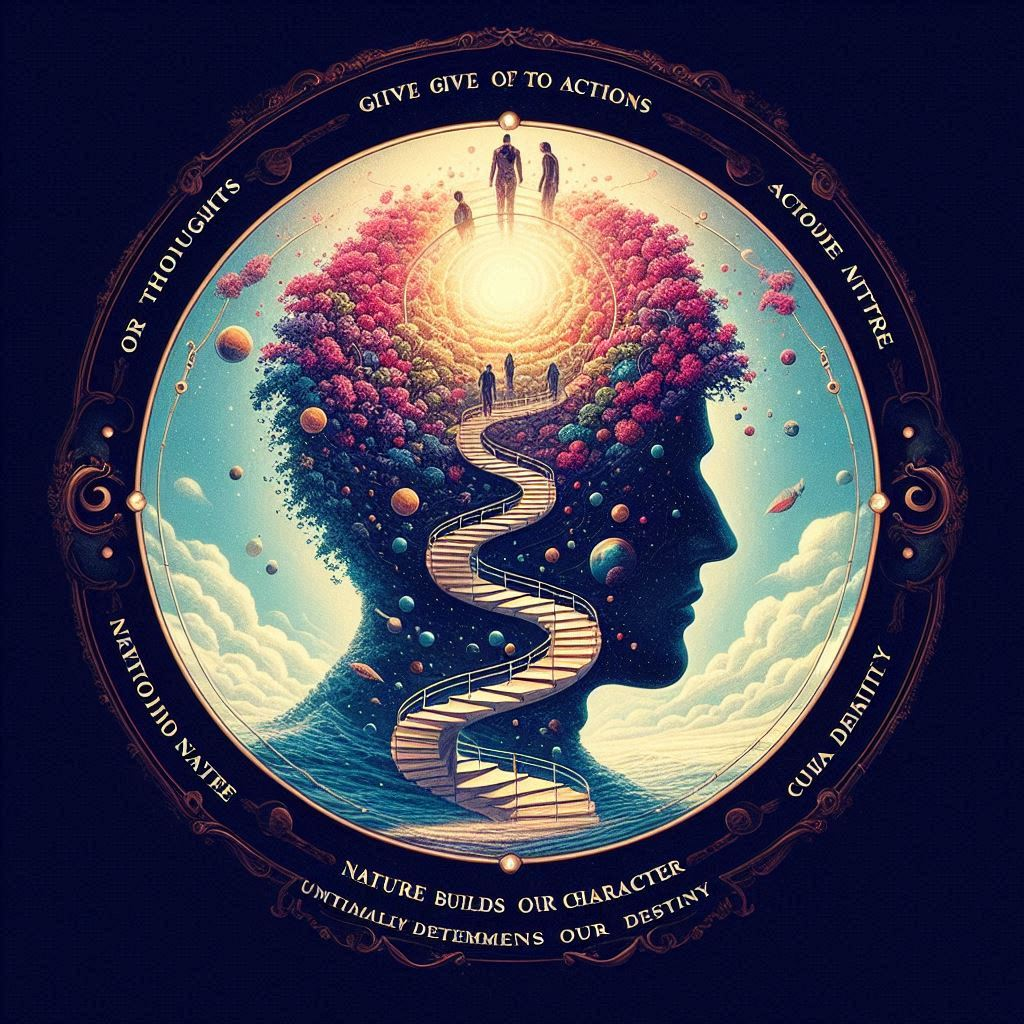
Our thoughts give rise to actions, actions shape our nature, nature builds our character, and character ultimately determines our destiny. This thought emphasizes that every stage of our life begins with our thoughts. When we hold a thought in our minds, it transforms into our actions. Our actions shape our nature, which in turn builds our character. Ultimately, our character determines our destiny or fate.
“The Power of Bhagwan Satyanarayana” is a Story from the Upanishads.
Once upon a time, there was a Brahmin who regularly worshipped Bhagwan Satyanarayana. He performed his rituals with devotion and kept his thoughts pure and sacred. One day, a sage asked him why he worshipped with such devotion and regularity.
The Brahmin replied, My thoughts are pure, which makes my actions pure as well. When I perform righteous actions, my nature becomes pure. And when my nature is pure, my character becomes noble. This improves my destiny, bringing me peace and prosperity. The sage said, Your understanding is in alignment with what is described in the Upanishads. Our thoughts guide our lives. Therefore, we must always keep our thoughts pure and positive. Thus, through his worship and the purity of his thoughts, the Brahmin not only improved his own life but also imparted a message to society that it is our thoughts that shape our destiny.
“Let your thoughts be the seeds of purity, your actions the blossoms of righteousness, your nature the fragrance of virtue, and your character the fruit of destiny.” This captures the essence of how our inner world shapes our outer reality. By nurturing pure thoughts, we lay the foundation for a life of integrity, peace, and fulfillment.
Central upnishad
 Spirituality is Beyond Science
Leave a comment