Immerse in your infinite knowledge.

What alternative career paths have you considered or are interested in?

Spirituality is beyond science.

Mother Nature has created this world 432 million years ago. There is a catastrophe of the same number of years. It has been 1,96,08,53,125 years since the creation was created. This is the time it has been since the Vedas were born. All the religious texts of the world are within 5000 years but the Vedas are the oldest. Other opinions also believe this. This is Sanatan’s unique heritage. Therefore, Sanatan is considered eternal

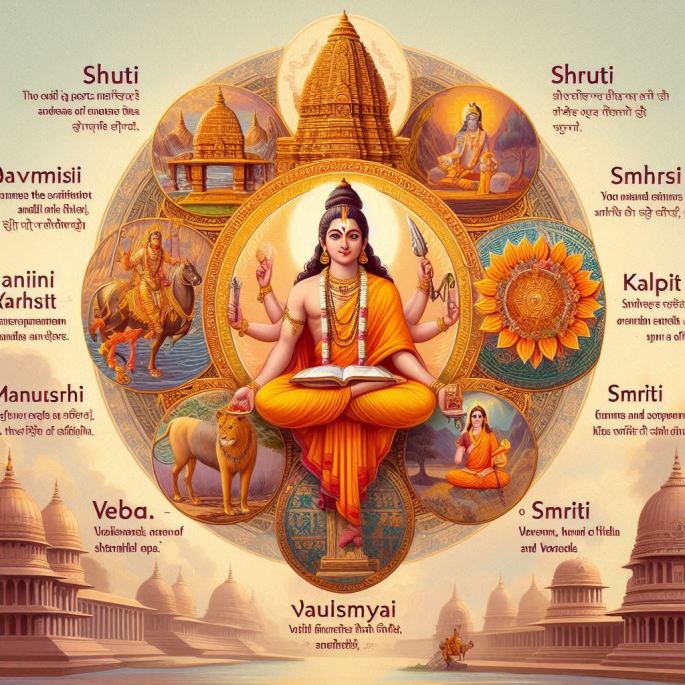
To understand Indian scriptures and Vedic knowledge, the scriptures are divided into two parts: Shruti and Smriti. Shruti includes the scriptures Vedas and Smriti includes books of history and interpretation of the Vedas, Manusmriti, Yajnavalkya Smriti, etc. The Vedas are the symbols of eternal and eternal truth. The Vedas have 6 अंग and 6 उपांग . Which helps in knowing the Vedas. The 6 limbs of the Vedas are Varna Shiksha, Panini Krita व्याकरण (Ashtadhyayi), Kalpa, Maharishi Yaska Krita Nirukta, Maharishi Pingal Krit Chhanda and Jyotish etc. This is explained to you in just a few words. This is to be understood

6 उपांग Philosophy:

(1) Yoga Darshan (Maharishi Patanjali)

(2) Sankhya Darshan (Maharishi Kapil)

(3) Nyaya Darshan (Maharishi Gautam)

(4) Vaisheshikadarshan (Maharishi Kanada)

(5) Mimamsa Darshan (Maharishi Jaimini)

(6) Vedanta Darshan (Maharishi Vyasa)

Although more than 100 Upanishads are found in the spiritual field of Indian culture, it is necessary to read 11 Upanishads before studying Vedanta philosophy. Those Upanishads are as follows –

1. ईशोपनिषद
2. केनोपनिषद
3. कठोपनिषद
4. प्रश्नोपनिषद
5. माण्डूक्योपनिषद
6. मुण्डकोपनिषद
7. ऐतरेयोपनिषद
8.  तैत्तिरीयोपनिषद
9.  बृहदारण्यकोपनिषद
10. छांदोग्योपनिषद
11. श्वेताश्वतरोपनिषद .

There are only 4 interpretation books of the Vedas – (Brahmin texts)

(1) Aitareya Brahmins

(2) Shatapatha Brahmins

(3) Tandya Brahmins

(4) Gopatha Brahmins.

Case-ending showing possession or relation

Is complete knowledge hidden in the Vedas?
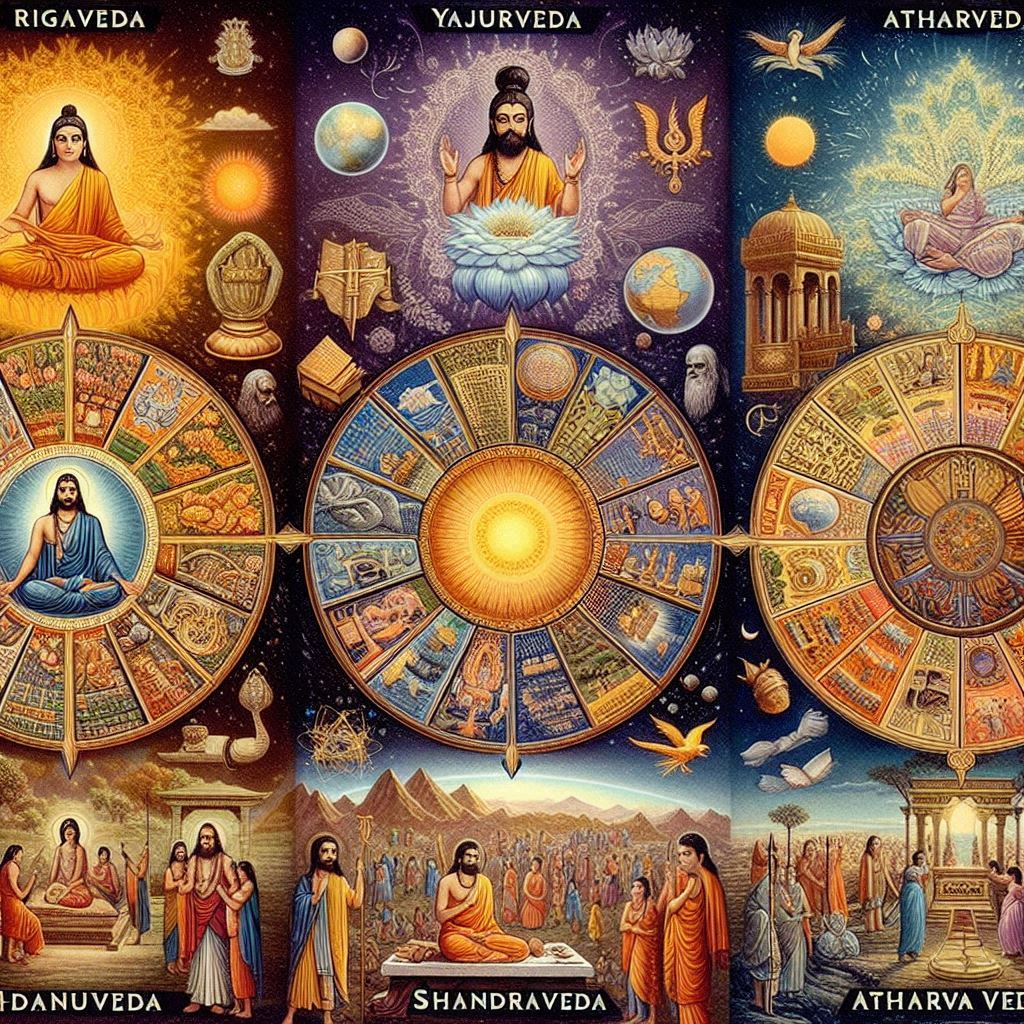
The Vedas are full of knowledge related to almost all subjects, like God, the universe, astrology, mathematics, chemistry, medicine, nature, astronomy, geography, religious rules, history, rites, customs, etc. The four Vedas are Rigveda, Yajurveda, Samaveda and Atharvaveda. There are only 4 upavedas. Ayurveda of Rigveda, Dhanurveda of Yajurveda, Gandharva Veda of Sama Veda and Atharva Veda

Rigveda:

ऋक means status and knowledge. It has a lot to do with geographical location and mantras invoking the deities. The hymns of the Rig Veda contain prayers, praise of the gods and descriptions of their position in Devlok. It also provides information on water therapy, air therapy, solar medicine, psychiatry and healing by Havan. The description of substances ranging from nature’s smallest atom to God is found in the Rigveda. It has 10522 mantras. The knowledge of Rigveda was received in the soul of Maharishi Agni

Yajurveda –

यजु means moving sky and action. Yajurveda contains the methods of sacrifice and the mantras used in sacrifices. We can understand the 16 rituals properly from Yajurveda. Apart from sacrifice, philosophy is described. Element knowledge means mystical knowledge. Knowledge of the universe, soul, God and matter. There are two branches of this Veda, Shukla and Krishna. There are 1075 mantras in Yajurveda. The knowledge of Yajurveda was received in the soul of Maharishi Vayu


Samaveda:

साम means transformation and music. Gentleness and worship. This Veda has a musical form of many hymns of the Rig Veda. It mentions about the gods Savita, Agni and Indra. It also makes references to classical music and dance. This Veda is considered to be the origin of music science. It has 1875 mantras. The knowledge of Samaveda was received in the soul of Maharishi Aditya

Atharva Veda:

अथर्व means vibration and Atharva means vibration. This Veda mentions mystical sciences, herbs, miracles and medicines of Ayurveda etc. It also provides knowledge of Indian tradition and astrology. By studying it, all doubts are solved and the vibration of the mind ends. It has 5977 mantras. The knowledge of Atharva Veda was received in the soul of Maharishi Angira.

6 limb of Sanatan.
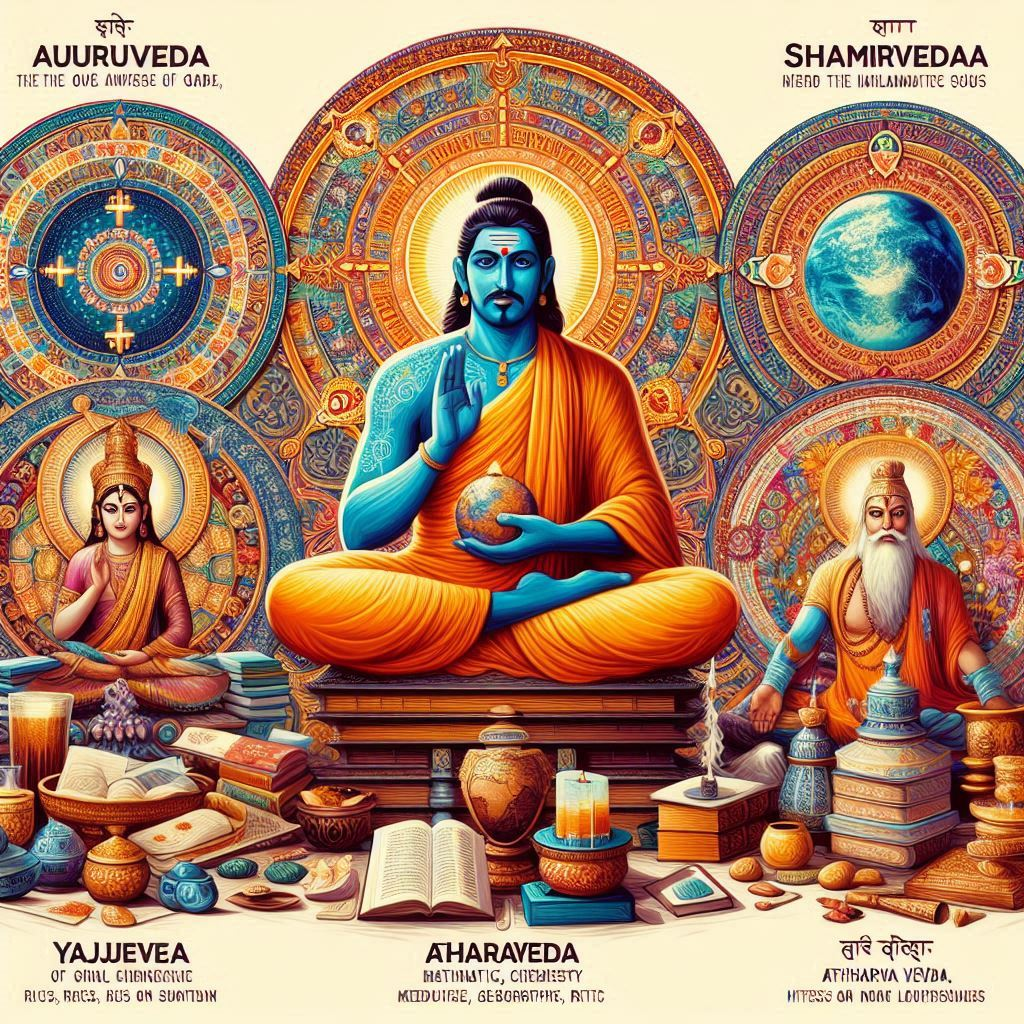
To know the Indian Sanatan culture, it is very important to study 6 scriptures with the knowledge of the four Vedas.  So these 6 scriptures are also called the Upavedas of the Vedas i.e. philosophy . Our sages have created these 6 philosophies by incorporating the doctrines scattered everywhere in the Vedas, on the basis of which we can understand this divine knowledge accurately. These 6 Vedic philosophies are called theistic philosophies. These are our logics, by reading which the intellect of every human being opens and he never confuses and doubts about God, religion, unrighteousness, truth, falsehood etc. By reading these philosophical scriptures, all kinds of doubts are resolved automatically. These 6 philosophies are as follows:

(1) Nyayashastra: –

It has been composed by Gautam Muni. The subject of this scripture is mainly logic. This philosophy has been created with the purpose of separating truth and falsehood from the world spread around him through four types of evidence (direct, inference, simile and word.

(2) Vaisheshika Shastra: –

It has been composed by Kanad Muni. This scripture is about material knowledge. How to know the qualities and karma of the substances that God has created for us and use them? This is the subject of this scripture. (This is physics.)

3) Sankhya Shastra: –

It has been composed by Kapil Muni. Its main theme is how the creation originates from the most subtle particles of nature (Word, Touch, Form, Taste and Smell) from Sat, Raja, and Tama. How are all substances similar and characteristic? This scripture completely explains the difference between nature and soul.

(4) Yoga Shastra: –

It has been composed by Patanjali Muni. Its main topic is to tell the method of attaining salvation by following the eight limits (Yama, Niyama, Asana, Pranayama, Pratyahara, Dharana, Dhyana, Samadhi) by getting rid of all sorrows

5) Mimamsa:

It has been composed by Jaimini Muni. Its subject is that by following what kind of Vedic rituals and limitations, a person can become completely happy and can attain salvation, the goal of his life?

(6) Vedanta (Brahmasutra):

It has been composed by Ved Vyasa Muni. Its main theme is to describe the nature of God, his qualities, knowing which man should get rid of all doubts about him and start worshiping him and attain them by practicing yoga.

Praying with Spiritual Emotion (Bhāv) :

◆ God Principle:

The divine essence flows through spiritual practices.


◆ Transmission of Frequencies:
N
5% of frequencies of Divine Consciousness (Chaitanya) are transmitted outside the body. Seekers can access up to 20% of frequencies of Divine Consciousness (Chaitanya).


◆ Protective Sheath:

A protective layer surrounds the seeker.


◆ Spreading of Divine Consciousness:
15% of the accessed Divine Consciousness spreads into the body of the seeker.

What exactly do you want ??

What alternative career paths have you considered or are interested in?

If take a look at some of our great men, scientists, and philosophers, we will know that many who were born in very difficult and adverse circumstances did not accept that situation and do what they wanted to do, without any thought that they couldn’t do what they want to do because of this situation. They have achieved what they wanted. This statement is true for a Yogi, a researcher, or a great person in any field. People who do not let their minds become negative and constricted by their circumstances can overcome any difficulty or lack and fulfill their purpose. Meditation is a magical process that helps to fulfill dreams. One should be able to understand its proper method and path. A perfect way to do this is to pray according to different ways of thinking and thinking. However many people do not believe in prayer. Why should I pray? They believe that praying is a form of pretense.

Believe me, prayer is not a plea but a beautiful mental exercise. Prayer helps you overcome situations that limit your progress and overcome obstacles that hinder your progress in the present situation. Prayer works by invoking the higher faculties of the mind to achieve what you would not ordinarily achieve. Prayer helps you.
You can also refer to this higher capacity of mind as God. Or if you don’t want to say, God, that’s fine. But your achievement is to overcome all limitations and move unlimitedly. You say then how to pray? Is there a specific method to it? Yes, of course. There are many ways to pray. If you believe in the Infinite God, put all your energy and concentration into what you want or want and pray hard. It is very simple. Anyone can do it easily. Complete the prayer with a great feeling.

Your body and mind living in the Third Dimension help you to feel and sense in achieving your goals. Because when you start that prayer, you will not have any obstacles in it. Only through prayer is this possible. So pray, do it in the morning, and do it in the evening too. Do it whenever you have time. Do it not only for yourself but also for others. But one thing is true the more you pray, the more your goal will be imprinted in your mind. Until it is done, it will become stronger and stronger. This is possible only through prayer. Human beings have one faculty, which is not found in animals, and that is imagination. Of course, animals think too. Animals are also very intelligent. Sometimes, to our surprise, they are smarter than us in many ways. Animals are intelligent. But one thing they lack is imagination. Humans can imagine. That ability belongs to God. It has been gifted to man. The human heart is full of breath. It is a symbolic way of saying that a mortal man or a human being has been endowed with divine abilities. It is this idea of evolving, improving, and reaching that state that has created the human mind, mankind. For this reason, how to make the mind beautiful, definitely read the next series.