How Ancient India Taught the World the Science of Immunization

What will your life be like in three years?

The Real Origin of the Vaccine

The credit for the invention of the vaccine is often given to Western scientists. However, historical records from Cambridge University and the writings of early researchers show that the foundation of vaccination was learned from India — particularly from Bengal in South India, near Kolkata.

The Smallpox Vaccine and Its Ancient Roots

The earliest reference to the principle of vaccination can be found in the Charaka Samhita, written by the great sage Maharshi Charaka. From the Vedic period to the Buddhist era, the study of disease prevention and immunization was taught in ancient Gurukuls and universities such as Nalanda, Vallabhi, and Takshashila.
During the Mughal period, these institutions gradually declined. In the British era, traditional systems of medicine survived only in limited forms.

By the 1700s, smallpox had become a deadly epidemic throughout England and across the world. Many scientists were searching for ways to combat it. That’s when a British doctor named Dr. Oliver discovered that in colonial India, traditional healers had long been using an effective preventive method against smallpox.

In 1710, Dr. Oliver traveled to India and toured Bengal. In his diary, he wrote:

“For the first time in my life, I saw how easily the people of India cure a disease as dangerous as smallpox.”

At that time, smallpox was a devastating epidemic in Europe, killing millions. He continued:

“Here in India, people receive something like an inoculation. A fine needle-like instrument is used, and the person develops a mild fever for three days. Cool water compresses and herbal medicines are given, and within a few days, the person recovers. Once vaccinated, they remain immune for life.”

After witnessing this, Dr. Oliver returned to London and presented his findings to a gathering of doctors. When the others doubted his claims, he brought them to India to see for themselves.

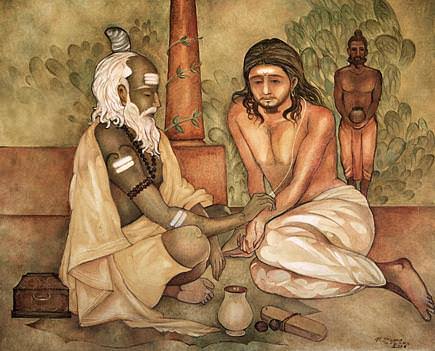
When they asked the Indian healers what the vaccine was made of, the vaidyas (Ayurvedic physicians) explained:

We take a small amount of pus from a person infected with smallpox and insert just a tiny droplet — as small as the tip of a needle — into a healthy person’s skin. This helps the body develop natural resistance to the disease.”


Dr. Oliver further wrote:

“When I asked them who taught them this process, they said, ‘Our teachers did — and their teachers before them.’ I estimate that this vaccination method has been practiced in India for at least 1,500 years.”


He concluded his diary with the following tribute:

“We must honor the Indian physicians who go door to door, freely giving this life-saving vaccine to people. They taught us this knowledge without asking for any payment. We British owe them immense gratitude.”

Today, the world credits Dr. Oliver as the father of the smallpox vaccine — yet, in his own writings, he acknowledged India’s ancient scientists and healers as the true pioneers of vaccination.