What historical event fascinates you the most?
The Cosmic Sound of Healing and Consciousness
Long before telescopes, microphones, or brain scans, the Vedas declared that sound is the foundation of creation. That primordial vibration the sound that began it all is ॐ (Oṃ). Modern science now recognizes that the universe itself vibrates. From the smallest atom to the largest galaxy, everything is in motion — everything hums with energy.
The sages of India heard this cosmic hum thousands of years ago and called it “Oṃ” the sound of the universe.
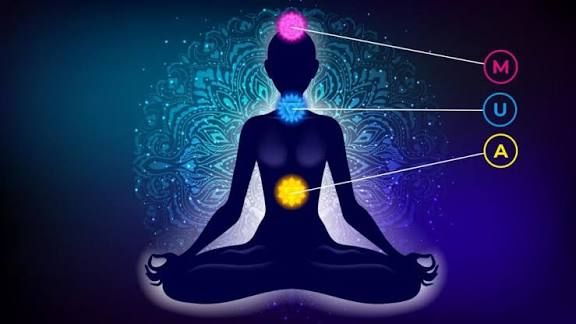
The Three Sounds — AA, UU, and MMAA
When we chant Oṃ slowly and consciously, it unfolds in three parts:
Sound Pronunciation Symbolic Meaning Physical Resonance
AA (अ) As in “father” (Waking state)
material world, body consciousness Vibrates in navel and chest — activates lower chakras
UU (उ) As in “put” (Dream state)
inner world, mental awareness Vibrates in throat and heart — harmonizes the middle chakras
MMAA (म्) As in “hum” (closed lips)
Deep sleep state — merging into silence Vibrates in head and crown — awakens higher centers
When the sound fades into silence, that silence is called “Turiya” — the fourth state, pure consciousness beyond sound.
The Science Behind Oṃ
🧠 1. Brain Synchronization and Calm
Modern neuroscience confirms that chanting Oṃ produces measurable changes in the brain:
fMRI and EEG studies (IIT Delhi, 2018; Frontiers in Human Neuroscience, 2011) show that Oṃ chanting deactivates the amygdala — the brain’s fear center.
→ This reduces stress, anxiety, and anger.
Oṃ increases alpha and theta brain waves, which induce deep relaxation, creativity, and meditation.
The vibration stimulates the vagus nerve, activating the parasympathetic system, the body’s natural “rest and heal” mode. In essence, Oṃ acts like a natural neural reset button.
💓 2. Heart and Breath Coherence
When you chant Oṃ, your breathing slows to about 6 breaths per minute —
the body’s resonant frequency for maximum oxygen efficiency.
Heart rate, blood pressure, and respiration become synchronized — a state known as cardiorespiratory coherence.
The result: calm mind, balanced emotions, and improved immunity.
3. Cellular Healing and Vibration
Recent studies in sonocytology show that each cell emits sound frequencies.
When exposed to rhythmic vibrations like Oṃ, these micro-oscillations come into harmonious alignment —
restoring cellular balance and promoting self-repair.
In Ayurveda, this state is called Sattva — the natural harmony of body and mind.
🌠 4. Frequency of the Cosmos
The tone of Oṃ (≈ 136.1 Hz) corresponds to the frequency of Earth’s orbit around the Sun —
known as the “AUM tone” in Indian classical music (Sa note).
Chanting Oṃ therefore synchronizes your body’s vibration with the planet’s resonance —
aligning you with the cosmic rhythm of nature.
🔮 5. The Pineal Gland and Inner Light
The humming “M” sound creates vibration in the skull, gently stimulating the pineal gland, the ancient “third eye.”
This gland regulates melatonin, the hormone that governs sleep, biological rhythm, and intuition.
Regular Oṃ chanting enhances clarity, emotional stability, and inner luminosity.
⚛️ The Quantum Connection
Physics tells us that the universe emerged from a primordial vibration — the Big Bang.
The Upanishads said the same:
“From Oṃ the universe expands, by Oṃ it exists, and into Oṃ it dissolves.”
This means Oṃ is not just a sound — it is the blueprint of existence itself. Every particle, every heartbeat, every breath carries that same sacred rhythm.
OM — The Supreme Name of the Divine
OM (AUM) is not merely a sound — it is the essence of the entire universe.
This sacred syllable is the vibration through which the Vedas, Upanishads, and Bhagavad Gita revealed the highest truth of existence.
The chanting, remembrance, and meditation of OM purify the soul, stabilize the mind, and sharpen the power of memory.
🌸 OM in the Vedas
Every Vedic mantra begins and ends with OM.
The Manusmriti (2/74) declares that a Brahmachari (spiritual student) should begin and conclude his study with OM, for:
If OM is not uttered at the beginning, learning gradually fades away,
and if not uttered at the end, it does not remain stable.Thus, OM is both the seed and the seal of divine knowledge.
🔺 Nachiketa’s Question in the Kathopp Upanishad
The Kathopp Upanishad narrates how Nachiketa, the young seeker, asked Yama, the Lord of Death:
“O Revered One, tell me — what is the most essential truth in this universe?”
Yama replied:
> “That sacred name which the Vedas glorify,
which ascetics uphold through celibacy and discipline,
that supreme name is OM — the highest name of the Divine.”
He further said:
“OM is indeed Brahman itself.
Whoever realizes this sacred syllable,
all their noble desires are fulfilled.”
— Kathopp Upanishad 2/16
The Path of OM in the Yajurveda

The Path of OM in the Yajurveda
The Yajurveda proclaims:
“There is no path to conquer death and attain liberation
other than the path of OM.”
This makes it clear — OM is not just a spiritual practice,
it is the gateway to moksha (liberation).
The Vision of the Rigveda
The Rigveda (6/45/26) beautifully expresses:
“O Divine Lord! Your friendship is eternal and unbreakable.
You are the giver of cows to the one who desires cows,
and horses to the one who desires horses.”
to the one who meditates upon OM,
all rightful desires and needs are fulfilled in due harmony.
🔆 OM Meditation in the Prashna Upanishad
Sage Pippalāda reveals:
“He who constantly meditates on the Supreme Being
through the threefold sound of OM
becomes radiant like the sun.”
— Prashna Upanishad 5/5
✨ The Chhandogya Upanishad’s Vision
Even the Devas (celestial beings) attained immortality through OM:
“Those who took refuge in the imperishable, fearless sound of OM
themselves became immortal and fearless.”
— Chhandogya Upanishad 2/4/4
Lord Krishna’s Teaching in the Bhagavad Gita
In the Bhagavad Gita, Lord Krishna tells Arjuna:
“He who, at the time of death,
remembers the one-syllabled Brahman
OM attains the supreme state of liberation.”
— Bhagavad Gita 8/13
🌺 The Mundaka Upanishad on OM
“Through the chanting of OM,
the knots of the heart are loosened,
all doubts are destroyed,
and all karmas are dissolved.
— Mundaka Upanishad 2/28
🌕 OM — The Eternal Among the Ephemeral
The Katha Upanishad (5/13) declares:
“OM is the eternal among the transient,
the One among the many.
It fulfills the highest desires of those
who perceive it within their own soul.
Only such wise ones attain supreme peace.”
⚛️ OM — The Primordial Cause
In the Yajurveda (40/8) it is said:
“This OM is eternal, all-pervading, subtle, and imperishable. It is the cause of all living beings.
It has no body, no lineage, no organs.
It is pure, stainless, self-existent, and its own master.”
Om as a medicine
 Spirituality is Beyond Science
Leave a comment