What are your favorite physical activities or exercises?
Category: inspirational life
The month of Margashirsh: The Era of Bhagavad Gita Revelation
आदित्य हृदयं पुण्यं सर्वशत्रु विनाशनम्
Energy moment new cell born.
What is something others do that sparks your admiration?
Passed on your ancestors.

Sanatan Dharma culture believes that the universe has been created only by sound and pure light! The soul is the cause of this world! In Sanatan Dharma, some sounds are considered sacred and mysterious, such as temple bells, conch shells, flutes, manjira, and damru! Damru or Dugduggi is a small musical instrument! Damru has been given great importance in Hinduism, Tibetan, and Buddhism! In Sanatan culture, only two Gods see Damru in their hands, one is Adiyogi Shiva and Lord Dattatreya. In this blog, we will all worship a part of Dattatreya, the supreme supreme God of Guru power. Powers like Damru, Trishul, Lotus, Pash, and Ankush are seen in the hands of many Gods and Goddesses. Now the trident and damru are also seen in the hand of Lord Shiva. However, the Damru Trident in the hand of each deity has a great difference in the energy of all. The power installed in each trident and every damru is different. How does the Yogini Shakti work on the sound of Damru, and all the Yogini powers of Dattatreya Ji are controlled by that sound? I will write it in detail in another blog.
Ancient moments like RSS

Sripada Srivallabha is an Indian guru of the Dattatreya Sampradaya (Lineage) who is regarded as an incarnation of Dattatreya. He was born in the early 14th century in Pithapuram, formerly known as Pithikapuram in Andhra. He lived for 30 years and disappeared as a human but still exists in ‘Tejorup’ (Pure energy form).
He is believed to have reincarnated as Nrusimha Saraswati (1378−1459 CE) in Karanja, Maharashtra.
His biography was written by 16th-century kannada-marathi poet Saraswati Gangadhar.
“Guru Chaitra” is written as a conversation between Siddha (who is a disciple of Sri Narasimha Saraswati) and Naamdharak who is listening to him. Guru Charitra is assumed to be written in a village in Karnataka known as Kadaganchi or Kudugunchi. It is possible that the Sanskrit version of the Guru Chaitra was written by Narasimha Saraswati’s disciple, Siddha, and Gangadhar Saraswati translated that into Marathi. Gangadhar mentions that his ancestor Sayandev was one of the four close disciples of Nrusimha Saraswati. Gangadhar also mentions four generations that passed away between him and his ancestor Sayandev.
This matches with information that Guru Charitra must have been written in the late 16th century, although Vasudevanand Saraswati, alias Tembe Swami, (1854-1914 CE) wrote a Sanskrit version of Sri GuruCharitra later. This Marathi version of Guru Charitra, written during the late 16th century, mentions the first incarnation of Dattatreya as Sripada Srivallabha between chapters 5 and 10. These chapters mention a rich Brahmin trader named Vallabhesh, born in Kasyapa gotra. He vowed to Sripada SriVallabha that he would visit Kuruvapuram, the place where Sripada lived most of his life, and feed 4000 Brahmins if he earned more profits in his business. Later when Vallabhesh earned profits in business, he started towards Kuruvapuram but was attacked by dacoits, who robbed and killed him.
Before collapsing, he shouted ‘Sripada Srivallabha….”
Sripada Srivallabha appeared with a Trishul in his hand and stabbed those dacoits to death. One of those dacoits fell on his feet and begged for mercy.
Sripada gave him Bhasma (holy ash) and made him use it to bring back the dead Vallabhesh, who disappeared. This incident happened in a village called Manthangoud, which is on the way to Kuruvapuram.
This incident was narrated through the lineage of Vallabhesh, and 9 generations later, his descendant, Keshav Baliram Hedgewar, born on 1st April 1889 in Kadakurthi village of Nizamabad district of Telangana, went on to start Rashtriya Swayamsevak Sangh (RSS) on Vijayadasami day, which is 27th September 1925 in Nagpur. This is written in Dr. Hedgewar Charitra by N. H. Palkar and English translation, “
India was an ancient civilization, and the freedom struggle was an attempt to re-establish a land for the Hindus after almost 800 years of foreign rule, primarily by the Mughals and then by the British. An army of Muslims invaded and ruled over Hindus, while a bunch of British ruled India because Hindus had degenerated and lacked knowledge of their roots. He was arrested after being released in 1922, he became disgusted with what he believed was the appeasement of Muslims by the Congress during the Khilafat movement. He believed that this would result in Muslim communalism and, though intended to win them over to the freedom struggle, could, in the long run, sow the seeds of separation. Dr.Hedgewar concluded that all the problems he felt the Hindu community in India faced—subjugation and oppression by ‘foreigners’ in the present and past, provincialism, and untouchability – were a result of an inherent flaw in the Hindu character rather than problems themselves
He felt that the remedy was a cultural organization that would unite Hindus on a common platform and instill among them discipline and national character. In this endeavor, he was blessed by Vinayak Damodar Savarkar, who was then under house imprisonment in Ratnagiri. The senior Hindu Mahasabha leaders of Nagpur, Dr. B. S. Moonje and Dr. L. V. Paranjpe, actively supported Hedgewar in starting such an organization.
RSS, today, is the world’s largest socio-political organization going by membership count.
Sanatan scriptures.
What’s the biggest risk you’d like to take — but haven’t been able to?
Oldest religion texts.
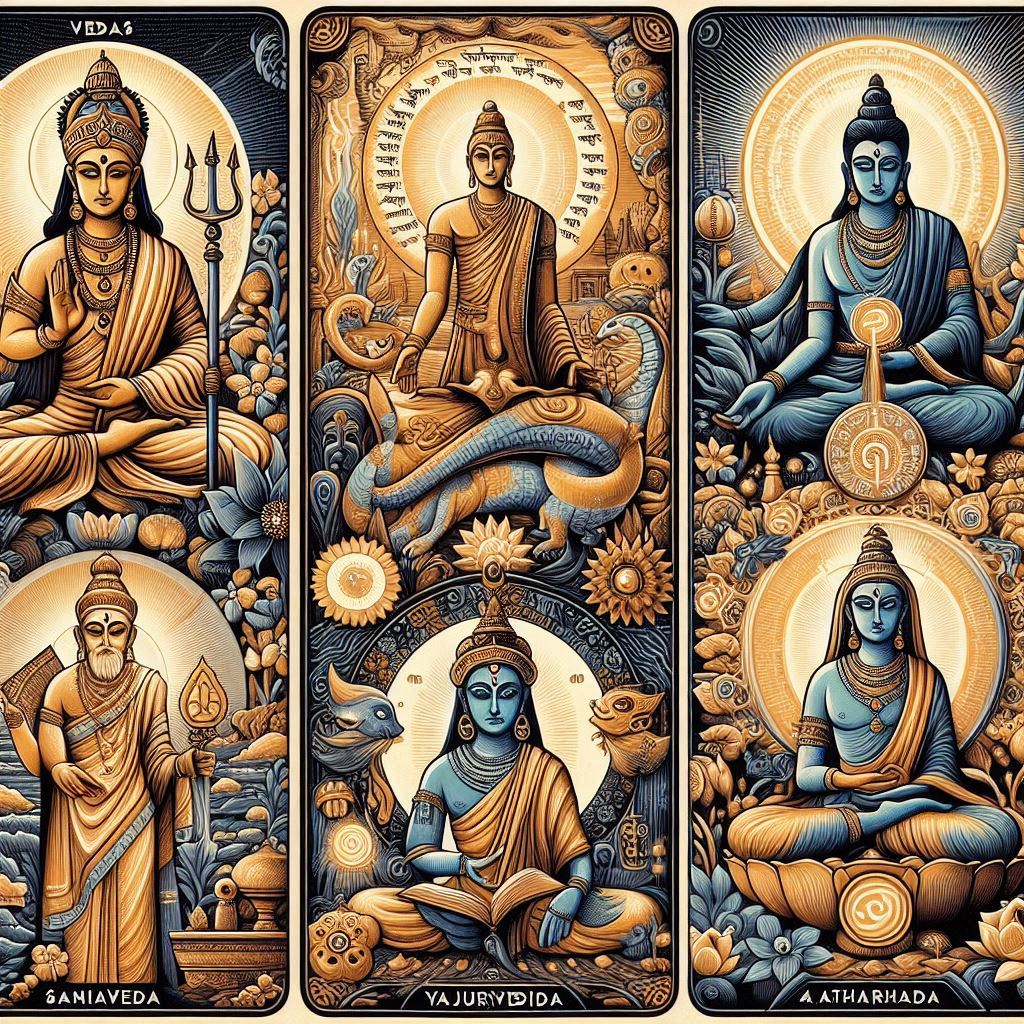
There are four Vedas and 108 Upanishads in Sanatan Dharma. The Vedas are considered to be the oldest religious texts. The four Vedas are as follows:
1. Rigveda
2. Yajurveda
3. Samaveda
4. Atharvaveda
These Vedas, as well as the Upanishads, are considered an important part of the Vedic literature. Profound philosophical and spiritual topics have been discussed in the Upanishads. Vedas and Upanishads are profound and ancient texts of Sanatan Dharma, in which the philosophical and religious principles related to life, universe, and ultimate truth have been described in detail
VEDAS (1,00,000 verses)
Divided & Organized into 4 Vedas by
Krsna Dvaipayana (Vedavyasa)
Whya Vedas .
1. Vedas:
The Vedas are considered as the most ancient and main texts of Sanatan Dharma. The Vedas are considered by the sages as “shruti” (knowledge gained by hearing. These were compiled by Maharishi Ved Vyasa. The purpose of the Vedas is to guide the four major goals of human life (Dharma, Artha, Kama, Moksha. This is Sanatan meaning that which has been going on continuously since time immemorial is in the real form, this is eternal
The four Vedas are as follows:
Rig Veda:
This is the oldest Veda and consists mainly of a compilation of richas (mantras) in the form of praise of the gods. It has around 10,552 mantras, which are used in the worship of various deities, prayers, and yajnas.
🔸Rigveda (21+ Shakhas)
▪️Available 1 Shakha
▪️Lost 20+ Shakhas
▪️Samhita
▪️Brahmana
▪️Aranyaka
Yajurveda:
It describes mantras and methods for sacrifices and rituals. It is divided into two parts: Krishna Yajurveda and Shukla Yajurveda. It mainly deals with ritualistic and ritualistic activities
Yajurveda (101+ Shakhas)
▪️Available 3-4 Shakhas
▪️Lost 97+ Shakhas
▪️Samhita
▪️Brahmana
▪️Aranyaka
Samaveda:
In this Veda, some mantras of Rigveda have been presented in musical form. It is seen by linking it with devotion and music. The mantras of Samaveda are used to accompany music in sacrifices and rituals.
Samaveda (1000+ Shakhas)
▪️Available 3 Shakhas
▪️Lost 997+ Shakhas
▪️Samhita
▪️Brahmana
▪️Aranyaka
Atharvaveda:
This Veda is slightly different from the other three. It describes mantras and methods related to witchcraft, medicine, healing, and social life. There are many mantras in it that throw light on all aspects of a person’s life
Atharvaveda (9+ Shakhas)
▪️Available 2 Shakhas
▪️Lost 7+ Shakhas
▪️Samhita
▪️Brahmana
▪️Aranyaka
The 108 Upanishads:

The Upanishads are called the last part of the Vedas or “Vedanta”. Their purpose is to clarify the search for enlightenment, Brahman, Atma, and the ultimate truth. The Upanishads mainly describe spiritual, philosophical and meditative topics. The doctrines of Vedanta are based on the Upanishads. Although the number of Upanishads is considered to be 108, some of the major and ancient Upanishads are as follows:
1. Total Shakhas: 1180
▪️10-15 Available
▪️Brahmanas
▪️Available 19-20
▪️Lost 1,111+
2. Samhitas :
▪️Available 9-10
▪️Lost 1,121+
3. Upanishads :
▪️Available 108
▪️Lost 1,023+
4. Aranyakas
▪️Available 7
▪️Lost 1,124
1. Ishopanishad:
It mentions the unity of the universe and the soul and considers the impermanence of karma and life.
2. Kathopanishad:
It is based on the dialogue of Yama and Nachiketa, explaining the mysteries of soul, death and salvation.
3. Mandukya Upanishad:
It analyzes the forms of Om and its three sounds. This Upanishad is a major source of Advaita Vedanta.
4. Chandogya Upanishad:
This Upanishad is related to the Samaveda and discusses in detail the Atman, Brahman and the methods of meditation
5. Brihadaranyaka Upanishad:
This is the largest Upanishad and considers the importance of the soul, rebirth, Brahman and knowledge.
Importance of Vedas and Upanishads:
The Vedas and Upanishads are the foundation of Indian religious, philosophical and spiritual traditions. These texts provide guidance on every aspect of human life, such as:
Spirituality:
The ultimate purpose of life is the union of the soul with Brahman (moksha), which is explained in depth in the Upanishads
Religion:
Duties and religious conduct have been described in the Vedas.
Yoga:
The path to purification and salvation of the soul is shown through meditation and yoga.
Karma:
The principle of karma and its consequences have been explained in detail in the Vedas and Upanishads.
Vedas and Upanishads are not only religious texts but also show the philosophical and spiritual path to understand and find solutions to the complexities of human life
Navgrah: Aspects of planetary constellation science:
What makes a good neighbor?
Transforming lives
aspects of planetary constellation science: Navagrahas
The science of planetary constellations, which we know as astrology, is an ancient science that studies the planets, constellations, and other celestial bodies located in the universe and analyzes their effect on our lives. Its history is thousands of years old and this science has been practiced in different cultures such as India, Greece, China, and the Mayan civilization.
1. Planets :
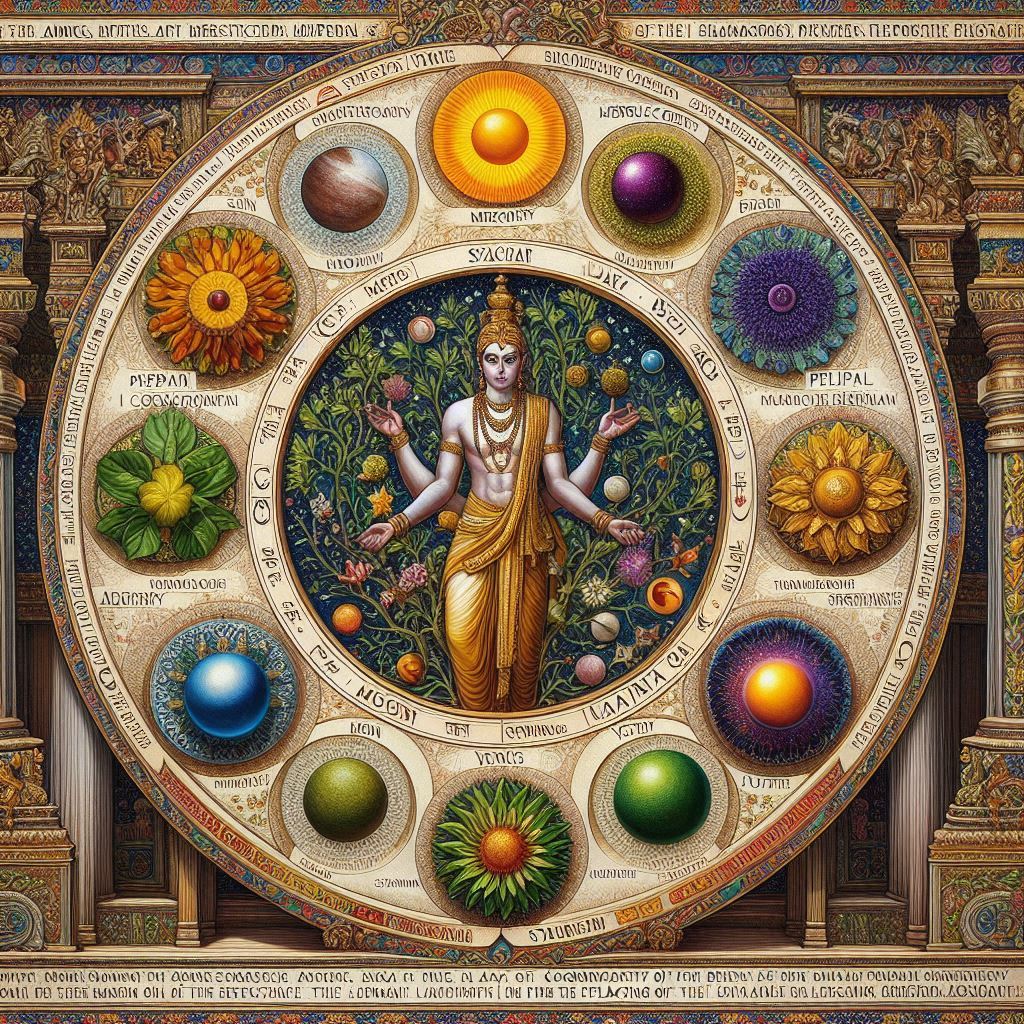
Planets are celestial bodies that revolve around the sun. There are nine main planets in Indian astrology, which are called ‘Navagrahas’:
Sun
– Moon
– Mars
– Mercury
– Jupiter
– Venus
– Saturn
– Rahu
– Ketu
2. Nakshatra:
Constellations are groups of stars located in the sky that form specific shapes. There are a total of 27 nakshatras in Indian astrology, which are divided by the monthly path of the moon. Each nakshatra has a ruling planet and it has a special effect on a person’s horoscope.
The zodiac is divided into 12 zodiac signs, and each sign is a segment of 30 degrees. These amounts are:
– Aries
– Taurus
– Gemini
– Cancer
– Leo
– Virgo
– Libra
– Scorpio
– Sagittarius
– Capricorn
– Aquarius
– Pisces
4. Birth Chart:
The birth chart is the chart of the positions of planets and constellations based on the birth time and place of a person. This chart is used to forecast various aspects of a person’s life such as health, career, marriage, offspring, etc. The birth chart is divided into 12 houses, and each house represents a particular area of life.
5. Planetary Movements:
The transit of planets means the movement of planets and their entry into different zodiac signs. The transit has a major impact on a person’s horoscope and brings changes in a person’s life from time to time.
6. Dasha :
Dasha and Antardasha show the period of planetary influence. The major Dasha system in Indian astrology is ‘Vinshottari Dasha’, in which the dasha of each planet lasts for a certain period.
7. Scientific Attitude:
Though astrology has an important cultural and religious aspect, it is not considered according to the norms of science. The principles of astrology have no scientific basis and cannot be proved in science. Nevertheless, its relevance and popularity remain based on cultural and personal beliefs.

8. Types of Astrology:
– Vedic Astrology:
Astrology is prevalent in Indian tradition.
– Western Astrology:
Astrology is prevalent in Western countries.
– Chinese Astrology:
The Astrology System Prevalent in China.
– Mayan Astrology:
The astrological system developed by the Mayan civilization.
9. Remedy:
In astrology, various remedies have been prescribed to reduce the malefic effects of planets, such as wearing gemstones, chanting mantras, donating, fasting, worshiping, etc. These remedies are aimed at reducing the negative energy of the planets and promoting positive energy. That which is in the universe is also in the body. From this point of view, the planetary constellations of the universe also affect the body.
The pulse related to the right voice is said to be influenced by the lunar element, such is also the experience of the yogis that for the auspicious effect of the planetary constellations, other methods like Havan, Mantra, Upasana and Navratna Ashta Dhatu Dharan, etc. have been described in our religious texts.
They have also been described in the Vedas, the relation of the planet located in the universe to the body is as follows. In the body, the representative soul of the Sun, the mind of the moon, the blood of Mars, the speech of Mercury, the knowledge of Jupiter, the semen of Venus, and the happiness of Saturn are related to sorrow. The effect of the planets in the universe reads on the body. If it is favorable to the month, it is good and if it is unfavorable, it has adverse effects on health and the body. Therefore, by making scientific discoveries in Sanatan Dharma, the sages have given such methods according to which we can avoid their evil effects and get good effects. Among the gemstones, the sun element in red ruby, the moon element in the pearl with white, yellow, and black light, the element of Mars in the coral, the element of Mercury in the green emerald, the element Jupiter in the topaz with a golden hue, the element of Venus in the white diamond and the element Saturn in the blue sapphire. Therefore, by wearing a gemstone compatible with the constellation related to that planet, it is described that by removing restlessness, illness, and disease related to it, strength and health can be obtained.
Similarly, in metals, gold, silver, copper, brass, bronze, mercury, and the elements of the Sun, Moon, Mars, Mercury, Jupiter, Venus, and Saturn reside. Which have auspicious effects. Due to the presence of the sun element in gold, it provides strong energy and longevity. (Atharvaveda 16/261) That is why, along with other names of Surya, it also has a name Hiranya.
There is a Moon in silver, and hence, its name is also Chandranti.
Copper has the element, Mars,
Mercury is a fact of Shuk, hence his name is also Rasendra.
Similarly Mercury in brass, bronze, and iron,
Jupiter and Saturn remain the elements
In this way, in vegetation also, Apamarg, Yak, Dak, Khair Sycamore, Peepal, and Kush have the qualities and influence of the Sun, Moon, Mars, Mercury, Jupiter, Venus, and Saturn. The same medicine is used for the fulfillment and compatibility of the element lacking in the body. By praying through the mantras of planet worship, we establish a relationship with them. In this way, based on gems, metals, medicines, and mantras, we can get the compatibility of the planets of the universe in the body, so the sages have considered it minutely and made it a part of religion for our welfare. The purpose of astrology is not only to predict but also to guide the individual towards self-knowledge and self-improvement. It is an ancient tradition that has helped determine the direction of people’s lives for centuries
THE COLOURS OF NAVGRAHA.
Colours of all Navgraha is mentioned in Bhavishya Puran Brahm Parva Chapter no 206.41–42 (श्वेतवर्ण स्मरेत्सोमं रक्तवर्ण कुजं स्मरेत् । सौम्यमष्टापदामं च गुरुं च पीतिवर्णकम् ॥४१ शङ्खक्षीरनिनं श्वेतं काणं याञ्जनसन्निभम् । रजावर्तनिभं राहूं धूत्रं च विकचं स्मरेत्।:४२)
1) Chandrama (Moon) – White colored
2) Mangal (Mars) – Blood colored.
3) Budhá (Mercury) – Blood and dark colored.
4) Brahaspati (Jupiter) – Yellow coloured.
5) Shukra (Venus) – Shankh or conch and Milk white colored.
6) Shani (Saturn) – Anjan like dark coloured.
7 & 8) Rahu and Ketu – Lajawart or Lapis lazuli blue colored.
9) Sun – The color of Suryadev is like the Japa (hibiscus) flower (Bhavishya Puran Brahm Parva 206.33 [जपावर्ण महातेजं ]).
Colors play a very important role in Sanatan Dharma. Many people wear clothes as per the color of Graha.
Need overall !
What could you try for the first time?
Lentent hit :

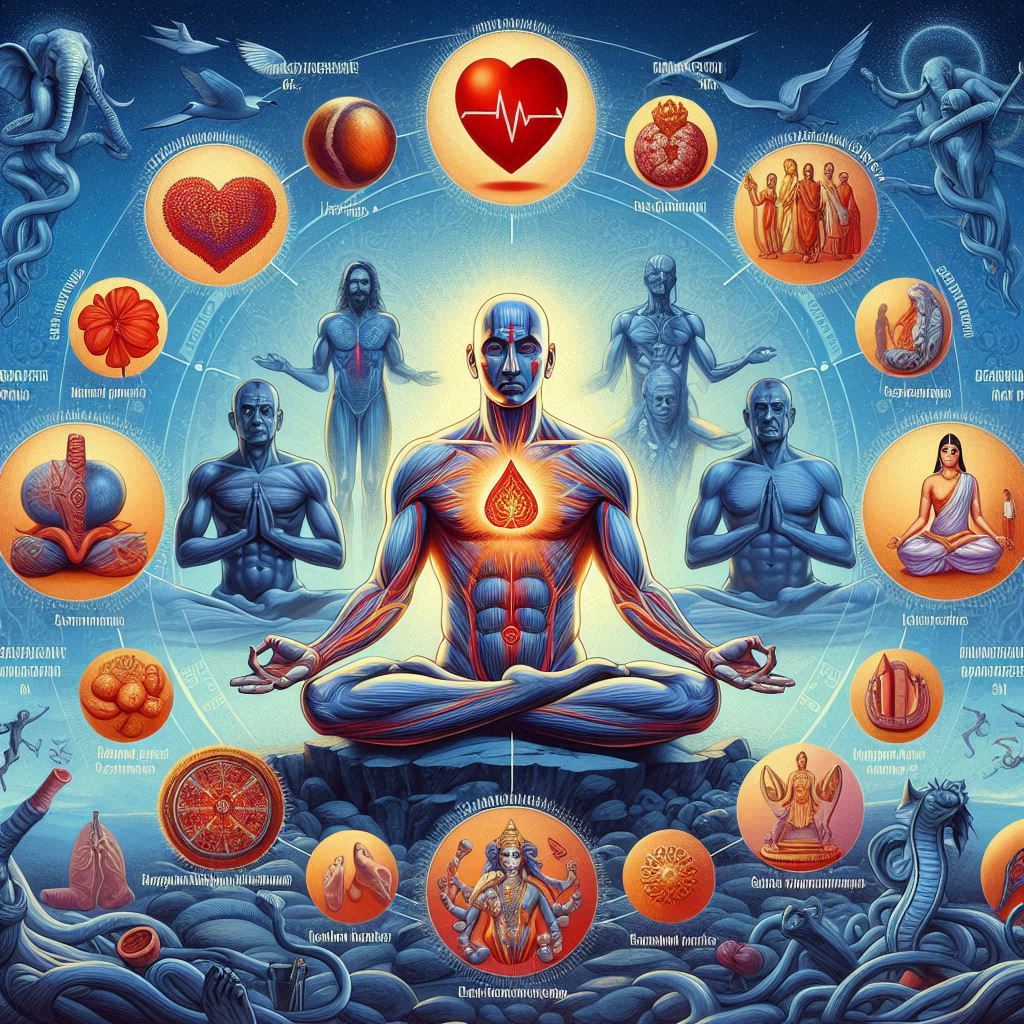
Due to stressful life in modern society, human beings are vulnerable to deadly diseases like high blood pressure, heart disease and cancer. Many diseases are destroyed by lifestyle improvement. Along with this, there is another easy solution, which does not have any side effects. You just need to do it regularly. This easy solution is the Gayatri Mantra, which has been tried for centuries. And nowadays it has also been put to the test of science.
1. If this mantra is read in any position i.e. while sitting, lying down or standing, then one gets equal benefit to
2. The mantra begins with the word Om- Pull the word Om as long as you can, without taking a breath. Draw the words “o” and “m” separately long.
3. After this, read or speak the remaining mantra as fast as you can with the correct pronunciation. Repeat the OM process every time. Keep repeating Om and Mantra continuously for five minutes.
4. Do this process every two hours for a month. In this way, do the awakening of a normal person 8 times in 16 hours. A total of 40 minutes are to be given in 24 hours.
5. After one month, the beneficial effect of this process will be seen. Now continue this process by doing it four times in 24 hours.
6. It is necessary to chant this mantra for five minutes at the time of getting up in the morning and at bedtime. After this, keep reciting this mantra regularly by fixing a fixed time only twice.
आत्मानं विद्धि”
Vasana Daha Tantra is a powerful spiritual practice rooted in the ancient wisdom of Bharat that aims to burn away the latent impressions (vasanas) accumulated from past experiences, desires, and karmic patterns. The term “Vasana” refers to the deep-seated tendencies and subconscious impressions that influence our thoughts, emotions, and actions. “Daha” means burning or purification, and “Tantra” signifies a structured method or practice. In essence, Vasana Daha Tantra is the process of purging or transforming these deep-rooted impressions, leading to liberation from mental and emotional conditioning, ultimately bringing one closer to spiritual enlightenment.
Process of Vasana Daha Tantra:

1. योगस्थ: कुरु कर्माणि = Self- realisation:
The first step involves deep introspection and awareness of one’s thoughts, desires, and behaviors. Through meditation and mindfulness, you identify the underlying patterns and attachments that are obstructing spiritual growth. As the Bhagavad Gita states, “योगस्थ: कुरु कर्माणि” — remain established in yoga while performing actions, staying aware of the forces at play.
2. आत्मानं विद्धि = Acknowledge and Accept:
Once the asanas are identified, the next step is to fully acknowledge their presence without judgment. Accept that these impressions are part of the karmic cycle, and they need to be transformed, not resisted. The acceptance phase draws from the Upanishadic wisdom, “आत्मानं विद्धि” (Know thyself), recognizing the self in all its layers.
3. Purification through Reflection :
This step involves deep contemplation on the harmful or binding nature of these vasanas. By reflecting on their impermanence and the suffering they cause, the seeker gradually detaches from their influence. In this phase, spiritual texts like the “Shvetashvatara Upanishad” guide the seeker to view desires as fleeting and not inherent to the true self.
4.सर्वे कर्माखिलं पार्थ ज्ञाने परिसमाप्यते”= Soul of Visualization:
A key technique of Vasana Daha Tantra is meditative visualization, where one mentally visualizes the vasanas burning in the fire of wisdom. The fire represents spiritual knowledge, often referred to as “Jnana Agni” (fire of knowledge). As stated in the Mundaka Upanishad, all actions are dissolved in the fire of wisdom.
5. तंत्र: Ritualistic Dissolution :
Engage in a ritual where you symbolically burn these impressions. This can involve the chanting of mantras, such as the powerful “Om Agnaye Namah” (Salutations to the fire element), while mentally offering the vasanas into an inner fire. This act strengthens the internal process of release and purification.
6. Affirmation of Liberation :
After the process of dissolution, affirm your liberation from the past tendencies. Repeat mantras like “सोऽहं” (I am That), affirming the unity of self with the divine consciousness. It reinforces the realization that you are beyond desires and karmic impressions.
7. तत्त्वमसि : Feel the infinite :
The final stage is integrating this newfound freedom into daily life. You move forward with a clearer mind and a lighter heart, no longer governed by old vasanas. The Chandogya Upanishad says, real, I remind you that the true self is infinite, pure, and free from conditioning.
Vasana Daha Tantra is a transformative spiritual practice that combines deep introspection, meditation, mantra, and ritual to dissolve the karmic impressions that bind us to the cycle of birth, death, and rebirth. By purifying these asanas, one can attain clarity, freedom, and a deeper connection to the divine. This method empowers the seeker to transcend habitual patterns and step into a higher state of consciousness, aligning with the true self eternal, blissful, and free.
Peaceful perspective: mindfulness for health.
What jobs have you had?
Food is not life
The most important thing that nature has put in the inner mind of all organisms is survival, meaning the first goal of all organisms is to survive, so we do everything necessary to survive and advance our consciousness with the subconscious mind, and when we do this work, a chemical is released in our brain which is called dopamine and this gives us happiness Is. Meaning Mother Nature has arranged that in whatever work we fulfill our minimum goal, we feel happy. Such as good food, music, etc.
Then the natural question arises that then why do we like such food which is more junk and unhealthy because it makes us sick, so it should not be natural
But no matter how hard we try, we plan the diet, and in the end, the mind keeps running behind the test. The reason for this is also our survival instinct because no matter how much material progress we have made, we are primitive humans who live in caves.
At that time after getting food, there was no guarantee of getting food the next time, and once the food came in front of him, he was forced to eat more and more because who does not know whether he could not get such food tomorrow or not and had to be hungry for many days, and at such times fat is most important because it keeps us alive in the lack of food. We also like sugar more for this reason because it gives us the energy to work immediately.
You can see the small child for this, how much trouble it is to feed him vegetables or something good, the same chocolate, candy, or junk food he likes the first time
But there is also a reason for this because you see that there is a war going on between Ukraine and Russia, there is a war against Israel and Palestine, and the availability of food has decreased due to the horrors of the war, no matter how much progress we have made, but only one bad event can take us back to the primitive age. And long lines for food and starvation can be forced to see the horrors of death.
So no matter how much progress we make materially, it is in our inner mind that if we do not get this food tomorrow, then eat it today, and all our diet plans become zero But what should we do now, and how to convince ourselves that now the quantity of food is available in abundance and we will not die of hunger.
For that, we have to raise our level a little which separates us from other animals, we have to convince ourselves that we have not come to this earth just to survive, our goal is very big. One way for this is Patanjali’s Yoga Sutra, which tells us that we can attain Godhood from the human body, and by moving on different levels, we can move out of the vicious cycle of survival and move forward on the path of self-welfare.
When we do pranayama and meditation, our consciousness gradually rises, then the system of the mind changes, and the pleasure that comes from good food or sex is automatically achieved manifold. Then external things do not affect it, that is why fasting, etc. was included in our traditions. So that we prepare ourselves slowly. If you consume the green leaves of peepal yourself in this series, then in a few days, as a result, the flow of electrical signals in your brain changes slightly, if you continue to progress in this way, then karmic bonds can also end, it supplies oxygen to the body It is not that one should meditate only for the attainment of God, it can also benefit in maintaining our diet plan, this is one of its many benefits. It is our journey from animality to humanity and tells us that our goal is not just to survive but to self-welfare, there are many ways to meditate, and you can choose from them according to you.
Bhagvat Gita said :

असंशयं महाबाहो मनो दुर्निग्रहं चलम्।
अभ्यासेन तु कौन्तेय वैराग्येण च गृह्यते।। 35।।
Sri Bhagavan said, “O Mahabaho! Indeed, the mind is fickle and difficult to be subdued, but O Arjuna, the son of Kunti! It is subdued by practice and detachment. So far, our efforts are on the surface and we try to stop the mind directly for not eating food or to leave a habit while the mind is not in your control
First of all, prayer –
1. Praying to God is the easiest and most suitable means, it increases the Sattva quality. The power of prayer is a tool that gives us inner strength.
2. Desi Indian cow should start consuming milk and ghee. This increases the Sattva quality.
3. Apart from this, the use of fruits and satvik food should be increased Whatever mantra you have received from the Guru, you should chant it or chant the name.
4. One should take 8 hours of sleep, but he should not take eight hours from twelve o’clock in the night to 8 in the morning, but try to get up by 6 o’clock, and slowly start getting up in Brahma Mahurat.
5. After that start doing pranayama and meditation, in pranayama, Anulom-Vilom, Bhastrika Pranayama can be done, after that meditation should be done. Start cow service, spend some time in the cowshed.
This will increase your Sattva quality. You can also start activities like donating to the deserving. Gradually, you will be able to balance sattvic qualities with your tamasic and majestic qualities
Lord Shiva: A Motivational Perspective on Spiritual Strength
Who would you like to talk to soon?
The Key to the Fullness of Life
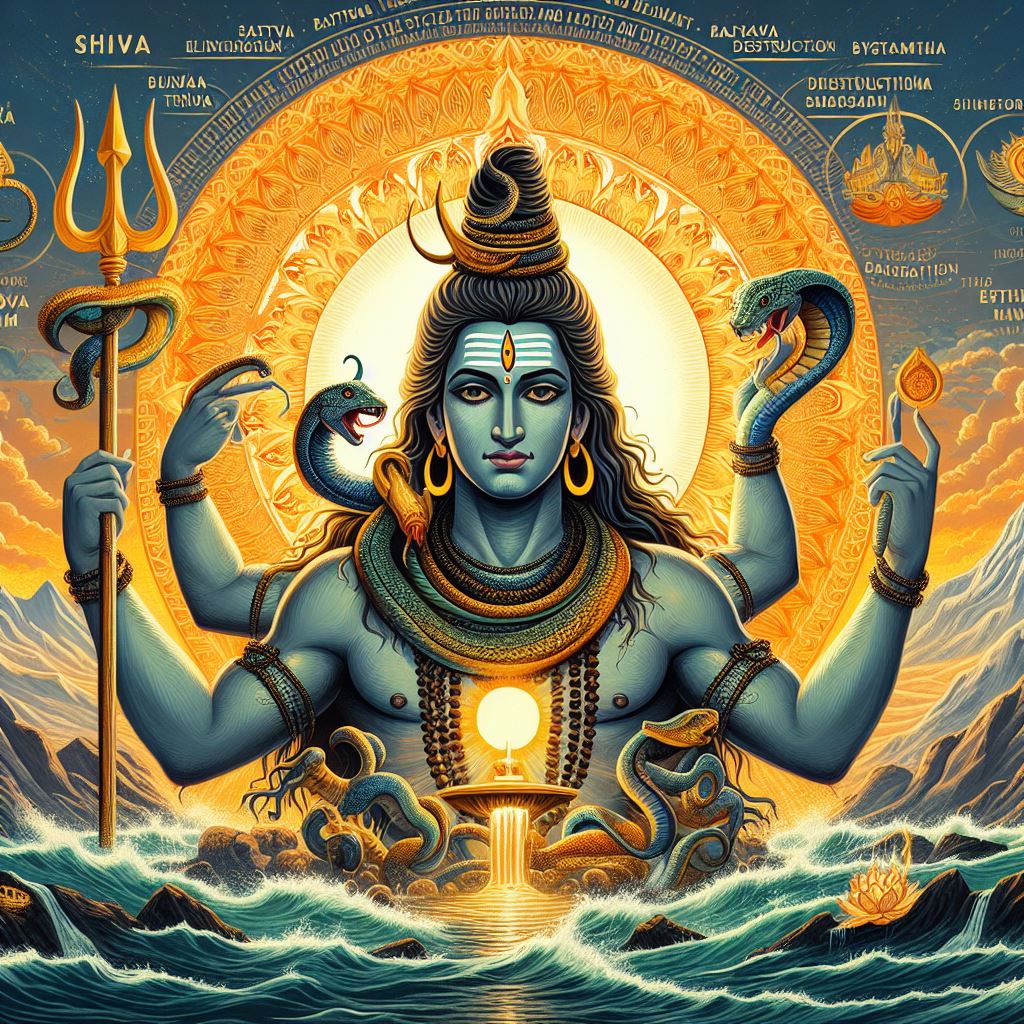
Lord Shiva has a special place in Indian culture and religion. He is not just a deity, but also a lifestyle, a philosophy, and a spiritual guide. Shiva is called Mrityunjaya, which means ‘beyond the last moment’. He is the god of destruction, which is necessary for the creation of the new creation. Surrender to them not only gives us satisfaction in material life but also paves the way for spiritual growth. The idea “Surrender to Shiva, and he will give you everything” is not just a religious statement, but a profound truth of life. Shiva means to join yourself, within your brain, there is a pea-sized pity gland and module whose form is similar to a Shivalinga and the serpent that is wrapped around Shiva is your speech. If you have control over your speech, then it is good, otherwise, it is also like some poison
Meaning of Shiva and His Symbolism:
Shiva means ‘benefactor’. They are Trinetradhars, whose third eye symbolizes knowledge, enlightenment, and destruction. They wear the serpent around their neck, symbolizing the cycle of life and death. Shiva’s damaru depicts the sound of creation and destruction, and the trident symbolizes three gunas – Sattva, Raja, and Tama. The Ganges flowing in their locks teaches us how to calm the difficulties and disturbances of life
Meaning of surrender to Shiva:
Surrendering to Shiva means renouncing one’s ego, selfishness,s and Maya and surrendering oneself to Shiva. This dedication is a symbol of deep faith and faith. When we offer our worries, sorrows, and joys at the feet of Shiva, we attain mental peace and contentment. This dedication helps us understand the truth of our lives and connects us to the true nature of our soul
Result of Dedication:
The most important consequence of surrendering to Shiva is that we go beyond material comforts and attain spiritual satisfaction. True reverence and devotion towards Lord Shiva make us get all the things that are necessary for our life. By the grace of Shiva, we get joy, peace, power, knowledge, and prosperity in life. He takes away all our sufferings and overwhelms us with His divine energy
Story: Shivabhakta Ravana
Ravana, who was a great Shiva devotee, pleased Shiva with his devotion and penance. Ravana performed rigorous penance to please Lord Shiva and eventually Shiva granted him a boon. This story teaches us that if we worship Shiva with a true heart and remain devoted to him, then Shiva fulfills us with all our wishes.
Ways to worship Shiva

1. Meditation and Yoga:
Remembering Shiva through meditation and yoga. It is an important step towards spiritual peace and self-realization.
2. Rudrabhishek:
This is a special puja in which water, milk, curd, ghee, honey, etc. are offered to the Shivalinga. This puja is very dear to Shiva.
3. Mahamrityunjay Mantra:
This mantra is chanted to bring peace, prosperity, and health to life. This mantra is a powerful medium to get the immense grace of Shiva.
4. Keeping your body healthy:
If you are on this earth, it is through your body. If your body system is healthy then Shiva will be happy in himself, you get complete knowledge of living life, it is necessary to understand every aspect of life
Incarnations of Bhagawan Shiva

1. Piplaad:
Helps devotees overcome Shani Dosha.
2. Nandi:
Considered an aspect of Shiva.
3. Veerbhadra:
Destroyed Daksha and his yagna.the fight between ego and real I
4. Bhairav:
Emerged during a fight between Brahma and Vishnu over superiority. Belong to creation and innovation.
5. Ashwatthama:
Born from the poison Shiva consumed during the Samudra Manthan, destined to kill oppressive Kshatriyas.
6. Sharabh:
Part bird and part lion.
7. Grihpati:
Born as the son of the Brahmin Vishwanar.
8. Rishi Durvasha:
Maintains universal discipline.
9. Hanuman:
Aided Shri Rama. This is the incarnation that is dedicated only to the Supreme Mighty Power
10. Brishabh:
Represents righteousness
11. Yatinath:
A peaceful form Journey of the inner soul.
12. Krishna Darshan:
Highlights the significance of religious rituals. Dedicate to love
13. Bhichhuwarya:
Protects all creatures.
14. Sureshwar:
Took the form of Indra to test a devotee.
15. Kiraat:
Tested Arjuna means surrender to Supreme Power.
16. Sunatnartak:
Asked for Parvati’s hand in marriage.
17. Yaksheshwar:
Removed false ego from the gods.
18. Avadhoot:
Crushed Indra’s arrogance. The meaning of surrendering to Lord Shiva is not just limited to religious rituals but it is a way of life, which leads us to freedom and liberation in the true sense. When we dedicate ourselves to Shiva in every aspect of our lives, we attain all the things that bring us perfection and contentment. Surrender to Shiva helps us understand the purpose of our lives and leads us to a deep, meaningful, and prosperous life
Version 2.0: The bugs of life do not affect me.
What is the legacy you want to leave behind?
Spirituality is beyond science: Divine Journey Towards the Real I”
मनस्वी म्रियते कामं कार्पण्यं न तु गच्छति।
अपि निर्वाणमायाति नानलो याति शीतताम्।।”
(श्रीमद्भागवत 2, 50)
A person or seeker who is endowed with self-power does not only fear physical happiness and unhappiness but tends towards self-realization, he does not wait for happiness and unhappiness. This verse conveys the importance of courage, patience, and decision in life. It means that a person who is endowed with self-strength is engaged in his tasks, accomplishes them, and inherits them, but he does not worry whether he will succeed in achieving his efforts or not. This verse has a message of inspiration and courage, which gives us the feeling of not being defeated by desires. This leads us to the point that like thought, we can motivate ourselves, and accumulating the power of faith can help us achieve our goals. The person who is endowed with self-confidence does not give up in any situation, but tends towards self-realization and is ready to face any kind of adversity
In a world often bustling with noise and distraction, the quest for inner peace and self-discovery has become a paramount pursuit for many. Amidst the chaos of everyday life, there exists a profound longing to reconnect with one’s true essence, to delve deep within and uncover the mysteries of the soul. This journey of self-exploration, known as Aadhyatm, transcends mere existence; it is a transformative odyssey that leads individuals toward profound spiritual awakening and enlightenment.
Aadhyatm is more than just a spiritual practice; it is a way of life a philosophy that seeks to unravel the intricacies of human consciousness and the cosmos. Rooted in ancient wisdom and timeless teachings, Aadhyatm invites seekers to embark on an inner pilgrimage, guided by the principles of introspection, mindfulness, and self-realization. Central to the Aadhyatm journey is the concept of “Atma,” or the soul the eternal, immutable essence that transcends the physical realm. Through practices such as meditation, yoga, and self-reflection, individuals endeavor to peel away the layers of ego and illusion, unveiling the radiant truth that lies at the core of their being. In this pursuit, the journey towards the soul becomes a sacred quest for unity with the divine—a journey towards wholeness, harmony, and liberation.
The path of Aadhyatm is as diverse as it is profound, encompassing a myriad of spiritual traditions, practices, and philosophies from around the world. Whether through the ancient wisdom of Vedanta, the mystical teachings of Sufism, or the contemplative practices of Buddhism, seekers are drawn to different paths, each offering a unique roadmap toward self-discovery and spiritual fulfillment.
Yet, regardless of the path chosen, the Aadhyatm journey is ultimately a deeply personal one—a voyage of inner exploration that transcends the confines of time and space. It is a journey that unfolds in moments of stillness and silence, as well as in life’s myriad experiences and challenges. It is a journey that requires courage, patience, and unwavering devotion a journey towards the deepest recesses of the heart, where the soul resides in eternal communion with the divine.
As individuals traverse the path of Aadhyatm, they may encounter moments of profound revelation, as well as moments of doubt and uncertainty. Yet, amidst the ebb and flow of their inner landscape, they remain steadfast in their commitment to self-discovery and spiritual growth. For in the journey towards the soul, every step taken, every obstacle overcome, becomes a sacred offering—a testament to the resilience of the human spirit and the infinite potential that lies within. Aadhyatm is not merely a destination to be reached, but a journey to be embraced a journey towards the deepest depths of our existence, where the light of the soul shines eternal. It is a journey of self-transcendence, of awakening to the infinite possibilities that lie within, and of realizing our innate connection to all of creation. As we embark on this sacred quest, may we be guided by the wisdom of the ages, the light of our inner truth, and the boundless love that permeates the universe.
Change the creation.
What’s something most people don’t understand?
Fear and you !!
Humans find opportunities even in circumstances according to time. And this is the mantra of success. Every challenge can be overcome by this principle. Life is to be beyond fear in life. Man’s journey is to do something on this earth, which he can get a worthy opportunity for his future generation as a good example. It is true that as human beings in this world, we should never consider anyone weak. Time and situation can change at any time. But this is also true if we live fearlessly with self-respect, then such a situation never comes, due to which we have to be afraid
Lord Shri Ram was never afraid of any kind of situation in his life but went ahead and respected the situation. Even if they have to face sudden adversity. And over time, the circumstances that were against them also adopted them. In any case, time is the most powerful, and change is its nature. No matter how many big demons he encountered, how to build a bridge over the sea, to keep the promises given to Sugriva and Vibhishana, Lord Rama remained relaxed and fearless in every situation. And he succeeded in making every big situation an opportunity
It was his personality that the smallest creature or the biggest creature bowed down before him by coming into his presence. His biggest characteristic was to control anger in his nature. They would have more trouble than problems when they saw someone worried. And he used to relieve her anxiety immediately with his sweet smile. Anyway, with whom Lord Rama himself is, what fear and concern in this life because Lord Shri Ram is the existence and he is the creation.
Are We Living In A Computer Program?
How has technology changed your job?
Simulation Hypothesis.
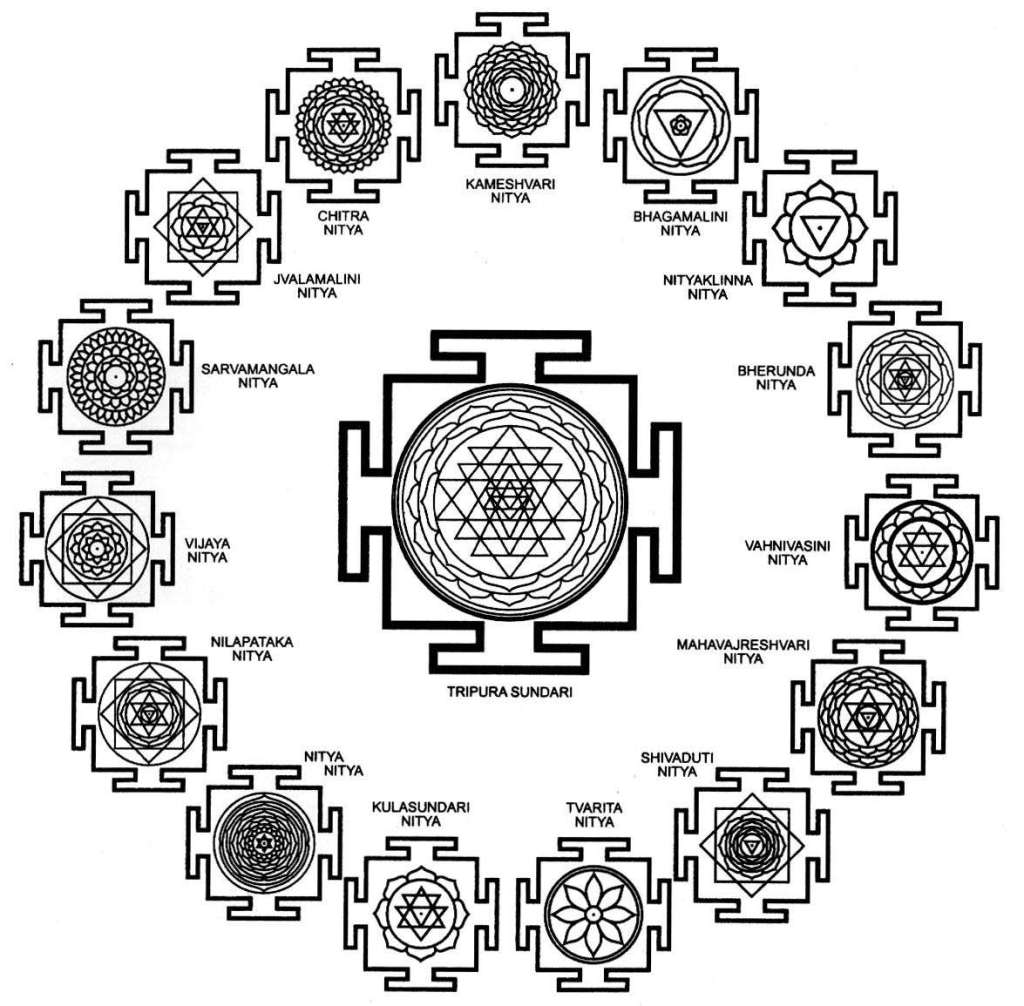
Man-made the image of the deity based on his imagination. For this reason, the picture of the form of the deities is different at each place. There are thousands of types of pictures of Ganesh, Lakshmi, Kali, Shiva, and Vishnu, there are thousands of types of idols. In Sanatan culture, tantra has special importance i.e. technology. Therefore, it has been clearly stated in Tantra Sadhana and Tantra Science that the literal form of any deity is the mantra and its form is the yantra.
Each instrument has some special lines, triangles, points, and circles. These three are present in every instrument and they are composed according to geometrical science. No line is crooked, nor are the sides of a triangle separated, and dots
Therefore, you can draw a picture of a deity based on your imagination, but the yantra is constructed only based on definite principles and calculations. After this, life is consecrated in it by special mantras, then that yantra is not a normal sketch but becomes a manifestation of power and divine energy. What is the secret behind this tantrokta creation? This is necessary to understand. Each point, triangle, and circle have an important place in tantra science.
The point is a drop but it is given a special place in the system because the sound is produced from the point and the sound symbolizes the sky element. If we look at our vision, everything in space appears to be a dot. Therefore, according to tantra science, the point is an indicator of entry, an indicator of a beginning. When a point is moved forward, a line is formed when it moves with a simple speed. The straight line represents the desireless sense of the point and in the desired state this line curves, forming a triangle.
Our Sanatan Tantra science believes in the truth that when there was nothing before the emergence of this world, then from where did the creation begin? Of course, it started from the point. The point is that when there was nothing, there was a point in the universe and when everything also dissolves into a point, the point is also the form of emergence and also the form of merger. From the starting point to the endpoint. That is why there was a lot of thought in the tantra texts whether the point is Shiva or the point is power. The conclusion was that the points are a form of power, and there is also a solid basis behind it
What is Simulation Theory?
Simulation theory says that we are all likely living in an extremely powerful computer program, directed by an entity outside of our physical comprehension and controlled by a superior being. It also means that humans are not real beings, but instead predetermined constructs of the digital world. The theory also suggests that the physical laws affecting our reality are algorithms, and what we experience, is created by the computational processes.
What does Sanatan’s Philosophy say about the Simulation theory?
Well, Sanatan philosophy gives many theories regarding the creation, out of which the two major theories are-
1. Nasadiya suktam- a creation that came out from formless, nirgun Brahman. (Already explained).
2. Purusha suktam- a creation which is created by the god (Swagun Brahman). If we go by the Purusha suktam it gives us a detailed idea about the simulation.
But it is just one aspect of Purusha suktam.
According to the Rig Veda 6.47.18-
रूपं-रूपं परतिरूपो बभूव तदस्य रूपं परतिचक्षणाय |
इ
न्द्रो मायाभिः पुरुरूप ईयते युक्ता हयस्य हरयःशता दश ||
Meaning- In every figure he has been the mode: this is his only form for us to look at. Indra assumes many form by his Maya.
Maya is something that doesn’t exist in reality but we all are bound to it, just like the simulation which we cannot see but our life is bound to it.
As per the Bhagavad Gita, 7.14-
दैवी ह्येषा गुणमयी मम माया दुरत्यया |
मामेव ये प्रपद्यन्ते मायामेतां तरन्ति ते ||
Meaning – “My lord ( bhagavan shree maha Vishnu) divine energy Maya, consisting of the three modes of nature, is very difficult to overcome. But those who surrender unto Me cross over it easily.”
According to the Atharva Veda 19.53.3, it states the universe, being a projection in space-time-
पूर्ण कुम्भोदिः काल आहितस्तं वै पश्यामो बहुदा नु सन्तः ।
A full pot has been placed in time and it is that which we see manifoldly.
Also, Brahma Samhita states that Bhagawan Maha-Vishnu reclines in the water of the ocean in a state called yoga-nidra. Thus, it is said that the universal creation is nothing but the dream of Maha-Vishnu. He is said to create and destroy innumerable universes in his dream. But, as we know creation and destruction are the two aspects of this universe. After the destruction, it is very difficult for any programmer to rewrite such a complex and huge program again and again. Hence, to prevent that one needs to have backup and the following mantra of Rig Veda gives us a clue regarding the backup-
सूरय्याचन्द्रमसौ धाता यथा पूर्वमकल्पयत् I
दिवं च पृथ्वीं च अंतरिक्षमथो स्वः II 10.190.3 II
Meaning- “The Ordainer created the sun and moon like those of previous cycles. He formed in order Heaven and Earth, the regions of the air, and light.” Going by scientific research, It was Nick Bostrom who is a Faculty of Philosophy, at Oxford University, published a research paper, “ARE YOU LIVING IN A COMPUTER SIMULATION?”, in 2003 and coined this whole simulation hypothesis.
His theory was also backed by elonmusk, @NASA when in a podcast with Joe Rogan, Musk said “If you assume any rate of improvement at all, games will eventually be indistinguishable from reality” before concluding “that it’s most likely we’re in a simulation. The biggest question here is whether every program is a set of codes and have we found any such codes that can back this hypothesis?
Interestingly, James Gates, an MIT graduate who has dedicated his life researching on string theory and simulation theory, claims that he has found such code. He claims that he has identified what appears to be actual computer code embedded in the equations of string theory that describe the fundamental particles of our universe.

You must be logged in to post a comment.