Ashwagandha as the Plant of Ketu

What TV shows did you watch as a kid?

Ketu and Ashwagandha

In Ayurveda, it is said that on this Earth, the only plant or herb considered “useless” is the one about which we lack knowledge. Ayurveda itself is regarded as an Upaveda of the Atharvaveda.

The Atharvaveda gives detailed descriptions of plants, their medicinal as well as astrological applications. Unfortunately, many plants are no longer correctly identified, but those that are known have proven and precise uses. While the proper therapeutic applications should always be guided by a qualified Ayurvedic physician, today, on Dakshinamurthy Ayurveda’s blog – Spirituality is Beyond Science, let’s explore the astrological and medicinal significance of Ashwagandha.

Ashwagandha is associated with Ketu, the planet that represents action and detachment. I often write that Rahu symbolizes illusion, thoughts, and desires, while Ketu represents the execution or manifestation of those thoughts into reality. In other words, Rahu is thought, Ketu is action.

So, when stress or other factors cause insomnia or restlessness, Ashwagandha helps calm Rahu’s confusion and supports Ketu’s grounding effect.


Traditional Practices with Ashwagandha

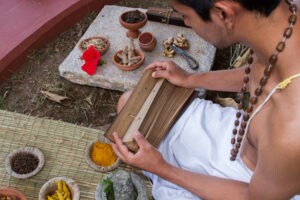
For insomnia and stress: Crush two fresh Ashwagandha leaves with your fingers, roll them into a small ball, and swallow with water.

For weight gain or general vitality: Those without weight concerns can take Ashwagandha root powder with milk, or consume Ashwagandha Pak. This is usually taken for 7 days, then paused for 7 days, and repeated as needed.


In Skin Diseases and Delayed Healing

The spread and complexity of disease cannot be assessed without understanding Rahu’s role. Rapidly growing or irregular cell behavior (such as in cancer), or wounds that resist healing, also fall under Rahu’s domain.

In such conditions, Ashwagandha leaf paste applied externally has shown benefit, especially in cases like skin disorders or diabetic foot wounds that heal slowly.


Other Classical Uses

Chronic fevers: A combination of Giloy (Guduchi) juice and Ashwagandha juice is traditionally used to bring down persistent fevers.

Insomnia & stress: When taken in appropriate amounts, Ashwagandha is one of the safest remedies, with no side effects.

Reproductive health:

In women, Ashwagandha is used in cases of Leucorrhea and irregular menstruation, often linked to the disturbed influence of Chandra (Moon) and Rahu.

In men, it helps with infertility, low sperm count, and poor sperm motility.


Spiritual and Astrological Note

Rahu’s illusions and expansions can only be balanced by Ketu’s wisdom. Therefore, during Ketu’s Mahadasha, Antardasha, or challenging transits, it is recommended to plant an Ashwagandha herb at home and nurture it. This act itself brings spiritual harmony.

At Dakshinamurthy Ayurveda Pvt. Ltd., we believe Ayurveda is not just a system of medicine but a living tradition that connects health, nature, and cosmic energies. As we often emphasize through our blog “Spirituality is Beyond Science”, true wellness is achieved when body, mind, and spirit are aligned.

⚠️ Disclaimer: The information above is meant for educational and cultural discussion. Always consult a qualified Ayurvedic practitioner before using Ashwagandha or any herbal medicine for health purposes.

🌿 Today’s Common Illnesses


In modern life, most people suffer from lifestyle-related illnesses:

Stress, anxiety & insomnia (caused by overthinking, work pressure, screen exposure)

Diabetes & hypertension (due to irregular diet, lack of exercise)

Low immunity (frequent infections, weakness)

Fertility issues in both men and women

Chronic fatigue & low energy


Ayurveda looks at these problems as imbalances in doshas (Vata, Pitta, Kapha) and weak immunity (Ojas).


🌱 Healing with Ashwagandha

Ashwagandha (Withania somnifera), also called Indian ginseng, is one of Ayurveda’s most powerful herbs.

How it helps today’s illnesses:

1. Stress & Insomnia → Ashwagandha calms the nervous system, reduces cortisol (stress hormone), and improves sleep quality.


2. Low Immunity → It strengthens Ojas (vital energy), helping the body fight infections.


3. Diabetes & Weak Healing → Supports better metabolism and faster wound healing.


4. Weakness & Fatigue → Acts as a natural rejuvenator (Rasayana), increasing strength and stamina.


5. Fertility Issues → Improves sperm count in men, balances hormones in women.


Ways to use (with Ayurvedic guidance):

Ashwagandha powder (Churna): 3–5 grams with warm milk before bed.

Ashwagandha tablets/capsules: Safer for daily use in measured doses.

Ashwagandha root decoction or leaf paste: For specific conditions (like wounds or skin problems).


⚠️ Always take under the guidance of a qualified Ayurvedic practitioner, since dosage and form vary depending on your health condition.


💊 The Challenge with Antibiotic Treatment

Modern antibiotics are lifesaving, but there are serious challenges today:

1. Antibiotic Resistance – Overuse and misuse of antibiotics cause bacteria to adapt, making infections harder to treat.


2. Side Effects – Antibiotics can disturb gut health, leading to acidity, diarrhea, and reduced immunity.


3. Short-term Relief, Not Root Cause – They kill bacteria but don’t strengthen the body’s natural defense system.


This is where Ayurveda offers a complementary path. Instead of just fighting microbes, herbs like Ashwagandha, Giloy, and Tulsi build inner strength (immunity), making the body less dependent on repeated antibiotic use.

Today’s illnesses mostly come from stress, poor lifestyle, and low immunity.

Ashwagandha is a powerful healer for stress, sleep, energy, immunity, and reproductive health.

The big challenge with antibiotics is resistance and side effects, while Ayurveda focuses on root cause + immunity building.

🌿 Ayurveda’s Approach vs Antibiotics


While antibiotics fight disease directly, Ayurveda builds internal defense and balance. Herbs like Ashwagandha, Giloy, and Tulsi support the immune system, reduce stress, and strengthen the body so it naturally resists illness.

This doesn’t mean Ayurveda replaces antibiotics in emergencies – but it offers a sustainable path to prevention and healing.

✨ Spiritual Insight

In Jyotish (Vedic astrology), Ashwagandha is linked with Ketu, the planet of grounding and wisdom. Just as Ketu stabilizes Rahu’s illusions, Ashwagandha stabilizes the restless modern mind. Planting an Ashwagandha at home and caring for it during Ketu’s Mahadasha or difficult transits is believed to bring spiritual harmony.

In today’s world of rising stress, lifestyle disorders, and antibiotic resistance, Ashwagandha stands as a timeless healer. At Dakshinamurthy Ayurveda Pvt. Ltd., we believe true wellness is achieved when body, mind, and spirit are in balance – a principle we share through our blog, “Spirituality is Beyond Science”.

👉 Explore Ayurveda, embrace Ashwagandha, and let nature restore your health.

⚠️ Disclaimer: This article is for educational purposes only. Please consult a qualified Ayurvedic doctor before using Ashwagandha or any herbal medicine.

Ayurveda Warn …

What’s your favorite recipe?

10 diseases in 2025

1. Diabetes (Madhumeha)

Modern Name: Type 2 Diabetes (Insulin resistance)
Ayurvedic Name: Madhumeha — “Sweet Urine Disease”

📜 “Pramehino madhuryāccha mehaḥ madhumehaḥ smṛtaḥ” — Charaka Saṁhitā

Ayurveda’s causes:

Overeating heavy/sweet foods

Excessive sleep & sedentary lifestyle

Weak digestive fire (Agni)

Lethargy (Tamas)
Ayurveda warned that diabetes is not just about sugar—it is a collapse of Agni, and an imbalance of Kapha + Vāta.


2. Autoimmune Diseases (Ama + Ojas Kṣhaya)

Modern Name: Lupus, Rheumatoid Arthritis, Psoriasis, MS
Ayurveda’s view:

Ama (toxic, undigested metabolic residue)

Ojas Kṣhaya (loss of vitality & immunity)


📜 “Amaḥ śarīre prakopayati doṣān” — Ama provokes doṣas & makes the body attack itself.

Science still struggles to find exact causes. Ayurveda already explained: disturbed digestion → toxins → immune confusion → body attacks itself.


3. Depression & Anxiety (Manas Roga)

Modern Name: Mental health disorders (serotonin imbalance)
Ayurvedic Name: Manas Roga

📜 “Rajas tamaśca manaso doṣāḥ” — Charaka Saṁhitā

Causes according to Ayurveda:

Excess stimulation (social media, stress)

Poor diet (junk, stale food)

Lack of spiritual connection

Suppressed emotions

Loss of Sattva (clarity & balance)

Ayurveda says: Heal the gut, senses, and soul together. A disturbed mind cannot be cured by pills alone.


4. Cancer (Arbuda + Granthi Roga)

Modern Name: Cancer (tumor formation)
Ayurvedic Name: Arbuda (immovable growth), Granthi (hard swelling)

📜 “Ekadeśasthāni māṁsāni granthibhūtāni jāyante” — Suśruta Saṁhitā

Causes described in Ayurveda:

Viruddha Āhāra (incompatible foods)

Suppressing natural urges

Chronic stress & grief

Genetic predisposition (Bīja Doṣa)

Ayurveda understood cancer as physical + emotional + karmic imbalance, not just a mutation of cells.


5. Asthma (Tamak Śvāsa)

Modern Name: Bronchial asthma (allergens, airway constriction)
Ayurvedic Name: Tamak Śvāsa — “Dark Breath”

📜 “Tamakaḥ śvāso vāyurdūṣitaḥ”

Causes:

Heavy/cold foods

Emotional suppression

Past trauma

Weak digestion (Agni disturbance)

Ayurveda saw asthma not only as lung disease, but as a cry of the soul struggling to breathe freely.


6. Obesity & Metabolic Syndrome (Sthūlatva)

Modern Name: Obesity, metabolic syndrome
Ayurvedic Name: Sthūlatva — “Excess growth due to Kapha imbalance”

📜 “Ati bhuktam guru snigdhaṁ sthūlatvaṁ janayanti hi” — Charaka Saṁhitā

Ayurveda explains:

Medo Roga — fat-related disorders

Blocked Srotas — clogged channels

Manda Agni — weak digestion

Obesity is not just fat—it is loss of metabolic intelligence.


7. Hypertension & Heart Disease (Raktagata Vāta + Hṛdroga)

Modern Name: High blood pressure, blocked arteries
Ayurvedic Name: Hṛdroga — heart diseases

📜 “Hṛdayasya vyādhayo doṣajāḥ” — Heart disease arises from disturbed doṣas.

Ayurveda’s view:

Vāta, Pitta, Kapha can all disturb the heart

Suppressed grief & broken rhythm → weak heart

Lifestyle & emotional disharmony → blocked Prāṇa


Modern medicine sees BP. Ayurveda sees broken inner rhythm.


8. Irritable Bowel Syndrome (Grahani Roga)

Modern Name: IBS
Ayurvedic Name: Grahani — “seat of Agni disturbed”

📜 “Grahani nāma agnith sthānam” — Charaka Saṁhitā

Symptoms:

Indigestion

Alternating constipation & diarrhea

Fatigue after meals

Mental dullness


Eating in stress, multitasking while eating, ignoring food rituals → weak digestion → IBS.


9. PCOS & Hormonal Disorders (Ārtava Duṣṭi)

Modern Name: PCOS, hormonal imbalance
Ayurvedic Name: Ārtava Duṣṭi — disturbed menstrual essence

📜 “Ārtavaṁ strīṇāṁ garbhahetuḥ” — Essence of fertility

Causes:

Stress & agitation (Rajas)

Cold, damp Kapha foods

Abuse of birth control

Ignoring seasonal routines (Ritu-caryā)

Ayurveda says: The womb is a sacred altar, not just a machine. Honor it with balance.


10. Chronic Fatigue Syndrome (Alasya + Ojokṣaya)

Modern Name: Chronic Fatigue Syndrome (CFS)
Ayurvedic Name: Alasya (fatigue) + Ojokṣaya (loss of vitality)

📜 “Alasyaṁ śarīrasya prāṇa hāni nimittam” — Fatigue = loss of life-force.

Symptoms:

Brain fog

Lack of drive

Weak digestion

Sleep not refreshing


Ayurveda calls it collapse of Agni + depletion of Ojas (vital essence).

Science is diagnosing these in 2025.
But Ayurveda diagnosed them thousands of years ago.

The difference?
Science gives names. Ayurveda gives solutions.

Ayurveda’s prescription for preventing disease:

Dinacharyā — Daily rhythm

Ritu Charyā — Seasonal living

Sattvic Āhāra — Conscious diet

Prāṇāyāma — Mindful breath

Sadvṛtta — Dharma-centered lifestyle


Your Rishis didn’t just want you to “treat” disease.
They wanted you to avoid it altogether. Dakshinamurthy Ayurveda Pvt. Ltd. carries forward this timeless wisdom, blending ancient healing with modern needs.


Don’t worry Solution is here !!

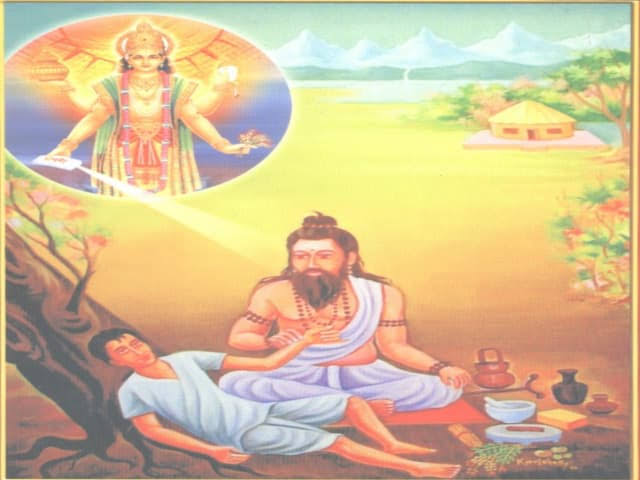
The Secret of the Sun’s Rays (Savitṛ’s Power) – Esoteric Wisdom, While Ayurveda spoke of disease and health, the Vedas went even deeper.
They described the Sun (Savitṛ) not only as a physical source of light but as the cosmic awakener of higher consciousness.

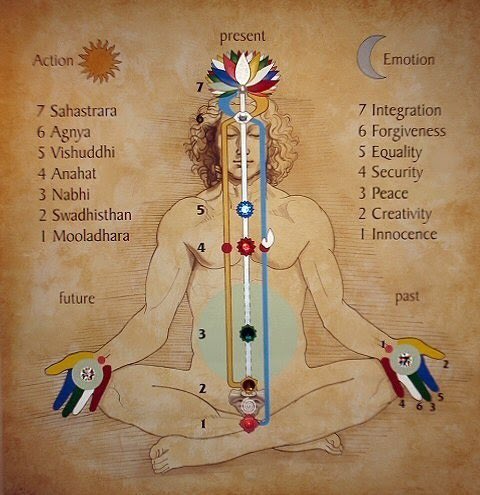
The Ṛgveda (1.115.1) speaks of the seven rays (sapta-aśva) of the Sun, the seven horses that pull Surya’s chariot. These are not merely beams of light, but sevenfold powers of cosmic energy that sustain both body and soul.

Esoterically, these seven rays correspond to seven layers of spiritual force:

1. Third eye light

The visible sunlight that nourishes the earth, supports plants, balances hormones, and drives the rhythm of life.

2. Inhale (Prāṇa Śakti)

The vital current that flows through all beings. Just as the Sun powers photosynthesis, it fuels our own prāṇa.

3. Focus on Chidakash (Buddhi Tejas)

The inner illumination of discernment, clarity, and wisdom. Sunlight awakens not just crops, but also our capacity to see truth.

4. Heart plexus (Manas)

The subtle link between human thought and divine intelligence. The Sun is called Manas-chakṣuḥ (eye of the mind) in the Vedas.

5. Intuition (Vijñāna)

Direct perception beyond logic, often associated with the third eye. This ray connects us to deeper knowing, the inner “Gayatri light.”

6. Sankalp (Icchā Śakti)

The creative power of manifestation, linked with Hiraṇyagarbha (the Golden Womb)—the cosmic source from which creation unfolds.

7. Pure Consciousness.

The formless, eternal radiance of Brahman itself. Beyond light and energy, it is the awareness that illumines everything.

📜 That is why the Gayatri Mantra is not just a prayer but an invocation of these rays:

“Tat Savitur Vareṇyaṁ Bhargo Devasya Dhīmahi Dhiyo Yo Naḥ Prachodayāt”

“We meditate on the divine radiance of Savitṛ (the Sun). May that light inspire and awaken our intelligence.”

Thus, in Ayurveda and Vedanta, health is not only freedom from disease.
It is alignment with these seven rays — balancing body, prāṇa, mind, intellect, will, intuition, and consciousness.


This is the eternal mission of Dakshinamurthy Ayurveda Pvt. Ltd. — to blend health with higher consciousness.

How you create your own reality.

Where did your name come from?

Understand your Energy 💪

Nadi Vigyan (Pulse Diagnosis): An Ancient Science of Ayurveda

Spirituality is Beyond Science

Ayurveda is not just about herbs and medicines—it is a complete science of life, deeply connected with body, mind, and spirit. Among its most mystical and powerful diagnostic methods is Nadi Vigyan (Pulse Diagnosis). This ancient practice reveals the hidden secrets of health, energy, and consciousness through the subtle rhythm of the pulse. At Dakshinamurthy Ayurveda Pvt. Ltd., we honor and preserve this timeless knowledge for holistic healing.


1. What is Nadi Vigyan?

Nadi Vigyan is the art of analyzing the pulse at the wrist. The Ayurvedic practitioner (Vaidya) observes the speed, depth, quality, and rhythm of the pulse to identify the balance or imbalance of the three doshas—Vata, Pitta, and Kapha.

Index finger (Vata): Governs movement, air, and nervous system.

Middle finger (Pitta): Governs metabolism, heat, and digestion.

Ring finger (Kapha): Governs structure, water, and stability. This subtle reading goes far beyond modern medical diagnostics—it connects the physical body with the deeper layers of mind and spirit.


2. Why is Pulse Diagnosis Important?

Nadi Vigyan is not limited to disease detection. It can reveal:

Health predictions – Identifying possible future illnesses.

Mental state – Stress, anxiety, and emotional well-being.

Life energy (Prana Shakti) – The strength of vitality and immunity.


3. Time, Gender & Seasonal Variations

Morning: Vata pulse dominates.

Afternoon: Pitta pulse dominates.

Evening: Kapha pulse dominates.

Men: Right wrist pulse is stronger.

Women: Left wrist pulse is stronger.

Seasons: Pulse slows in winter, quickens in summer. Even meditation and yoga influence the pulse—creating a slow, steady, and deep rhythm in spiritual practitioners.


4. Nadi Vigyan in Ancient Texts

Classical Ayurvedic scriptures like Charaka Samhita and Ashtanga Hridayam mention pulse science as an essential diagnostic tool. They describe how pulse rhythms can even indicate lifespan, vitality, and spiritual progress.


5. Nadi Vigyan & Ayurveda in Today’s Lifestyle

In today’s fast-paced, stressful world, lifestyle-related disorders such as diabetes, hypertension, anxiety, and obesity are rising at an alarming rate. Modern medicine often focuses only on symptoms, while Ayurveda addresses the root cause.

Balanced lifestyle: Nadi Vigyan helps identify imbalances early, guiding diet, exercise, and lifestyle changes.

Preventive care: Ayurveda emphasizes prevention rather than cure, making it highly relevant in today’s health-conscious society.

Mind-body harmony: Stress, digital overexposure, and irregular routines disturb natural rhythms. Pulse diagnosis helps restore balance between body, mind, and spirit.

Natural healing: Through herbs, diet, yoga, and meditation, Ayurveda strengthens immunity and improves vitality without harmful side effects.
Ayurveda and Nadi Vigyan are not just ancient sciences—they are essential companions for a healthy, balanced, and peaceful modern life.


6. Nadi Vigyan Today

Although modern science overlooks this method, Nadi Vigyan is still practiced widely in Ayurveda. It remains a powerful, precise, and holistic diagnostic approach in India, Tibet, China, and South India.

At Dakshinamurthy Ayurveda Pvt. Ltd., we believe that Spirituality is Beyond Science, and through Nadi Vigyan, we carry forward this wisdom to serve humanity with authentic Ayurvedic healing.

Nadi Vigyan is more than pulse diagnosis—it is a bridge between the seen and the unseen, the physical and the spiritual. It reminds us that health is not just about curing disease but about balancing the body, mind, and spirit.

Dakshinamurthy Ayurveda Pvt. Ltd. continues to uphold this legacy, bringing the light of Ayurveda into modern lives and helping people achieve true wellness in today’s stressful times.

Nadi Vigyan (Pulse Diagnosis): A Guide for Today’s Healthy Living

Spirituality is Beyond Science | Dakshinamurthy Ayurveda Pvt. Ltd.

In today’s fast-moving lifestyle, most people are struggling with stress, lack of sleep, poor digestion, obesity, and lifestyle-related disorders. While modern medicine often focuses on treating the symptoms, Ayurveda offers us a deeper wisdom: to understand and heal our body before disease even appears.
At the heart of this wisdom lies Nadi Vigyan (Pulse Diagnosis)—an ancient science that connects us to our inner rhythm and helps us maintain balance.

🌿 Importance of Nadi Vigyan in Today’s Life


1. Early Detection of Imbalances

Before disease manifests physically, imbalances in the three doshas (Vata, Pitta, Kapha) can already be detected in the pulse.

This makes Nadi Vigyan a preventive tool for health.


2. Stress & Mental Health Awareness

Our fast lifestyle creates constant stress and anxiety.

The pulse reflects the state of the mind—helping us recognize when we need rest, meditation, or self-care.


3. Guidance for Healthy Lifestyle

By knowing your pulse nature, you can adapt your diet, exercise, and daily routine according to your body’s needs.

Example: If Pitta is high, one should avoid spicy foods and prefer cooling foods.


4. Restoring Mind-Body-Spirit Balance

Nadi Vigyan reminds us that health is not just physical, but also mental, emotional, and spiritual.

✋ How to Connect with Your Own Pulse (Self-Diagnosis)


While true Nadi Vigyan requires years of practice and guidance from a trained Vaidya, you can still begin to listen to your own body through pulse awareness:

1. Sit Calmly – Rest for 5 minutes in a quiet place.


2. Place Your Fingers – Gently place the index, middle, and ring finger of your right hand on the left wrist (for women, right wrist; for men, left wrist).


3. Feel the Rhythm – Observe the speed, depth, and flow of the pulse.

Fast & sharp pulse → Indicates Pitta dominance (heat, acidity, irritability).

Slow & steady pulse → Indicates Kapha dominance (heaviness, lethargy, coldness).

Light & irregular pulse → Indicates Vata dominance (anxiety, dryness, weakness).


4. Observe Daily Changes – Notice how your pulse feels in the morning, afternoon, and evening. This builds awareness of your body’s natural rhythms.


5. Match with Lifestyle – If pulse shows imbalance, correct it with diet (Ahara), routine (Dinacharya), yoga, pranayama, or meditation.


🌏 Why It Matters Today

With rising cases of diabetes, hypertension, depression, obesity, and autoimmune disorders, learning to understand our body is more important than ever.

Nadi Vigyan + Ayurveda give us the tools to not just treat illness, but to prevent disease and create a balanced lifestyle.


At Dakshinamurthy Ayurveda Pvt. Ltd., we believe Spirituality is Beyond Science—and by practicing Nadi Vigyan, each person can take the first step in knowing their body and living a healthier, more conscious life. Nadi Vigyan is not just for doctors and vaidyas—it is for everyone who wishes to live in harmony with their own body. By learning to read the signs of your pulse, you can understand your doshas, energy, stress levels, and lifestyle needs—and take control of your health naturally through Ayurveda.

Wisdom surpasses knowledge.

Divine Sun : The Radiant Bridge Between Heaven and Earth


Ever wondered why ancient Rishis worshipped the Sun?
In the rich tapestry of Vedic wisdom, Surya Dev is far more than a celestial body. He is not merely the golden orb rising each day he is a symbol of the eternal light of consciousness, divine wisdom, and the spiritual force that sustains all life.

☀️ Surya: More Than Just the Sun

In Vedic thought, Surya is not just a physical phenomenon but a divine principle  a cosmic intelligence that brings knowledge, vitality, and illumination to the inner and outer worlds. The sun’s rays don’t just warm the earth; they awaken the soul. Just as the sun touches every leaf, river, and mountain, divine knowledge flows into us through:

❤️ Feelings & Intuition – A heart-level knowing beyond logic.

🧠 Logical Thinking – The clarity of reasoning and insight.

✨ Spiritual Wisdom – A higher understanding that transcends ego and thought.


The Three Radiant Forms of Surya

The Vedas describe Surya in three distinct yet unified forms:

1. 🌞 SURYA – The Great Illuminator
The one who reveals truth, dispels darkness, and awakens consciousness. Surya illuminates not only the outer world but the inner realm of our being.


2. 🌅 SAVITAR – The Divine Creator
The creative force behind all movement and life. Savitar is invoked in the Gayatri Mantra, the sacred hymn that seeks the awakening of higher intellect (buddhi).


3. 🌾 PUSHAN – The Nourisher and Increaser
The guardian of journeys, the bringer of growth — physical, mental, and spiritual. Pushan ensures safe passage through life’s paths, guiding the seeker to the truth.


The Rays of Surya: Divine Messengers of Light

In Vedic philosophy, the sun’s rays are not just streams of light — they are supramental energies that carry:

Revelation – Sudden flashes of truth

Inspiration – A divine stirring of the spirit

Intuition – Direct knowing without reasoning

Luminous Discernment – The ability to see clearly, beyond illusion . These are not ordinary mental functions, but the workings of Vijnana — the higher knowledge or Truth-consciousness described in Vedanta as Ritam.

Why We Need the Sun’s Help

Unlike the divine mind, which radiates truth naturally, our human mind is like a mirror — it can reflect truth, but it is not truth itself. We are limited by doubt, distraction, and duality. That’s why divine knowledge doesn’t flood us all at once — it arrives like the sunrise.

It begins with a faint glow, and gradually, light takes over the sky.

So too, our spiritual journey unfolds with effort, devotion, and inner purity. As we evolve, the light of Surya Dev shines brighter in our inner world, awakening deeper layers of wisdom.


In Closing: Salutations to Surya Dev

In the words of the Rig Veda:

> “Surya is the soul of all that moves and does not move.”
(Rig Veda 1.115.1)

The worship of Surya Dev is not just a ritual — it’s a profound reminder that divine knowledge is ever shining, waiting to be received by the seeking soul. Through practices like Surya Namaskar, Gayatri mantra, and daily inner reflection, we align ourselves with the eternal light.  Let us all become vessels for that light.
Let our lives reflect the wisdom, strength, and compassion of the eternal Surya within.

The Gayatri Mantra: Unlocking the Light of Savitar

ॐ भूर्भुवः स्वः। तत्सवितुर्वरेण्यं भर्गो देवस्य धीमहि।
धियो यो नः प्रचोदयात्॥


This sacred verse, known as the Gayatri Mantra, is a direct invocation to Savitar, the divine form of Surya who creates and illuminates all worlds.

Why Is It So Powerful?

1. It aligns our consciousness with divine light.
Chanting the Gayatri purifies the mind and opens the inner channels to receive Vijnana — the supreme truth-consciousness.


2. It awakens the intellect (buddhi) and inner wisdom.
“Dhiyo yo nah prachodayat” — we are literally asking the Divine Light to awaken and guide our thinking faculty toward truth.


3. It connects us with the Source of all creation.
By meditating on Savitar, the Creator, we harmonize with the universal rhythm of birth, sustenance, and transcendence.


4. It transcends religion and time.
Gayatri is not just for Hindus; it’s a universal prayer for enlightenment, balance, and realization.


Gayatri Mantra and the Sun’s Inner Light

The sun outside helps our eyes see — but the Gayatri mantra activates the sun within that helps our soul realize. That inner light dispels ignorance, ego, and fear.

With consistent chanting, this mantra acts like a spiritual switch, turning on the divine current within the seeker. Many saints and sages have confirmed that regular recitation brings clarity, peace, healing, and even supernatural intuition.


Surya is the soul of all that moves and does not move.”
— Rig Veda 1.115.1

The worship of Surya Dev and the chanting of the Gayatri Mantra is not superstition — it is a sacred science of awakening. Every sunrise is a reminder that no matter how dark life gets, the divine light is always rising. May we all become reflectors of that inner sun.
Let our thoughts be guided by Gayatri, and our path illuminated by Surya’s eternal light.

📵 Screen addiction: The Silent Killer of Human Health and Human Relationships

What’s your favorite game (card, board, video, etc.)? Why?

Screen phobia

How Excessive Screen Time is Killing Human Health this digital age, screens are everywhere—in our hands, homes, schools, and even temples. But this convenience has come at a cost. From depression to divorce, screen addiction is silently tearing apart our health, mind, and society.

Constant notifications = Stress & anxiety

Sitting long hours = Obesity & lifestyle diseases

Social comparison = Low self-worth

Addictive scrolling = No time to think clearly

Eye strain = Headaches & blurry vision


👁️ 2. Blue Light Dangers to Eyes

Blue light from screens:

Causes eye fatigue & headaches

Suppresses melatonin = poor sleep

May damage retina (long-term)


🧠 3. Loss of Thought Power and Confidence

Excessive screen use:

Destroys mental silence

Weakens decision-making

Creates dopamine dependency

Builds a false self-image → leading to low confidence

People no longer ask their own soul. They ask Google and Instagram reels.

4. Screen Addiction in Children (Age 2–10)

Age Recommended Use Actual Use Effects

2–5 Max 1 hr/day 3–4 hrs ADHD, speech delay
6–10 Max 2 hrs/day 5–6 hrs Aggression, mood swings
Children can’t sit quietly, can’t talk clearly, and can’t imagine deeply.

💔 5. The New Age Plague: Mental Health Crisis

Rising Problems Due to Screen Addiction:

Problem Root Cause Linked to Screen Use

😡 Anger & Irritability Overstimulation, lack of real human contact
😞 Depression Comparison, digital rejection, isolation
😔 Low Confidence Fake success online, body image pressure
🧍‍♂️ Loneliness & Isolation More followers, less real friends
💔 Divorce & Breakups Digital infidelity, lack of presence
🕯️ Suicide Cases Cyberbullying, hopelessness, mind fatigue

Social media is selling a fantasy life—causing people to hate their real one.

📉 Health is Dropping, Screen Use is Rising

📊 Graph: Screen Time vs Mental Health (2005–2025)

📈 Screen time has increased 800% since 2005

📉 Mental health, focus, joy, and emotional balance have declined

📱 Screen = fast pleasure, but long-term suffering


🧭  Mobile and Social Media: Tool or Trap?

Not all screen time is bad. The same mobile that destroys can also empower:

Divine Use Devil Use

Learning Vedic wisdom Scrolling toxic content
Ayurvedic & spiritual healing Promoting false body image
Meditation apps, AUM chanting Violence, reels, adult content
Self-development courses Gossip, trolling, cyberbullying


> Screen is a mirror—it shows your intent.


🌱. Brahmacharya: The Key to Control

Brahmacharya is not just celibacy—it means control over senses, mind mastery, and self-discipline.
When you reduce digital pleasures, you unlock:

Calmness

Confidence

Self-respect

Inner clarity

Purpose-driven action

📿 Through Ayurveda, meditation, nature, and mindful living, you can overcome screen addiction and rise in life.

Who Chooses?

Every day you wake up, you have a choice:

Scroll through illusions

Or build real life, real relationships, and real power


“You are not a robot. You are a soul. Choose wisely.”


✅ Suggested Categories & Tags for WordPress:

Categories:

Mental Health

Ayurveda and Modern Life

Child Wellness

Digital Addiction

Marriage & Relationships


Tags:
screen time, anger issues, depression, suicide awareness, digital detox, brahmacharya, social media harm, low confidence, child development, divorce, Ayurveda healing, mind control, meditation, mental peace


✅ Meditation
✅ Ayurveda
✅ Healthy lifestyle
✅ Yoga and positive habits
✅ And the healing support of Dakshinamurthy Ayurveda Pvt. Ltd.

🛡️ 9. How to Protect Yourself From Digital Damage

Even though screen time, social media, and tech overuse are harming our lives — you can take control and bring balance through time-tested practices.


🧘 1. Meditation: Cleanse the Mind

Meditation is mental cleansing, just like bathing is for your body.

Benefits:

Calms anger and impulsiveness

Increases focus and memory

Reduces anxiety and depression

Builds confidence and inner clarity

Helps detach from mobile addiction


📿 Start your day with just 10 minutes of deep breathing, mantra chanting, or AUM meditation.


🌿 2. Ayurveda: Heal Your Body and Mind Naturally

At Dakshinamurthy Ayurveda Pvt. Ltd., we combine ancient wisdom with modern health needs.

How Ayurveda helps:

Detoxifies the body with herbs

Balances your doshas (Vata, Pitta, Kapha)

Boosts immunity and energy

Restores mental peace with Rasayanas

Clears brain fog and improves digestion


💊 Our natural products like Sudarshan Lepam, herbal teas, and stress relief oils support mind-body harmony.


🧘‍♂️ 3. Yoga: Move Your Body, Still Your Mind

Yoga is not just exercise—it is meditation in motion.

Benefits of regular yoga practice:

Improves posture after long screen time

Enhances sleep and hormone balance

Boosts brain oxygen and clarity

Releases trauma stored in body

Builds patience, flexibility, and self-discipline


You can follow simple yoga-asana routines offered by Dakshinamurthy Ayurveda’s wellness advisors.


🍃 4. Healthy Lifestyle & Positive Habits

A good life comes from daily choices, not just therapy.

✅ Wake up early (Brahmamuhurta)
✅ Eat fresh, seasonal, sattvic food
✅ Avoid digital use 1 hour after waking / before sleep
✅ Spend time in nature, barefoot walking
✅ Read Vedic texts or spiritual books
✅ Limit social media to purposeful use only
✅ Practice Brahmacharya and simple living

These habits reconnect you with your soul and protect your energy from draining devices.


🌳 5. Dakshinamurthy Ayurveda Pvt. Ltd.: Your Wellness Partner

At Dakshinamurthy Ayurveda Pvt. Ltd., we offer:

🪔 100% natural and herbal wellness products
🧠 Mind-balancing formulas rooted in Vedic tradition
🧘 Guided yoga, meditation, and daily health routines
🌿 Lifestyle counseling to reduce screen addiction and stress
🕉️ A holistic approach to physical, mental, and spiritual well-being

> “We don’t just heal the body—we nurture the soul.”
You don’t have to be a victim of the digital world.
You can rise—stronger, calmer, clearer.

Through Ayurveda, meditation, yoga, and divine wisdom, you can choose a life of purpose, not distraction.

Let Dakshinamurthy Ayurveda Pvt. Ltd. walk with you on that journey.

Shumbhamkari kali : The Supreme Consciousness of Life and Longing

What is your career plan?

The Colorless Midnight: Sri Ramakrishna’s Journey

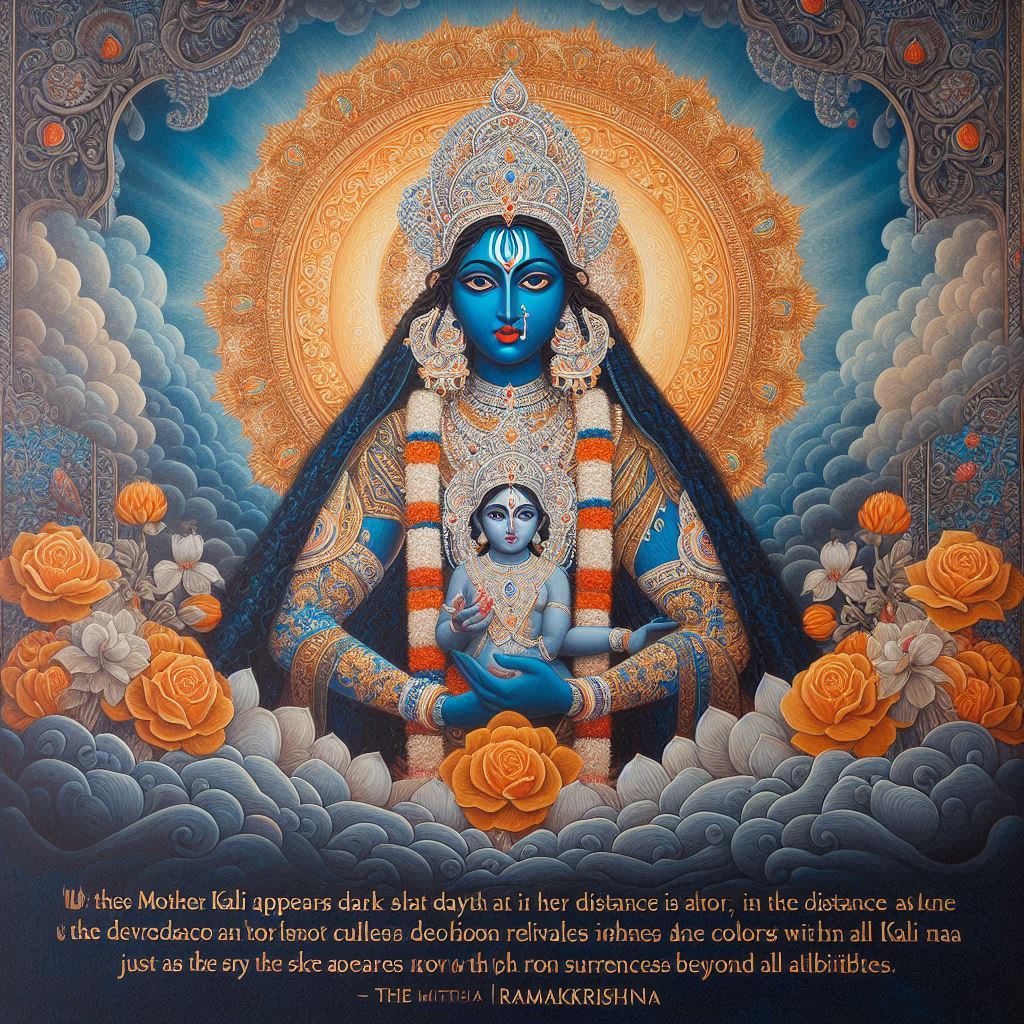
Kali Maa is more than a fierce deity, She is the embodiment of Ultimate Reality, Brahman itself. Though many see maa only as the goddess of destruction, She is also the loving Universal Mother, worshipped in countless forms. Sri Ramakrishna Paramahamsa, with tears streaming down his face, would often declare that his beloved Bhavatarini Kali of Dakshineswar was none other than the Supreme Brahman in motherly form. His divine visions and profound devotion led him to proclaim with childlike simplicity: “What the Vedas call Brahman, I call Mother.”

Though Tantra was widely practiced in Bengal during his time, Sri Ramakrishna cautioned against its misinterpretations. He emphasized pure Bhakti, selfless devotion as the surest path to Mother Kali’s embrace. For him, She existed beyond all dualities, being both the formless Absolute and the manifest universe, both Brahman and Maya simultaneously.

Sri Ramakrishna experienced Kali Maa in Her various aspects: as Maha Kali, the primordial power before creation, as gentle Syama Kali, who accepts worship in homes, as Raksha Kali, the divine protectress in times of danger, and as Smasana Kali, the fierce goddess of the cremation grounds who destroys all illusions.

His most illuminating teaching was that Mother Kali appears dark only from a distance, but in the intimate embrace of devotion, She reveals Herself as colorless beyond all attributes. Just as the sky appears blue from afar yet has no color when one is immersed within it. Sri Ramakrishna taught that to truly know Kali Maa, one must surrender completely at Her lotus feet. She is not merely a symbol but the living presence of love, power, and absolute truth. Through his life and ecstatic visions, he demonstrated that Mother Kali’s grace flows most abundantly to those who approach Her with the innocent trust of a child calling for its mother.

The Supreme Consciousness of Life.

Kali Maa is the MahaPrana (great life energy) that flows through everything. She represents our deepest wish to live forever, which isn’t just human arrogance, but a fundamental part of our soul’s connection to supreme consciousness.

Kali Maa embodies our most profound longing, to love everything and feel connected to all of life’s supreme consciousness. She is the hidden force behind our desires, always pushing us to seek something more meaningful. When we feel unhappy or restless with what we have, it’s Kali Maa’s ascending force working to expand our understanding and take us beyond our current limits. Her energy is like a gentle but powerful current of that moves us towards deeper experiences. She helps us see that there’s always something more beautiful and profound waiting to be discovered, encouraging us to grow, transform, and reach for a higher understanding of life’s supreme consciousness.

The Golden Paralyzer: Das mahavidyas the key of beyond Transformation

What do you do to be involved in the community?

Nature’s Everyday Wisdom

The Mahavidyas reveal themselves in the simple, everyday aspects of nature that we all experience. Here’s how each goddess works in ways we can easily observe and relate to:

1) Kali Maa-

works like seasonal change. Just as autumn strips trees of their leaves, making way for new growth in spring, Kali reminds us that endings are necessary for beginnings. When a garden needs pruning to grow stronger, that’s Kali’s wisdom at work.


2) Maa Tara-

acts like a mother bird protecting her nest. She appears in the way plants heal their wounds, in how our skin repairs itself after a cut, and in how communities come together after disasters to rebuild. She is nature’s nurturing response to harm.


3) Maa Tripura Sundari-

shines in life’s perfect designs, the symmetry of a butterfly’s wings, the perfect spiral of your ear, the hexagonal honeycomb that wastes no space. She shows us that beauty in nature is also practical.


4) Maa Bhuvaneshwari-

works like the air we breathe, connecting all living things in an invisible exchange. She’s present when bees pollinate flowers, creating fruits we later enjoy, showing how each creature’s actions affect countless others.


5) Maa Bhairavi-

functions like the heat that transforms raw ingredients into a nourishing meal. She’s the fever that burns away infection and the challenging life experiences that, though difficult, make us stronger and more adaptable.


6) Maa Chinnamasta-

operates like a mother nursing her child, giving of herself to nourish others. She’s visible when a fallen apple decomposes, feeding the soil that will grow new trees, demonstrating how one life form sustains another.


7) Dhumavati Maa-

works like composting, breaking down what’s no longer useful. She’s present when old leaves break down into rich soil and when outdated ideas make way for fresh perspectives, showing how apparent loss creates new resources.


8) Bagalamukhi Maa-

acts like the pause between heartbeats or the moment of stillness before you speak. She governs the dormancy of seeds in winter that ensures they sprout at the right time, teaching us the power of perfect timing.


9) Matangi Maa- 

moves like a sudden summer storm that disrupts plans but waters gardens. She appears when a fallen tree creates a sunny gap in the forest where new species can grow, showing how unexpected changes create new opportunities.


10) Maa Kamala-

blossoms like a community garden overflowing with vegetables to share. She’s present in the abundance of fruits on a healthy tree and in the generosity of nature’s harvest, demonstrating that true wealth comes through sharing and circulation.

Bhagalamukhi’s : Silent Power of Transformation

Among Dasmahavidhyas, Mata Baglamukhi stands as the mesmerizing force of stillness. While her divine sister Tara embodies the vibrant power of the spoken word and the sacred sound OM, Baglamukhi represents the profound impact of silence and immobility. Baglamukhi essence lies in her ability to freeze negative patterns rather than destroy them. Unlike Chinnamasta who cuts through impurities with lightning energy, Baglamukhi immobilizes our destructive tendencies, holding them motionless for examination. She shatters the ego’s foundations and halts the endless stream of deceptive thoughts, creating the perfect conditions for true self inquiry.

Like a strategic warrior queen wielding her mighty vajra, she grants mastery over our wildest thoughts and sensory distractions. Her ultimate gift is liberation from material attachments through complete mental stillness, eliminating inner conflicts, dissolving confusion, and entrancing us with the hypnotic allure of spiritual wisdom.

The universe will reflect that back to you.

You have three magic genie wishes, what are you asking for?

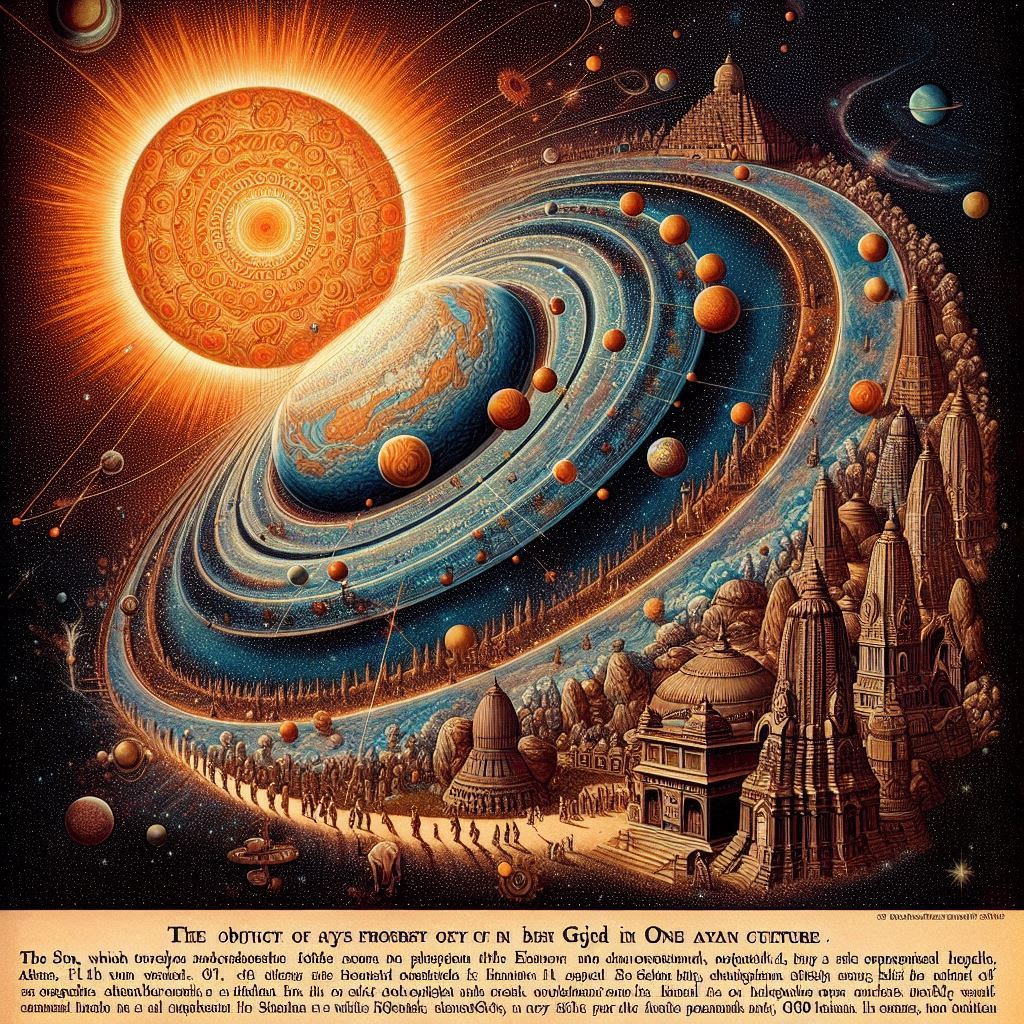
Speed of Sun = 2000 yojanas + 2 kos (Asha yojana) per moment .


The Sun, which travels a distance of nine crores fifty-one lakh yojanas in one Ahoratri at such a rapid speed, is considered to be God in Sanatan culture. No object in this galaxy remains unreasonable; it is the foremost duty of every human being to respect them. One thing is clear from the description so far: the expansion of the solar system is nine crores and fifty-one lakh yojanas, and the orbital path of the earth is also the same. The Earth completes this distance in one Samvatsar, and the Sun completes this distance in one Ahoratra. The speed of the Sun is 20005 Yojanas per moment and the speed of the Earth is 26055 Yojanas per day.

Each body (mah) has two spines… 1 axial spine, and 2 revolution spines.

Each month rotates around its axis and moves bently, walking on a circuitous path. This inclination is considered by modern scientists to be 23 degrees. Just as the Earth has two spines, the Sun has two spines. The Sun rotates on its axis and completes one cycle in one Ahorattra, i.e. 9,51,00,000 yojanas. The Sun moves on its rotational path and revolves around the pole, taking one cycle to complete a cycle. These are the two spines of the Sun. Similarly, Dhruva also has two Meru. All the bodies are comprised of pairs of meru. Thanking these bodies is an important task. 

1.  The backbone that supports the structure of the body. It is also called the spinal cord.

2.  The life cycle of a living entity is also the journey from birth to death. Every living thing, every sun, constellation, star, and moon, is connected by two spines.

It’s a season. Ritaye Namah. Why does the sun move? Why does the earth collapse? Why does it spin? Walking is the sun’s destiny. It is the nature of the earth to revolve. Rotation is the destiny of the planets. The destiny which is narrated through the medium, the same destiny has also tied the planets. Everyone has an activity. They have an impact on mankind. The mood disposition is based on this object

The sun is moving, the earth is moving. They are all God. If the Lord does not act, how can the living entity be engaged in Kriya? Instinct is life. Retirement is death. God is a living being active. Therefore, nature has the status of a mother. Self-actions are religions. Acting according to one’s nature is Swadharma. Nature is pre-attained, from birth, from past birth, from destiny. Disposition cannot be changed. Nature is strong. It is our welfare to do natural actions. There is success in natural actions. Therefore, one should be engaged in natural action.

True infinite

यतः प्रवृत्तिः भूतानां येन सर्वमिदं जगत् ।

स्व कर्मणा तमभ्यर्च्य सिद्धि विन्दति मानव ॥

(गीता १८/४६)

We have our origin from the earth, we have our origin from us. The sun is the earth from the earth, the sun rises from the sky element and the sun is self-evident. Therefore, the sun rotates on its axis and performs its work, and sadhana, the pole traveling in its orbit, worships the sky. The earth worships itself while traveling on its axis and also worships the sun dancing around the sun. We worship ourselves in samadhi (suptatastha) and worship the five bhutas through daily activities. In doing so, the opening of the Surya Siddha, i.e., Anahad Chakra and the flow of infinite love, is a pleasant experience of spiritual life. There is a ritual of sadhana in the root of the earth element, which is the place of Lord Ganesha. Our Lord is the soul (Sun). The Lord of the Sun (Jyoti) is the sky (void. That is why it is said to be ego emptiness. I have very little capacity to put into words this universe and this beautiful Mother Nature.

On reaching the Supreme Stage, the yogi realizes that He is his own God. The goal of everyone’s life is to know oneself and believe in God. The sun is worshipping itself; the earth is doing its sadhana, which is based on tolerance. The creature is meditating. All are self-centered. This self-center is tied to some other center. The second is also tied to a third. Third, there is no end to a fourth, and so on. To make ends meet, we consider someone who is not bound by anyone. Therefore, Shiva is infinite

Navgrah: Aspects of planetary constellation science:

What makes a good neighbor?

Transforming lives

aspects of planetary constellation science: Navagrahas

The science of planetary constellations, which we know as astrology, is an ancient science that studies the planets, constellations, and other celestial bodies located in the universe and analyzes their effect on our lives. Its history is thousands of years old and this science has been practiced in different cultures such as India, Greece, China, and the Mayan civilization.


1. Planets :

Planets are celestial bodies that revolve around the sun. There are nine main planets in Indian astrology, which are called ‘Navagrahas’:

Sun

– Moon

– Mars

– Mercury

– Jupiter

– Venus

– Saturn

– Rahu

– Ketu

2. Nakshatra:

Constellations are groups of stars located in the sky that form specific shapes. There are a total of 27 nakshatras in Indian astrology, which are divided by the monthly path of the moon. Each nakshatra has a ruling planet and it has a special effect on a person’s horoscope.

The zodiac is divided into 12 zodiac signs, and each sign is a segment of 30 degrees. These amounts are:

– Aries

– Taurus

– Gemini

– Cancer

– Leo

– Virgo

– Libra

– Scorpio

– Sagittarius

– Capricorn

– Aquarius

– Pisces

4. Birth Chart:

The birth chart is the chart of the positions of planets and constellations based on the birth time and place of a person. This chart is used to forecast various aspects of a person’s life such as health, career, marriage, offspring, etc. The birth chart is divided into 12 houses, and each house represents a particular area of life.

5. Planetary Movements:

The transit of planets means the movement of planets and their entry into different zodiac signs. The transit has a major impact on a person’s horoscope and brings changes in a person’s life from time to time.


6. Dasha :

Dasha and Antardasha show the period of planetary influence. The major Dasha system in Indian astrology is ‘Vinshottari Dasha’, in which the dasha of each planet lasts for a certain period.

7. Scientific Attitude:

Though astrology has an important cultural and religious aspect, it is not considered according to the norms of science. The principles of astrology have no scientific basis and cannot be proved in science. Nevertheless, its relevance and popularity remain based on cultural and personal beliefs.


8. Types of Astrology:

– Vedic Astrology:
Astrology is prevalent in Indian tradition.

– Western Astrology:
Astrology is prevalent in Western countries.

– Chinese Astrology:
The Astrology System Prevalent in China.

– Mayan Astrology:
The astrological system developed by the Mayan civilization.

9. Remedy:

In astrology, various remedies have been prescribed to reduce the malefic effects of planets, such as wearing gemstones, chanting mantras, donating, fasting, worshiping, etc. These remedies are aimed at reducing the negative energy of the planets and promoting positive energy. That which is in the universe is also in the body. From this point of view, the planetary constellations of the universe also affect the body.
The pulse related to the right voice is said to be influenced by the lunar element, such is also the experience of the yogis that for the auspicious effect of the planetary constellations, other methods like Havan, Mantra, Upasana and Navratna Ashta Dhatu Dharan, etc. have been described in our religious texts.

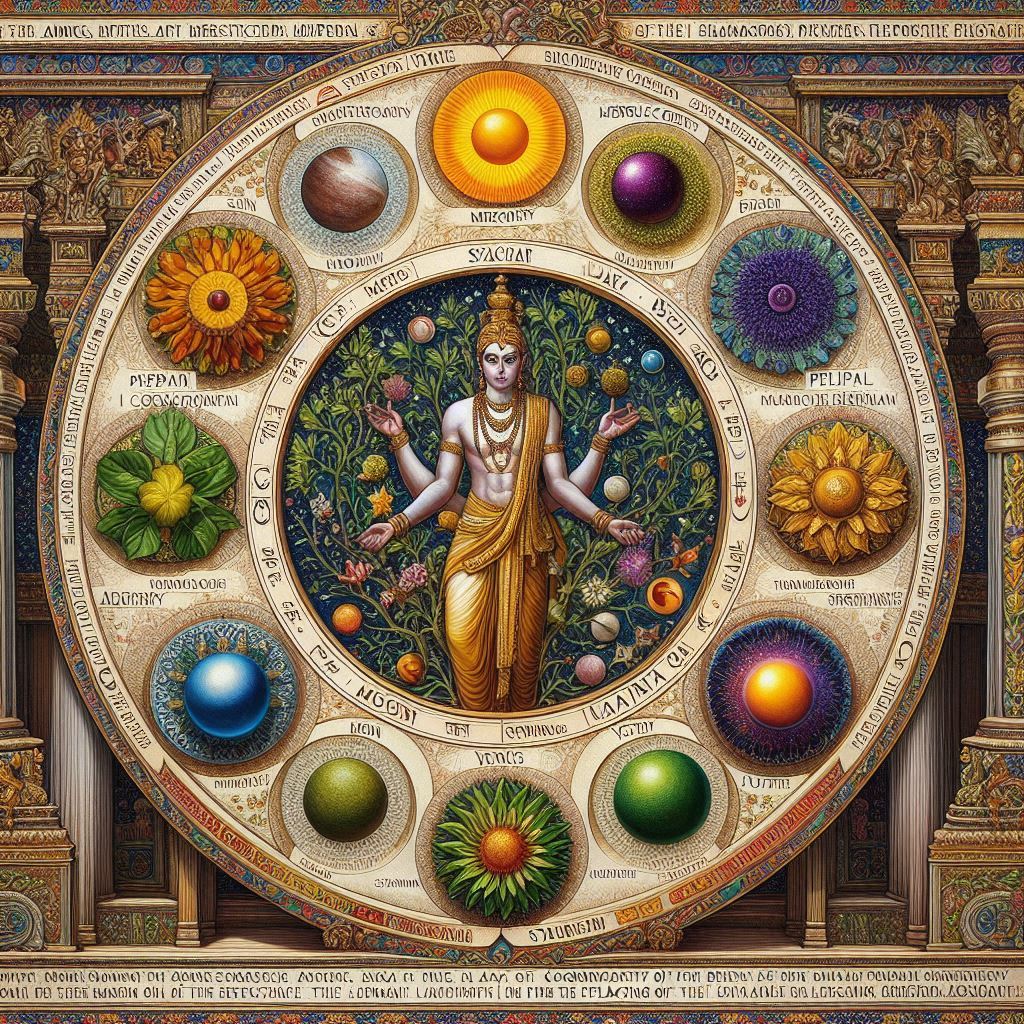
They have also been described in the Vedas, the relation of the planet located in the universe to the body is as follows. In the body, the representative soul of the Sun, the mind of the moon, the blood of Mars, the speech of Mercury, the knowledge of Jupiter, the semen of Venus, and the happiness of Saturn are related to sorrow.  The effect of the planets in the universe reads on the body. If it is favorable to the month, it is good and if it is unfavorable, it has adverse effects on health and the body.  Therefore, by making scientific discoveries in Sanatan Dharma, the sages have given such methods according to which we can avoid their evil effects and get good effects.  Among the gemstones, the sun element in red ruby, the moon element in the pearl with white, yellow, and black light, the element of Mars in the coral, the element of Mercury in the green emerald, the element Jupiter in the topaz with a golden hue, the element of Venus in the white diamond and the element Saturn in the blue sapphire. Therefore, by wearing a gemstone compatible with the constellation related to that planet, it is described that by removing restlessness, illness, and disease related to it, strength and health can be obtained.


Similarly, in metals, gold, silver, copper, brass, bronze, mercury, and the elements of the Sun, Moon, Mars, Mercury, Jupiter, Venus, and Saturn reside. Which have auspicious effects.  Due to the presence of the sun element in gold, it provides strong energy and longevity. (Atharvaveda 16/261) That is why, along with other names of Surya, it also has a name Hiranya.

There is a Moon in silver, and hence, its name is also Chandranti.

Copper has the element, Mars,

Mercury is a fact of Shuk, hence his name is also Rasendra.

Similarly Mercury in brass, bronze, and iron,

Jupiter and Saturn remain the elements

In this way, in vegetation also, Apamarg, Yak, Dak, Khair Sycamore, Peepal, and Kush have the qualities and influence of the Sun, Moon, Mars, Mercury, Jupiter, Venus, and Saturn. The same medicine is used for the fulfillment and compatibility of the element lacking in the body. By praying through the mantras of planet worship, we establish a relationship with them. In this way, based on gems, metals, medicines, and mantras, we can get the compatibility of the planets of the universe in the body, so the sages have considered it minutely and made it a part of religion for our welfare. The purpose of astrology is not only to predict but also to guide the individual towards self-knowledge and self-improvement. It is an ancient tradition that has helped determine the direction of people’s lives for centuries

THE COLOURS OF NAVGRAHA.


Colours of all Navgraha is mentioned in Bhavishya Puran Brahm Parva Chapter no 206.41–42 (श्वेतवर्ण स्मरेत्सोमं रक्तवर्ण कुजं स्मरेत् । सौम्यमष्टापदामं च गुरुं च पीतिवर्णकम् ॥४१ श‌ङ्खक्षीरनिनं श्वेतं काणं याञ्जनसन्निभम् । रजावर्तनिभं राहूं धूत्रं च विकचं स्मरेत्।:४२)


1) Chandrama (Moon) – White colored

2) Mangal (Mars) – Blood colored.

3) Budhá (Mercury) – Blood and dark colored.

4) Brahaspati (Jupiter) – Yellow coloured. 

5) Shukra (Venus) – Shankh or conch and Milk white colored.

6) Shani (Saturn) – Anjan like dark coloured.

7 & 8) Rahu and Ketu – Lajawart or Lapis lazuli blue colored.

9) Sun – The color of Suryadev is like the Japa (hibiscus) flower (Bhavishya Puran Brahm Parva 206.33 [जपावर्ण महातेजं ]).

Colors play a very important role in Sanatan Dharma. Many people wear clothes as per the color of Graha.

Need overall !

What could you try for the first time?

Lentent hit :

Due to stressful life in modern society, human beings are vulnerable to deadly diseases like high blood pressure, heart disease and cancer. Many diseases are destroyed by lifestyle improvement. Along with this, there is another easy solution, which does not have any side effects. You just need to do it regularly. This easy solution is the Gayatri Mantra, which has been tried for centuries. And nowadays it has also been put to the test of science.

1. If this mantra is read in any position i.e. while sitting, lying down or standing, then one gets equal benefit to

2. The mantra begins with the word Om- Pull the word Om as long as you can, without taking a breath. Draw the words “o” and “m” separately long.

3. After this, read or speak the remaining mantra as fast as you can with the correct pronunciation. Repeat the OM process every time. Keep repeating Om and Mantra continuously for five minutes.

4. Do this process every two hours for a month. In this way, do the awakening of a normal person 8 times in 16 hours. A total of 40 minutes are to be given in 24 hours.

5. After one month, the beneficial effect of this process will be seen. Now continue this process by doing it four times in 24 hours.

6. It is necessary to chant this mantra for five minutes at the time of getting up in the morning and at bedtime. After this, keep reciting this mantra regularly by fixing a fixed time only twice.

आत्मानं विद्धि”

Vasana Daha Tantra is a powerful spiritual practice rooted in the ancient wisdom of Bharat that aims to burn away the latent impressions (vasanas) accumulated from past experiences, desires, and karmic patterns. The term “Vasana” refers to the deep-seated tendencies and subconscious impressions that influence our thoughts, emotions, and actions. “Daha” means burning or purification, and “Tantra” signifies a structured method or practice. In essence, Vasana Daha Tantra is the process of purging or transforming these deep-rooted impressions, leading to liberation from mental and emotional conditioning, ultimately bringing one closer to spiritual enlightenment.

Process of Vasana Daha Tantra:


1. योगस्थ: कुरु कर्माणि =  Self- realisation:

The first step involves deep introspection and awareness of one’s thoughts, desires, and behaviors. Through meditation and mindfulness, you identify the underlying patterns and attachments that are obstructing spiritual growth. As the Bhagavad Gita states, “योगस्थ: कुरु कर्माणि” — remain established in yoga while performing actions, staying aware of the forces at play.

2. आत्मानं विद्धि = Acknowledge and Accept:

Once the asanas are identified, the next step is to fully acknowledge their presence without judgment. Accept that these impressions are part of the karmic cycle, and they need to be transformed, not resisted. The acceptance phase draws from the Upanishadic wisdom, “आत्मानं विद्धि” (Know thyself), recognizing the self in all its layers.

3. Purification through Reflection :

This step involves deep contemplation on the harmful or binding nature of these vasanas. By reflecting on their impermanence and the suffering they cause, the seeker gradually detaches from their influence. In this phase, spiritual texts like the “Shvetashvatara Upanishad” guide the seeker to view desires as fleeting and not inherent to the true self.

4.सर्वे कर्माखिलं पार्थ ज्ञाने परिसमाप्यते”=  Soul of Visualization:

A key technique of Vasana Daha Tantra is meditative visualization, where one mentally visualizes the vasanas burning in the fire of wisdom. The fire represents spiritual knowledge, often referred to as “Jnana Agni” (fire of knowledge). As stated in the Mundaka Upanishad, all actions are dissolved in the fire of wisdom.

5. तंत्र: Ritualistic Dissolution :

Engage in a ritual where you symbolically burn these impressions. This can involve the chanting of mantras, such as the powerful “Om Agnaye Namah” (Salutations to the fire element), while mentally offering the vasanas into an inner fire. This act strengthens the internal process of release and purification.

6. Affirmation of Liberation :  

 After the process of dissolution, affirm your liberation from the past tendencies. Repeat mantras like “सोऽहं” (I am That), affirming the unity of self with the divine consciousness. It reinforces the realization that you are beyond desires and karmic impressions.

7. तत्त्वमसि :  Feel the infinite :

The final stage is integrating this newfound freedom into daily life. You move forward with a clearer mind and a lighter heart, no longer governed by old vasanas. The Chandogya Upanishad says, real, I  remind you that the true self is infinite, pure, and free from conditioning.

Vasana Daha Tantra is a transformative spiritual practice that combines deep introspection, meditation, mantra, and ritual to dissolve the karmic impressions that bind us to the cycle of birth, death, and rebirth. By purifying these asanas, one can attain clarity, freedom, and a deeper connection to the divine. This method empowers the seeker to transcend habitual patterns and step into a higher state of consciousness, aligning with the true self eternal, blissful, and free.