The immortal journey: beyond own limits

What does freedom mean to you?

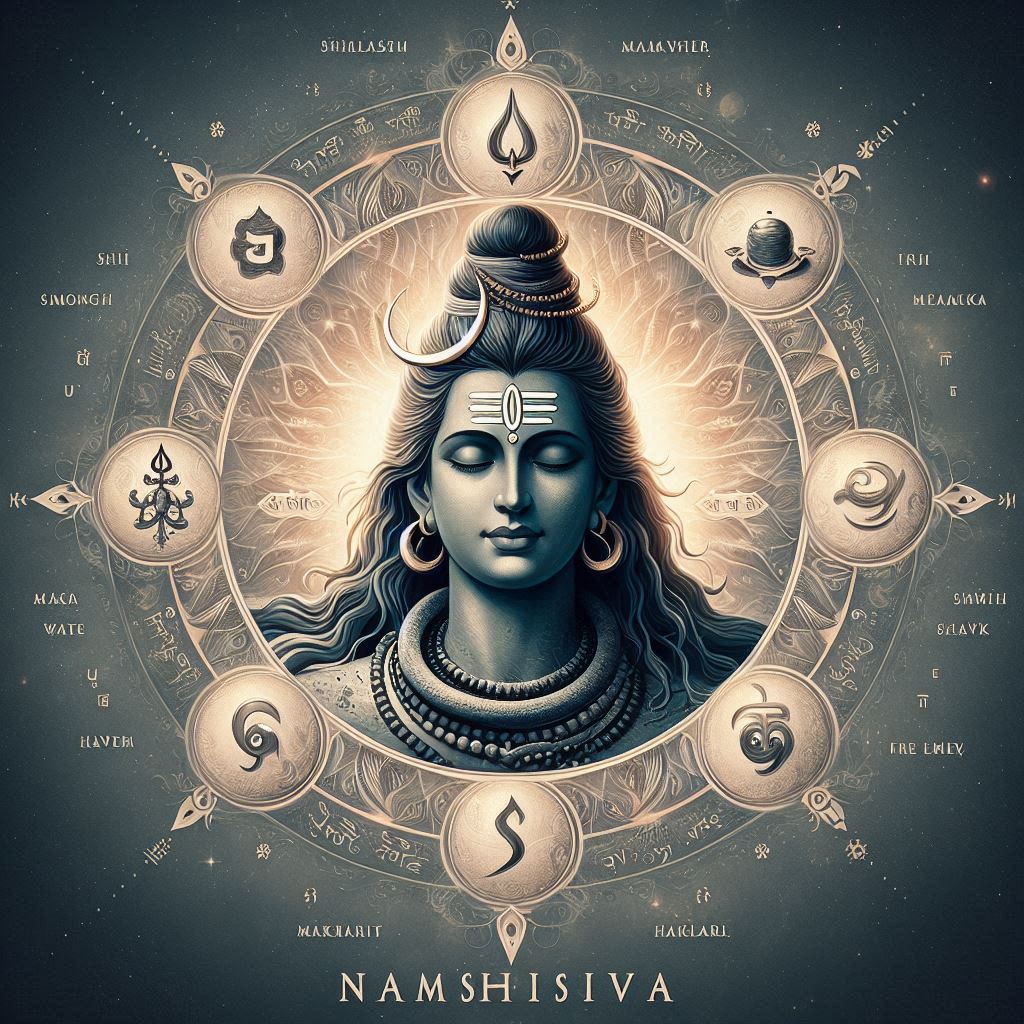
Vibrate your body with 5 : SHIVA PANCHAKSHARI MANTRA

Shiva Panchakshari Mantra “Namashivaya” is the Shiva Panchakshari mantra, which is simple to chant but profound to interpret and understand. Due to the lofty meaning behind this mantra, this is considered a universal mantra.

Na –
This first syllable corresponds to Earth element.

Ma –
This second syllable represents Water element.

Shi –
This third syllable stands for the Fire element.

Va –
This fourth syllable denotes the Air element.

Ya-
This fifth syllable relates to the Ether or Space element


Lord Shiva as the Supreme God is said to be engaged in five tasks associated with the creations. The pancha Kriyas or the five acts are

Srishti_ creating,

Sthiti_ preserving,

Samhara _ destructing

Tirodhana _ concealing
 
Anugraha _ blessing.

The five syllables of the Shiva Panchakshari mantra correspond to these five divine acts of the Supreme Shiva. ‘Om’ or Pranava mantra and ‘Namashivaya’ are said to be one and the same. While the Pranava is the crux of the divine acts, the Shiva Panchakshari mantra expounds these divine acts further. The Pranava Mantra is like the husk of the paddy while the Shiva Panchakshari mantra is like the rice inside.

Shiva consciousness is beyond time and boundry

There was a time when balance in the cosmos broke.
The Devas ( positive ) energy were weakened. Their energy faded. The Asuras( giant ) energy grew in strength. Conflicts rose. Dharma trembled.

The only way to restore harmony was to retrieve the immortal the nectar of immortality, hidden deep within the Kṣīra Sāgara, the Ocean of Milk. But to bring it out, the ocean had to be ready for twist movement

Both Devas and Asuras agreed to churn the ocean together. Mandara Mountain became the churning rod.
Vāsuki, the great serpent of Mahādeva, was the rope.
The mountain began to sink So Viṣṇu took the form of a giant tortoise (Kurma) to support it from beneath.
Thus began the divine Samudra Manthan — the twist movement (manthan)  of the Cosmic Ocean.

Many diamonds (wondrous)  things emerged:

1. Kamadhenu,
2. Airāvata,
3. Kaustubha,
4. celestial Apsarās…

Movement of somthing unexpected : Hālāhala Visha.

But before the nectar could rise From the depths of the twist movement of ocean emerged something unexpected.  A dense, bluish-black vapor arose called Hālāhala Viṣa (Halahal vish). It spread in all directions.
Its very presence began to shake the elements.
The air darkened. The ocean trembled. Neither the Devas nor the Asuras could bear its touch.
Even Agni, the god of fire, stepped back. The sages, Devas, and ṛṣis gathered and said: “There is only One who can hold this The Mahāyogī, the Ever-Compassionate  Śiva.”

Silence is Medicine

Śiva, with infinite calm, took the entire Hālāhala Viṣa in His palms and in an act of sheer compassion… He drank it. But He did not swallow. With supreme control over His own being, He held the poison in His throat  between creation and destruction. His throat turned a deep, radiant blue. From that moment onward, the sages called Him:

1. Nīlkaṇṭha — The Blue-Throated One

2. The Lord who holds back destruction

3. The One who saves by containing, not by resisting

He absorbed the chaos and remained unmoved.
But this act was not His alone. As the fire of the poison raged in His throat, maa Pārvatī Devī  His consort, His Shakti. placed Her hand gently on His neck,
preventing the poison from descending into His body.
Shakti and Śiva stood as One Stillness and Compassion united in perfect harmony.The world was saved. Balance was restored.


The eternal teaching:

True divinity does not seek reward.
True power lies in absorbing the world’s pain in silence.
Not to destroy, but to protect. That is the glory of aadiyogi shiv . This is a mirror held up to your own journey.

1. The twist movement in ocean – your mind

2. The dark poison – your ego, pain, and hidden fears

3. Śiva – your inner Self

4. Shakti – your discriminating power, your inner devotion

when you churn your being when you face the inner poison with awareness. Can you reach the nectar of immortality-   real I .

Shiva soul: Anaahat chakras

Blessed are the rare devotees who worship the Chidanandalahari (divine consciousness/bliss) that eternally dwells in the heart chakra (Anahata).
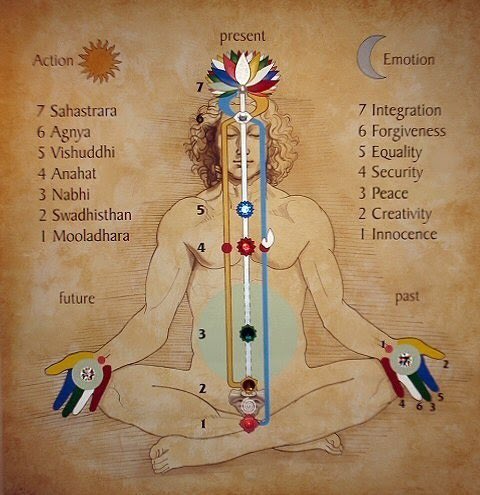
The Anahata Chakra (heart lotus) is uniquely blessed, positioned in the center of our spiritual anatomy. It lies between two crucial points: the Mooladhara (root chakra) below and the Sahasrara (crown chakra) above, where the moon continuously bathes the energy channels with divine nectar.

This heart center is especially sacred because:

1. It contains the essence of all deities

2. It embodies the spiritual power of sacred pilgrimage sites like Srishaila

3. It’s guarded by the ten vital breaths (or the deities of the ten senses)

4. It’s connected to other major energy centers that shine like jeweled islands

5. It houses the individual soul (Jivatman), which extends throughout one’s being like a vast tree

The Golden Paralyzer: Das mahavidyas the key of beyond Transformation

What do you do to be involved in the community?

Nature’s Everyday Wisdom

The Mahavidyas reveal themselves in the simple, everyday aspects of nature that we all experience. Here’s how each goddess works in ways we can easily observe and relate to:

1) Kali Maa-

works like seasonal change. Just as autumn strips trees of their leaves, making way for new growth in spring, Kali reminds us that endings are necessary for beginnings. When a garden needs pruning to grow stronger, that’s Kali’s wisdom at work.


2) Maa Tara-

acts like a mother bird protecting her nest. She appears in the way plants heal their wounds, in how our skin repairs itself after a cut, and in how communities come together after disasters to rebuild. She is nature’s nurturing response to harm.


3) Maa Tripura Sundari-

shines in life’s perfect designs, the symmetry of a butterfly’s wings, the perfect spiral of your ear, the hexagonal honeycomb that wastes no space. She shows us that beauty in nature is also practical.


4) Maa Bhuvaneshwari-

works like the air we breathe, connecting all living things in an invisible exchange. She’s present when bees pollinate flowers, creating fruits we later enjoy, showing how each creature’s actions affect countless others.


5) Maa Bhairavi-

functions like the heat that transforms raw ingredients into a nourishing meal. She’s the fever that burns away infection and the challenging life experiences that, though difficult, make us stronger and more adaptable.


6) Maa Chinnamasta-

operates like a mother nursing her child, giving of herself to nourish others. She’s visible when a fallen apple decomposes, feeding the soil that will grow new trees, demonstrating how one life form sustains another.


7) Dhumavati Maa-

works like composting, breaking down what’s no longer useful. She’s present when old leaves break down into rich soil and when outdated ideas make way for fresh perspectives, showing how apparent loss creates new resources.


8) Bagalamukhi Maa-

acts like the pause between heartbeats or the moment of stillness before you speak. She governs the dormancy of seeds in winter that ensures they sprout at the right time, teaching us the power of perfect timing.


9) Matangi Maa- 

moves like a sudden summer storm that disrupts plans but waters gardens. She appears when a fallen tree creates a sunny gap in the forest where new species can grow, showing how unexpected changes create new opportunities.


10) Maa Kamala-

blossoms like a community garden overflowing with vegetables to share. She’s present in the abundance of fruits on a healthy tree and in the generosity of nature’s harvest, demonstrating that true wealth comes through sharing and circulation.

Bhagalamukhi’s : Silent Power of Transformation

Among Dasmahavidhyas, Mata Baglamukhi stands as the mesmerizing force of stillness. While her divine sister Tara embodies the vibrant power of the spoken word and the sacred sound OM, Baglamukhi represents the profound impact of silence and immobility. Baglamukhi essence lies in her ability to freeze negative patterns rather than destroy them. Unlike Chinnamasta who cuts through impurities with lightning energy, Baglamukhi immobilizes our destructive tendencies, holding them motionless for examination. She shatters the ego’s foundations and halts the endless stream of deceptive thoughts, creating the perfect conditions for true self inquiry.

Like a strategic warrior queen wielding her mighty vajra, she grants mastery over our wildest thoughts and sensory distractions. Her ultimate gift is liberation from material attachments through complete mental stillness, eliminating inner conflicts, dissolving confusion, and entrancing us with the hypnotic allure of spiritual wisdom.

The universe is moving. And you are hurtling with it.

What are your favorite brands and why?

You think you’re standing still?

Right now,!!!!! at this very second, you are hurtling through the void at a mind-shattering 2.1 million kilometers per hour, yet you feel nothing. The Earth’s orbit? A perfect circle? A lie. We are spiraling through the abyss in a violent corkscrew, dragged mercilessly by the Sun at 828,000 km/h. 

Mark this spot in space, return in 24 hours, and you’ll find yourself 57.8 million kilometers away, lost in the cosmic drift. But it gets worse. Our entire galaxy, the Milky Way is a runaway train, screaming through the darkness at 2.1 million km/h, pulled toward an unfathomable force, the Great Attractor. A monstrous, invisible titan, dragging millions of galaxies toward it… and we have no idea what it is. You are not still. You are a passenger on a cosmic roller coaster, racing at speeds so vast, so terrifying, your mind cannot even comprehend them. So tell me again, do you really think you’re standing still?

Breath of the Cosmos: Unveiling the Divine Dance inside yourself.

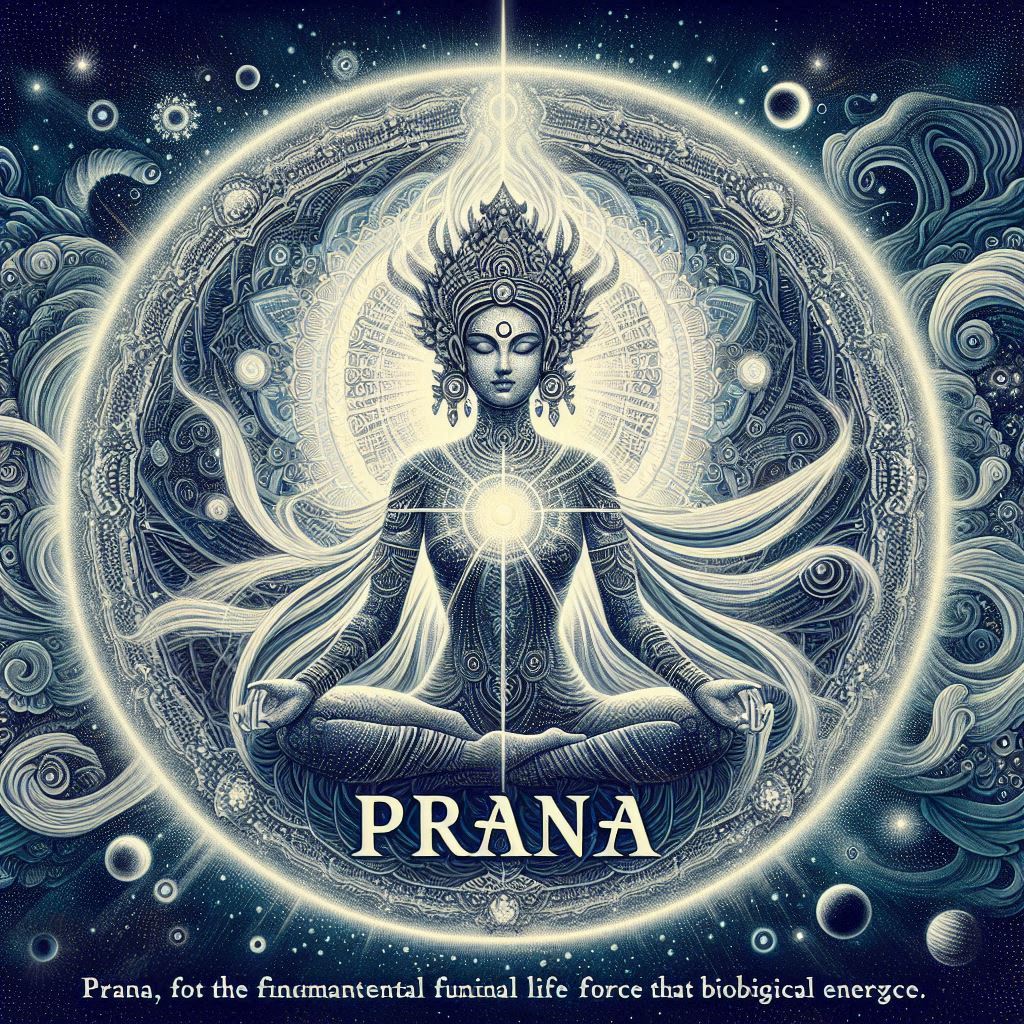
Prana is described as the fundamental life force that permeates all existence. It’s not merely the breath or biological energy, but rather a cosmic principle that manifests as the very essence of life itself. This concept is intricately connected to the Goddess Shakti, who is seen as the primordial energy that animates the entire universe.

According to the Kalika purana, Prana is the subtle manifestation of Shakti’s power that operates at different levels of existence. At the cosmic level, it’s the vital force that sustains the universe. At the individual level, it flows through the human body, animating it and connecting the physical form to higher states of consciousness.

The  five primary forms of Prana, known as the Pancha Pranas:

1. Prana (in the specific sense):

This aspect governs inhalation and is located in the heart and chest region. It’s responsible for the forward movement of energy and is associated with the element of air. This form of prana controls perception, consciousness, and mental activities.

2. Apana:

Located in the lower abdomen, this downward-moving energy governs excretion, reproduction, and elimination. It’s associated with the earth element and is crucial for grounding and stabilizing the body’s energies.

3. Samana:

This is the balancing or equalizing force located in the navel region. It governs digestion and the assimilation of nutrients and experiences. Samana is associated with the fire element and transforms everything it encounters.

4. Udana:

This upward-moving energy is located in the throat region. It governs speech, growth, and spiritual elevation. Udana is associated with the element of water and is particularly important in spiritual practices as it can direct consciousness toward higher states.

5. Vyana:

This is the pervasive energy that circulates throughout the entire body. It coordinates the other pranas and governs circulation and nervous impulses. Vyana is associated with the ether element and maintains the connection between all bodily systems.

A Divine Architectural Metaphor.

Write about a time when you didn’t take action but wish you had. What would you do differently?

The concept of Samayachara worship:


Core Concept:

Samaya chara worship is fundamentally about the fusion of chit Shakti (divine consciousness) with Brahman (ultimate reality).
In this tradition, Shiva and Sridevi are viewed as complementary forces – Shiva as Samaya and Sridevi as Samayaa.

The Five-Fold Unity of Shiva and Shakti

1. Adhishthana Samya (Unity of Abode)

They share the same divine dwelling place or domain.


2. Anushthana Samya (Unity of Action)

Both engage in identical cosmic activities, particularly in the act of creation.


3. Avastha Samya (Unity of State)

They mirror each other in divine states and expressions, such as the dances of Lasya and Tandava.


4. Nama Samya (Unity of Names)

Their names reflect their inherent connection:

– Shiva and Shivaa
– Samaya and Samayaa


5. Rupa Samya (Unity of Form)

They share identical physical characteristics:

– Both have three eyes
– Both are associated with the color red
– Other physical attributes are matched

The Sacred Palace of Sricakra: A Divine Architectural Metaphor

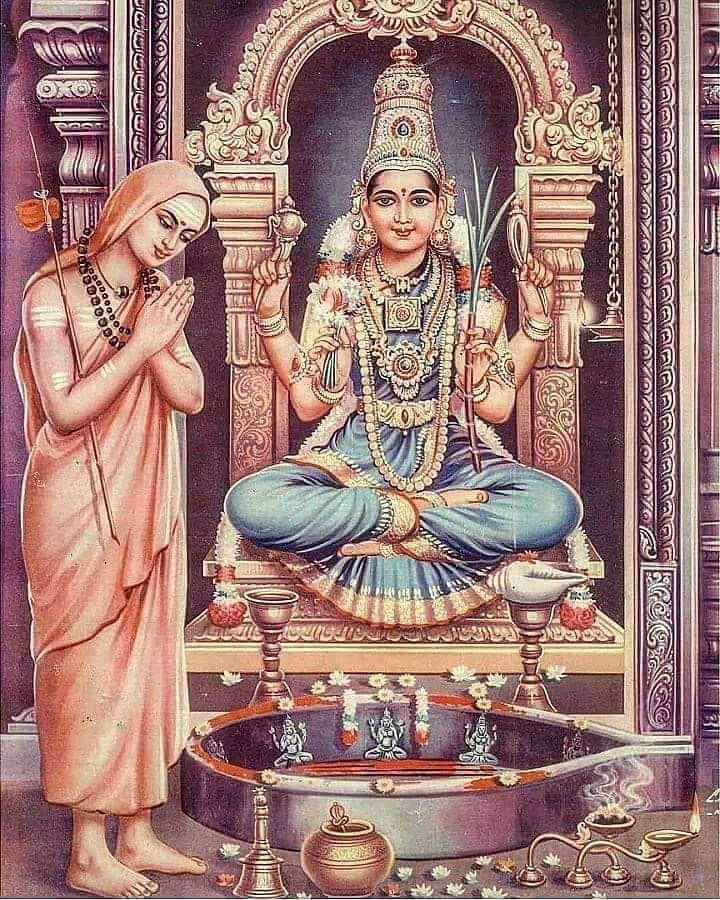
In the illustrious city of Sri pattana, a remarkable palace stands, constructed entirely from luminous Cintamani gems. The palace features three distinctive towers named Iccha Sikhara, Kriya Sikhara, and Jnana Sikhara, symbolizing desire, action, and knowledge. With four cardinal doors called Amnaya devas representing the Vedas: Purva, Dakshina, Paschim, and Uttara

The palace embodies sacred geometric precision. At its center, the Bindu Peetha, a powerful seat with four-sided steps, represents multiple divine aspects: Sri Peetha (prosperity), Maha Peetha (greatness), Vidya Peetha (knowledge), and Ananda Peetha (bliss). The entire structure follows the intricate design of Sri chakra, housing all male and female deities of this mystical configuration.

The central cot, resting on four divine legs: Brahma, Vishnu, Mahesana, and Iswara, which is supported by Sadasiva. Leading to this sacred space are 36 steps representing spiritual dimensions, with a foot rest positioned before the cot. A swan like bed adorns the cot, accompanied by two head pillows and one leg pillow, covered by a light red blanket. Upon this sacred throne, Lord Kameswara sits facing east, eternally manifested as a sixteen year old boy with four hands and three eyes, wearing elaborate ceremonial attire. On his lap resides Lalitha Devi, also perpetually sixteen, with a rosy complexion, four hands, and adorned with the moon, her name derived from her ability to please Sadasiva, embodying the principle of divine feminine grace.

These will help calm your mind and bring balance to your emotions.

What relationships have a positive impact on you?

Our surroundings & I

Negative energies or energies are those forces that are not made for this world but still reside here in a supernatural form. Since they are not in harmony with nature, they are harmful to human life and its energy, but this effect is not universal. Some people quickly come under the influence of such negative energies. Due to mental and emotional weaknesses, a person can pull negative energies towards him Many types of bad habits in lifestyle, such as spending time in negative places or with people, weaken the energy of the person. Its main effect is on our mental health, so we need to know about it. Weakening of the aura can be the main reason for a person to come under the influence of negative forces

I see so many people struggling with such overwhelming emotions, especially at an age when life should be full of hope and possibilities. Usually, I don’t respond to messages that focus on such negativity, and I won’t reply to each of you personally this time either. I feel the need to share something that can genuinely help you overcome these feelings of despair.

I assure you, it can make a difference.


This remedy is not just a suggestion it’s something I’ve seen work for many individuals who have tried it, along with certain astrological practices. It can bring about a positive change in your life, but only if you are willing to take the first step. If you truly want to heal, follow this remedy with faith and commitment. I assure you, it can make a difference.

1. Sharp writing.

Take a notebook or diary and start writing down everything on your mind. Whatever is troubling you….your fears, guilt, pain, or anything you can’t share with anyone, just pour it out. Write every single day. Don’t worry about how it looks or sounds….this is just for you. Write at least two pages daily.

2. Start filling up.

When your diary starts filling up, start reading it. Begin with a few pages…don’t rush. Allow yourself to feel everything as you read….if you cry, let it out. If you feel angry, let yourself feel it. Keep reading and re-reading until the emotions lose their grip on you.

3. What are you doing??

Keep this diary safe. Hide it safely in a cupboard, a drawer, or any place where no one else can access it. This is your safe space.

4. Step 4.

When you feel that the words no longer hurt you and seem like just ink on paper, it’s time to let go. Burn the diary. Tear the pages one by one and safely burn them. Let the flames take away all the pain and negativity.

5.  useful !!

Alongside this, start practicing meditation, Trataka (focused gazing), Yoga Nidra (deep relaxation), and cleansing techniques from Ayurveda(षट्कर्म).
To avoid negativity, it is very important to adopt a positive attitude, do regular meditation and yoga, and follow a balanced lifestyle. According to spirituality, everything is a form of energy, and the human aura is also a form of energy. Those whose aura is weak quickly come under the influence of negative energy. Mental, emotional, and spiritual weakness is the main cause. Also, psychological, spiritual, and external factors can also be responsible for this.  A mind full of fear and stress attracts negative energies. Mental exhaustion and negative thinking weaken a person’s energy, making them more vulnerable to external negative influences

Strengthen an energy

Spiritual Weakness Not practicing regular meditation, prayer, or positive energy can weaken a person’s spiritual protection, making him more vulnerable to external negative energies. A lack of knowledge of negative energies and their nature can force a person to attract them unknowingly. Engaging in spirits or supernatural activities without safeguards can be extremely risky. Factors that hinder spiritual energy, such as impurity of place, old negative events, or unfulfilled spirits, can affect the individual.  Places filled with negative energy, such as controversial, deserted, or accidental areas, can affect the person quickly. Spending time with negative people and physical exhaustion weakens mental and spiritual energy, which can lead to negative energies. Our energy (aura) protects us from external negative influences. But if it becomes weak, the person becomes more sensitive. An imbalance of the seven chakras in the body can cause mental, physical, and spiritual weakness

Remember, this is a journey, and it’s not always easy. Some days you won’t feel like writing or reading, but fight through it. Push yourself. You are stronger than you think. This is your battle, and you can win it. When you’ve completed this process written, read, and burned your diary, message me. That’s when I’ll reply to you personally. Healing is a step-by-step process, but trust me, you can come out of the darkness. Just take the first step. Adopt a positive attitude. Meditate, do yoga, pray, and chant mantras. Use Rudraksha, or Raksha Kavach, to strengthen the energy. Light a lamp of incense regularly in the house. Eat a balanced diet, sleep well, and exercise. Surround yourself with positive people and stay away from negative places. Be sure to read

You are here to experience

Are you a good judge of character?

Yoga Vashishta: The Treasure of Infinite Knowledge.

Yoga Vashishta is known for its unique identity in the world of Sanatan Science, which is a wonderful book preached by Maharishi Vashishta to Shri Ram. It is a treatise explaining the essence of Vedanta and Advaita as well as explaining the depths of the mind. It should be read and understood by everyone. In the story of Yoga Vashishta, Lord Shri Ram asks questions to his Guru Vashishta to understand the purpose of his life and the reality of the universe. This journey of self-awakening of Lord Shri Ram is inspiring for every seeker

In this book, Vashistha Rishi has discussed the origin of creation, the illusion of human life, and the meaning of liberation in human life. Here Maya is presented as a force that keeps the soul in illusion.  There are many wonderful illustrations in Yoga Vashishta. One example is the Parable of Lavan, which shows the influence of Maya. In this, King Lawan learns from a supernatural experience that this world is just a dream. When this illusion erupts, the true nature of everything and the world is presented

The main purpose of Yoga Vashishta is the purification of the mind. Vashishta says that the root of man’s misery is his unstable mind. Only by calming it down can he attain lasting bliss. Regarding wisdom and self-introspection, Rishi Vashishta explains that for enlightenment one must look deep inside one’s consciousness. Happiness is not obtained by external means; True happiness lies in the journey within. The Principle of the Four Elements – Vashishta described the four pillars of life: detachment, discretion, contentment, and Satsang. These are the four pillars of sadhana, which lead the seeker towards self-knowledge. The essence of Advaita in Yoga Vashishta is: “The whole world is one consciousness. There is no duality here. The soul and the divine are the same; To understand this is liberation

Vashishta says, “The world is a dream, and the soul is its witness. This idea is meant to awaken every person that he is an eternal consciousness beyond this body, thought, and world. Yoga Vashishta is not just a treatise, but a guide that shows the path to self-realization. It helps us to quiet our minds and lead us to the real truth

To get into oneself is the deepest spiritual practice.

There are also three very subtle currents within the Sushumna Nadi. These are called Vajra, Chitrani, and Brahma Nadi. The Brahma Nadi is the center and source of power for all the channels. The Brahma Nadi reaches the center of the brain and spreads around in thousands of parts. That is why that place is called Sahasra Dal Lotus. The Sahasra Dal belongs to the subtle worlds – the world-wide powers. By which the infinite powers of God are caught from the astral world, the Brahma Nadi within the Sushumna in the last part of the spinal cord is bound by a black hexagon atom

The hexagon atom has been called Kurma in figurative language in yogic texts. Its shape is like a turtle. The earth rests on God Kurma. It is dependent on the hood of Sheshnag. The basis of this statement is the shape of the Brahmanadi, which is entwined in this kurma. And holding on to life. If he abandons his base, it will not take long for the land of life to crumble into pieces. The place of intermingling of the Brahma Nadi from Kurma is called Kundalini in spiritual language. Due to being annular, she was named Kundalini

The glory, power, and usefulness of Kundalini are so much that the intellect cannot even imagine. The atom remains a miracle for the inventors of physics. After the method of breaking it has been found, the source of tremendous energy has come into the hands of scientists.
Right now, a part of his energy has been seen to be destructive. A big side of creativity and power is untouched. It is a matter of the power of the atom from the inertial world, which one would have to be surprised to see, a spark of the living world, infinitely more powerful than the inertial atom

Everyone is aware of the power and achievements of science. The achievements of yoga are riddhi and siddhis. Just as many scientists are engaged in the research of atoms. In the same way, the ancient spiritual sciences, the wise rishis, had researched a lot about a seed atom within the human body and benefited from its infinite power. The best place to break, large, or move two atoms is in the Kundalini center because the living atoms of all other places are round and smooth, but in Kundalini, it is wrapped in the form of Mithun ( Gemini).

Just as the atoms of uranium and plutonium are kneaded in such a zig-zag manner that it is easier to break them down than atoms of other substances. In the same way, the movement of the Kundalini sparkling atoms is more convenient for the desired movement. Therefore, the sages of the past researched Kundalini awakening with great readiness. After testing and experimenting with research, he gained so much power that it is considered a miracle. Kundalini has been called the storehouse of secret powers। Precious gems are kept in a safe and kept in a secret place. Strong locks are installed in it so that no unauthorized outsider can get it. God has also given the treasures of man’s infinite powers but has put six locks on them.
These are called awaken kundalini. These locks have been installed in the form of chakras so that no one can get them undeserved. The six locks and six chakras on the Kundalini power have to be pierced. Normally, the Kundalini sits in a disheveled state facing downwards in the perineum

To awaken him, one has to take refuge in the divine prana energy. The unconscious Kundalini superpower is awakened by the high-level practice of meditation yoga. Prana Sadhana in yoga fulfills this goal. Along with the process of Kundalini awakening, the seeker has to resort to self-reflection and self-improvement. Spiritual practice done on the double front makes the inner part of the Purushartha seeker full of power and power

Gajendra Moksham : Lotus as the Soul & complete surrender

List your top 5 grocery store items.

How achieve a goal ??

Acharya Chanakya says that the power of any king is his decision power.
A student’s strength is their knowledge. The strength of women is their beauty, their youth, and their sweet speech. The woman who speaks bitterly, instead of showing her values by remaining calm in front of her husband or other elder or younger ones of the in-laws, gives them the opposite answer; such a woman is deprived of respect and affection in the husband’s society forever. Acharya says that Agni, Guru, little girl, old, and child should never touch our feet. According to the scriptures, all of them are revered and always holy. Therefore, they should not disrespect them by putting their feet

According to Chanakya, whenever these types of people are seen sleeping, they should be woken up immediately. For example, watchmen, servants, passers-by, hungry people, students, and frightened people should be woken up immediately from sleep. This increases awareness of the tasks in life. There is less attachment to suffering in life

In this regard, Acharya Chanakya has said that, before starting any work, we should ask ourselves three questions. These three questions will prove to help overcome the obstacles to achieving the goal!  Along with this, they will also ensure the success of the work, these three questions are –

Why am I doing this?

– What could be the results of this work I am doing?

– Will I be able to succeed in the work I am going to start?


To achieve success in life, it is necessary to take care of many things. Many accurate sutras have been given by Acharya Chanakya in this regard. One of these sutras is that snakes, kings, lions, stinging creatures, small children, other people’s dogs, and fools seven should not be woken up from sleep. If they are sleeping, then it is beneficial to let them stay in this state. This is too small to say, but when followed, the same thing seems to be true

Physical illnesses can be treated with proper medicines, but mental or ideological illnesses cannot be treated with any medicine. The worst disease in this regard is said to be greed. The person in whose mind greed is awakened is sure to run towards downfall. Greed is a disease that is not easily cured. For this reason, Acharya has described it as the biggest disease. A sensible man sees the beauty of the mind for the sake of marriage, not the external beauty of the woman. If an ugly or less beautiful girl of a higher family or a noble family is beautiful, then one should marry her. Whereas if a beautiful girl is not cultured, irreligious, belongs to a low family, whose character is not good, then she should not be married under any circumstances. Marriage is always auspicious in the same family

God is not in idols or temples. God is present in our perception. Our soul is God’s temple. In everyone’s body, God, in the form of experience, resides in the temple of the soul. Just humans can’t feel them and keep searching all over the world. God is present within us. Preaching to a foolish disciple, providing for an evil-tempered woman, and dealing with miserable people in any way will only lead to misery.

Gajendra Moksham..

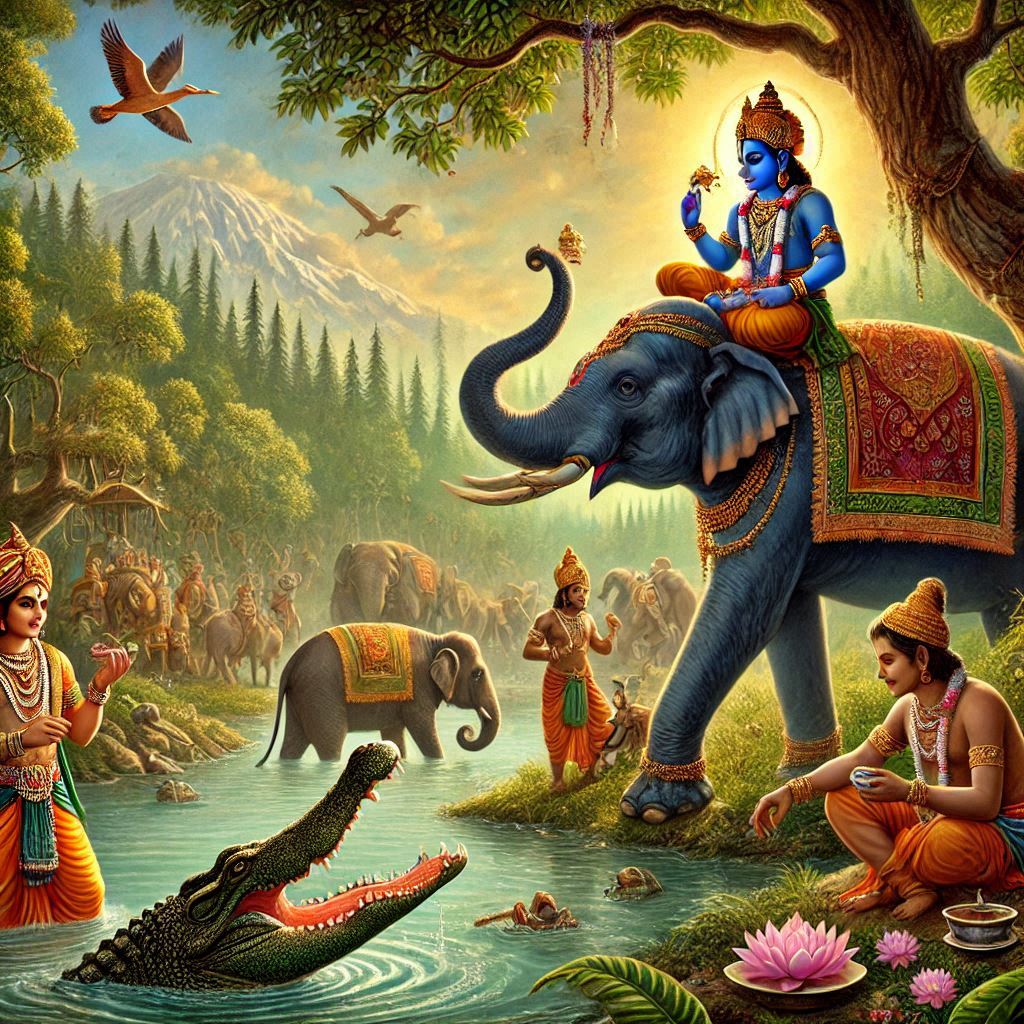
8th Skanda of Srimad Bhagavatam describes this wonderful Story of Bhakti & ultimate surrender towards the supreme.  In a forest on the mount Trikoota, there lived an Elephant king called Gajendra great devotee of Maha Vishnu.
One day, Gajendra & his herd go to a nearby lake. While they were drinking water, suddenly, a Makara (crocodile) attacked Gajendra and was caught by his leg.   Gajendra tries hard to free himself from the crocodile’s clutches but in vain. All the other elephants left him as they felt he could not be rescued. Gajendra, in his previous birth, was a king known as Indradyumna (a great Vishnu devotee). Gajendra remembered Mahavishnu and. Started his prayers holding a lotus with his trunk.
“OM NAMO BHAGWATE VASUDEVAYA”

He didn’t think of anything unless of Bhagwan. He was sure that Mahavishnu would protect him. Hearing Gajendra’s prayer Sriman Narayana. Rushes from Vaikunta in his Garuda Vahana & saved Gajendra.
Here, Gajendra is signified as the humans, the Crocodile as the cycle of Papa & Punya, and Lotus as the Soul & complete surrender, which can attain Moksha.

Major Stories of Hayagriva Avatar: Restoration of the Vedas

What are your favorite physical activities or exercises?

।। सूर्य आत्मा जगतस्तस्थुषश्च।।

The month of Margashirsh: The Era of Bhagavad Gita Revelation

Margashirsh is the ninth month of the Hindu lunar calendar, falling between November and December. It is also known as Agrahayana and holds immense spiritual significance in Sanatan Dharma. Margashirsh is the month when Bhagwan Shree Krishna imparted the eternal wisdom of the Bhagavad Gita to Arjun on the battlefield of Kurukshetra during the Mahabharat.

In the Bhagavad Gita (10.35), Shree Krishn says,

“मासानां मार्गशीर्षोऽहमृतूनां कुसुमाकरः ”

“Among months, I am Margashirsh.” This emphasizes the month’s supreme importance as a time for Dharmik’s growth and reflection. Historically, Margashirsh marked the beginning of the harvest cycle in the Ancient Bharatvarsh, making it a time of gratitude and prayer for abundance.

Grant victory Aditya Hridaya Stotram: the power to eliminate all enemies.

आदित्य हृदयं पुण्यं सर्वशत्रु विनाशनम्
जयावहं जपेन्नित्यम् अक्षय्यं परमं शिवम्

Aditya Hridaya Strotram is advised by Agastya Muni to Shri Rama to defeat Ravana. Stotra is mentioned in Yudha Kandam of Srimad Ramayanam. Shri Rama was very fatigued before the war & Agastya Muni gave Aditya Hridayam as Updesham, dedicated to Surya Deva, who granted victory to all. Agastya Muni enlightens Rama saying Stotra has the power to eliminate all enemies &. And will be victorious. Rama prayed to Surya and felt energetic to fight with Ravana. Evil vanishes from life who keeps Sun in Heart. Sun is the soul of all that is dynamic & static.

Hayagriva Avatar: The worshiped as the god of knowledge and wisdom


Devi Bhagavata Purana (Book 1, Chapter 9)


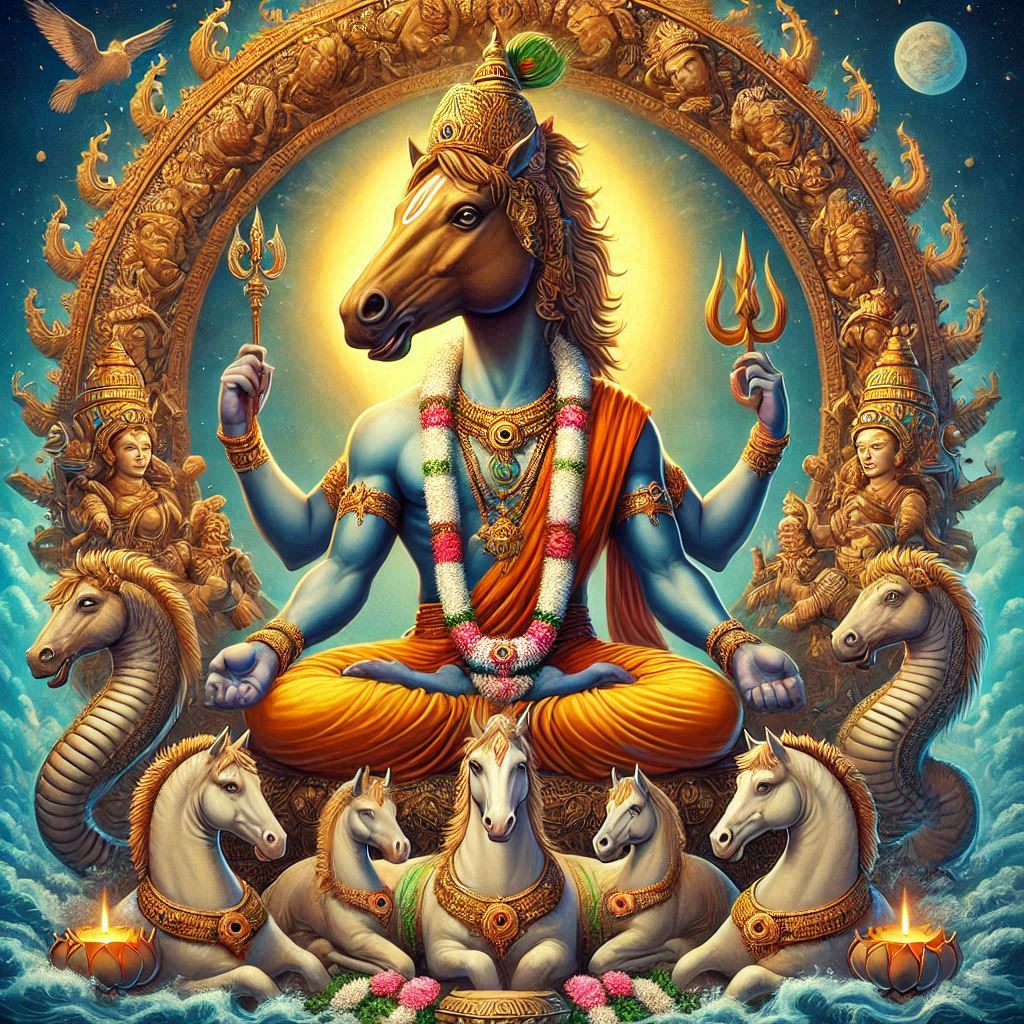
The Hayagriva Avatar of Lord Vishnu is a lesser-known yet significant incarnation. Hayagriva is depicted as a horse-headed deity, with the body of a human, representing wisdom, knowledge, and the preservation of the Vedas. Significance of the Hayagriva Avatar:The Hayagriva incarnation is often worshiped as the god of knowledge and wisdom, as his form represents clarity of thought and intellect. In various traditions, Hayagriva is revered for restoring the sacred Vedas that had been stolen, symbolizing the protection of spiritual knowledge. The demons Madhu and Kaitabha steal the Vedas from Brahma while he is asleep, causing chaos in the universe. Brahma prays to Lord Vishnu for help. In response, Vishnu assumes the form of Hayagriva, the horse-headed avatar, battles the demons, and restores the stolen Vedas to Brahma. Purana Reference:  Mahabharata (Shanti Parva, Chapter 348) In both sources, Vishnu’s Hayagriva form is highlighted as the protector of the Vedas, symbolizing the triumph of wisdom over ignorance and chaos. The Story of Hayagriva and Vishnu’s Meditation (Skanda Purana)In this story, Vishnu assumes the Hayagriva form to perform severe penance. During the end of the Kali Yuga. When darkness and ignorance dominate, the gods pray for Vishnu’s intervention. Vishnu, as Hayagriva, meditates to restore cosmic order, and his energy and wisdom ensure the continuation of dharma.

Immerse in your infinite knowledge.

What alternative career paths have you considered or are interested in?

Spirituality is beyond science.

Mother Nature has created this world 432 million years ago. There is a catastrophe of the same number of years. It has been 1,96,08,53,125 years since the creation was created. This is the time it has been since the Vedas were born. All the religious texts of the world are within 5000 years but the Vedas are the oldest. Other opinions also believe this. This is Sanatan’s unique heritage. Therefore, Sanatan is considered eternal

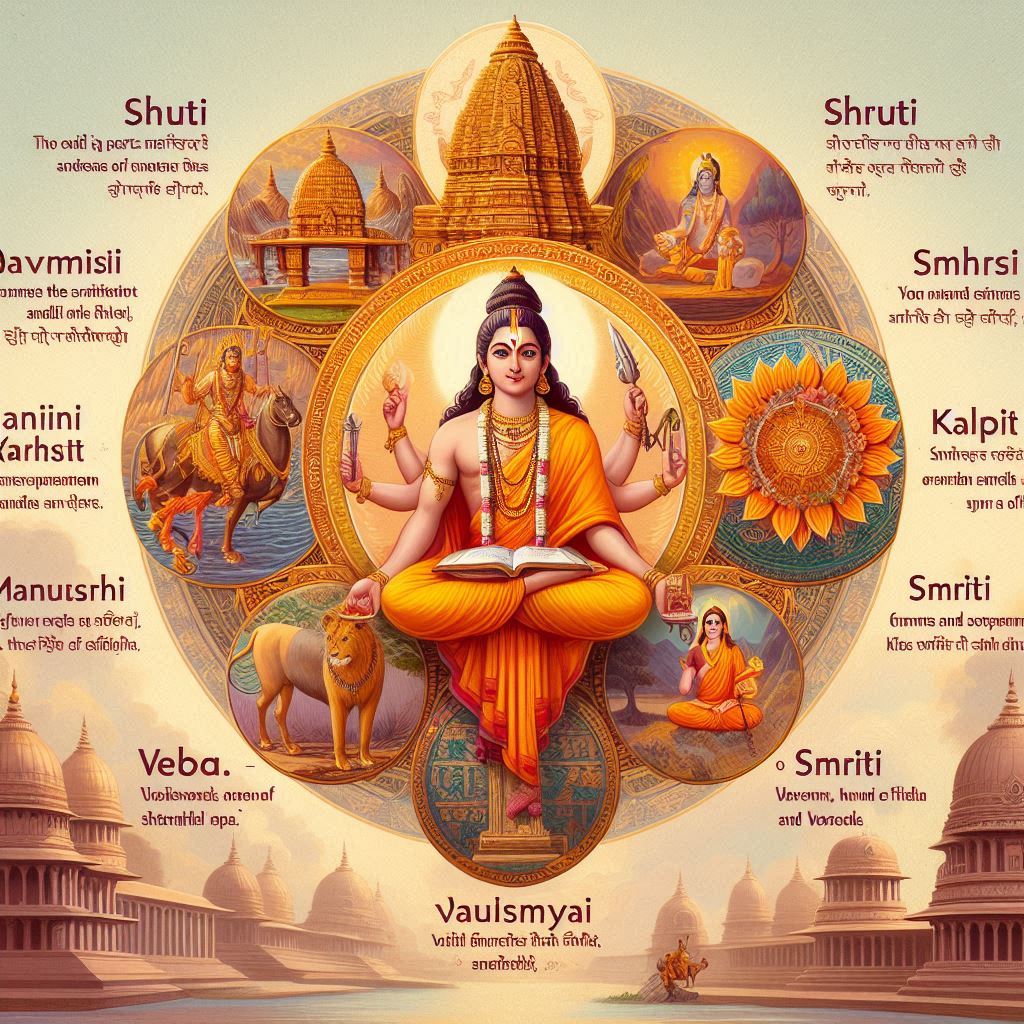
To understand Indian scriptures and Vedic knowledge, the scriptures are divided into two parts: Shruti and Smriti. Shruti includes the scriptures Vedas and Smriti includes books of history and interpretation of the Vedas, Manusmriti, Yajnavalkya Smriti, etc. The Vedas are the symbols of eternal and eternal truth. The Vedas have 6 अंग and 6 उपांग . Which helps in knowing the Vedas. The 6 limbs of the Vedas are Varna Shiksha, Panini Krita व्याकरण (Ashtadhyayi), Kalpa, Maharishi Yaska Krita Nirukta, Maharishi Pingal Krit Chhanda and Jyotish etc. This is explained to you in just a few words. This is to be understood

6 उपांग Philosophy:

(1) Yoga Darshan (Maharishi Patanjali)

(2) Sankhya Darshan (Maharishi Kapil)

(3) Nyaya Darshan (Maharishi Gautam)

(4) Vaisheshikadarshan (Maharishi Kanada)

(5) Mimamsa Darshan (Maharishi Jaimini)

(6) Vedanta Darshan (Maharishi Vyasa)

Although more than 100 Upanishads are found in the spiritual field of Indian culture, it is necessary to read 11 Upanishads before studying Vedanta philosophy. Those Upanishads are as follows –

1. ईशोपनिषद
2. केनोपनिषद
3. कठोपनिषद
4. प्रश्नोपनिषद
5. माण्डूक्योपनिषद
6. मुण्डकोपनिषद
7. ऐतरेयोपनिषद
8.  तैत्तिरीयोपनिषद
9.  बृहदारण्यकोपनिषद
10. छांदोग्योपनिषद
11. श्वेताश्वतरोपनिषद .

There are only 4 interpretation books of the Vedas – (Brahmin texts)

(1) Aitareya Brahmins

(2) Shatapatha Brahmins

(3) Tandya Brahmins

(4) Gopatha Brahmins.

Case-ending showing possession or relation

Is complete knowledge hidden in the Vedas?

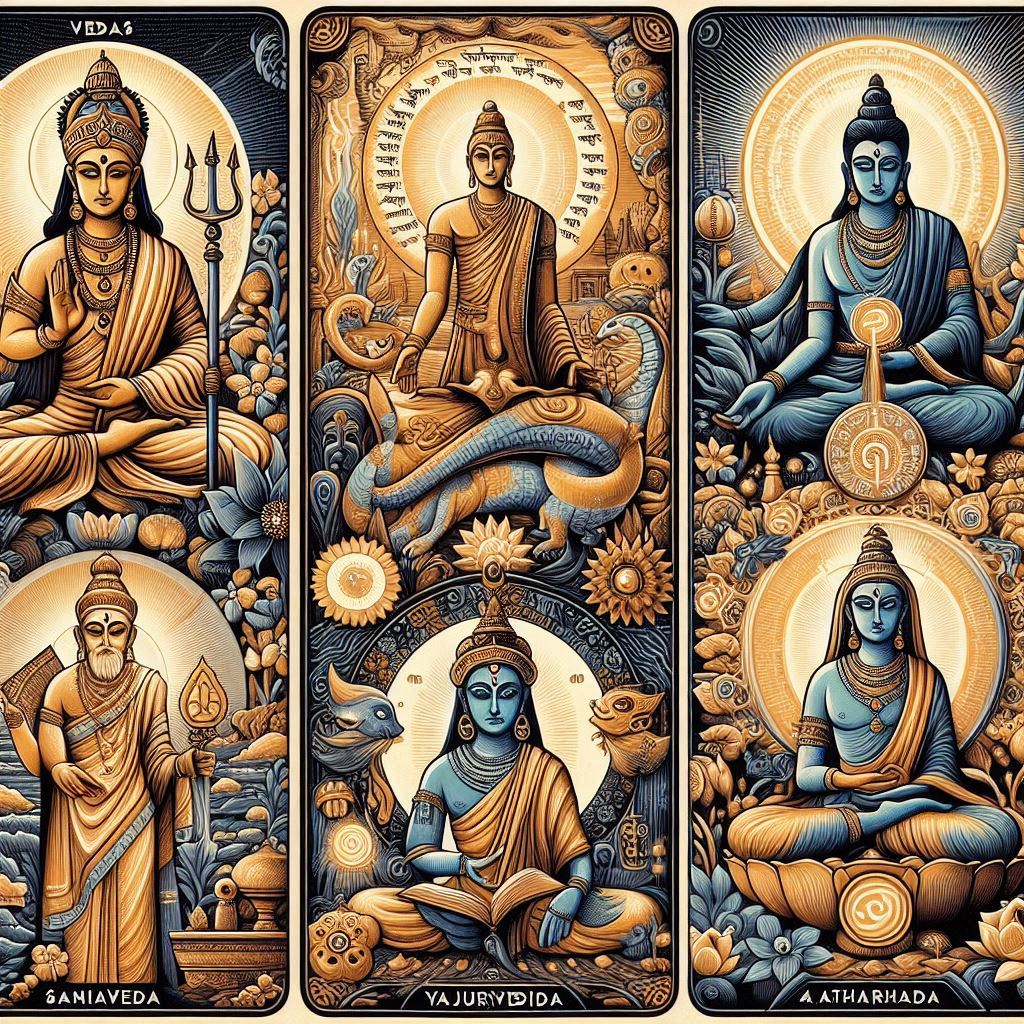
The Vedas are full of knowledge related to almost all subjects, like God, the universe, astrology, mathematics, chemistry, medicine, nature, astronomy, geography, religious rules, history, rites, customs, etc. The four Vedas are Rigveda, Yajurveda, Samaveda and Atharvaveda. There are only 4 upavedas. Ayurveda of Rigveda, Dhanurveda of Yajurveda, Gandharva Veda of Sama Veda and Atharva Veda

Rigveda:

ऋक means status and knowledge. It has a lot to do with geographical location and mantras invoking the deities. The hymns of the Rig Veda contain prayers, praise of the gods and descriptions of their position in Devlok. It also provides information on water therapy, air therapy, solar medicine, psychiatry and healing by Havan. The description of substances ranging from nature’s smallest atom to God is found in the Rigveda. It has 10522 mantras. The knowledge of Rigveda was received in the soul of Maharishi Agni

Yajurveda –

यजु means moving sky and action. Yajurveda contains the methods of sacrifice and the mantras used in sacrifices. We can understand the 16 rituals properly from Yajurveda. Apart from sacrifice, philosophy is described. Element knowledge means mystical knowledge. Knowledge of the universe, soul, God and matter. There are two branches of this Veda, Shukla and Krishna. There are 1075 mantras in Yajurveda. The knowledge of Yajurveda was received in the soul of Maharishi Vayu


Samaveda:

साम means transformation and music. Gentleness and worship. This Veda has a musical form of many hymns of the Rig Veda. It mentions about the gods Savita, Agni and Indra. It also makes references to classical music and dance. This Veda is considered to be the origin of music science. It has 1875 mantras. The knowledge of Samaveda was received in the soul of Maharishi Aditya

Atharva Veda:

अथर्व means vibration and Atharva means vibration. This Veda mentions mystical sciences, herbs, miracles and medicines of Ayurveda etc. It also provides knowledge of Indian tradition and astrology. By studying it, all doubts are solved and the vibration of the mind ends. It has 5977 mantras. The knowledge of Atharva Veda was received in the soul of Maharishi Angira.

6 limb of Sanatan.

To know the Indian Sanatan culture, it is very important to study 6 scriptures with the knowledge of the four Vedas.  So these 6 scriptures are also called the Upavedas of the Vedas i.e. philosophy . Our sages have created these 6 philosophies by incorporating the doctrines scattered everywhere in the Vedas, on the basis of which we can understand this divine knowledge accurately. These 6 Vedic philosophies are called theistic philosophies. These are our logics, by reading which the intellect of every human being opens and he never confuses and doubts about God, religion, unrighteousness, truth, falsehood etc. By reading these philosophical scriptures, all kinds of doubts are resolved automatically. These 6 philosophies are as follows:

(1) Nyayashastra: –

It has been composed by Gautam Muni. The subject of this scripture is mainly logic. This philosophy has been created with the purpose of separating truth and falsehood from the world spread around him through four types of evidence (direct, inference, simile and word.

(2) Vaisheshika Shastra: –

It has been composed by Kanad Muni. This scripture is about material knowledge. How to know the qualities and karma of the substances that God has created for us and use them? This is the subject of this scripture. (This is physics.)

3) Sankhya Shastra: –

It has been composed by Kapil Muni. Its main theme is how the creation originates from the most subtle particles of nature (Word, Touch, Form, Taste and Smell) from Sat, Raja, and Tama. How are all substances similar and characteristic? This scripture completely explains the difference between nature and soul.

(4) Yoga Shastra: –

It has been composed by Patanjali Muni. Its main topic is to tell the method of attaining salvation by following the eight limits (Yama, Niyama, Asana, Pranayama, Pratyahara, Dharana, Dhyana, Samadhi) by getting rid of all sorrows

5) Mimamsa:

It has been composed by Jaimini Muni. Its subject is that by following what kind of Vedic rituals and limitations, a person can become completely happy and can attain salvation, the goal of his life?

(6) Vedanta (Brahmasutra):

It has been composed by Ved Vyasa Muni. Its main theme is to describe the nature of God, his qualities, knowing which man should get rid of all doubts about him and start worshiping him and attain them by practicing yoga.

Praying with Spiritual Emotion (Bhāv) :

◆ God Principle:

The divine essence flows through spiritual practices.


◆ Transmission of Frequencies:
N
5% of frequencies of Divine Consciousness (Chaitanya) are transmitted outside the body. Seekers can access up to 20% of frequencies of Divine Consciousness (Chaitanya).


◆ Protective Sheath:

A protective layer surrounds the seeker.


◆ Spreading of Divine Consciousness:
15% of the accessed Divine Consciousness spreads into the body of the seeker.

Sanatan scriptures.

What’s the biggest risk you’d like to take — but haven’t been able to?

Oldest religion texts.

There are four Vedas and 108 Upanishads in Sanatan Dharma. The Vedas are considered to be the oldest religious texts. The four Vedas are as follows:

1. Rigveda

2. Yajurveda

3. Samaveda

4. Atharvaveda

These Vedas, as well as the Upanishads, are considered an important part of the Vedic literature. Profound philosophical and spiritual topics have been discussed in the Upanishads. Vedas and Upanishads are profound and ancient texts of Sanatan Dharma, in which the philosophical and religious principles related to life, universe, and ultimate truth have been described in detail

VEDAS (1,00,000 verses)

Divided & Organized into 4 Vedas by
Krsna Dvaipayana (Vedavyasa)

Whya Vedas .

1. Vedas:

The Vedas are considered as the most ancient and main texts of Sanatan Dharma. The Vedas are considered by the sages as “shruti” (knowledge gained by hearing. These were compiled by Maharishi Ved Vyasa. The purpose of the Vedas is to guide the four major goals of human life (Dharma, Artha, Kama, Moksha. This is Sanatan meaning that which has been going on continuously since time immemorial is in the real form, this is eternal

The four Vedas are as follows:

Rig Veda:

This is the oldest Veda and consists mainly of a compilation of richas (mantras) in the form of praise of the gods. It has around 10,552 mantras, which are used in the worship of various deities, prayers, and yajnas.


🔸Rigveda (21+ Shakhas)

▪️Available 1 Shakha

▪️Lost 20+ Shakhas

▪️Samhita

▪️Brahmana

▪️Aranyaka


Yajurveda:

It describes mantras and methods for sacrifices and rituals. It is divided into two parts: Krishna Yajurveda and Shukla Yajurveda. It mainly deals with ritualistic and ritualistic activities

Yajurveda (101+ Shakhas)

▪️Available 3-4 Shakhas

▪️Lost 97+ Shakhas

▪️Samhita

▪️Brahmana

▪️Aranyaka


Samaveda:

In this Veda, some mantras of Rigveda have been presented in musical form. It is seen by linking it with devotion and music. The mantras of Samaveda are used to accompany music in sacrifices and rituals.

Samaveda (1000+ Shakhas)

▪️Available 3 Shakhas

▪️Lost 997+ Shakhas

▪️Samhita

▪️Brahmana

▪️Aranyaka


Atharvaveda:

This Veda is slightly different from the other three. It describes mantras and methods related to witchcraft, medicine, healing, and social life. There are many mantras in it that throw light on all aspects of a person’s life

Atharvaveda (9+ Shakhas)

▪️Available 2 Shakhas

▪️Lost 7+ Shakhas

▪️Samhita

▪️Brahmana

▪️Aranyaka

The 108 Upanishads:

The Upanishads are called the last part of the Vedas or “Vedanta”. Their purpose is to clarify the search for enlightenment, Brahman, Atma, and the ultimate truth. The Upanishads mainly describe spiritual, philosophical and meditative topics. The doctrines of Vedanta are based on the Upanishads. Although the number of Upanishads is considered to be 108, some of the major and ancient Upanishads are as follows:


1. Total Shakhas: 1180

▪️10-15 Available

▪️Brahmanas

▪️Available 19-20

▪️Lost 1,111+

2. Samhitas :

▪️Available 9-10

▪️Lost 1,121+

3. Upanishads :
▪️Available 108

▪️Lost 1,023+

4. Aranyakas

▪️Available 7

▪️Lost 1,124


1. Ishopanishad:

It mentions the unity of the universe and the soul and considers the impermanence of karma and life.


2. Kathopanishad:

It is based on the dialogue of Yama and Nachiketa, explaining the mysteries of soul, death and salvation.


3. Mandukya Upanishad:

It analyzes the forms of Om and its three sounds. This Upanishad is a major source of Advaita Vedanta.


4. Chandogya Upanishad:

This Upanishad is related to the Samaveda and discusses in detail the Atman, Brahman and the methods of meditation


5. Brihadaranyaka Upanishad:

This is the largest Upanishad and considers the importance of the soul, rebirth, Brahman and knowledge.

Importance of Vedas and Upanishads:

The Vedas and Upanishads are the foundation of Indian religious, philosophical and spiritual traditions. These texts provide guidance on every aspect of human life, such as:

Spirituality:
The ultimate purpose of life is the union of the soul with Brahman (moksha), which is explained in depth in the Upanishads


Religion:
Duties and religious conduct have been described in the Vedas.

Yoga:
The path to purification and salvation of the soul is shown through meditation and yoga.

Karma:
The principle of karma and its consequences have been explained in detail in the Vedas and Upanishads.
Vedas and Upanishads are not only religious texts but also show the philosophical and spiritual path to understand and find solutions to the complexities of human life