The universe is moving. And you are hurtling with it.

What are your favorite brands and why?

You think you’re standing still?

Right now,!!!!! at this very second, you are hurtling through the void at a mind-shattering 2.1 million kilometers per hour, yet you feel nothing. The Earth’s orbit? A perfect circle? A lie. We are spiraling through the abyss in a violent corkscrew, dragged mercilessly by the Sun at 828,000 km/h. 

Mark this spot in space, return in 24 hours, and you’ll find yourself 57.8 million kilometers away, lost in the cosmic drift. But it gets worse. Our entire galaxy, the Milky Way is a runaway train, screaming through the darkness at 2.1 million km/h, pulled toward an unfathomable force, the Great Attractor. A monstrous, invisible titan, dragging millions of galaxies toward it… and we have no idea what it is. You are not still. You are a passenger on a cosmic roller coaster, racing at speeds so vast, so terrifying, your mind cannot even comprehend them. So tell me again, do you really think you’re standing still?

Breath of the Cosmos: Unveiling the Divine Dance inside yourself.

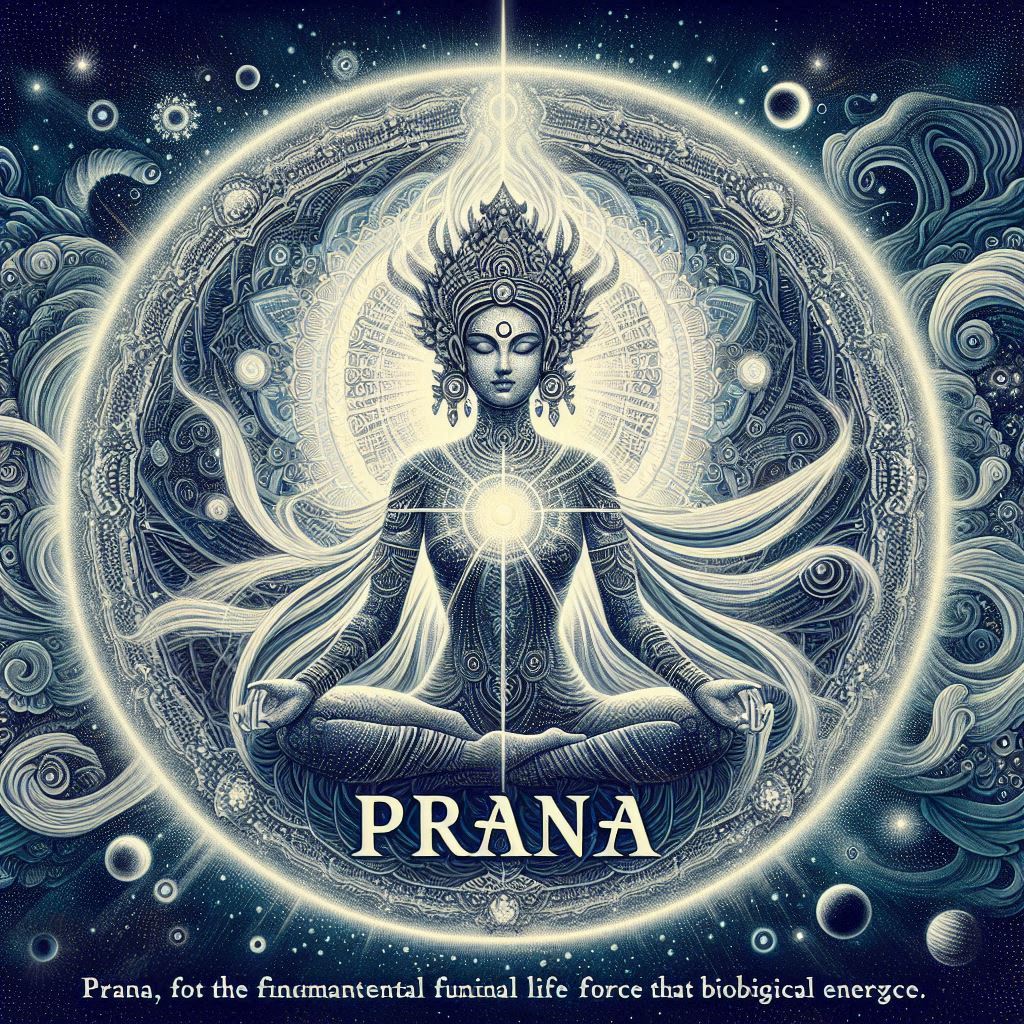
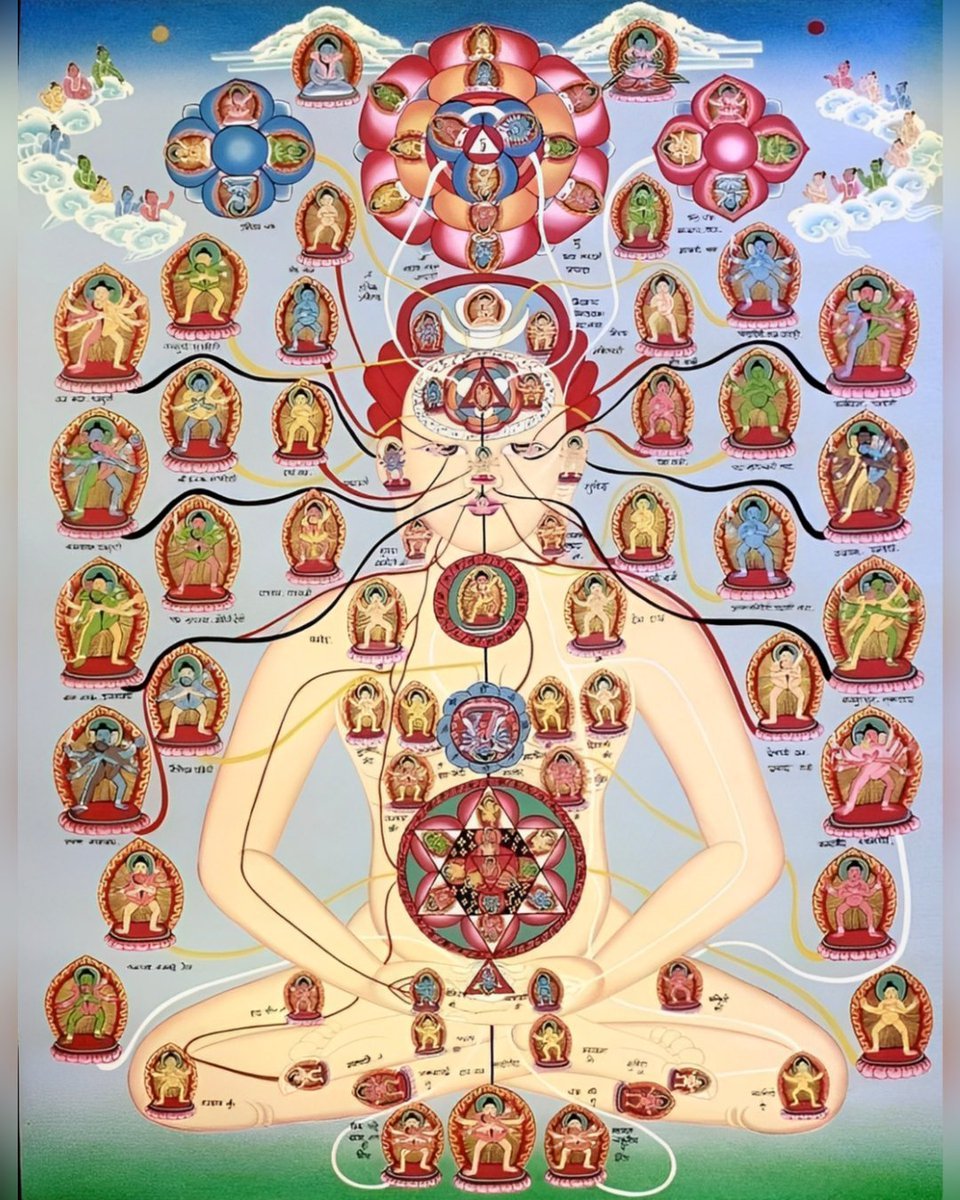
Prana is described as the fundamental life force that permeates all existence. It’s not merely the breath or biological energy, but rather a cosmic principle that manifests as the very essence of life itself. This concept is intricately connected to the Goddess Shakti, who is seen as the primordial energy that animates the entire universe.

According to the Kalika purana, Prana is the subtle manifestation of Shakti’s power that operates at different levels of existence. At the cosmic level, it’s the vital force that sustains the universe. At the individual level, it flows through the human body, animating it and connecting the physical form to higher states of consciousness.

The  five primary forms of Prana, known as the Pancha Pranas:

1. Prana (in the specific sense):

This aspect governs inhalation and is located in the heart and chest region. It’s responsible for the forward movement of energy and is associated with the element of air. This form of prana controls perception, consciousness, and mental activities.

2. Apana:

Located in the lower abdomen, this downward-moving energy governs excretion, reproduction, and elimination. It’s associated with the earth element and is crucial for grounding and stabilizing the body’s energies.

3. Samana:

This is the balancing or equalizing force located in the navel region. It governs digestion and the assimilation of nutrients and experiences. Samana is associated with the fire element and transforms everything it encounters.

4. Udana:

This upward-moving energy is located in the throat region. It governs speech, growth, and spiritual elevation. Udana is associated with the element of water and is particularly important in spiritual practices as it can direct consciousness toward higher states.

5. Vyana:

This is the pervasive energy that circulates throughout the entire body. It coordinates the other pranas and governs circulation and nervous impulses. Vyana is associated with the ether element and maintains the connection between all bodily systems.

A Divine Architectural Metaphor.

Write about a time when you didn’t take action but wish you had. What would you do differently?

The concept of Samayachara worship:


Core Concept:

Samaya chara worship is fundamentally about the fusion of chit Shakti (divine consciousness) with Brahman (ultimate reality).
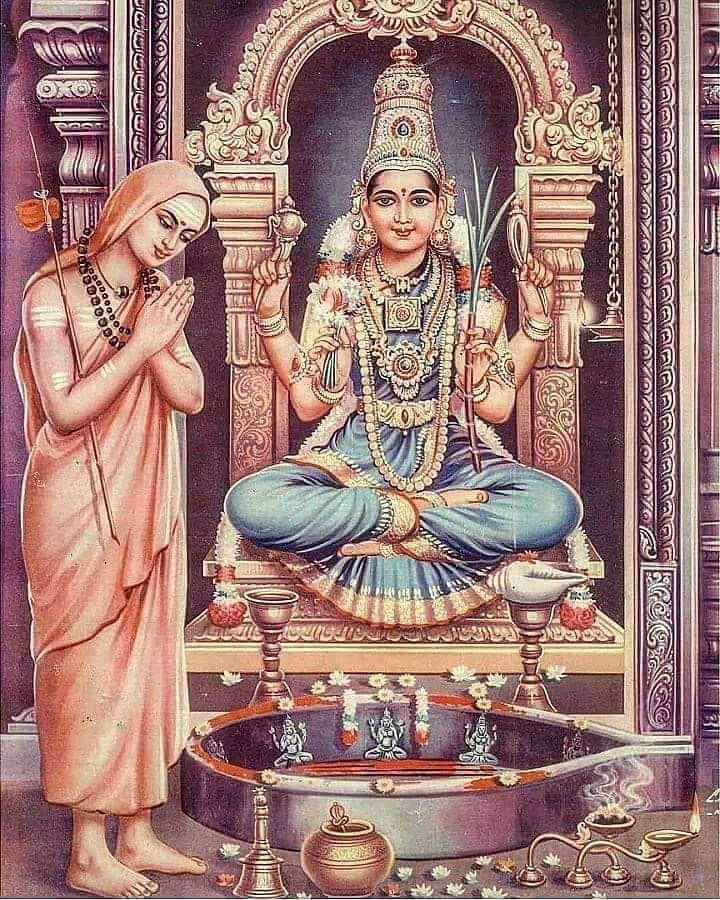
In this tradition, Shiva and Sridevi are viewed as complementary forces – Shiva as Samaya and Sridevi as Samayaa.

The Five-Fold Unity of Shiva and Shakti

1. Adhishthana Samya (Unity of Abode)

They share the same divine dwelling place or domain.


2. Anushthana Samya (Unity of Action)

Both engage in identical cosmic activities, particularly in the act of creation.


3. Avastha Samya (Unity of State)

They mirror each other in divine states and expressions, such as the dances of Lasya and Tandava.


4. Nama Samya (Unity of Names)

Their names reflect their inherent connection:

– Shiva and Shivaa
– Samaya and Samayaa


5. Rupa Samya (Unity of Form)

They share identical physical characteristics:

– Both have three eyes
– Both are associated with the color red
– Other physical attributes are matched

The Sacred Palace of Sricakra: A Divine Architectural Metaphor

In the illustrious city of Sri pattana, a remarkable palace stands, constructed entirely from luminous Cintamani gems. The palace features three distinctive towers named Iccha Sikhara, Kriya Sikhara, and Jnana Sikhara, symbolizing desire, action, and knowledge. With four cardinal doors called Amnaya devas representing the Vedas: Purva, Dakshina, Paschim, and Uttara

The palace embodies sacred geometric precision. At its center, the Bindu Peetha, a powerful seat with four-sided steps, represents multiple divine aspects: Sri Peetha (prosperity), Maha Peetha (greatness), Vidya Peetha (knowledge), and Ananda Peetha (bliss). The entire structure follows the intricate design of Sri chakra, housing all male and female deities of this mystical configuration.

The central cot, resting on four divine legs: Brahma, Vishnu, Mahesana, and Iswara, which is supported by Sadasiva. Leading to this sacred space are 36 steps representing spiritual dimensions, with a foot rest positioned before the cot. A swan like bed adorns the cot, accompanied by two head pillows and one leg pillow, covered by a light red blanket. Upon this sacred throne, Lord Kameswara sits facing east, eternally manifested as a sixteen year old boy with four hands and three eyes, wearing elaborate ceremonial attire. On his lap resides Lalitha Devi, also perpetually sixteen, with a rosy complexion, four hands, and adorned with the moon, her name derived from her ability to please Sadasiva, embodying the principle of divine feminine grace.

These will help calm your mind and bring balance to your emotions.

What relationships have a positive impact on you?

Our surroundings & I

Negative energies or energies are those forces that are not made for this world but still reside here in a supernatural form. Since they are not in harmony with nature, they are harmful to human life and its energy, but this effect is not universal. Some people quickly come under the influence of such negative energies. Due to mental and emotional weaknesses, a person can pull negative energies towards him Many types of bad habits in lifestyle, such as spending time in negative places or with people, weaken the energy of the person. Its main effect is on our mental health, so we need to know about it. Weakening of the aura can be the main reason for a person to come under the influence of negative forces

I see so many people struggling with such overwhelming emotions, especially at an age when life should be full of hope and possibilities. Usually, I don’t respond to messages that focus on such negativity, and I won’t reply to each of you personally this time either. I feel the need to share something that can genuinely help you overcome these feelings of despair.

I assure you, it can make a difference.


This remedy is not just a suggestion it’s something I’ve seen work for many individuals who have tried it, along with certain astrological practices. It can bring about a positive change in your life, but only if you are willing to take the first step. If you truly want to heal, follow this remedy with faith and commitment. I assure you, it can make a difference.

1. Sharp writing.

Take a notebook or diary and start writing down everything on your mind. Whatever is troubling you….your fears, guilt, pain, or anything you can’t share with anyone, just pour it out. Write every single day. Don’t worry about how it looks or sounds….this is just for you. Write at least two pages daily.

2. Start filling up.

When your diary starts filling up, start reading it. Begin with a few pages…don’t rush. Allow yourself to feel everything as you read….if you cry, let it out. If you feel angry, let yourself feel it. Keep reading and re-reading until the emotions lose their grip on you.

3. What are you doing??

Keep this diary safe. Hide it safely in a cupboard, a drawer, or any place where no one else can access it. This is your safe space.

4. Step 4.

When you feel that the words no longer hurt you and seem like just ink on paper, it’s time to let go. Burn the diary. Tear the pages one by one and safely burn them. Let the flames take away all the pain and negativity.

5.  useful !!

Alongside this, start practicing meditation, Trataka (focused gazing), Yoga Nidra (deep relaxation), and cleansing techniques from Ayurveda(षट्कर्म).
To avoid negativity, it is very important to adopt a positive attitude, do regular meditation and yoga, and follow a balanced lifestyle. According to spirituality, everything is a form of energy, and the human aura is also a form of energy. Those whose aura is weak quickly come under the influence of negative energy. Mental, emotional, and spiritual weakness is the main cause. Also, psychological, spiritual, and external factors can also be responsible for this.  A mind full of fear and stress attracts negative energies. Mental exhaustion and negative thinking weaken a person’s energy, making them more vulnerable to external negative influences

Strengthen an energy

Spiritual Weakness Not practicing regular meditation, prayer, or positive energy can weaken a person’s spiritual protection, making him more vulnerable to external negative energies. A lack of knowledge of negative energies and their nature can force a person to attract them unknowingly. Engaging in spirits or supernatural activities without safeguards can be extremely risky. Factors that hinder spiritual energy, such as impurity of place, old negative events, or unfulfilled spirits, can affect the individual.  Places filled with negative energy, such as controversial, deserted, or accidental areas, can affect the person quickly. Spending time with negative people and physical exhaustion weakens mental and spiritual energy, which can lead to negative energies. Our energy (aura) protects us from external negative influences. But if it becomes weak, the person becomes more sensitive. An imbalance of the seven chakras in the body can cause mental, physical, and spiritual weakness

Remember, this is a journey, and it’s not always easy. Some days you won’t feel like writing or reading, but fight through it. Push yourself. You are stronger than you think. This is your battle, and you can win it. When you’ve completed this process written, read, and burned your diary, message me. That’s when I’ll reply to you personally. Healing is a step-by-step process, but trust me, you can come out of the darkness. Just take the first step. Adopt a positive attitude. Meditate, do yoga, pray, and chant mantras. Use Rudraksha, or Raksha Kavach, to strengthen the energy. Light a lamp of incense regularly in the house. Eat a balanced diet, sleep well, and exercise. Surround yourself with positive people and stay away from negative places. Be sure to read

Energy moment new cell born.

What is something others do that sparks your admiration?

Passed on your ancestors.

Sanatan Dharma culture believes that the universe has been created only by sound and pure light! The soul is the cause of this world! In Sanatan Dharma, some sounds are considered sacred and mysterious, such as temple bells, conch shells, flutes, manjira, and damru! Damru or Dugduggi is a small musical instrument! Damru has been given great importance in Hinduism, Tibetan, and Buddhism!  In Sanatan culture, only two Gods see Damru in their hands, one is Adiyogi Shiva and Lord Dattatreya. In this blog, we will all worship a part of Dattatreya, the supreme supreme God of Guru power. Powers like Damru, Trishul, Lotus, Pash, and Ankush are seen in the hands of many Gods and Goddesses. Now the trident and damru are also seen in the hand of Lord Shiva. However, the Damru Trident in the hand of each deity has a great difference in the energy of all. The power installed in each trident and every damru is different. How does the Yogini Shakti work on the sound of Damru, and all the Yogini powers of Dattatreya Ji are controlled by that sound? I will write it in detail in another blog.

Ancient moments like RSS

Sripada Srivallabha is an Indian guru of the Dattatreya Sampradaya (Lineage) who is regarded as an incarnation of Dattatreya. He was born in the early 14th century in Pithapuram, formerly known as Pithikapuram in Andhra. He lived for 30 years and disappeared as a human but still exists in ‘Tejorup’ (Pure energy form).
He is believed to have reincarnated as Nrusimha Saraswati (1378−1459 CE) in Karanja, Maharashtra.
His biography was written by 16th-century kannada-marathi poet Saraswati Gangadhar.

“Guru Chaitra” is written as a conversation between Siddha (who is a disciple of Sri Narasimha Saraswati) and Naamdharak who is listening to him. Guru Charitra is assumed to be written in a village in Karnataka known as Kadaganchi or Kudugunchi. It is possible that the Sanskrit version of the Guru Chaitra was written by Narasimha Saraswati’s disciple, Siddha, and Gangadhar Saraswati translated that into Marathi.  Gangadhar mentions that his ancestor Sayandev was one of the four close disciples of Nrusimha Saraswati. Gangadhar also mentions four generations that passed away between him and his ancestor Sayandev.

This matches with information that Guru Charitra must have been written in the late 16th century, although Vasudevanand Saraswati, alias Tembe Swami, (1854-1914 CE) wrote a Sanskrit version of Sri GuruCharitra later. This Marathi version of Guru Charitra, written during the late 16th century, mentions the first incarnation of Dattatreya as Sripada Srivallabha between chapters 5 and 10. These chapters mention a rich Brahmin trader named Vallabhesh, born in Kasyapa gotra. He vowed to Sripada SriVallabha that he would visit Kuruvapuram, the place where Sripada lived most of his life, and feed 4000 Brahmins if he earned more profits in his business. Later when Vallabhesh earned profits in business, he started towards Kuruvapuram but was attacked by dacoits, who robbed and killed him.

Before collapsing, he shouted ‘Sripada Srivallabha….”
Sripada Srivallabha appeared with a Trishul in his hand and stabbed those dacoits to death. One of those dacoits fell on his feet and begged for mercy.
Sripada gave him Bhasma (holy ash) and made him use it to bring back the dead Vallabhesh, who disappeared. This incident happened in a village called Manthangoud, which is on the way to Kuruvapuram.

This incident was narrated through the lineage of Vallabhesh, and 9 generations later, his descendant, Keshav Baliram Hedgewar, born on 1st April 1889 in Kadakurthi village of Nizamabad district of Telangana, went on to start Rashtriya Swayamsevak Sangh (RSS) on Vijayadasami day, which is 27th September 1925 in Nagpur. This is written in Dr. Hedgewar Charitra by N. H. Palkar and English translation, “

India was an ancient civilization, and the freedom struggle was an attempt to re-establish a land for the Hindus after almost 800 years of foreign rule, primarily by the Mughals and then by the British. An army of Muslims invaded and ruled over Hindus, while a bunch of British ruled India because Hindus had degenerated and lacked knowledge of their roots. He was arrested after being released in 1922, he became disgusted with what he believed was the appeasement of Muslims by the Congress during the Khilafat movement.  He believed that this would result in Muslim communalism and, though intended to win them over to the freedom struggle, could, in the long run, sow the seeds of separation. Dr.Hedgewar concluded that all the problems he felt the Hindu community in India faced—subjugation and oppression by ‘foreigners’ in the present and past, provincialism, and untouchability – were a result of an inherent flaw in the Hindu character rather than problems themselves

He felt that the remedy was a cultural organization that would unite Hindus on a common platform and instill among them discipline and national character. In this endeavor, he was blessed by Vinayak Damodar Savarkar, who was then under house imprisonment in Ratnagiri. The senior Hindu Mahasabha leaders of Nagpur, Dr. B. S. Moonje and Dr. L. V. Paranjpe, actively supported Hedgewar in starting such an organization.
RSS, today, is the world’s largest socio-political organization going by membership count.

Thoughts and the Emergence of Destiny

What is your favorite form of physical exercise?

Journey from Thought to Destiny:

Journey from Thought to Destiny:
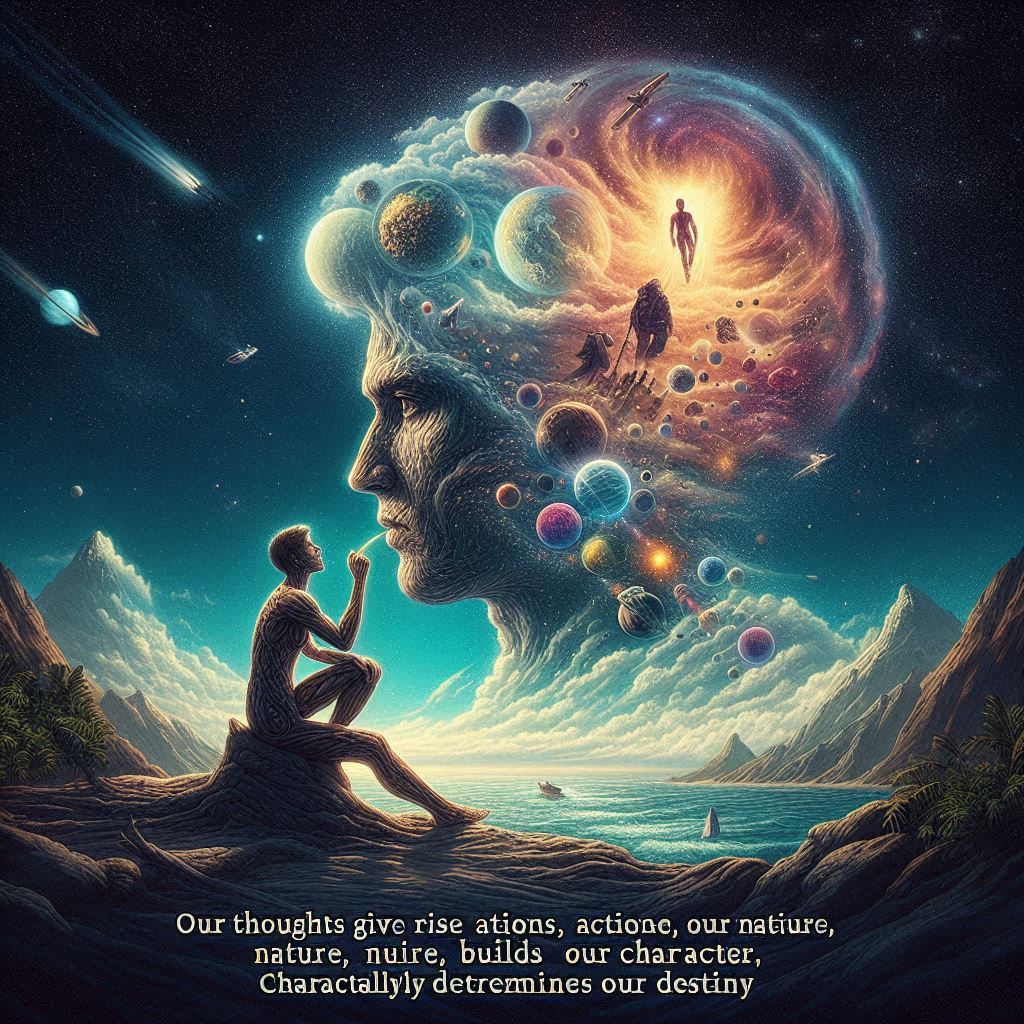
Our thoughts give rise to actions, actions shape our nature, nature builds our character, and character ultimately determines our destiny. This thought emphasizes that every stage of our life begins with our thoughts. When we hold a thought in our minds, it transforms into our actions. Our actions shape our nature, which in turn builds our character. Ultimately, our character determines our destiny or fate.

“The Power of Bhagwan Satyanarayana” is a Story from the Upanishads.
Once upon a time, there was a Brahmin who regularly worshipped Bhagwan Satyanarayana. He performed his rituals with devotion and kept his thoughts pure and sacred. One day, a sage asked him why he worshipped with such devotion and regularity.

The Brahmin replied, My thoughts are pure, which makes my actions pure as well. When I perform righteous actions, my nature becomes pure. And when my nature is pure, my character becomes noble. This improves my destiny, bringing me peace and prosperity. The sage said, Your understanding is in alignment with what is described in the Upanishads. Our thoughts guide our lives. Therefore, we must always keep our thoughts pure and positive. Thus, through his worship and the purity of his thoughts, the Brahmin not only improved his own life but also imparted a message to society that it is our thoughts that shape our destiny.

“Let your thoughts be the seeds of purity, your actions the blossoms of righteousness, your nature the fragrance of virtue, and your character the fruit of destiny.” This captures the essence of how our inner world shapes our outer reality. By nurturing pure thoughts, we lay the foundation for a life of integrity, peace, and fulfillment.

Central upnishad

1. ऋगवेद (Rig Veda) : प्रज्ञानं ब्रह्म

Pragnanam Brahm –
Brahm is intelligence, is a Defining aphorism (Lakshana Vakya)

2. यजुर्वेद (Yajur Veda) : अहं ब्रह्मास्मि

Aham Brahm Asmi –
I am Brahm, is an Experiential aphorism (Anubhava Vakya)

3. सामवेद (Sama Veda) : तत्त्वमसि

Tat Tvam Asi –
That you are, is a Teaching aphorism (Upadesha Vakya)

Immerse in your infinite knowledge.

What alternative career paths have you considered or are interested in?

Spirituality is beyond science.

Mother Nature has created this world 432 million years ago. There is a catastrophe of the same number of years. It has been 1,96,08,53,125 years since the creation was created. This is the time it has been since the Vedas were born. All the religious texts of the world are within 5000 years but the Vedas are the oldest. Other opinions also believe this. This is Sanatan’s unique heritage. Therefore, Sanatan is considered eternal

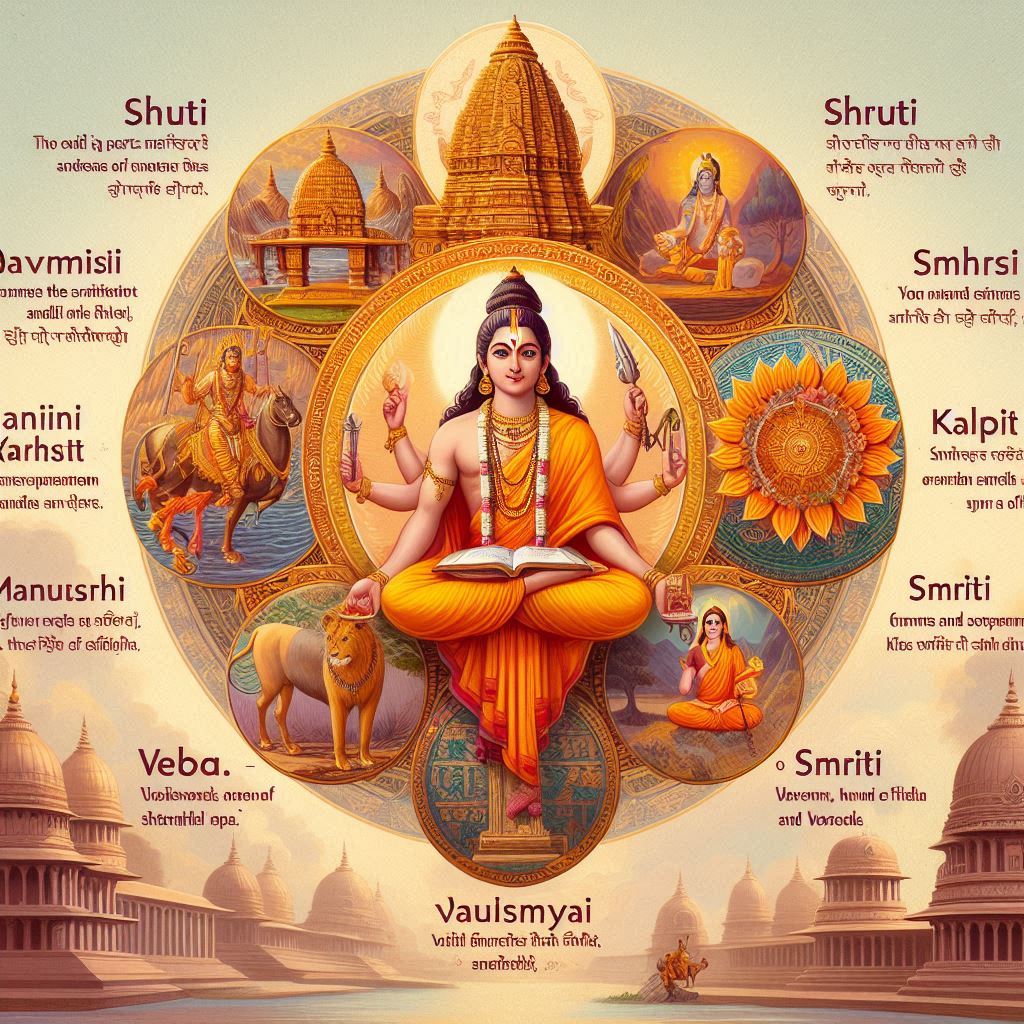
To understand Indian scriptures and Vedic knowledge, the scriptures are divided into two parts: Shruti and Smriti. Shruti includes the scriptures Vedas and Smriti includes books of history and interpretation of the Vedas, Manusmriti, Yajnavalkya Smriti, etc. The Vedas are the symbols of eternal and eternal truth. The Vedas have 6 अंग and 6 उपांग . Which helps in knowing the Vedas. The 6 limbs of the Vedas are Varna Shiksha, Panini Krita व्याकरण (Ashtadhyayi), Kalpa, Maharishi Yaska Krita Nirukta, Maharishi Pingal Krit Chhanda and Jyotish etc. This is explained to you in just a few words. This is to be understood

6 उपांग Philosophy:

(1) Yoga Darshan (Maharishi Patanjali)

(2) Sankhya Darshan (Maharishi Kapil)

(3) Nyaya Darshan (Maharishi Gautam)

(4) Vaisheshikadarshan (Maharishi Kanada)

(5) Mimamsa Darshan (Maharishi Jaimini)

(6) Vedanta Darshan (Maharishi Vyasa)

Although more than 100 Upanishads are found in the spiritual field of Indian culture, it is necessary to read 11 Upanishads before studying Vedanta philosophy. Those Upanishads are as follows –

1. ईशोपनिषद
2. केनोपनिषद
3. कठोपनिषद
4. प्रश्नोपनिषद
5. माण्डूक्योपनिषद
6. मुण्डकोपनिषद
7. ऐतरेयोपनिषद
8.  तैत्तिरीयोपनिषद
9.  बृहदारण्यकोपनिषद
10. छांदोग्योपनिषद
11. श्वेताश्वतरोपनिषद .

There are only 4 interpretation books of the Vedas – (Brahmin texts)

(1) Aitareya Brahmins

(2) Shatapatha Brahmins

(3) Tandya Brahmins

(4) Gopatha Brahmins.

Case-ending showing possession or relation

Is complete knowledge hidden in the Vedas?

The Vedas are full of knowledge related to almost all subjects, like God, the universe, astrology, mathematics, chemistry, medicine, nature, astronomy, geography, religious rules, history, rites, customs, etc. The four Vedas are Rigveda, Yajurveda, Samaveda and Atharvaveda. There are only 4 upavedas. Ayurveda of Rigveda, Dhanurveda of Yajurveda, Gandharva Veda of Sama Veda and Atharva Veda

Rigveda:

ऋक means status and knowledge. It has a lot to do with geographical location and mantras invoking the deities. The hymns of the Rig Veda contain prayers, praise of the gods and descriptions of their position in Devlok. It also provides information on water therapy, air therapy, solar medicine, psychiatry and healing by Havan. The description of substances ranging from nature’s smallest atom to God is found in the Rigveda. It has 10522 mantras. The knowledge of Rigveda was received in the soul of Maharishi Agni

Yajurveda –

यजु means moving sky and action. Yajurveda contains the methods of sacrifice and the mantras used in sacrifices. We can understand the 16 rituals properly from Yajurveda. Apart from sacrifice, philosophy is described. Element knowledge means mystical knowledge. Knowledge of the universe, soul, God and matter. There are two branches of this Veda, Shukla and Krishna. There are 1075 mantras in Yajurveda. The knowledge of Yajurveda was received in the soul of Maharishi Vayu


Samaveda:

साम means transformation and music. Gentleness and worship. This Veda has a musical form of many hymns of the Rig Veda. It mentions about the gods Savita, Agni and Indra. It also makes references to classical music and dance. This Veda is considered to be the origin of music science. It has 1875 mantras. The knowledge of Samaveda was received in the soul of Maharishi Aditya

Atharva Veda:

अथर्व means vibration and Atharva means vibration. This Veda mentions mystical sciences, herbs, miracles and medicines of Ayurveda etc. It also provides knowledge of Indian tradition and astrology. By studying it, all doubts are solved and the vibration of the mind ends. It has 5977 mantras. The knowledge of Atharva Veda was received in the soul of Maharishi Angira.

6 limb of Sanatan.

To know the Indian Sanatan culture, it is very important to study 6 scriptures with the knowledge of the four Vedas.  So these 6 scriptures are also called the Upavedas of the Vedas i.e. philosophy . Our sages have created these 6 philosophies by incorporating the doctrines scattered everywhere in the Vedas, on the basis of which we can understand this divine knowledge accurately. These 6 Vedic philosophies are called theistic philosophies. These are our logics, by reading which the intellect of every human being opens and he never confuses and doubts about God, religion, unrighteousness, truth, falsehood etc. By reading these philosophical scriptures, all kinds of doubts are resolved automatically. These 6 philosophies are as follows:

(1) Nyayashastra: –

It has been composed by Gautam Muni. The subject of this scripture is mainly logic. This philosophy has been created with the purpose of separating truth and falsehood from the world spread around him through four types of evidence (direct, inference, simile and word.

(2) Vaisheshika Shastra: –

It has been composed by Kanad Muni. This scripture is about material knowledge. How to know the qualities and karma of the substances that God has created for us and use them? This is the subject of this scripture. (This is physics.)

3) Sankhya Shastra: –

It has been composed by Kapil Muni. Its main theme is how the creation originates from the most subtle particles of nature (Word, Touch, Form, Taste and Smell) from Sat, Raja, and Tama. How are all substances similar and characteristic? This scripture completely explains the difference between nature and soul.

(4) Yoga Shastra: –

It has been composed by Patanjali Muni. Its main topic is to tell the method of attaining salvation by following the eight limits (Yama, Niyama, Asana, Pranayama, Pratyahara, Dharana, Dhyana, Samadhi) by getting rid of all sorrows

5) Mimamsa:

It has been composed by Jaimini Muni. Its subject is that by following what kind of Vedic rituals and limitations, a person can become completely happy and can attain salvation, the goal of his life?

(6) Vedanta (Brahmasutra):

It has been composed by Ved Vyasa Muni. Its main theme is to describe the nature of God, his qualities, knowing which man should get rid of all doubts about him and start worshiping him and attain them by practicing yoga.

Praying with Spiritual Emotion (Bhāv) :

◆ God Principle:

The divine essence flows through spiritual practices.


◆ Transmission of Frequencies:
N
5% of frequencies of Divine Consciousness (Chaitanya) are transmitted outside the body. Seekers can access up to 20% of frequencies of Divine Consciousness (Chaitanya).


◆ Protective Sheath:

A protective layer surrounds the seeker.


◆ Spreading of Divine Consciousness:
15% of the accessed Divine Consciousness spreads into the body of the seeker.

The 11 RUDRA

If you could host a dinner and anyone you invite was sure to come, who would you invite?

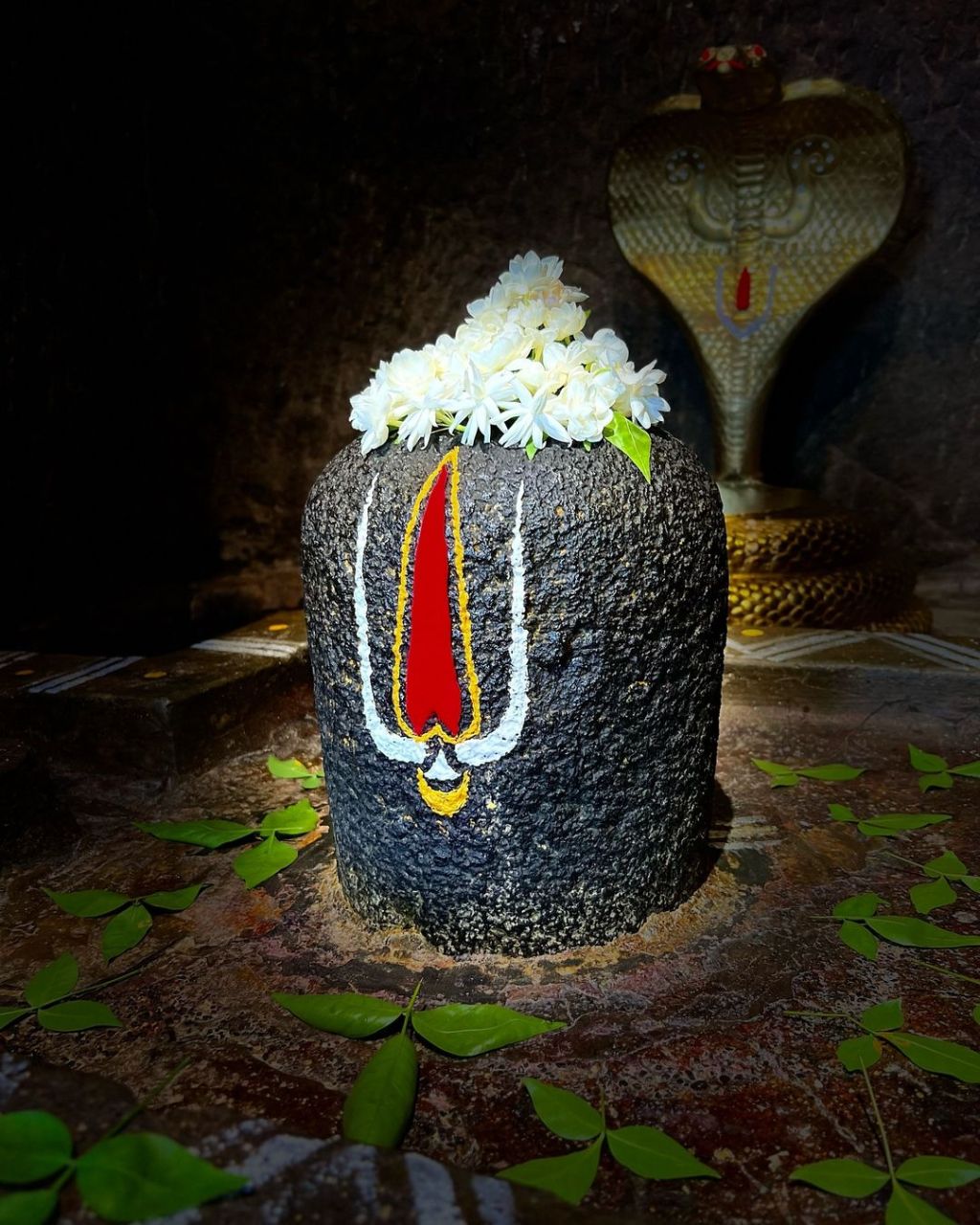
Worship of SHIVA

Many mantras in the Veda directly mention Shiva, like the following from the Rig Veda-

कैलासशिखरे रम्ये शंकरस्य शुभे गृहे ।
देवतास्तत्र मोदन्ि तन्मे मनः शिवसंकल्पमस्तु ।।

“On the charming peak of Kailasha mountain is the home of the Peace-creator Shivawhere all Gods ultimately rejoice. May my heart always rejoice with shiva thoughts.”

In the Rigveda, Bhagawan Shiva is referred to as Rudra, who is described as a powerful and benevolent deity. The Rigveda describes Rudra as the god of hunting and the protector of cattle. It also mentions his association with the bow, the arrow, and the storm, which symbolize his power and his ability to destroy evil.
The Yajurveda, another Veda in Hindu scripture, mentions Bhagawan Shiva as a god who is capable of destroying evil and ignorance. It also describes him as a god of fertility and as the one who bestows long life and prosperity. In the Atharvaveda, Shiva is described as the god of medicine and healing, who can cure physical and mental diseases. This Veda also mentions the importance of the worship of Shiva and the various rituals associated with his worship.


अजं शाश्वतं कारणं कारणानां
शिवं केवलं भासकं भासकानाम्
तुरीयं तमःपारमाद्यन्तहीनं
प्रपद्ये परं पावनं द्वैतहीनम्

The one who is beyond birth, the permanent one, the one who is the cause of the causes, the one who illuminates the whole Universe, the one beyond the three states, without beginning and end, the Destroyer of ignorance and struggle, the one beyond all duality, I offer my obeisance to him, the purest. Bhagawan Shiva has more than 1500 names and each name denotes a form so we can say he has thousands of forms

Significance of Rudra Avatar-

1) Kapali
2) Pingal
3) Bheem
4) Virupaksha
5) Vilohit
6) Shastra
7) Ajapaad
8) Ahirbudhnya
9) Shambhu
10) Chand
11) Bhav.

You know SHIVA


God resides within our body, in the cavity of the heart. This God is eternal. The Supreme Soul, who is one and infinite, is the Master of this physical body of ours, and this entire earth resides within His body. This God who circulates within the earth cannot be recognized by the earth itself. This shows that the elements of the physical world (such as the earth) are unable to understand the true nature of the soul.
Water, fire, air, space, mind, intellect, ego, mind, letters, and death, God is located in all of them and is the origin of all these

अन्तःशरीर निहितो गुहायामज एको नित्यमस्य पृथिवी शरीरं यः पृथिवीमन्तरे संचरन् यं पृथिवी न वेद ।
यस्यापः शरीरं योऽपोऽन्तरे संचरन् यमापो न विदुः ।
यस्य तेजः शरीर यस्तेजोऽन्त संचरन्यं तेजो न वेद ।
यस्य वायुः शरीरं यो वायुमन्तरे संचरन् यं वायुनं वेद ।
यस्याकाशः शरीरं च आकाशमन्तरे संचरन् यमाकाशो न वेद ।
यस्य मनः शरीरं यो मनोऽन्तरे संचरन्यं मनो न वेद ।
यस्य बुद्धिः शरीरं यो बु
द्धिमन्तरे संचरन् बुद्धिर्न वेद ।
यस्याहंकारः शरीरं योऽहंकारमन्तरे संचरन् यमहंकारो न वेद।
यस्य चित्तं शरीरं यश्चित्तमन्तरे संचरन् यं ।
चित्तं न वेद ।
यस्याव्यक्तं शरीरं योऽव्यक्तमन्तरे संचरन् यमव्यक्तं न वेद ।
यस्याक्षरं शरीर योऽक्षरमन्तरे संचरन् यमक्षरं न वेद ।
यस्य मृत्युः शरीरं यो मृत्युमन्तरे संचरन्यं मृत्युर्न वेद ।
स एष सर्वभूतान्तरात्माऽपहतपाप्मा दिव्यो देव एको नारायणः।
अहं ममेति यो भावो देहाक्षादावनात्मनि।
अध्यासोऽयं निरस्तव्यो विदुषा ब्रह्मनिष्ठया ॥

This God is the conscience of all living beings and He is free from all sins, divine and only Narayana.  The sense of “ego” (ego and affection) that appears in the body and senses is false. This false intention must be eliminated through the knowledge of Brahman and the stillness of the soul. The wise man who has faith in Brahman. This verse inspires us to understand the true nature of the soul and the divine and encourages us to look beyond the material elements of this world. The omnipresence of God and His unknowability teach us that true divinity and knowledge can only be attained through the soul.
This verse presents the essence of Vedanta philosophy, which describes the unity of the soul and the divine, their omnipresence and ignorance. It teaches us that the elements of the material world are unable to understand the true nature of the soul and that true knowledge can be attained only through the purification of the so

Create new positive neuro pathways of ancient knowledge.

How do you feel about cold weather?

Gravity in Vaisheshika Sutra

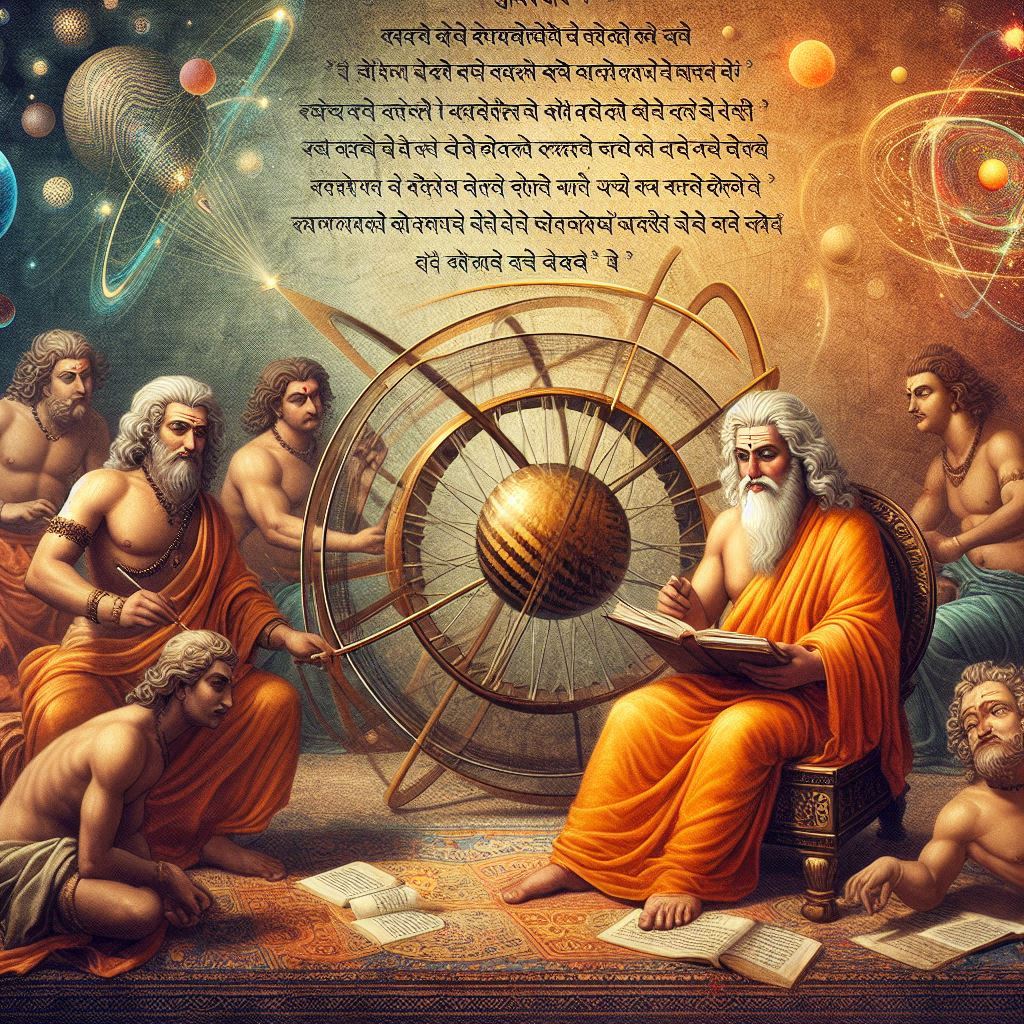
It’s fascinating to explore how ancient Indian philosophies and texts may have addressed concepts akin to modern gravitational theory long before Newton’s time. The Vaisheshika Sutra by Rishi Kanada is particularly intriguing as it predates Newton by over two millennia and contains verses that seem to describe gravitational principles.

1. The Nature of Objects Falling to the Earth:

The Vaisheshika Sutra mentions that objects tend to fall towards the earth due to an inherent property or force. This aligns with the idea that there is an attractive force between the earth and other objects, which we now identify as gravity. This recognition of a force causing objects to fall to the ground is a fundamental aspect of gravitational theory.

2. The Stability and Movement of Celestial Bodies:

The sutras also discuss how the stability and movement of celestial bodies are influenced by this attractive force. This can be seen as an early conceptualization of how gravity governs the motion of planets and other celestial entities, akin to the principles described by Kepler and Newton.

Verse 5.1.7:
Discusses how substances move downward due to an inherent force.

Verse 5.2.4:
Addresses the concept of attraction between substances, hinting at a force akin to gravity.

Interpretation and Comparison:

While these ancient texts don’t provide the mathematical formulations that Newton did, they demonstrate a conceptual understanding of gravity’s effects. This understanding is significant, showing that the idea of gravity as an attractive force was observed and noted by ancient Indian philosophers. In ancient Indian philosophy, the idea of “Gurutva Aakarshana Shakti” captures the essence of gravitational pull. The term “Gurutva” (mass) and “Aakarshana” (attractive pull) together indicate an awareness of the relationship between mass and the force it exerts, reflecting a sophisticated understanding of natural forces.

The exploration of gravitational concepts in ancient Indian texts like the Vaisheshika Sutra highlights a rich history of scientific thought in India. These early discussions on gravity illustrate how ancient scholars were keen observers of nature and sought to understand the forces governing the physical world. While Newton’s laws provided a detailed mathematical framework for gravity, it is remarkable to recognize that the fundamental ideas about gravitational forces were present in human thought long before his time.

आत्मकर्म हस्तसंयोगाश्च । (V.S. 5.1.6)

The action of the body and its members is also in conjunction with the hand.

संयोगभावे गुरुत्वात्पतनम (V.S. 5.1.7)

In the absence of conjunction falling results from Gravity.

Concept of air fall

नोदनाद्यभिषोः कर्म तत्कर्मकारिताच्च
संस्कारादुत्तरं तथोत्तरमुत्तरं च ।। (V.S 5.1.17)

The first action of arrow is from impulse; the next is resultant energy produced by the first action, and similarly the next next shloka-

संस्काराभावे गुरुत्वात्पतनम (V.S. 5.1.18)

In the absence of resultant/propulsive energy generated by the action, falling results from Gravity.
Rishi Varahamihira who is also supposed to be lived in the 5th century BCE, mentioned the

following shloka in his Surya Sidhanta, 12th chapter 32 shloka-

मध्ये समन्तादण्डस्य भूगोलो व्योम्नि तिष्ठति ।
बिभ्राणः परमां शक्तिं ब्रह्मणो धारणात्मिकाम् ॥

This verse conveys that the spherical Earth remains positioned at the center of the universe in space due to a special kind of energy that prevents it from falling away and helps it remain stable. The term ‘energy’ referred to in the previous shloka was further elaborated by Bhaskaracharya, a mathematician who lived in the 12th century AD. In his book Sidhanta Shiromani, Bhaskaracharya provided an explanation for this energy and named it “gurutvakarshan shakti.”

आकृष्टिशक्तिश्च महि तय यत्।
खष्ठं गुरु स्वभिमुखं स्वशक्त्या ॥
आकृष्यते तत्पततीव भाति।
समेसमन्तात् क्व पतत्वियं खे ॥

This verse explains that the energy present within the Earth is the power of attraction, known as “aakrushti shakti”, (according to the Bhaskaracharya).  Due to this attractive force, the Earth pulls objects towards itself, and this power is inherent and natural to the Earth. As a result of this pull, every object on Earth appears to be falling downward. Bhaskaracharya did not stop there; he concludes the shloka with a question: where can this Earth fall down in space? This passage eloquently captures the profound understanding of gravity and celestial mechanics found in ancient Indian texts. Aryabhatta’s poetic reference in the Gitikapada likens the gravitational pull to the way smaller flowers are drawn towards the center of the Kadamba flower cluster, metaphorically depicting the force that ties everything to the Earth’s center.

Vadic mantra = Attributing stability of celestial body.

The cited Vedic mantras further elaborate on this concept, attributing the stability of celestial bodies and their movements to gravitational forces:

Rigveda 8.12.28 and 8.12.30

यदा ते हर्यता हरी वावृधाते दिवेदिवे।
आदित् ते विश्वा भुवनानि येमिरे ।।

speak of the Sun’s radiant energy causing the planets to move in their orbits and remain stable due to the Sun’s attraction.

हिरण्यपाणि: सविता विचर्षणिरुभे द्यावापृथिवी अन्तरीयते।
अपामीवां बाधते वेति सूर्यमभि कृष्णेन रजसा द्यामृणोति॥

describes the Sun as holding the Earth and other heavenly bodies, preventing collisions through its attractive force.

According to Atharvaveda 4.11.1

अनड्वान् दाधार पृथिवीमुत द्यामनड्वान् दाधारोर्वन्तरिक्षम्।
अनड्वान् दाधार प्रदिश: षडुवीर्रनड्वान् विश्वंभुवनमाविवेश॥

uses the analogy of a bull pulling a cart to illustrate how the Sun controls the movements of planets.

The Taittiriya branch of Krishna Yajurveda

मित्रोदाधार पृथिवीमुतद्याम। मित्रः कृष्टी:।

emphasizes the Sun’s role in holding the Earth in space through its attractive power, with the term “Kristheeh” highlighting this force of attraction. These texts reflect a sophisticated grasp of gravitational principles, recognizing the Sun’s critical role in maintaining cosmic order. This ancient wisdom, although fragmented over time, underscores the depth of scientific thought in early Indian civilization.

Learn to utilize the tools that God offers to you

How do you balance work and home life?

The path of the mystic.

Spinal cord – The spinal cord is a part of the human body that is one to one and a half feet long. There are holes in the entire spinal cord, and 31 groups of nerves come out of it, the outer part is made of gray-colored material and the inner part is made of white matter. In the middle is the path of Sushumna Nadi. The spinal cord is the main function in keeping the human body upright. These nodes are located in our backside. There are 24 casseroles prominently in this backbone. These casseroles have holes from the inside. There are two ladies on either side of it. The left pulse is related to the nostril from the left side, it is called the lunar (ida) nadi. The second pulse remains on the right side, which is related to the nostril (hole) on the right side, it is called the Sun (Pingala) nadi. In between these two is the subtle Sushumna nadi. It involves subtle life. Physical vitality circulates in it.

The main centers of the body are connected to this spinal cord by nerves. Some are vital vessels, some are blood vessels. Similarly, something is going to give a sense of consciousness. To protect the 24 vertebrates from rubbing, a grease-like substance is filled in the middle of each vertebra. In which, due to disorder, there is pain in the waist or the uselessness of the lower part, etc

Similarly, by keeping feet in the lower and higher levels, the distance between these glands decreases or increases. So the body starts aching and the breathing process also starts getting interrupted. If the breath moves through the Ida nadi, then there is an effect of coolness in the body. Due to excessive movement of Pingala nadi, the body is affected by heat. According to pulse experts, it takes 1 hour to change one vowel or pulse from another to another. When both the nadis breathe equally, Sushumna comes from the nadi. When the Kaseru of Sushumna gets immobilized for some reason, there is a difference in breathing. For this reason, there is a difference in the subtle fibers of the body and the body becomes a victim of many diseases

Prevention of the spinal cord by rubbing the spinal cord – If there is a decrease in the spinal cord, the patient should do yoga of the spinal cord. Apart from this, the patient should lie down on the stomach and apply oil to the spine while on an empty stomach in the morning and massage it slowly. Do this sequence for 8-10 minutes, doing this for 4-5 days calms the disorders in the body. This action of yogis which keeps the spine straight and restraint on prana in the prana duct pulse makes them yogis, so calling the spine healthy is very helpful in the path of yoga.

Modern medical science is appreciated in many ways. Some of its things are commendable. But there is a huge incompleteness in its structure, in its entire system. If we consider the fact, then the truth is understood, the students of modern medicine acquire all their knowledge based on the dead body, but they try this acquired knowledge on the living body. The dead body is devoid of various barriers of bio-energy, life energy, electromagnetic energy, psycho-energy, and emotional energy, diseases occurring in the body, and mental diseases arise from the deviation in the variety of these energy flows. If the doctor lacks proper knowledge of all these, then his treatment will be said to be incomplete

In the science of yoga, the stars and constellations are different centers of life and diversity of energy. By knowing them, not only can life be known correctly, but it can also be properly utilized. For example, if those who have nurtured the center of life in their eyes look at someone, it will seem as if happiness is pouring in. The sight of such a person fills the person in front of you with joy In the science of inter-travel, knowledge of these body structures is found based on the spinal cord in the course of yoga practice. The structure of the body is as complex as it is enigmatic. The human body is very delicate and delicate. It contains millions of cells and thousands of nerves. All these have a very correct, strange, and automated system. The scientific community of the modern age has created very complex mechanical systems. But if you compare it with the body, they are nothing

Universe within you !!

What strategies do you use to cope with negative feelings?

The saptarishi

Man’s biggest problem is frustration. This frustration has made him angry, impatient, and jealous. The question to consider is that as modernity has developed along with civilization, frustration has also increased in the same proportion, whereas the opposite should have happened. After all, what is the reason that today’s man is so frustrated and mentally weak

On reflection, the answer is that the outer world of present man is separate from his universe, his inner world, and his body. The two are not in harmony whereas the reality is that the inner world is reflected in the external world. As is our internal environment, we create the outer world. This can be illustrated by an example. If your officer’s mood is bad on a day, then on that day the whole office is a little scared because those officers can get angry without any reason. A crowd of frightened passive people gathers around the person who gets angry quickly. But those frightened people are passive wrathful, there will be a chance to vent their anger on others. Due to this, frustration is increasing in greater measure, and every person, society, and country is bound to pay for it

Just as we are inside, so we create the outer world. The solution is inside, it has always been within us, just we do not know about it. In Indian spirituality, it is believed that whatever is in the universe is in the body, that is, the outside world is not aware of the inner world because no god or sage is located outside.

Rather it is located inside. This idea has come in Yajurveda as follows –

सार ऋषयः प्रतिहताः
शरीरे साम रक्षन्ति सदम प्रमादम् साप्तापः
स्वपतो लोकभीयुस्तत्र जागृतो अस्वप्नजो सत्रसदोच देषौ।।

According to Yajurveda, seven sages are located in this body and are constantly protecting it. In the dormant state, these seven sages pervading the body attain the living soul. But two gods are beyond dreams, always awake, whose names are Prana and Apana. There are seven sages – five are the sense organs, the sixth is the mind and the intellect is the element. The meaning of the sage in this verse is not a living awakened person but reasoning, a life force. The whole world is full of life force. Therefore, the establishment of sage elements in the senses and mind has been described in Yajurveda.

Vashishta:

The word Vashishta has subdued. Those who control everyone are Vashishta. Prana is such an element in the human body, which subdues everyone. Prana has control over the whole body, if the prana leaves the body, then what is the value of the body?

Bharadwaja:

Bharadwaja means to fill the force. The divine power of the mind can be filled only by force and this filling is Bharadwaja. If the mind is weak, the body becomes weak. No matter how savage a depressed person may be, he cannot do anything.

Jamadagni:

Jamadagni means bright fire and light. In this sense, the divine, radiant power is installed in the eyes of the sage Jamadagni. An eye without light or fire can do nothing. Let the eyes be so bright that they destroy the impure deed at the sight of it, and the Bhadram Pashyam… Jamadagni Rishi is needed to keep the eyes bright and radiant so that it becomes meaningful.

Vishwamitra:

The power of the sage is to be attained. Shrotra means the power of the ears. Vishwamitra means, the friend of all, if you have the power of Vishwamitra in your ears, then you will not be ready for anyone’s lowly words, i.e. bhadram karnebhih shrnuyam… You will always follow to listen to words of benevolence.  If Vishwakarma Rishi is established in speech, then the essence of the world will be in your favor. All his work will be accomplished. Vishwakarma means the one who creates all work with skill and beauty. It is a matter to think that if the abode of Vishwakarma is in your hands, then it is elevated, but why in speech


Reasoning or thinking is called power. In any creation, first the mind is active, then the intellect, then the speech, then the hand. First, the mind is made to do the work, after that, the intellect makes a policy about how it will be done, then the speech makes it a practical plan, and finally, the body executes it. In any composition, if the end is in action, the beginning is always in the mind, the mind controls our emotions. Perhaps for this reason, when Brahma started creating this world, he started with mental creation, and Maithuni, or anatomical creation came later There is a lot of tumult in our inner world at present. Our thinking power has become numb, due to which frustration and anger are increasing in our life, if we want to get rid of them, then the solution is only in contemplation, not in worrying because in contemplation the sage resides, the sage itself is the power of thinking. When the thinking power is awakened, man embarks on his inner journey where he finds answers to all those untold and unanswered questions.