The universe will reflect that back to you.

You have three magic genie wishes, what are you asking for?

Speed of Sun = 2000 yojanas + 2 kos (Asha yojana) per moment .


The Sun, which travels a distance of nine crores fifty-one lakh yojanas in one Ahoratri at such a rapid speed, is considered to be God in Sanatan culture. No object in this galaxy remains unreasonable; it is the foremost duty of every human being to respect them. One thing is clear from the description so far: the expansion of the solar system is nine crores and fifty-one lakh yojanas, and the orbital path of the earth is also the same. The Earth completes this distance in one Samvatsar, and the Sun completes this distance in one Ahoratra. The speed of the Sun is 20005 Yojanas per moment and the speed of the Earth is 26055 Yojanas per day.

Each body (mah) has two spines… 1 axial spine, and 2 revolution spines.

Each month rotates around its axis and moves bently, walking on a circuitous path. This inclination is considered by modern scientists to be 23 degrees. Just as the Earth has two spines, the Sun has two spines. The Sun rotates on its axis and completes one cycle in one Ahorattra, i.e. 9,51,00,000 yojanas. The Sun moves on its rotational path and revolves around the pole, taking one cycle to complete a cycle. These are the two spines of the Sun. Similarly, Dhruva also has two Meru. All the bodies are comprised of pairs of meru. Thanking these bodies is an important task. 

1.  The backbone that supports the structure of the body. It is also called the spinal cord.

2.  The life cycle of a living entity is also the journey from birth to death. Every living thing, every sun, constellation, star, and moon, is connected by two spines.

It’s a season. Ritaye Namah. Why does the sun move? Why does the earth collapse? Why does it spin? Walking is the sun’s destiny. It is the nature of the earth to revolve. Rotation is the destiny of the planets. The destiny which is narrated through the medium, the same destiny has also tied the planets. Everyone has an activity. They have an impact on mankind. The mood disposition is based on this object

The sun is moving, the earth is moving. They are all God. If the Lord does not act, how can the living entity be engaged in Kriya? Instinct is life. Retirement is death. God is a living being active. Therefore, nature has the status of a mother. Self-actions are religions. Acting according to one’s nature is Swadharma. Nature is pre-attained, from birth, from past birth, from destiny. Disposition cannot be changed. Nature is strong. It is our welfare to do natural actions. There is success in natural actions. Therefore, one should be engaged in natural action.

True infinite

यतः प्रवृत्तिः भूतानां येन सर्वमिदं जगत् ।

स्व कर्मणा तमभ्यर्च्य सिद्धि विन्दति मानव ॥

(गीता १८/४६)

We have our origin from the earth, we have our origin from us. The sun is the earth from the earth, the sun rises from the sky element and the sun is self-evident. Therefore, the sun rotates on its axis and performs its work, and sadhana, the pole traveling in its orbit, worships the sky. The earth worships itself while traveling on its axis and also worships the sun dancing around the sun. We worship ourselves in samadhi (suptatastha) and worship the five bhutas through daily activities. In doing so, the opening of the Surya Siddha, i.e., Anahad Chakra and the flow of infinite love, is a pleasant experience of spiritual life. There is a ritual of sadhana in the root of the earth element, which is the place of Lord Ganesha. Our Lord is the soul (Sun). The Lord of the Sun (Jyoti) is the sky (void. That is why it is said to be ego emptiness. I have very little capacity to put into words this universe and this beautiful Mother Nature.

On reaching the Supreme Stage, the yogi realizes that He is his own God. The goal of everyone’s life is to know oneself and believe in God. The sun is worshipping itself; the earth is doing its sadhana, which is based on tolerance. The creature is meditating. All are self-centered. This self-center is tied to some other center. The second is also tied to a third. Third, there is no end to a fourth, and so on. To make ends meet, we consider someone who is not bound by anyone. Therefore, Shiva is infinite

Thoughts and the Emergence of Destiny

What is your favorite form of physical exercise?

Journey from Thought to Destiny:

Journey from Thought to Destiny:
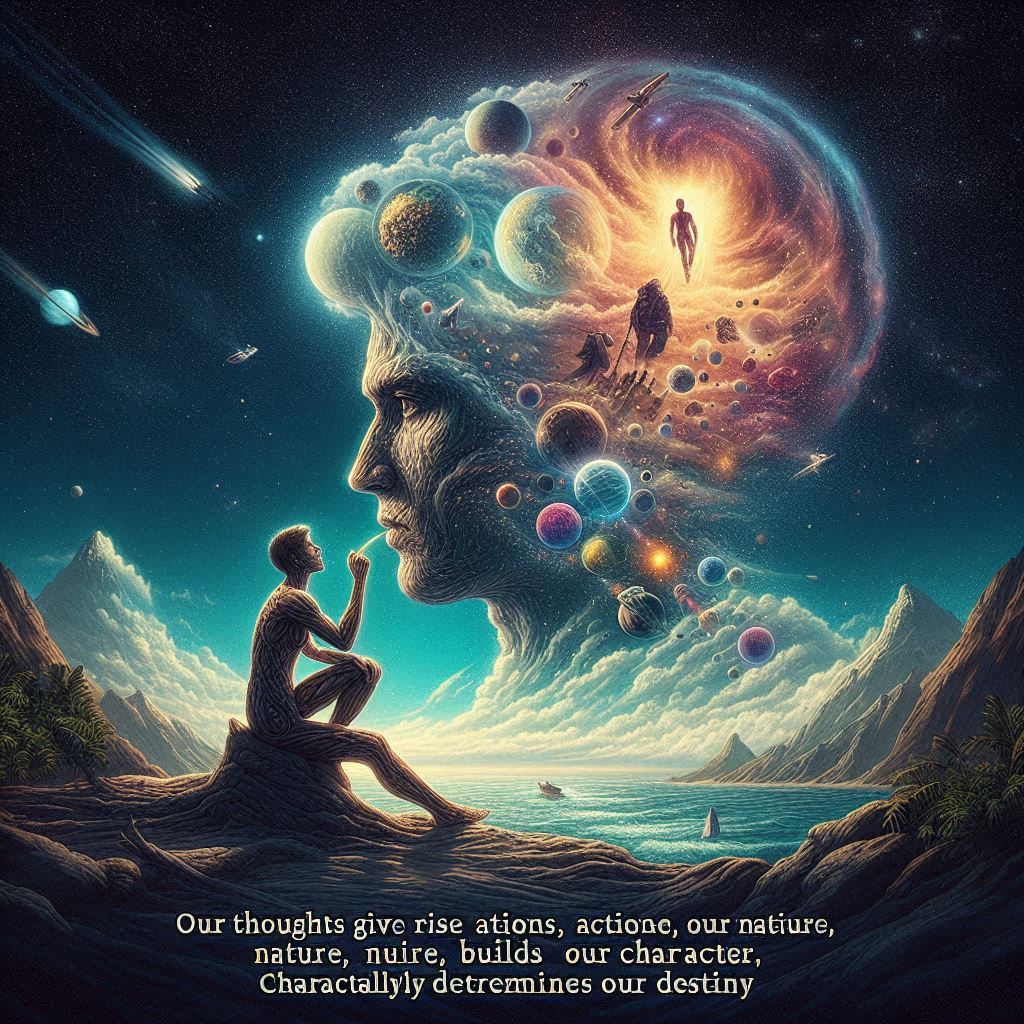
Our thoughts give rise to actions, actions shape our nature, nature builds our character, and character ultimately determines our destiny. This thought emphasizes that every stage of our life begins with our thoughts. When we hold a thought in our minds, it transforms into our actions. Our actions shape our nature, which in turn builds our character. Ultimately, our character determines our destiny or fate.

“The Power of Bhagwan Satyanarayana” is a Story from the Upanishads.
Once upon a time, there was a Brahmin who regularly worshipped Bhagwan Satyanarayana. He performed his rituals with devotion and kept his thoughts pure and sacred. One day, a sage asked him why he worshipped with such devotion and regularity.

The Brahmin replied, My thoughts are pure, which makes my actions pure as well. When I perform righteous actions, my nature becomes pure. And when my nature is pure, my character becomes noble. This improves my destiny, bringing me peace and prosperity. The sage said, Your understanding is in alignment with what is described in the Upanishads. Our thoughts guide our lives. Therefore, we must always keep our thoughts pure and positive. Thus, through his worship and the purity of his thoughts, the Brahmin not only improved his own life but also imparted a message to society that it is our thoughts that shape our destiny.

“Let your thoughts be the seeds of purity, your actions the blossoms of righteousness, your nature the fragrance of virtue, and your character the fruit of destiny.” This captures the essence of how our inner world shapes our outer reality. By nurturing pure thoughts, we lay the foundation for a life of integrity, peace, and fulfillment.

Central upnishad

1. ऋगवेद (Rig Veda) : प्रज्ञानं ब्रह्म

Pragnanam Brahm –
Brahm is intelligence, is a Defining aphorism (Lakshana Vakya)

2. यजुर्वेद (Yajur Veda) : अहं ब्रह्मास्मि

Aham Brahm Asmi –
I am Brahm, is an Experiential aphorism (Anubhava Vakya)

3. सामवेद (Sama Veda) : तत्त्वमसि

Tat Tvam Asi –
That you are, is a Teaching aphorism (Upadesha Vakya)

Immerse in your infinite knowledge.

What alternative career paths have you considered or are interested in?

Spirituality is beyond science.

Mother Nature has created this world 432 million years ago. There is a catastrophe of the same number of years. It has been 1,96,08,53,125 years since the creation was created. This is the time it has been since the Vedas were born. All the religious texts of the world are within 5000 years but the Vedas are the oldest. Other opinions also believe this. This is Sanatan’s unique heritage. Therefore, Sanatan is considered eternal

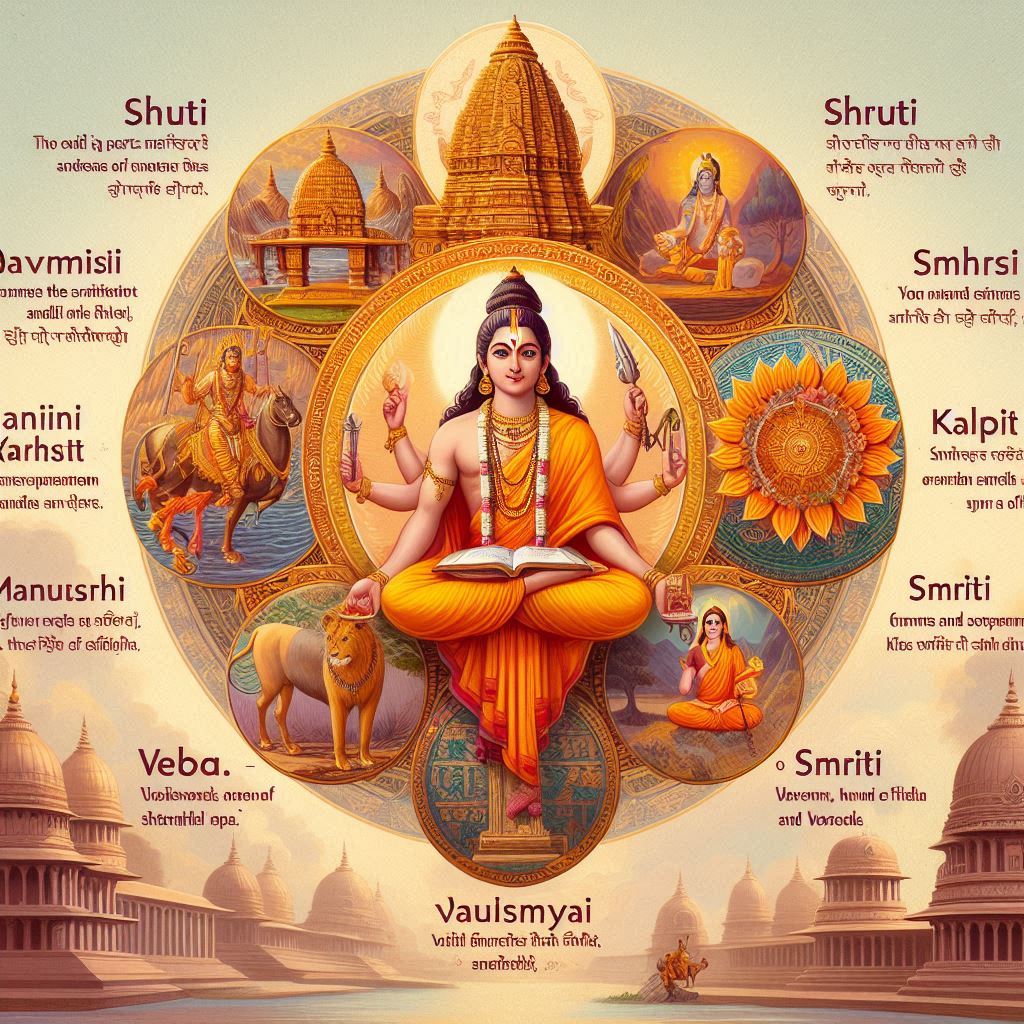
To understand Indian scriptures and Vedic knowledge, the scriptures are divided into two parts: Shruti and Smriti. Shruti includes the scriptures Vedas and Smriti includes books of history and interpretation of the Vedas, Manusmriti, Yajnavalkya Smriti, etc. The Vedas are the symbols of eternal and eternal truth. The Vedas have 6 अंग and 6 उपांग . Which helps in knowing the Vedas. The 6 limbs of the Vedas are Varna Shiksha, Panini Krita व्याकरण (Ashtadhyayi), Kalpa, Maharishi Yaska Krita Nirukta, Maharishi Pingal Krit Chhanda and Jyotish etc. This is explained to you in just a few words. This is to be understood

6 उपांग Philosophy:

(1) Yoga Darshan (Maharishi Patanjali)

(2) Sankhya Darshan (Maharishi Kapil)

(3) Nyaya Darshan (Maharishi Gautam)

(4) Vaisheshikadarshan (Maharishi Kanada)

(5) Mimamsa Darshan (Maharishi Jaimini)

(6) Vedanta Darshan (Maharishi Vyasa)

Although more than 100 Upanishads are found in the spiritual field of Indian culture, it is necessary to read 11 Upanishads before studying Vedanta philosophy. Those Upanishads are as follows –

1. ईशोपनिषद
2. केनोपनिषद
3. कठोपनिषद
4. प्रश्नोपनिषद
5. माण्डूक्योपनिषद
6. मुण्डकोपनिषद
7. ऐतरेयोपनिषद
8.  तैत्तिरीयोपनिषद
9.  बृहदारण्यकोपनिषद
10. छांदोग्योपनिषद
11. श्वेताश्वतरोपनिषद .

There are only 4 interpretation books of the Vedas – (Brahmin texts)

(1) Aitareya Brahmins

(2) Shatapatha Brahmins

(3) Tandya Brahmins

(4) Gopatha Brahmins.

Case-ending showing possession or relation

Is complete knowledge hidden in the Vedas?

The Vedas are full of knowledge related to almost all subjects, like God, the universe, astrology, mathematics, chemistry, medicine, nature, astronomy, geography, religious rules, history, rites, customs, etc. The four Vedas are Rigveda, Yajurveda, Samaveda and Atharvaveda. There are only 4 upavedas. Ayurveda of Rigveda, Dhanurveda of Yajurveda, Gandharva Veda of Sama Veda and Atharva Veda

Rigveda:

ऋक means status and knowledge. It has a lot to do with geographical location and mantras invoking the deities. The hymns of the Rig Veda contain prayers, praise of the gods and descriptions of their position in Devlok. It also provides information on water therapy, air therapy, solar medicine, psychiatry and healing by Havan. The description of substances ranging from nature’s smallest atom to God is found in the Rigveda. It has 10522 mantras. The knowledge of Rigveda was received in the soul of Maharishi Agni

Yajurveda –

यजु means moving sky and action. Yajurveda contains the methods of sacrifice and the mantras used in sacrifices. We can understand the 16 rituals properly from Yajurveda. Apart from sacrifice, philosophy is described. Element knowledge means mystical knowledge. Knowledge of the universe, soul, God and matter. There are two branches of this Veda, Shukla and Krishna. There are 1075 mantras in Yajurveda. The knowledge of Yajurveda was received in the soul of Maharishi Vayu


Samaveda:

साम means transformation and music. Gentleness and worship. This Veda has a musical form of many hymns of the Rig Veda. It mentions about the gods Savita, Agni and Indra. It also makes references to classical music and dance. This Veda is considered to be the origin of music science. It has 1875 mantras. The knowledge of Samaveda was received in the soul of Maharishi Aditya

Atharva Veda:

अथर्व means vibration and Atharva means vibration. This Veda mentions mystical sciences, herbs, miracles and medicines of Ayurveda etc. It also provides knowledge of Indian tradition and astrology. By studying it, all doubts are solved and the vibration of the mind ends. It has 5977 mantras. The knowledge of Atharva Veda was received in the soul of Maharishi Angira.

6 limb of Sanatan.

To know the Indian Sanatan culture, it is very important to study 6 scriptures with the knowledge of the four Vedas.  So these 6 scriptures are also called the Upavedas of the Vedas i.e. philosophy . Our sages have created these 6 philosophies by incorporating the doctrines scattered everywhere in the Vedas, on the basis of which we can understand this divine knowledge accurately. These 6 Vedic philosophies are called theistic philosophies. These are our logics, by reading which the intellect of every human being opens and he never confuses and doubts about God, religion, unrighteousness, truth, falsehood etc. By reading these philosophical scriptures, all kinds of doubts are resolved automatically. These 6 philosophies are as follows:

(1) Nyayashastra: –

It has been composed by Gautam Muni. The subject of this scripture is mainly logic. This philosophy has been created with the purpose of separating truth and falsehood from the world spread around him through four types of evidence (direct, inference, simile and word.

(2) Vaisheshika Shastra: –

It has been composed by Kanad Muni. This scripture is about material knowledge. How to know the qualities and karma of the substances that God has created for us and use them? This is the subject of this scripture. (This is physics.)

3) Sankhya Shastra: –

It has been composed by Kapil Muni. Its main theme is how the creation originates from the most subtle particles of nature (Word, Touch, Form, Taste and Smell) from Sat, Raja, and Tama. How are all substances similar and characteristic? This scripture completely explains the difference between nature and soul.

(4) Yoga Shastra: –

It has been composed by Patanjali Muni. Its main topic is to tell the method of attaining salvation by following the eight limits (Yama, Niyama, Asana, Pranayama, Pratyahara, Dharana, Dhyana, Samadhi) by getting rid of all sorrows

5) Mimamsa:

It has been composed by Jaimini Muni. Its subject is that by following what kind of Vedic rituals and limitations, a person can become completely happy and can attain salvation, the goal of his life?

(6) Vedanta (Brahmasutra):

It has been composed by Ved Vyasa Muni. Its main theme is to describe the nature of God, his qualities, knowing which man should get rid of all doubts about him and start worshiping him and attain them by practicing yoga.

Praying with Spiritual Emotion (Bhāv) :

◆ God Principle:

The divine essence flows through spiritual practices.


◆ Transmission of Frequencies:
N
5% of frequencies of Divine Consciousness (Chaitanya) are transmitted outside the body. Seekers can access up to 20% of frequencies of Divine Consciousness (Chaitanya).


◆ Protective Sheath:

A protective layer surrounds the seeker.


◆ Spreading of Divine Consciousness:
15% of the accessed Divine Consciousness spreads into the body of the seeker.

Process of Self-surrender.

What are you most proud of in your life?

As per Brihat Parashara Hora Shastra

The woman who has the marks of a wall or gateway on her palms becomes a queen even if she is born as a maidservant.

Mahārśi Parasara said. O Maitreya! Now, I will describe to you the effects of moles, marks, spots, and signs found on the bodies of women and men.
A mole, spot, or figure formed by hair on the left side of a woman and the right side of a man is auspicious. If there is a mole on the chest of a woman, she will be fortunate. A woman who has a red mark, like a mole, etc., on her right breast begets many children, and she is blessed with all kinds of enjoyment and comfort.

The woman, who has a red mark (mole) on her left breast, begets only one son. The woman, who has a mole on her right breast, begets many daughters and sons. There will be gain, or acquisition of a kingdom, if there is a red mole, etc, on the forehead or in the middle of (between) the eyebrows. The person will enjoy sweetish preparations if there is such a mark on the cheeks.

The woman, who has a red mark (mole, etc.) on her nose, becomes the consort of a king. If the mark is blackish, the woman concerned becomes an adulteress or widow. All the marks below the navel are auspicious for both men and women. If there are moles, etc., on the ears, cheeks, or neck of a man, his first issue will be male, and he will enjoy good fortune and happiness. The man, who has moles, etc., in the thighs, suffers misery. The woman, who has the sign of a trident on her forehead, becomes a queen. Such a mark on the forehead of a man makes him a king.

Balancing energy by MOON.

Neurodevelopmental problems, autism, ADHD, etc. problem,s include Moon being angry, Balarishta, relation to 6th and 1st hours,e, etc.
Looking at the position of the moon in most horoscopes, I feel that when the moon gives problems when it is under the influence of cruel planets and arista houses, then it gives the most problems. It also disturbs normal people, mental disturbance, and pressure, but we do not realize it

Those in need of powering the moon or balancing its energy should try to meditate with the sound of running water, as good as the morning, even with the rays of the moon if the moon is beneficial in the horoscope.
Meditate on the image of the moon of Shukla paksha Dwitiya while meditating.

Turn off unprovoked running and wasting clean water.

◆If more water is flowing from your RO, then get it serviced immediately.

◆If there is a problem of constantly dripping water from the tap in your house, then get it fixed immediately.

Moon i.e. water, the factor of the mind, mixing in the contaminated drains (Rahu), will confuse the mind, reduce focus, cause stress and anxiety, and give playfulness instead of permanence Especially those who are going on the Mahadasha of the moon, fast on the full moon, can also fast on Monday. Pradosh fast is also a very good solution.
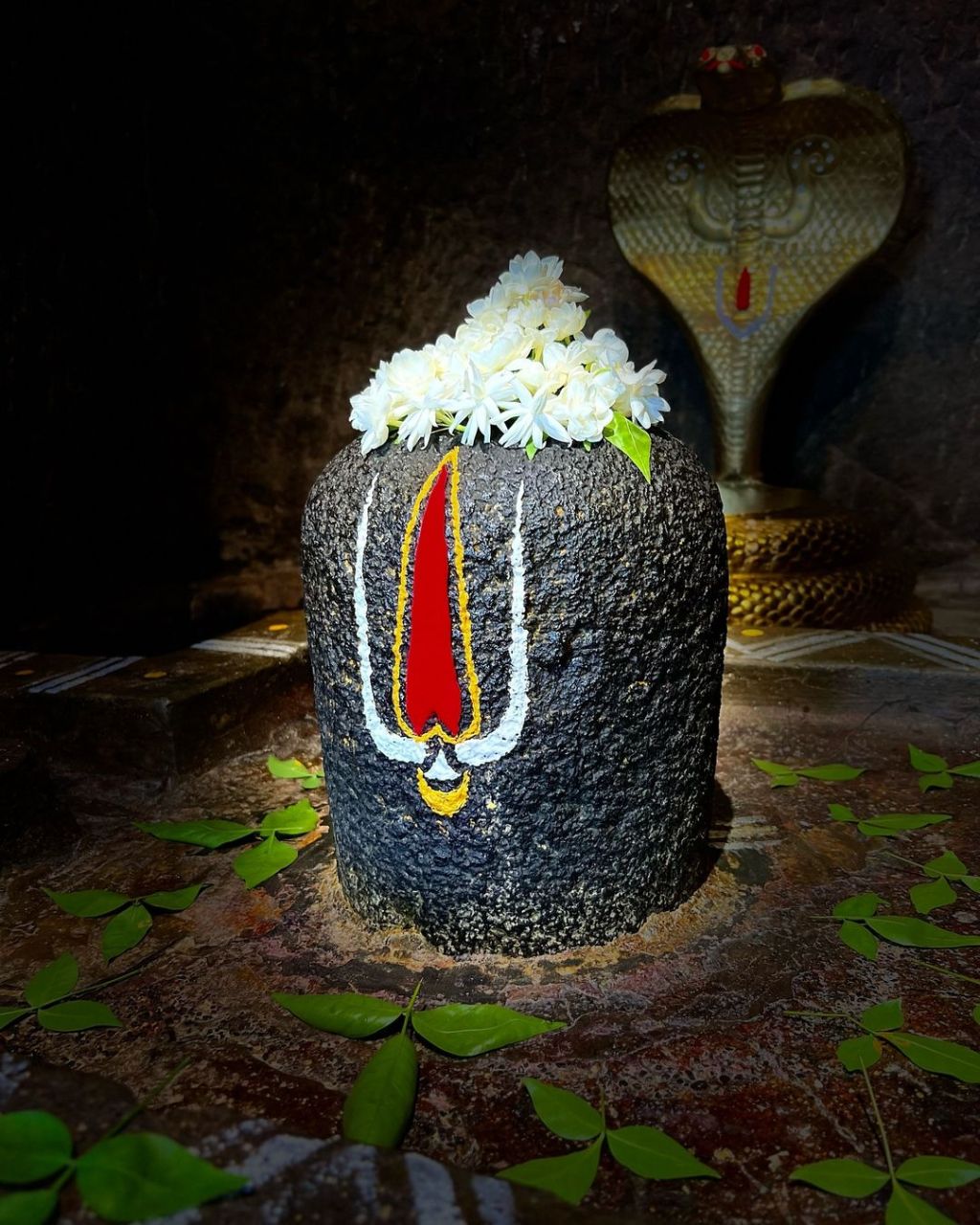
Donation related to the moon is said according to the horoscope, but you should anoint the Shivalinga with cow’s milk in the evening when the moon rises. If there are a lot of problems, donation is also given, and pearls are also worn, but it is not right to take measures without any advice

Self-surrender means surrendering oneself to that divine power, in which the feeling of complete faith, loyalty, and surrender to the soul is awakened. This frees us from our desires, conflicts, and ego and unites us with the ultimate truth. But it is necessary to strike a balance between self-compassion and self-surrender. Many times human beings get so entangled in self-sensation that they forget self-surrender. • Meditation in the Indian spiritual realm, i.e., astrology and sadhana, helps in the mental, physical, and spiritual development of people through the processes of self-sensitization and self-surrender. This enables man to get rid of his ego, desires, and material things When a human being is devoted to God or the universal energy, he gets rid of mental and emotional stress and through self-surrender that person can connect the direction of his life with the highest consciousness, thereby giving him divine guidance and peace. This process of Shiva Yoga simplifies and empowers the journey from self-sensation to self-surrender, enabling one to move towards a higher consciousness.

You become what you think all day long.

Do lazy days make you feel rested or unproductive?

Why the tradition of getting up in Brahma Muhurat?

ब्रह्ममुहूर्ते या निद्रा सा पुण्यक्षयकारिणी”।

The last prahar of the night is called Brahma Muhurat. Our sages have given special significance to this Muhurat. According to him, this is the best time to quit sleeping. This is not to say that sleeping is wrong, but sleeping more time than necessary is harmful. By getting up in the Brahma Muhurat, one attains beauty, strength, knowledge, intelligence, and health. One should wake up about one and a half hours before sunrise in the Brahma Muhurat. This Brahman means the Supreme Element or the Supreme Soul. Muhurat means favorable time. The last pra har of the night i.e. 4 to 5.30 am is called Brahma Muhurat

The sleep of Brahma Muhurta is the destroyer of virtue.
In Sikhism, there is a very beautiful name for this time – “Amrit Vela”, through which the importance of this time itself is proved. This importance of devotion to God proves itself. This is the best time for devotion to God. By getting up at this time, man gets beauty, intelligence, health, etc. His mind remains calm, and his body is completely healthy. Getting up in Brahma Muhurat is very beneficial for our lives. This makes our body healthy and keeps us energetic throughout the day. This is a formula for staying healthy and successful that costs nothing. Only laziness needs to be abandoned


According to Valmiki’s Ramayana, Lord Hanuman reached the Ashok Vatika in Brahmamuhurta while searching for Mother Sita.

Where he heard the sound of chanting mantras of the knowers of Vedas and Yajna.
It is also mentioned in the scriptures –

वर्णं कीर्तिं मतिं लक्ष्मीं स्वास्थ्यमायुश्च विदन्ति।

ब्राह्मे मुहूर्ते संजाग्रच्छि वा पंकज यथा॥

By getting up in Brahma Muhurat, a person gets beauty, Lakshmi, intelligence, health, age, etc. By doing this, the body becomes beautiful like a lotus

That’s why you get success and prosperity.

According to Ayurveda, getting up and walking in Brahma Muhurta transmits Sanjeevani power in the body. This is the reason that the air flowing at this time is called nectar. Apart from this, this time is also said to be the best for study because when we wake up in the morning after resting at night, there is energy and freshness in the body and brain. The doors of major temples are also opened in Brahma Muhurta and there is a law to adorn and worship God in Brahma Muhurat.
Knowing the religious, mythological, and practical aspects and benefits of Brahmamuhurta, start waking up every day at this auspicious time, then you will get better results

A person who rises in Brahma Muhurat is successful, happy, and prosperous; why? Because getting up early gives you enough time to make tasks and plans throughout the day. So not only does life succeed. Everyone who is physically and mentally healthy can be happy and prosperous. The reason is his progress in the work he does. The student is successful in the examination. The boss is happy with the job-doer. Businessmen can earn well. The income of the sick person is affected, on the contrary, the expenses start increasing. Success kisses the feet of the one who makes good use of time and stays healthy. Therefore, if you want to remain healthy and successful, then get up in the Brahma Muhurat
There is a deep connection between Brahma Muhurat and nature. At this time, animals and birds wake up. His melodious voice begins. The lotus flower also blooms. In a way, nature also becomes vibrated in the Brahma Muhurat. It is a symbol of getting up, waking up. Nature gives us the message to get up in the Brahma Muhurat


प्रातारत्नं प्रातरिष्वा दधाति तं चिकित्वा प्रतिगृह्यनिधत्तो।

तेन प्रजां वर्धयमान आयू रायस्पोषेण सचेत सुवर:॥
– ऋग्वेद-1/125/1

The health of the person who wakes up before sunrise in the morning is good. That is why wise people do not waste this time. A person who wakes up early in the morning is healthy, happy, strong and long-lived

A cosmic day- routine


1.  3:00 am to 5:00 am –

At this time the life force is mainly in the lungs. Drink some lukewarm water and walk in the open air and do pranayama. At this time, long breathing develops lung function. They get oxygen and negative ions in abundance and the body becomes healthy and energetic. People who wake up in the Brahma Muhurat are intelligent and enthusiastic, and the life of those who sleep becomes dull.

2.  5:00 am to 7:00 am –

At this time the life force is mainly in the intestine. Defecation and bathing should be taken between waking up in the morning and 7 in the morning. Those who bowel after 7 in the morning dry up the stool by absorbing the fluid from the stool. It causes constipation and many other diseases

3.  7:00 p.m. to 9:00 p.m –

At this time the life force is mainly in the brain. The brain is especially active at this time. Therefore, apart from the morning, the lesson read in this period is quickly remembered. This has also been confirmed by modern exploration.


4.  9 pm to 11 p.m.:

At this time, the life force is mainly present in the spinal cord. At this time, resting on the back or the left side helps to absorb the strength received by the spinal cord. Sleep at this time provides the most relaxation. The awakening of this time tires the body and intellect. If food is eaten at this time, it remains in the stomach till morning, it is not digested and its decay produces harmful fluids which cause diseases by going into the intestines with acid. Therefore, it is dangerous to eat at this time


5.  11 p.m. to 1 p.m.:

At this time the life force is mainly present in the gall bladder. Awakening at this time causes bile disorders, insomnia, eye diseases, and early aging. At this time new cells are formed

6.  1 to 3 pm:

At this time, the life force is mainly in the liver. Microdigestion of food is the function of the liver. Awakening at this time spoils the liver and digestive system. If you keep awake at this time, then the body starts getting sleepy, the vision is dim and the body’s reactions are slow. Therefore, road accidents are more common at this time

Red Caution:

Sages and Ayurvedacharyas have said that eating without hunger is forbidden. Therefore, the quantity of food in the morning and evening should be such that one feels hungry openly during the above-mentioned meal time. Spread something on the ground and eat food sitting in Sukhasana. In this asana, the gastric fire remains illuminated due to the activation of the Muladhara chakra. Digestion is weak while sitting on a chair and eating food while standing does not happen at all. Therefore ‘buffet dinnerʹ should be avoided

To take advantage of the earth’s magnetic field, sleep only with the head in the east or south direction. Otherwise, there are problems like insomnia. To run the body’s biological clock properly, sleep with the light off at night. The research done in this context is shocking. Working or studying late at night and sleeping with the light on can cause severe health hazards by deactivating the biological clock. By sleeping in the dark, this biological clock runs properly. The cause of most of the diseases found nowadays is the chaotic routine and adverse diet. If we maintain our daily routine according to the biological clock of the body, then we will get the benefit of the activity of different organs of the body. In this way, a little awareness lays a new foundation for a healthy life

Need overall !

What could you try for the first time?

Lentent hit :

Due to stressful life in modern society, human beings are vulnerable to deadly diseases like high blood pressure, heart disease and cancer. Many diseases are destroyed by lifestyle improvement. Along with this, there is another easy solution, which does not have any side effects. You just need to do it regularly. This easy solution is the Gayatri Mantra, which has been tried for centuries. And nowadays it has also been put to the test of science.

1. If this mantra is read in any position i.e. while sitting, lying down or standing, then one gets equal benefit to

2. The mantra begins with the word Om- Pull the word Om as long as you can, without taking a breath. Draw the words “o” and “m” separately long.

3. After this, read or speak the remaining mantra as fast as you can with the correct pronunciation. Repeat the OM process every time. Keep repeating Om and Mantra continuously for five minutes.

4. Do this process every two hours for a month. In this way, do the awakening of a normal person 8 times in 16 hours. A total of 40 minutes are to be given in 24 hours.

5. After one month, the beneficial effect of this process will be seen. Now continue this process by doing it four times in 24 hours.

6. It is necessary to chant this mantra for five minutes at the time of getting up in the morning and at bedtime. After this, keep reciting this mantra regularly by fixing a fixed time only twice.

आत्मानं विद्धि”

Vasana Daha Tantra is a powerful spiritual practice rooted in the ancient wisdom of Bharat that aims to burn away the latent impressions (vasanas) accumulated from past experiences, desires, and karmic patterns. The term “Vasana” refers to the deep-seated tendencies and subconscious impressions that influence our thoughts, emotions, and actions. “Daha” means burning or purification, and “Tantra” signifies a structured method or practice. In essence, Vasana Daha Tantra is the process of purging or transforming these deep-rooted impressions, leading to liberation from mental and emotional conditioning, ultimately bringing one closer to spiritual enlightenment.

Process of Vasana Daha Tantra:


1. योगस्थ: कुरु कर्माणि =  Self- realisation:

The first step involves deep introspection and awareness of one’s thoughts, desires, and behaviors. Through meditation and mindfulness, you identify the underlying patterns and attachments that are obstructing spiritual growth. As the Bhagavad Gita states, “योगस्थ: कुरु कर्माणि” — remain established in yoga while performing actions, staying aware of the forces at play.

2. आत्मानं विद्धि = Acknowledge and Accept:

Once the asanas are identified, the next step is to fully acknowledge their presence without judgment. Accept that these impressions are part of the karmic cycle, and they need to be transformed, not resisted. The acceptance phase draws from the Upanishadic wisdom, “आत्मानं विद्धि” (Know thyself), recognizing the self in all its layers.

3. Purification through Reflection :

This step involves deep contemplation on the harmful or binding nature of these vasanas. By reflecting on their impermanence and the suffering they cause, the seeker gradually detaches from their influence. In this phase, spiritual texts like the “Shvetashvatara Upanishad” guide the seeker to view desires as fleeting and not inherent to the true self.

4.सर्वे कर्माखिलं पार्थ ज्ञाने परिसमाप्यते”=  Soul of Visualization:

A key technique of Vasana Daha Tantra is meditative visualization, where one mentally visualizes the vasanas burning in the fire of wisdom. The fire represents spiritual knowledge, often referred to as “Jnana Agni” (fire of knowledge). As stated in the Mundaka Upanishad, all actions are dissolved in the fire of wisdom.

5. तंत्र: Ritualistic Dissolution :

Engage in a ritual where you symbolically burn these impressions. This can involve the chanting of mantras, such as the powerful “Om Agnaye Namah” (Salutations to the fire element), while mentally offering the vasanas into an inner fire. This act strengthens the internal process of release and purification.

6. Affirmation of Liberation :  

 After the process of dissolution, affirm your liberation from the past tendencies. Repeat mantras like “सोऽहं” (I am That), affirming the unity of self with the divine consciousness. It reinforces the realization that you are beyond desires and karmic impressions.

7. तत्त्वमसि :  Feel the infinite :

The final stage is integrating this newfound freedom into daily life. You move forward with a clearer mind and a lighter heart, no longer governed by old vasanas. The Chandogya Upanishad says, real, I  remind you that the true self is infinite, pure, and free from conditioning.

Vasana Daha Tantra is a transformative spiritual practice that combines deep introspection, meditation, mantra, and ritual to dissolve the karmic impressions that bind us to the cycle of birth, death, and rebirth. By purifying these asanas, one can attain clarity, freedom, and a deeper connection to the divine. This method empowers the seeker to transcend habitual patterns and step into a higher state of consciousness, aligning with the true self eternal, blissful, and free.

The 11 RUDRA

If you could host a dinner and anyone you invite was sure to come, who would you invite?

Worship of SHIVA

Many mantras in the Veda directly mention Shiva, like the following from the Rig Veda-

कैलासशिखरे रम्ये शंकरस्य शुभे गृहे ।
देवतास्तत्र मोदन्ि तन्मे मनः शिवसंकल्पमस्तु ।।

“On the charming peak of Kailasha mountain is the home of the Peace-creator Shivawhere all Gods ultimately rejoice. May my heart always rejoice with shiva thoughts.”

In the Rigveda, Bhagawan Shiva is referred to as Rudra, who is described as a powerful and benevolent deity. The Rigveda describes Rudra as the god of hunting and the protector of cattle. It also mentions his association with the bow, the arrow, and the storm, which symbolize his power and his ability to destroy evil.
The Yajurveda, another Veda in Hindu scripture, mentions Bhagawan Shiva as a god who is capable of destroying evil and ignorance. It also describes him as a god of fertility and as the one who bestows long life and prosperity. In the Atharvaveda, Shiva is described as the god of medicine and healing, who can cure physical and mental diseases. This Veda also mentions the importance of the worship of Shiva and the various rituals associated with his worship.


अजं शाश्वतं कारणं कारणानां
शिवं केवलं भासकं भासकानाम्
तुरीयं तमःपारमाद्यन्तहीनं
प्रपद्ये परं पावनं द्वैतहीनम्

The one who is beyond birth, the permanent one, the one who is the cause of the causes, the one who illuminates the whole Universe, the one beyond the three states, without beginning and end, the Destroyer of ignorance and struggle, the one beyond all duality, I offer my obeisance to him, the purest. Bhagawan Shiva has more than 1500 names and each name denotes a form so we can say he has thousands of forms

Significance of Rudra Avatar-

1) Kapali
2) Pingal
3) Bheem
4) Virupaksha
5) Vilohit
6) Shastra
7) Ajapaad
8) Ahirbudhnya
9) Shambhu
10) Chand
11) Bhav.

You know SHIVA


God resides within our body, in the cavity of the heart. This God is eternal. The Supreme Soul, who is one and infinite, is the Master of this physical body of ours, and this entire earth resides within His body. This God who circulates within the earth cannot be recognized by the earth itself. This shows that the elements of the physical world (such as the earth) are unable to understand the true nature of the soul.
Water, fire, air, space, mind, intellect, ego, mind, letters, and death, God is located in all of them and is the origin of all these

अन्तःशरीर निहितो गुहायामज एको नित्यमस्य पृथिवी शरीरं यः पृथिवीमन्तरे संचरन् यं पृथिवी न वेद ।
यस्यापः शरीरं योऽपोऽन्तरे संचरन् यमापो न विदुः ।
यस्य तेजः शरीर यस्तेजोऽन्त संचरन्यं तेजो न वेद ।
यस्य वायुः शरीरं यो वायुमन्तरे संचरन् यं वायुनं वेद ।
यस्याकाशः शरीरं च आकाशमन्तरे संचरन् यमाकाशो न वेद ।
यस्य मनः शरीरं यो मनोऽन्तरे संचरन्यं मनो न वेद ।
यस्य बुद्धिः शरीरं यो बु
द्धिमन्तरे संचरन् बुद्धिर्न वेद ।
यस्याहंकारः शरीरं योऽहंकारमन्तरे संचरन् यमहंकारो न वेद।
यस्य चित्तं शरीरं यश्चित्तमन्तरे संचरन् यं ।
चित्तं न वेद ।
यस्याव्यक्तं शरीरं योऽव्यक्तमन्तरे संचरन् यमव्यक्तं न वेद ।
यस्याक्षरं शरीर योऽक्षरमन्तरे संचरन् यमक्षरं न वेद ।
यस्य मृत्युः शरीरं यो मृत्युमन्तरे संचरन्यं मृत्युर्न वेद ।
स एष सर्वभूतान्तरात्माऽपहतपाप्मा दिव्यो देव एको नारायणः।
अहं ममेति यो भावो देहाक्षादावनात्मनि।
अध्यासोऽयं निरस्तव्यो विदुषा ब्रह्मनिष्ठया ॥

This God is the conscience of all living beings and He is free from all sins, divine and only Narayana.  The sense of “ego” (ego and affection) that appears in the body and senses is false. This false intention must be eliminated through the knowledge of Brahman and the stillness of the soul. The wise man who has faith in Brahman. This verse inspires us to understand the true nature of the soul and the divine and encourages us to look beyond the material elements of this world. The omnipresence of God and His unknowability teach us that true divinity and knowledge can only be attained through the soul.
This verse presents the essence of Vedanta philosophy, which describes the unity of the soul and the divine, their omnipresence and ignorance. It teaches us that the elements of the material world are unable to understand the true nature of the soul and that true knowledge can be attained only through the purification of the so

Learn to utilize the tools that God offers to you

How do you balance work and home life?

The path of the mystic.

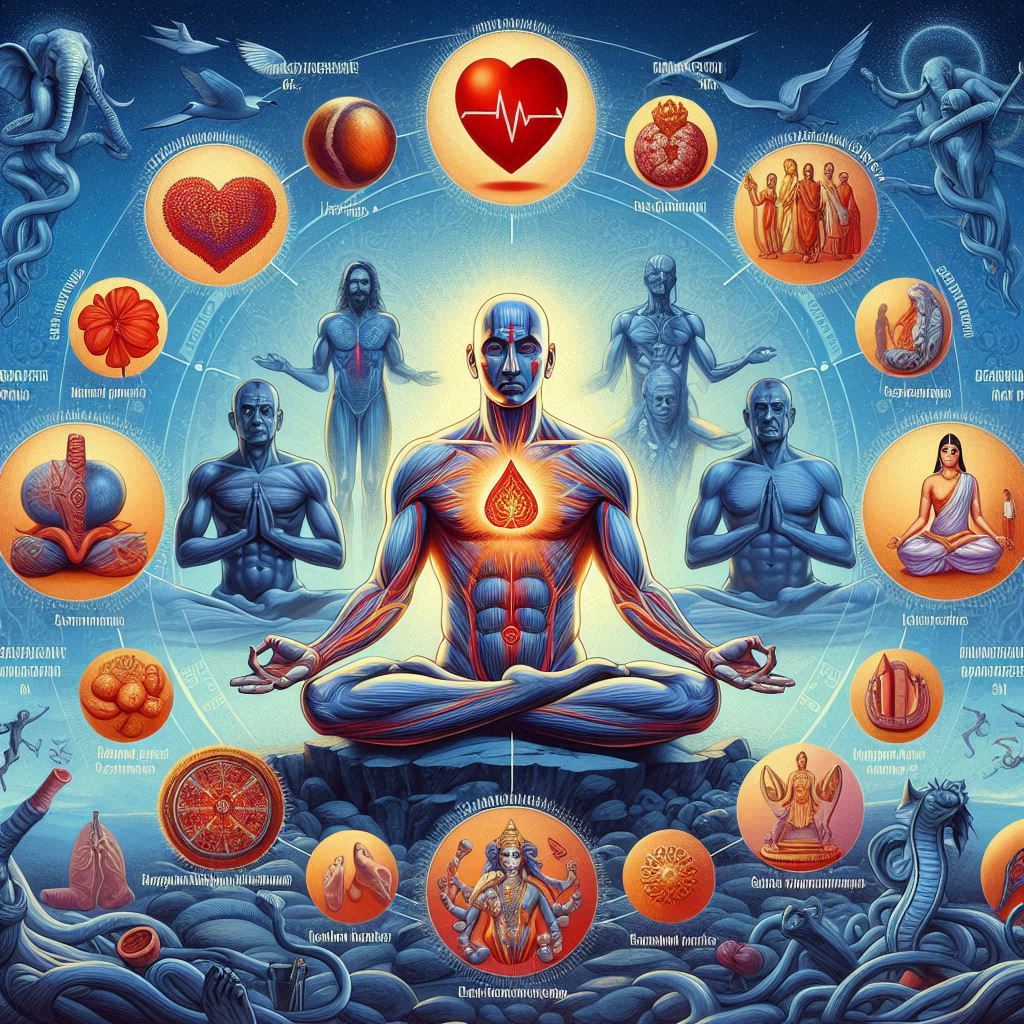
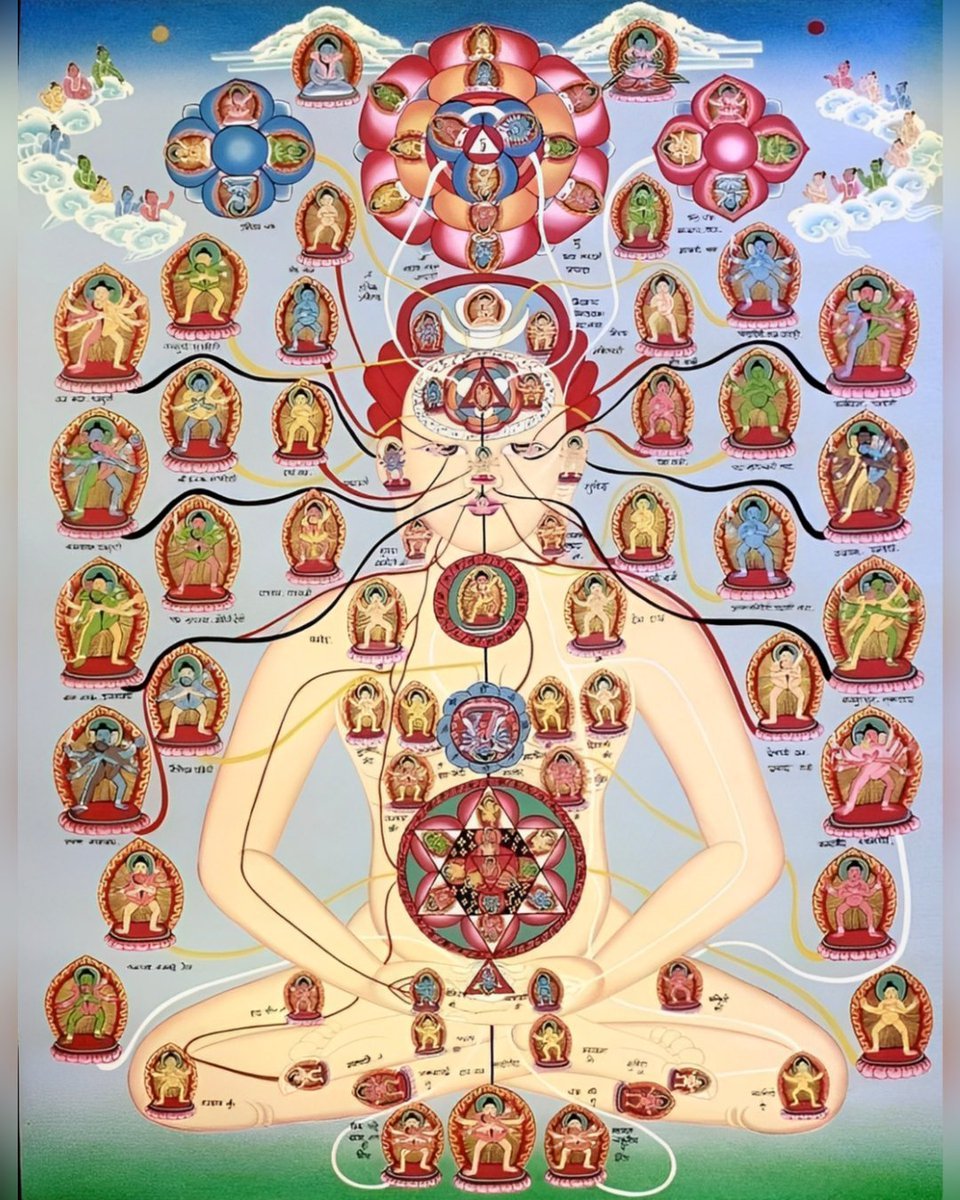
Spinal cord – The spinal cord is a part of the human body that is one to one and a half feet long. There are holes in the entire spinal cord, and 31 groups of nerves come out of it, the outer part is made of gray-colored material and the inner part is made of white matter. In the middle is the path of Sushumna Nadi. The spinal cord is the main function in keeping the human body upright. These nodes are located in our backside. There are 24 casseroles prominently in this backbone. These casseroles have holes from the inside. There are two ladies on either side of it. The left pulse is related to the nostril from the left side, it is called the lunar (ida) nadi. The second pulse remains on the right side, which is related to the nostril (hole) on the right side, it is called the Sun (Pingala) nadi. In between these two is the subtle Sushumna nadi. It involves subtle life. Physical vitality circulates in it.

The main centers of the body are connected to this spinal cord by nerves. Some are vital vessels, some are blood vessels. Similarly, something is going to give a sense of consciousness. To protect the 24 vertebrates from rubbing, a grease-like substance is filled in the middle of each vertebra. In which, due to disorder, there is pain in the waist or the uselessness of the lower part, etc

Similarly, by keeping feet in the lower and higher levels, the distance between these glands decreases or increases. So the body starts aching and the breathing process also starts getting interrupted. If the breath moves through the Ida nadi, then there is an effect of coolness in the body. Due to excessive movement of Pingala nadi, the body is affected by heat. According to pulse experts, it takes 1 hour to change one vowel or pulse from another to another. When both the nadis breathe equally, Sushumna comes from the nadi. When the Kaseru of Sushumna gets immobilized for some reason, there is a difference in breathing. For this reason, there is a difference in the subtle fibers of the body and the body becomes a victim of many diseases

Prevention of the spinal cord by rubbing the spinal cord – If there is a decrease in the spinal cord, the patient should do yoga of the spinal cord. Apart from this, the patient should lie down on the stomach and apply oil to the spine while on an empty stomach in the morning and massage it slowly. Do this sequence for 8-10 minutes, doing this for 4-5 days calms the disorders in the body. This action of yogis which keeps the spine straight and restraint on prana in the prana duct pulse makes them yogis, so calling the spine healthy is very helpful in the path of yoga.

Modern medical science is appreciated in many ways. Some of its things are commendable. But there is a huge incompleteness in its structure, in its entire system. If we consider the fact, then the truth is understood, the students of modern medicine acquire all their knowledge based on the dead body, but they try this acquired knowledge on the living body. The dead body is devoid of various barriers of bio-energy, life energy, electromagnetic energy, psycho-energy, and emotional energy, diseases occurring in the body, and mental diseases arise from the deviation in the variety of these energy flows. If the doctor lacks proper knowledge of all these, then his treatment will be said to be incomplete

In the science of yoga, the stars and constellations are different centers of life and diversity of energy. By knowing them, not only can life be known correctly, but it can also be properly utilized. For example, if those who have nurtured the center of life in their eyes look at someone, it will seem as if happiness is pouring in. The sight of such a person fills the person in front of you with joy In the science of inter-travel, knowledge of these body structures is found based on the spinal cord in the course of yoga practice. The structure of the body is as complex as it is enigmatic. The human body is very delicate and delicate. It contains millions of cells and thousands of nerves. All these have a very correct, strange, and automated system. The scientific community of the modern age has created very complex mechanical systems. But if you compare it with the body, they are nothing

The Sanatan mortal for you !!

What sacrifices have you made in life?

In Shri Gita Ji, Lord Krishna has said,

आकिञ्चन्ये न मोक्षोऽस्ति किञ्चन्ये नास्ति बन्धनम्।

किञ्चन्ये चेतरे चैव जन्तुर्ज्ञानेन मुच्यते।।

This verse inspires a person to attain salvation through knowledge. It states that only by attaining knowledge can a person recognize his soul and have the means to attain salvation.  “Nothing is adoptable, and nothing is bondage.” And man can be liberated only by knowledge. That is, he gets true knowledge of the ultimate motion. Only then does that man’s confusion, fear, sleep, and laziness disappear.  This verse stimulates a person to attain salvation through knowledge and shows him the path of liberation from bondage. It states that only by attaining true knowledge can a person recognize his soul and have the means to attain salvation

Knowledge has an important place in the pursuit of the salvation of the soul of a person. It is through knowledge that a person comes to know the ideal of his selfishness and the universal truth. In Indian culture, knowledge is considered the path to salvation, which makes a person feel free from bondage.  Knowledge makes a person introverted, leads him to the truth, and makes him feel his true nature. With the attainment of knowledge, a person feels complete, due to which he gets freedom from worldly bondage and attains the height of self-reliance. Therefore, we should always be engaged in the search for knowledge, because knowledge gives us the feeling of true freedom and leads us towards salvation. Therefore, we have established that Spirituality is Beyond Science which keeps giving you the right knowledge on time

The Concept of Matter: A Create Your Zone


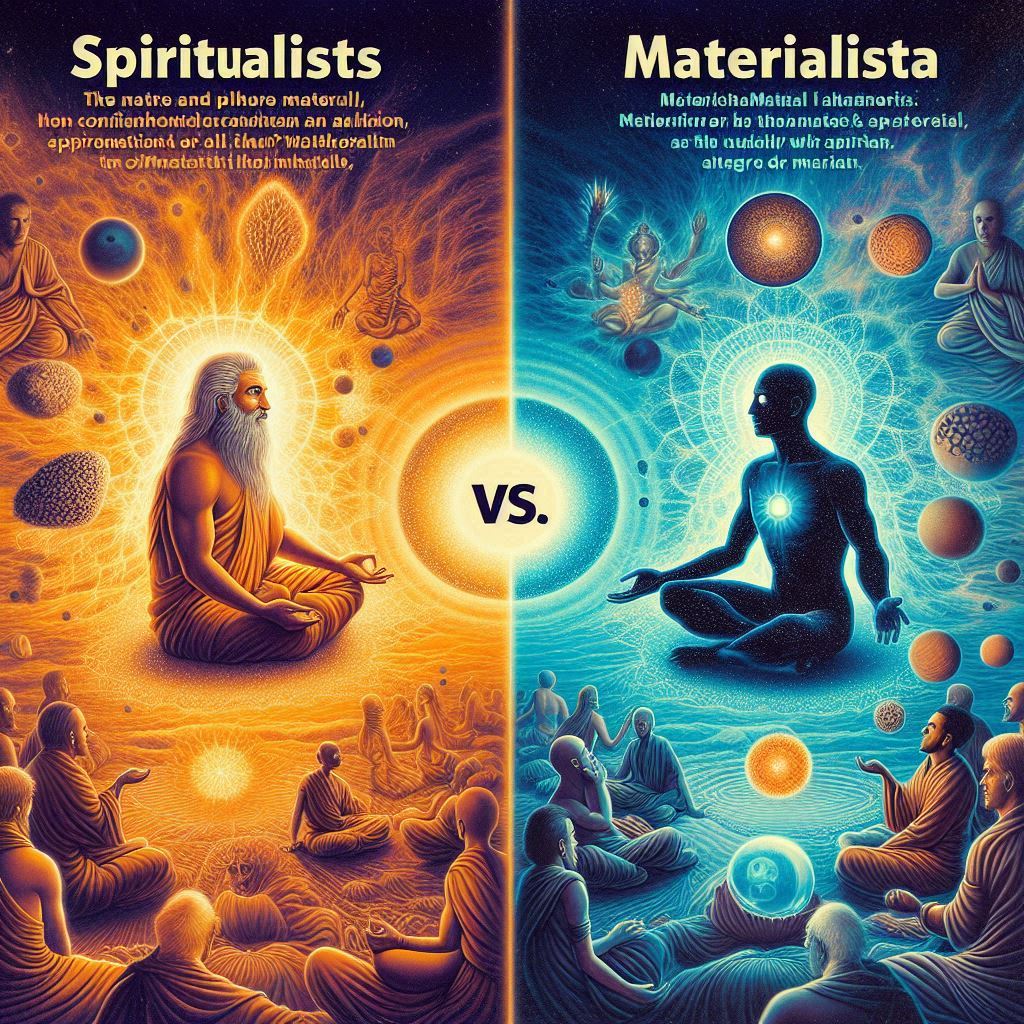
The debate between spiritualists and materialists about the nature and supremacy of matter and Aatma (Energy) is a longstanding one. This discussion intersects with both philosophical and physical perspectives.

1. The Philosophical Divide:
Spiritualists argue that Aatma, or energy, is the true reality, considering matter as an illusion or unreal. On the other hand, materialists assert that matter is the true reality and dismiss Aatma or spiritual energy as unreal.

2. Dynamic Character of Matter:
In the realm of Bhartiya (Indian) thought, some philosophers have postulated that matter is not static but dynamic. This perspective holds that matter possesses the capability to create, sustain, and destroy the universe, a view that aligns with the principles of modern physics.

3. Vaiśeṣika Darshan and Quantum Physics:
The Vaiśeṣika school of philosophy presents a view similar to quantum physics, proposing that the world originated from the combination of atoms, known as Paramāṇukāraṇatāvāda. This contrasts with the Advaita Vedānta belief in Brahmākaraṇatāvāda, which posits Brahman as the ultimate cause.

4. Atomic Combination:
Vaiśeṣika explains that initially, two atoms (paramāṇus) combine to form a dyadic compound (dvyaṇuka). Three dyadic compounds then form a triadic one (trasareṇu), leading to the creation of gross objects. This raises the question: how do unconscious atoms combine without a conscious force?

5. Sānkhya Perspective:
The Sāṁkhya philosophy offers an answer by suggesting that atoms possess intrinsic energy, enabling them to combine. This self-contained energy leads to the natural conjunction and disjunction of atoms, facilitating both creation and dissolution.

In essence, both philosophical and scientific traditions explore the dynamic and self-organizing nature of matter, albeit from different perspectives. This interface between philosophy and physics reveals a profound dialogue on the nature of reality.

The Guru

Who was your most influential teacher? Why?

Shri Panchadashnam Juna Akhara: An Important Tapassthan |

In ancient times, Akhara was a group of saints and saints of India who worked for the protection of the nation and the protection of religion in situations against Raj Dharma in times of crisis. The sadhus of the Akhara also used to use their weapons to protect both the nation and religion from this type of crisis. That is why there was a ground for the wrestlers under the akhara, in which all the members of the arena used to practice more than one trick in terms of keeping the body strong and protecting themselves in times of crisis. He also used to learn weapons. Even in the present time, some Akharas are still ready to bring people on the right path with knowledge, etc. when the nation is in crisis. They are ready at all times to serve the country and humanity

In Kumbh, the largest fair in India, these Akharas still participate with full dedication and take a royal bath. These Akharas would have a president whose election is subject to a complex process. The Akhara system occupies an important place in Indian culture, whose main purpose is to conduct religious and social functions. Shri Panchdashnam Juna Akhara is one of the major Akharas of India, which plays an important role during the Maha Kumbh Mela. This Akhara is located in Haridwar of Uttarakhand state and is famous for its religious and social programs. The history of Shri Panchadashnam Juna Akhara is very ancient. It finds a very prominent place during the Mahakumbh Mela, where millions of devotees consider it as their religious organization. The name of this akhara is “Juna”, as it is traditionally associated with the Juna sect, in which the company of ascetics and spiritual practice play an important role. These are the names of the Dashnami sect: Giri, Parvat, Sagar, Puri, Bharati, Saraswati, Van, Aranya, Tirtha and Ashram. Out of the 7 Akharas, Juna Akhara is their special arena. The rank of Mahamandaleshwar is the highest in any akhara

The main objective of Shri Panchadashnam Juna Akhara is to encourage public struggle and spiritual growth through meditation, penance, religious education, and service. The members of this akhara are devout in meditation and penance and study various religious texts.
Members of Sri Panchadashnam Juna Akhara regularly participate in religious programs, social service campaigns, and meditation houses. It organizes meditation and religious activities that help seekers towards spiritual growth and understanding the spiritual message The importance of this akhara is special in Indian culture, as it provides a path of spiritual growth to seekers along with conducting religious and social functions. Shri Panchdashnam Juna Akhara enjoys deep reverence and respect in society for its religious message and service efforts. Earlier it was known as Bhairav Akhara because at that time his presiding deity was Bhairav, which is a form of Shiva. At present, the presiding deity of this akhara is Lord Dattatreya, who is Rudravatara. There are also Avahanas, Alkhiya, and Brahmacharis under this akhara. It is said that Juna Akhara is the largest among the 7 Akharas of the Shiva Sanyasi sect, which has about 5 lakh Naga Sadhus and Mahamandaleshwar Sanyasis Most of these sadhus are Naga Sadhus. There are mahants according to different regions. Juna Akhara was established in 1145 when the first monastery was established at Karnaprayag in Uttarakhand. It is also called Bhairav Akhara. Its presiding deity is Shiva and Rudravatar is Guru Dattatreya God. Their center is believed to be at Hanuman Ghat in Varanasi and their ashram is near the Maya temple of Haridwar. The headquarters of Shri Panchdashnam Juna Akhara is located in Varanasi

Through this Akhara, seekers awaken their spiritual sensibility and do the work of service for society. In this form, Shri Panchadashnam Juna Akhara is an important part of Indian culture, which plays an active role in developing society through spirituality and service. At present, the Acharya of the Akhara is Mahamandaleshwar Swami Avdheshanand Giri Maharaj and the International Patron Shrimahant Harigiri Acharya Swami Parmatmanand of Shri Panch Dashnam Juna Akhara established Mrityunjaya Ashram in Tedinim in Kashi and Kankhal in 1921. According to the tradition of Juna Akhara, the Akhara is run by a 17-member committee. The presiding deity of the Akhara is Lord Dattatreya. Maa Mayadevi Temple, Anand Bhairav Temple, Shri Harihar Mahadev Parad Shivling Mahadev Temple are under this akhara

It is also described in all historical and religious books. The rules of the Akhara are very strict and the Akhara loves discipline about them. Sadhus who do not follow the rules are shown the way out. At present, there are more than five lakh sadhus in the Akhara, with the largest number of Naga monks. There are more than 120 Mahamandaleshwars in the arena at present. Whose splendor is the pride of Yatra Kumbh Mela and gives it grandeur and divinity Shri Panch Dashnam Juna Akhara does a lot of work for social reform. After the recognition of transgenders as a third gender by the Supreme Court, the Akhara not only gave the Kinnar Akhara a place in its akhara to bring them into the mainstream of society but also allowed them to put the religious flag and take a royal bath with them. In Haridwar Kumbh, Shripanch Dashnam Juna Akhara along with Agni and Ahvaan Akhara also take out their Peshwai and also take a royal bath with the same. Shri Panch Dashnam Juna Akhara was the first to take a bath while taking a Mahashivratri bath at Haridwar Kumbh. In which the saint Mahatmas of Agni and Ahvaan Akhara bathed with him and the members of Kinnar Akhara also shahi snshan with them.


Shri Panch Dashnam Juna Akhara was established in Samvat 1202 (Year-1145) Kartik Sudi 10 Tuesday in Karnaprayag of Devbhoomi Uttarakhand by Sundar Giri Maharaj, Dalpat Giri Maharaj, Laxman Giri Maharaj, Raghunath Giri Maharaj, Baikunth Giri Maharaj, Shankar Puri Maharaj Avadhuta, Veni Puri Avadhuta, Swami Dayavan, Swami Raghunath Van, Swami Prayag Bharti and Swami Neelkanth Bharti. It is also called Shri Panchayati Dashnam Junadatta Akhara or Bhairav Akhara. Their headquarters center is at Bada Hanuman Ghat in Varanasi Shri Panch Dashnam Juna Akhara has a special system of arrangement. This Akhara is a complete society where a committee of all the elder members of 52 families of sadhus is formed. All these people elect the chairman for the akhara. Once an election is held, the post belongs to the elected persons for life. These elections are held during the Kumbh Mela. In the Maharshi of the akhadas, from Mahant to Ashtakaushal Mahant and Kotwal are appointed.
The name of “Juna Akhara” is known as “Panch Dashnam Juna Akhara” because it belongs to the Panchdashnam sect. The Panchdashnam sect is a major saint sect in which the traditional number of saints is 15.

Hence, it is known as “Panch Dashnam Juna Akhara”, which signifies the 15 nomenclatures of this sect. “The 15 nomenclatures of the sect” means that the sect consists of 15 main saints, who are called by different names. These saints impart spiritual teachings, guide people, and contribute to the service of society during their lives. The initiation of the names of these 15 saints is accompanied by a specific Sanskrit word that represents their spiritual tradition This group of saints organizes various sects and saint sects and assimilates them as a social and spiritual community. Through the spiritual education and guidance of these saints, people gain religious knowledge and confidence