No matter what kind of substance it is, it gives some light when burned.

What activities do you lose yourself in?

Oh, think  🤔

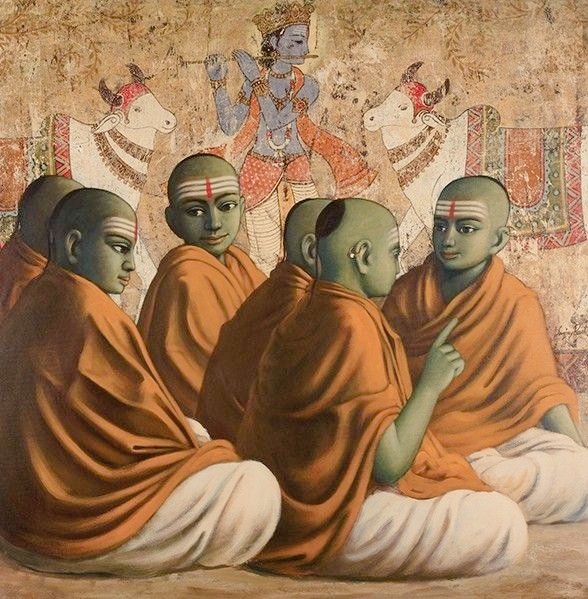
In ancient times, there was a learned sage Kakshiwan who was well versed in all types of scriptures and Vedas. Once he went to meet Rishi Priyamedha who was a scholar like him and knowledgeable in all the scriptures. Both were also classmates and whenever they met, there was a long debate between the two, in which sometimes the orbiter and sometimes the beloved were victorious.  On that day also the sage Orbiter asked Priyamedha a question in the debate, “What is the thing that  that, if lit, produces heat but does not spread any light?” Priyamedha pondered a lot but was unable to answer the riddle. He promised to answer it later, but his life was spent trying to find the answer. No matter what kind of substance it is, it gives some light when burned

When the end time of Priyamedh Rishi came near, he sent a message to the sage Orbiter that I was unable to find the answer to your riddle, but I am sure that such a scholar will be born in my dynasty who will be able to answer your question. But promise me that you will not leave this earth until a scholar of my family answers your question. Saying this, he gave up his life. Orbiter was deeply saddened by his death, but what saddened him even more was that Priyamegha died in dissatisfaction because of his question After the death of Priyamegh, his son took the responsibility of answering this question but he too was unable to find the answer to this question and one day he also died. In the same way, one after the other, eight generations of Priyamegh fell into the cheek of time in an attempt to find the answer to the question of the orbiter. Orbiter stayed alive to find a solution to his riddle. As a boon, Kakshivan had received a pouch from Devraj Indra which was made of mongoose leather. It was full of rice grains and they had a boon that they would live until the rice grains were exhausted.


Every year they would take out a grain and throw it away, and were living to answer their question. In the ninth generation of Priyamegh, a child named Sakamshva was born, who was very learned since childhood. As a child, he had participated in innumerable scriptures and was always victorious. When Sakamsva grew up, one thing started pricking him his entire 8 generations had been unable to answer a riddle and the sage orbiters were alive only to get the answer to their question He decided that by finding the answer to this question, he would eradicate the stigma of his family and free the sage Orbiter from this life cycle. One day he was thinking about this question when he remembered a verse from Sama Veda and he was filled with emotion and started singing it in a melodious voice. With that, he also got the answer to his question. He immediately ran to the hermitage of the chamber and paid obeisance to him. The roomers knew as soon as they saw him that they would get the answer to their question today. Sakamsva said, “O Gurudev, a person who recites the Sama Veda after the Rig Veda, that singing is like a fire from which both heat and light are produced.


But the person who sings only the hymns of the Rig Veda, not the Sama Veda, that singing is like the real fire, but this is the fire from which heat is produced but not light.  Hearing Sakamshva’s reply, tears welled up in the eyes of the orbiter. He said in a full voice, “O son! You are blessed. A question I inadvertently asked snatched my dear friend Priyamegh from me. Not only this, I also saw many generations of him in front of me in the dark.   But today by answering this question, you not only benefited your ancestors but also freed me from this cycle of life. Saying this, he gave his bag to Sakamshva and asked him to scatter the remaining rice grains so that he could go to the next world.  At his command, Sakamsva threw all the rice grains on the earth, and then the orbiter gave up his body.
This is Prabodha, this is the Sumarti for which this human body has been obtained.

All of us human beings have kept ourselves in the limited range where we only have our job, savings account, children, and education, so far our thinking power has been limited. Instead of giving space to new thinking, people are busy shopping, new mobiles, and fashion styles. The difficult problem today is the weakening of willpower. Whether it is worth considering whether it is worth considering or not that only external option is being given importance to solve the problem!!!

The answer NO

Are you superstitious?

What happens after the death of a person,

Bhagvad geeta, chapter 8, verse 16 –

आब्रह्मभुवनाल्लोकाः पुनरावर्तिनोऽर्जुन |
मामुपेत्य तु कौन्तेय पुनर्जन्म न विद्यते ||

Meaning- इस जगत् में सर्वोच्च लोक से लेकर निम्नतम सारे लोक दुखों के घर हैं, जहाँ जन्म तथा मरण का चक्कर लगा रहता है | किन्तु हे कुन्तीपुत्र! जो मेरे धाम को प्राप्त कर लेता है, वह फिर कभी जन्म नहीं लेता.

Purpose of Reincarnation:

According to Sanatan, the purpose of reincarnation is to provide opportunities for the atman to learn, grow, and evolve spiritually. Each life offers valuable lessons and challenges that help the soul progress toward self-realization and attaining Moksha. Samsara (संसार) is the process of passing one body to another throughout all species of life. Consciousness pervades all living beings, but it is only in human form that its active utilization is possible. Samsara, in essence, represents a transitory existence marked by impermanence, change, and the repetitive process of reincarnation or rebirth. It encompasses the complete sequence of earthly lives experienced by the atman. It is well-known that the atman is entrapped within the continuous “cycle” of life and death. Infinitely, the atman transcends from one embodiment to another, embodying the fundamental concept of saṃsara or reincarnation. According to Hinduism and Sanatan, the belief in the cycle of birth, death, and rebirth is known as reincarnation. Upon the death of the physical body, the individual’s soul, known as the atman, is believed to detach from the body and enter a new one.


The specific body the atman enters is believed to depend on various factors, including:

State of mind at the time of death: It is believed that the state of mind at the moment of death can influence the future birth. For example, a person who dies with a peaceful and virtuous state of mind may be reborn into a more favorable situation, while someone who dies with a disturbed or negative state of mind may experience a less desirable rebirth.

Unfulfilled desires :

Hinduism teaches that unfulfilled desires can carry over from one life to another. If a person has strong attachments or unfulfilled desires, it may impact their next birth. The nature of these desires can influence the circumstances and experiences in the subsequent life.

Karmic record :

Karma, the law of cause and effect, plays a crucial role in determining one’s future birth. The actions, intentions, and deeds performed in previous lives contribute to an individual’s karmic record. Positive actions and intentions lead to positive karma, while negative actions and intentions result in negative karma. The accumulated karma influences the circumstances and conditions of the next incarnation.

As per Shrimad Bhagavatam 7.2.41 :

“With time, every being receives a material body as per his corresponding actions.” There may be a question regarding whether the aatma immediately takes on a new body after death.
If a person dies an unnatural death, such as suicide or an accident, or has unfulfilled desires, it is believed that their atman may experience a different state or dimension known as loka, before reincarnation. The term “Pret Aatma” is often used to refer to the soul in such a state. It is believed that until the unfulfilled desires are resolved or the necessary conditions are met, the atman may not proceed to its next birth.

According to Shree Garud Puran 2.22.8

“One who dies by hanging, also through poison and weapon, one who commits suicide and also dies by cholera, etc. becomes a pret (ghost).” On the other hand, if a person dies a natural death with no unfulfilled desires, and if that individual does not attain moksha (liberation) for some reason (will explain when I will write on moksha), it is generally believed that their atman will go through the cycle of reincarnation. The reincarnation will be based on the karma of the person. Depending on the karma, an atman can take any of the following six forms of life-

◆ Aquatics:

This category includes beings that reside in water, such as fish, aquatic mammals, and other marine creatures.

◆ Reptiles and Insects:

This category comprises reptiles, insects, and other small crawling creatures.

Human:

Human life is considered the most privileged and valuable form of life in Hinduism. It is believed to provide the greatest potential for spiritual growth and realization.


Bhagavad Gita chapter 2, verse 27-

जातस्य हि ध्रुवो मृत्युर्ध्रुवं जन्म मृतस्य च |
तस्मादपरिहार्येऽर्थे न त्वं शोचितुमर्हसि ||

जिसने जन्म लिया है उसकी मृत्यु निश्चित है और मृत्यु के पश्चात् पुनर्जन्म भी निश्चित है | अतः अपने अपरिहार्य कर्तव्यपालन में तुम्हें शोक नहीं करना चाहिए


Samsara is a painful recurring cycle of-

Birth—> death’

disease—>old age—>

death—>Re-birth.

In Sanatan, the concept of heaven and hell is not seen as permanent destinations but rather as temporary realms of existence. The ultimate goal in Sanatan is to attain moksha, liberation from the cycle of birth and death.  Unlike Hinduism and Sanatan, religions like Islam and Christianity do not emphasize the belief in reincarnation. They generally teach that individuals have only one life on Earth, and after death, the soul is believed to go to either heaven or hell based on their actions and beliefs during their earthly life. Heaven is seen as a place of eternal bliss and closeness to God, while hell is viewed as a realm of eternal punishment.

Habbit like postive.

The most important invention in your lifetime is…

Life is magical transformation.

1. Putting a tilak :

The tilak, a significant symbol in Hindu Sanatan Dharma, originates from the Sanskrit word “til,” which signifies sesame seed. Sesame seeds hold immense significance in yagnas (sacred rituals) and acts of charity. The application of a tilak on the forehead is based on the belief that it is a focal point through which one can connect with Divinity, thereby augmenting an individual’s spiritual nature.

The location where the mark is traditionally applied is known as the Ajna Chakra, situated between the eyebrows. Within Hinduism, this point is widely regarded as the entry and exit point of the atman. From a scientific perspective, the Ajna Chakra area is often recognized as the center for thinking, concentration, and memory. It is also the region that tends to heat up during times of stress and tension. By applying the tilak, typically using Chandan (sandalwood paste), a cooling effect is achieved, thereby facilitating concentration.


2. Taking Agni Snan :

Agni means fire, Agnidev is the twin brother of Indra & has 2 faces. In Rigveda, Agnidev is considered the mouth of every deity. Agni also known as Pavaka, means whatever enters in fire becomes pure. Agni snan doesn’t mean taking a real bath with fire. Agni Snan is a way to clean your aura just like a jal snan (normal bath). This can remove all the negativity within you. It was a very prominent practice in ancient days. Today, for many Agni snan refers to practicing sati. However, this process is just like doing arti of one’s body (from head to toe) using camphor. This should be followed just after taking a normal bath and one needs to wear very light clothes. The after-effects are magical. It really works great with the concentration.


3. Burning up the camphor :

According to Hindu belief, the burning of camphor is the process to clean the environment before praying to gods & goddesses. Burning camphor gives light & aroma, both linked with spirituality. Camphor burns itself out completely without leaving any residual. It represents our Vasanas (ego, lust, greed). The burning of camphor also signifies oneness with God & spreading the light of knowledge.

Scientifically speaking camphor helps in killing germs. It is also an excellent way to purify the air in the surroundings of your home. Burning camphor regularly is an effective way to kill germs from our household.
Apart from this, camphor has a properties of antibacterial, antifungal, and anti-inflammatory & hence it is used to to treat skin conditions, improve respiratory function, and for pain relief. Try burning it everyday twice a day, in your study room or office and in three days you will see the difference.

4. Doing Dhyan Yoga :

Okay, hold a piece of a paper in your fully stretched hand. Your hand will start paining in just few minutes and that tiny piece of paper will feel like a 5 kg of dumbbell. If our hand can’t hold a tiny piece of paper even for few minutes then imagine the condition of our brain which keep working even in our sleep times. Dhyan yoga can do a lot of good stuff but the first thing it does is relaxing our brain. It will increase your concentration and help you cope with any given situation.


5. Chanting 15 chapter of Bhagavad Gita :

Bhagavad Gita is called as the eternal source of knowledge as it has the essence of all four Veda. Trust me you will get to know a lot of things and will be able to solve any problem in your life. it also teaches the science of yoga, leading a healthy life.


6. Stay connected with postive energy station :

A temple that adheres to scriptural guidelines in the worship of deities provides a more conducive environment for spiritual progress. Such temples maintain a clean and spiritual atmosphere since their sole purpose is to facilitate deity worship and other spiritual activities. It is worth noting that in an advanced stage of devotion, when our hearts are filled with deep reverence, we may experience the sanctity pervading everywhere and perceive the presence of our worshipable god and goddesses in all places.
However, this elevated state of perception is not common among ordinary individuals but attained by those who have reached a highly elevated stage of spiritual advancement. If you do go to a temple, it elevates your consciousness and brings you closer to attaining self realization. If it is impractical to go daily make it a weekly or other suitable periodical visit.


7. Science of mantras :

Chanting any mantra regularly can do magics in your life. Chant any mantra you know, but do it regularly. Chanting mantra is one of the easiest way to connect yourself with universe. The best part is, it will keep you happy and in joyful state even in the era of depression and overthinking. Like Gayatri Mantra, mahamrityunjay Mantra, Shanti Mantra etc


8. Take care of a Maa prakrtuit :

Worshiping nature is one of the main teachings of Hinduism. Giving water to plants, feeding cows, birds can protect you from your past life bad karma.

How to keep your thinking positive?

When a person has to face failure in life, the thought comes to his mind that I cannot do this because I am not destined to do this. This is the main reason for his failure. This thinking makes a person a victim of negativity and he tries to tell himself right by blaming his failure on others. By doing this, the person spoils the relationship with other people and invites his misfortune unknowingly. Instead of taking failure as an experience, the person becomes depressed and in the event of success, the person feels equally excited and proud of himself. In both cases, he does not surrender to God and forgets to thank Him Whatever success and failure we achieve in life, behind it is our accumulated karma along with our ability and confidence. Due to our accumulated virtuous deeds, only a few of our efforts convert into success, but at the same time, our bad deeds attract failure towards us. We forget that success and failure come for a moment which gives us some experience. Our hard work and our positive thinking help us to understand our shortcomings, after which we can improve them and shape our future. To concentrate on this positive emotion and goal, we should adopt meditation and sadhana in our daily lives.

Origin identity

Describe your most ideal day from beginning to end.

purpose of Saptrishi


They are the seven mind-born sons of Bhagawan Brahma who live for a period of time known as a manvantara (306,720,000 Earth Years). Throughout this period, they function as representatives of Brahma. As the manvantara concludes and the universe undergoes destruction, the Saptarishis merge into Brahman, and the responsibility of replenishing the Earth is entrusted to newly designated Saptarishis. These enlightened beings bring essential knowledge and energies to fortify the processes of transition (pralaya). Naturally, they stand as the most evolved “light beings” in creation and serve as guardians of divine laws.

The first group of Saptarishi had worked closely with the Adi Yogi Shiva to maintain the balance on Earth. The present Saptarishis of Vyvasvata manvantara differs from text to text. Probably because we have lost the original texts. According to Mahabharata, Shanti Parva 12.322.27-

मरीचिरत्र्यङ्गिरसौ पुलस्त्यः पुलहः क्रतुः |
वसिष्ठश्च महातेजा एते चित्रशिखण्डिनः।।

The 7 celebrated Rishis, Marichi, Atri, Angiras, Pulastya, Pulaha, Kratu, & Vasishta of great energy, who came to be known by the name of Chitra-sikhandins.”

Srimad Bhagavatam 8.13.5 gives different name of seven sages for Vaivasvara Manvantara-

कश्यपोऽत्रिर्वसिष्ठश्च विश्वामित्रोऽथ गौतमः।
जमदग्निर्भरद्वाज इति सप्तर्षयः स्मृताः॥

Kashyapa, Atri, Vasiṣṭha, Vishwamitra, Gautama, Jamadagni & Bharadvaja are known as the seven sages.”

The Saptarshis of the Vaivasvata Manvantara According to Brahma Purana, Chapter 3 are-
Manvantaras) Atri, Vasista, Kaśyapa, Gautama, Bharadvāja, Viśvāmitra & Jamadagni. Brihadaranyaka Upanishad mentions the names of Saptrishis of Savarni Manvantara which will be the next Manvantara-

गालवो दीप्तिमान्रामो द्रोणपुत्रः कृपस्तथा।
ऋष्यशृङ्गः पितास्माकं भगवान्बादरायणः ॥ ८.१३.१५ ॥
इमे सप्तर्षयस्तत्र भविष्यन्ति स्वयोगतः।
इदानीमासते राजन्स्वे स्व आश्रममण्डले ॥ ८.१३.१६ ॥

“O King, during the eighth manvantara, the great personalities Galava, Diptiman, Parasurama, Asvatthāmā, Krpacarya, Rsyasrnga and our father, Vyasadeva, the incarnation of Narayana, will be the seven sages. For the present, they are all residing in their respective asramas.” During the onset of every Satya Yuga, Sapta Rishis come to earth and recount Dharma that is lost (by end of Kali Yuga all Dharma will be lost). This is mentioned in Chapter 31 Anusanga of Brahmanda Purana.

How Powerful Are They And What are Their Purpose?


Saptarishi, meaning “seven sages” are actually Brahmarshis. A Brahmarishi, a tatpurush compound of brahma, is a member of the highest class of Rishis, especially those who are credited with the composition of the hymns collected in the Rigveda.

A Brahmarshi is a sage who has attained enlightenment and became a Jivanmukta by completely understanding the meaning of Brahman and has attained the highest divine, infinite and self knowledge called Brahmajnana which means they have completely understood the meaning of Brahman. One cannot rise to the level of a Brahmarishi through merit alone, since the order was created divinely and is appointed by Bhagawan Brahma. Upon the passing of a Brahmarshi, they achieve Paramukti, liberating themselves from Samsara—the continuous cycle of life and death. The Saptarishi are praised in various passages within the Vedas and other literature. While the Vedic Samhitas refrain from explicitly listing these sages by name, subsequent Vedic texts like the Brahmanas, Upanishads, and Puranas provide such enumerations.

These Saptarishi are so powerful that they are capable of defeating every weapon on earth, can forecast the future, and are not influenced by the circle of life and death. In ancient Indian astronomy, the constellation of the Big Dipper is called saptarishi, with the seven stars representing seven rishis. Please note that The Ursa Major, Big Bear and Saptarishi are one and the same. Whether a person is in a worldly life or a spiritual life, he has only one dream or only goal that he should succeed in life. For which he also works and also prays to God. But even after this, there are no positive changes in his life. Due to this, the person starts losing faith in God and sometimes he starts showing himself as an atheist. In such a situation, we should not forget one thing God understands emotion, not language If the interest of others is involved in your success, then you will be successful in that work. Indian spirituality teaches us that the path to success passes through sadhana, sankirtan, and selfless service. If there is a deficiency in any one of these three, then we will face failure even after a million attempts. Therefore, one should meditate, sankirtan, and selfless service, so that one can get both permanent success and beautiful health in life

The alkaline water

Something on your “to-do list” that never gets done.

Every disease can be cured by water” Know and believe how?


Chhatramrtaṃ viṣaṃ vajraṃ chatvāro vāriṇō gunaḥ.

Śuktāntrē ca pratyushē amukta bhojanaiḥ sah.

Agrasanharakale cha paytadau parto nishi.

Ayurāhārāhākāle tu bhuktvā noparito nishī ॥

Chatrah:a, nectar, poison and thunderbolt are the four properties or effects of water. After meals, water acts as a protector like a canopy when thirsty. In the morning (early morning), water acts as nectar. If you do not eat food when you are hungry and fill the stomach with water, then this water acts as poison to eliminate hunger and water acts as a thunderbolt with food – that is, it is a firmness factor like thunderbolt


Nihanti shyamalasanghataṃ marutāṃ chapdarśanati.

ajirna jarayatyaṃ pītamuṣṇodakaṃ nishī ॥

By drinking hot water at night, it destroys phlegm present in the body, removes vata and digests the food that is not digested


Tatpadhheenam vataghnamarthheenam pitta chajit.
kāfē pādāvaśeṣaṃ tu pālayāṃ laghu dīpanam ॥

If the quart of water is reduced on boiling, then such water is aerating. If half is left, then gallicide and if only a quarter of water is left after boiling, then it is very useful in removing large phlegm. This water proves to be helpful in reducing body fat


Diva shrutam cha yattoyaṃ

raatrīrau tad gurutāṃ bhajet.

raatrārō śrutaṃ tu dāyāye gurutvāmadhigachāti ॥

Water boiled during the day acquires heaviness by night. Similarly, water kept boiled at night also acquires heaviness by morning. Therefore, this water should not be consume


Adhyamē stimiti koṣṭhē sadyaḥ śuddhau navajvere.

Hikkāyaṃ snehapeeta ca śitambu parivarjāyet ॥

Cold water should be given up after taking lateral colic (armpit pain), pratishya (cold), gout, gallagraha (sore throat), adhman (flatulence due to gas), high fever, ghee etc. That is, consumption of cold water in the above conditions is prohibited from being harmful


.
vātarāchyatiśarē kāfute kuṣṭhē

pratiśyake doshaṃ vārī

suśitālaṃ śrutahinṃ svatyaṃ pradēyaṃ jalam ॥

Hot and cooled water should be given in small quantity in fever, piles, tuberculosis, stomach diseases, swelling, jaundice, sore throat, wounds, unconsciousness, eye diseases, gout, anorexia, diarrhea, phlegm, cold etc


taptayaḥ pindasamyuktaṃ loṣṭhnirvāpitaṃ jalam. sarvadoshaharaM pathyaM sada nairujyakarakam ॥

The water in which a hot iron rod has been inserted or hot stone has been extinguished, that water is all-defective, dietary and always healthy


Nirmo bhojanadaka pivedavari susheetalam.

Azirne tu pibedwara sheetalam

svoluntarily resume again ||

A person free from amdoshas (amva) should drink mild cold water after meals. In case of indigestion, one should keep drinking cold water throughout the tongue along with fasting. This prevents indigestion


murcāpatōṣṇadheṣu viṣē raktē madātyē. brahmaklampariteṣu tamake vārī śitālam ॥

Cold water should be drunk in case of fainting, bile enlargement, heat, irritation, poisoning, blood bile disease and intoxication, dizziness, fatigue. Doing so provides instant relief


Ajirnē chauṣadhāṃ vārī jīrne vārī balapradām.

Bhojane chamritam vari raatrau vari vishopmam

In case of indigestion, do not eat food and drink a little water. In this way, the water drunk becomes a medicine for indigestion, that is, by doing so, the indigestion is removed. Drinking water when food becomes chronic and digested is forceful. Drinking water in the middle of a meal is nectar; Because by drinking some water or taking drinks as needed in the middle of the meal, the digestion of food is done well. Drinking water at night is poisonous, that is, harmful. Therefore, drinking water at night should be avoided as much as possible


Atyambupanāṁ vipachyātē them
nirambapaanacha s eva doshaH.
tasmannaro vahnidivardhanartham
muhurmuhurvārvārī pivēdābhūrī ॥

By drinking too much water, food is not digested and it is also caused by not drinking water, this defect basically increases the gastrointestinal fire for humans, so one should drink water again and again


amritaṃ vikīmiti salilāṃ cheṃ

nigadānti vidittattvārthaḥ.

yuktyā sevitāmṛtaṃ vikhrōmētadyuktaḥ pītam ॥

Wise people say that water is nectar and it also becomes poison. If it is consumed in a proper way, it is nectar, otherwise it becomes poison


Tasmādādāvatisvalyaṃ mā ca trīptidāyakam.
Matrayā ca pibedante na rogairbadhyate naraḥ

Therefore, water should be drunk at the beginning of the meal in the form of atisvalpa i.e. Achaman. In between meals, water can be drunk satisfactorily. But in the end, a small amount of water should be drunk. By doing this way, the person does not suffer from diseases

100% water 💦

What’s your favorite thing to cook?

Chemistry: Some important principles related to chemistry are found in the Vedas. These include the origin of water, the importance of water, the properties of water, the distinctions of water, the various metals created by water, their mixture, their diverse uses, salts, water, and the use of gemstones as medicine. etc

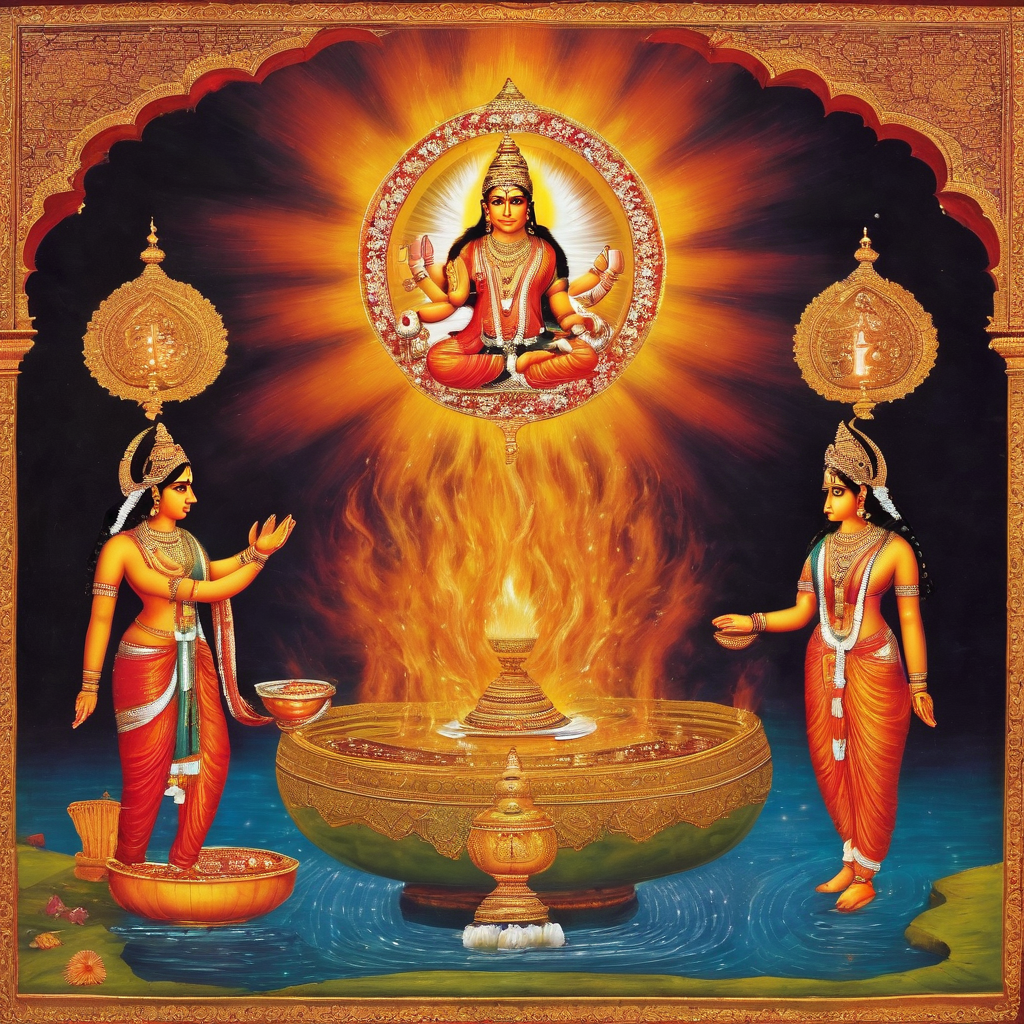
Origin of Water: Atharvaveda says that water has both Agni (Oxygen) and Soma (Hydrogen), here it should be kept in mind that in the Vedas, the words Agni, Mitra, Vaishvanar Agni, and Matrishva, etc. have been used for oxygen. For hydrogen, the words Soma, Jal, Aap, Salil, Varuna, etc. have been used. In a mantra of Atharvaveda, it is said that Matrishva Vayu (Oxygen) enters water.

The Rig Veda says that Vaishvanara fire is present in water.


1. अग्नीषोमौ बिभ्रति आप इत् ताः ।

2. अप्सु-आसीन् मातरिश्वा प्रविष्टः ।
~ (अथर्व० 3.13.5 अथर्व० 10.8.40)

3. वैश्वानरो यासु-अग्निः प्रविष्टः, ता आपः ।
~ (ऋग्० 7.49.4)

Sutra of Water: In a mantra of Rigveda, the formula of water has been given that water is obtained by the combination of Mitra and Varuna.

मित्रं हुवे पूतदक्षं वरुणं च रिशादसम् ।
(ऋग्० 1.2.4)

For the attainment of water, I take the friend of sacred energy (oxygen) and Varuna (hydrogen) which destroys blemishes. In the mantra, oxygen and hydrogen are indicated by the words Mitra and Varuna, but there is no clear indication of their quantity. According to science, water is obtained by placing 2 molecules of hydrogen gas and 1 molecule of oxygen in a vessel and passing an electric wave in it

This point has been explained in the four mantras of the Rigveda (Rigs 7.33.10 to 13). These mantras say that in a Kumbh, the sand semen of Mitra, and Varuna, particles were poured in the appropriate quantity at the same time, and from that Agastya and Vasishta Rishi were born. For this purpose, a flow of electricity (Vidyut jyotih) was released. Agastya and Vasishta were born from the mind of Urvashi (Vidyut), that is, both of them are the sons of Manas of Urvashi.

The mantra clearly states that water (Vasistha) originated from Mitra and Varuna. It has also been clarified that unless they are created fickle by electric current, water will not form. The mantras indicate Kumbh and (Test-tube). Therefore, Agastya is said to be born of Kumbhaj or pot. The word Urvashi means electricity, as it pervades the Uru (vast area). In the mantras, there is a clear instruction of Urvashi and Vidyut Jyoti along with Mitra (Oxygen) and Varuna (Hydrogen) (Electric current). It also means to say Manasputra that not from Urvashi’s stomach but by coming in contact with her, the semen of Mitra Varuna came out and he turned into water. Among the mantras, the names Agastya and Vasistha stand for water.

विद्युतो ज्योतिः परि संजिहानं मित्रावरुणा यदपश्यतां त्वा ।
तत् ते जन्म उतैकं वसिष्ठ,।। (अगस्त्यो)

उतासि मैत्रावरुणो वसिष्ठ।
उर्वश्यां मनसोऽधि जातः ।।

अप्सरसः परि जज्ञे वसिष्ठः ।
द्रप्स स्कन्नं पुष्करे त्वाददन्त ।।

कुम्भे रेतः सिषिचतुः समानम् ।
ततो जातमाहुर्वसिष्ठम् ।।

(ऋ० 7.33.11 to 13)

In the mantras, the placing of two gases in one place, transmitting electricity, testing in a vessel, the origin of water, and the propagation of this sutra by Agastya Rishi are also clearly indicated

That is why Agastya is called Kumbhaja (born from the pot) and Vasistha is called Maitravaruna (son of Mitra-Varuna).

Mitra- Varuna Vrishtikar:

This process of origin of water in space goes on continuously, due to which rain occurs. In Yajurveda and Shatapatha Brahmana, it has been explained how the water of the sea, etc. evaporates and goes up into the sky through the air. There, when oxygen and Neptune (hydrogen) interact with electricity, clouds are formed and they cause rain. If there is no contact between Mitra and Varuna, then there will be no clouds and no rain. In Yajurveda and Shatapatha Brahmana, clouds are said to be a subtle form of water (bhasma)

So learn to respect water, it is not just a combination of hydrogen and oxygen, it is alive, its life. It should be taught during school days, it is our misfortune that there is no awareness in the world on this subject

The sports of study.

What are your favorite sports to watch and play?

🔰Things to consider while studying


1. Always study sitting on a chair table. Do not read at all while lying on the bed, reading lying down does not remember what you read at all. Rather, sleepiness begins.

2. Do not turn on the television while reading and keep the radio or songs off, this increases concentration, if you have to study, then do it in the morning.

3. Switch off the mobile or keep it in silent mode while studying.

4. Keep writing down the read text, this will also maintain your concentration and notes will also be made for the future.

5. Read any paper at least three times. Useful for revision.

6. Avoid the tendency to boring study

7. Make short notes so that they come in handy at the time of examination.

8. Discuss the studied text with your friends, group discussion is beneficial in studies.

9. Sort out the important topics based on the old question papers and prepare them well.

10. Eat a balanced diet because more food brings sleep and laziness, while less food does not feel like studying. Students should not take fast food and salty flavored foods made from Maggi, Maida, this increases laziness.

11. Read with the help of pictures, maps, graphs, diagrams, etc. They are remembered for a long time.

Is a disease-free life in one’s own hands? So is that important?

In today’s era, a person is troubled by diseases. After all, why do these diseases come into our lives, or rather, how are these diseases born in our bodies? Do you know, if not, then know because this information can prove to be very beneficial in your life? Our emotions are hidden behind illness in our lives. If any disorder i.e. bad thoughts, misconceptions, sorrow, and grief are present in our mind, then these disorders take place in our body and these disorders affect our emotional level! After this, when there is harmony between our emotional state and physical state, then this harmony becomes the root cause of the disease The only way to avoid this situation is when a person is in the state of God Bhava and regularly accepts Sadhana in his daily life, then the flow of positive energy starts increasing inside him gradually. This is the energy with which the ability to cure every disease in man is also awakened. With a balanced diet and lifestyle, we can live a good study and healthy life

The lottery of solar energy

What would you do if you won the lottery?

Fuel that tha sun uses to produce energy according ved..

The Universe is a really vast and complex place that, in many ways, we still don’t understand.
But let’s have a look at the possibilities in the vast Universe and our understanding of it. We exist on this relatively tiny rock called Earth, floating around a relatively average star, the sun, and with the help of modern technology, we’ve only just begun to explore even a tiny part of the space that surrounds us. Vedas or science do not talk about multiverses, if science does so it is just an assumption for a particular theory like a hologram or parallel universe. But yeah Vedas and science do know about multi universes. Our Scriptures describe infinite different universes, they have described many universes and parallel universes within, earlier science was not capable of grasping it, but now they accept the possibilities of parallel universes within the universe (read hologram theory).

According to Vedic physics, space inside our universe is multidimensional. There are 64 main dimensions and each dimension is further divided into many sub-dimensions. Since the inhabitants of the earth can only perceive three dimensions, their senses have no access to many other realms of universal reality. Therefore, we are unable to perceive many other planets and their inhabitants. Furthermore, there are other planets that we can perceive but at the same time, we cannot see their inhabitants. According to Vedic physics, different planetary levels have different time scales. The relativity of time is elaborately described in the Vedic literature.

The Sun’s Surface is Described as a Honeycomb with the Golden Light of Honey.

Modern Scientists Proving Upnishads Right Where;


A recent picture of the Sun’s surface taken by the largest solar telescope of NASA Shows that the Sun’s surface looks like a honeycomb. But Chandogya Upanishad in its third Adhyaay mentions something similar; the Sun as ‘honey of the gods’ (देवमधु).


असौ वा आदित्यो देवमधु तस्य
द्यौरेवतिरश्चीनवंशोऽन्तरिक्षमपूपो मरीचयः पुत्राः ॥ ३.१.१

Meaning: The sun over there is honey to the gods. Heaven is the crossbeam, the mid-region is the beehive, and the rays are the eggs.

Fuel that tha sun uses to produce energy according ved..

Why we should read veda,puran? If we r students of science ?

until the year 1938 that Western scientists finally figured out the mechanism of Solar energy generation. According to the Vayu Purāņa (2.38.141-142), udaka (and its Sanskrit synonyms vāri, vṛṣți, ambhas, arṇava and apa) is the fuel that the Sun.

tasmādudakam sūryyasya tapato’ti hi kathyate

nāvṛṣṭyā tapate sūryo nāvṛṣṭyā pariviṣyate

nāvṛṣṭya paricinvanti vāriņā dīpyate raviḥ

tasmādapaḥ piban ya vai dipyate ravirambare


It is said that hydrogen (udaka) is the source of the Sun’s heat. When there is a lack of hydrogen (vṛṣṭi), the Sun will neither be hot, nor able to shine, nor able to cause evaporation of water. Sun shines in the sky because of consuming hydrogen (apaḥ) (Vāyu Purāņa 2.38.141-142). These verses are also found in the Visņu, Brahmaṇḍa, Kurma and other urāņas. The Sanskrit word udaka, and its synonyms, are generally translated as water, but we interpret them as hydrogen in this context because:

(1) Since the Purāņas recognized that the Sun maintains an enormous energy output for billions of years, it is clear that the mechanism of Solar energy generation can’t be based on water itself.

(2) The Puranic date for the formation of the Sun is stunningly accurate (as shown in previous sections).

(3) The Purāṇas accurately describe the Sun’s future expansion into a Red Giant and its ejection

THE DIVINE LEGACY: THE PRAN PRATISHTHA CEREMONY OF SHREE RAM IN AAYODHYA.

What books do you want to read?

The chapter of 22 January 2024.

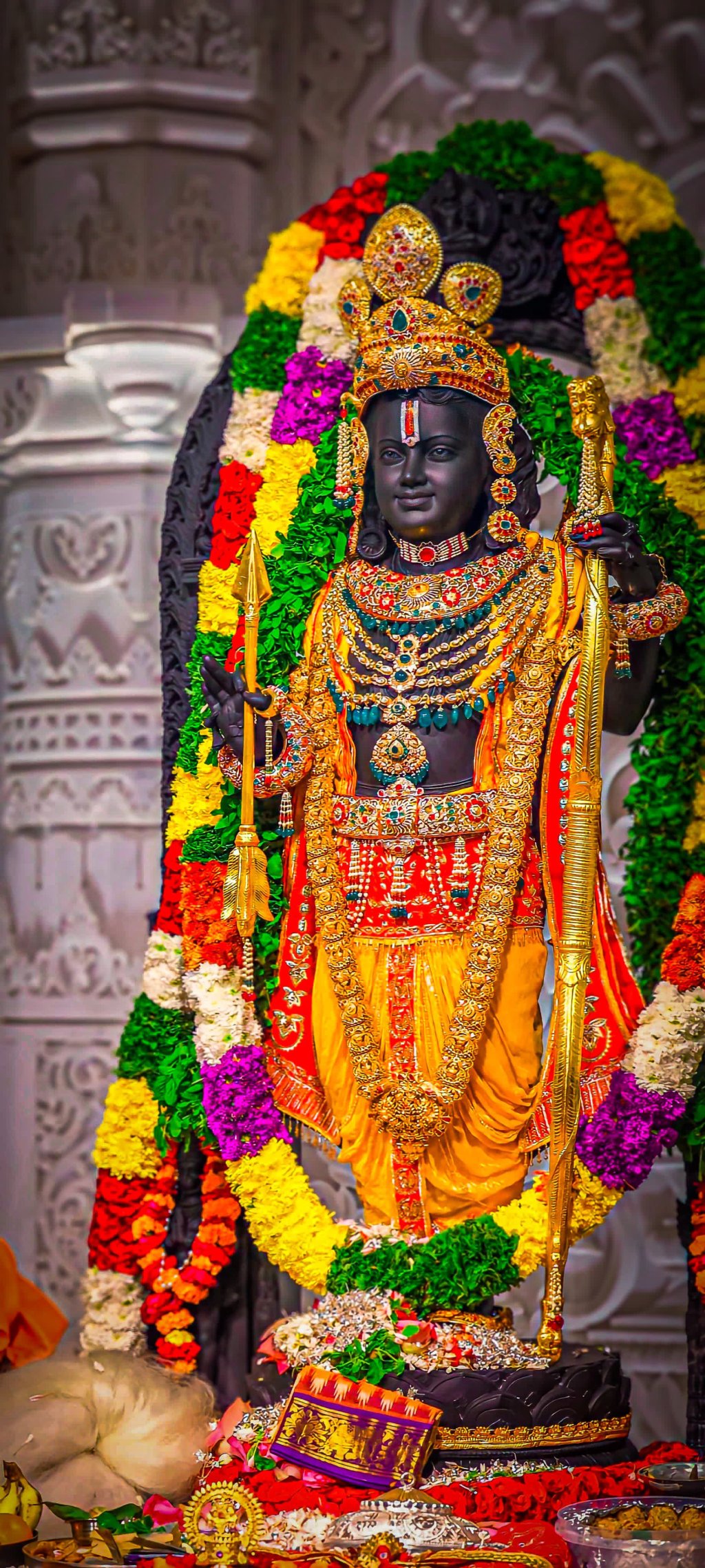
Lord Shri Ram is unattributed, formless, infinite, unborn, constant, limitless, and omnipresent. Omnipresent God… Omnipresent God… Omnipresent God… Just repeat this one word in your mind with love and feel what you feel inside. Some people feel deep peace and joy within themselves as soon as they take this name and in the minds of some people, the great character of Shri Ram, the stories related to him and his pastimes emerge, which fill them with positive energy. This is the praise of the name Rama. What magic there is in this little two-letter name. Someone was taught to have patience and faith in God even in sorrow, while someone reached self-realization by chanting the name Rama is the name of the ultimate state of supreme consciousness.

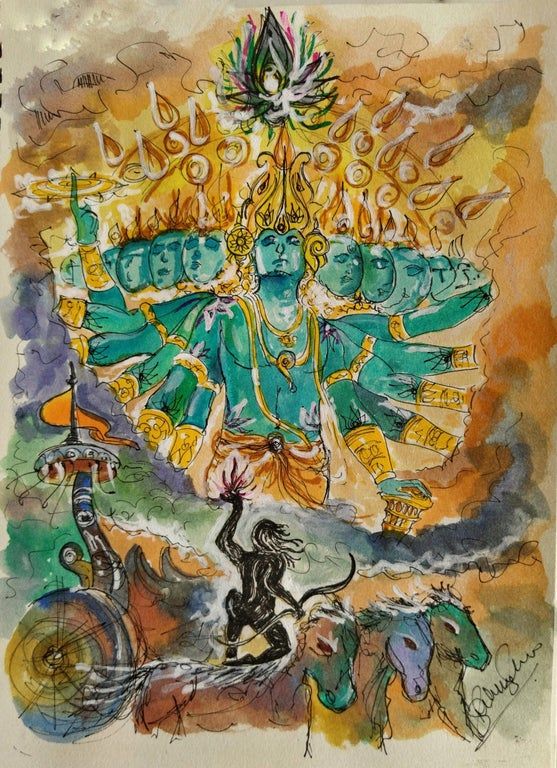
Who resides in every human being in his heart. The human body is ‘Dasaratha’. That is the chariot of horses in the form of ten senses. This chariot has ten horses – two ears, two eyes, one nose, one tongue, one skin, one mind, one intellect, and one soul. The driver of this body, Dasaratha, is ‘Rama’. Ram is the sun of the senses. The body and all its senses are running by the radiance and life energy of the same. When Rama, the form of consciousness, mounted on the chariot of the body, takes over it in his hands, only then does it operate alive Dasharatha’s existence ceases as soon as he is separated from Rama. The union of these two is the union of experience and expression, of root and consciousness, of the supernatural and nature. Dasharatha is aimless without his charioteer Rama and Ram is incomplete without Dasaratha. Lord Shri Ram has immense and infinite life energy. As soon as Rama’s name is taken, his entire character comes in front of the eyes.

Due to this, the people present around also start feeling positive energy, peace, and joy. When a person comes to know the importance of Rama in his life and feels his lack then efforts begin for the return of Rama in that person’s life. With the guidance of the Guru, he increases the power of truth within himself and defeats Ravana’s ego. As soon as Rama comes into the life of a person, there is celebration, gaiety, enthusiasm, love, joy, and silence in his life.

Lord Shri Ram is a symbol of positive powers


Lord Shri Ram is a personality who gives direction to the whole world. Lord Rama may have suffered a lot in his life but he did not see the suffering of others. Sorrow gives momentum to life by awakening manliness and Shri Ram gave this message to the whole world from his life. Lord Shri Ram is not just an example of humanity but also the Triveni of work, sacrifice, and devotion. He is a personality who gives direction to the world. Lord Shri Ram is the spiritual practice of divinity is greater than divinity. Lord Ram elevates your life from the highest to the highest level and makes it the most beautiful from the most beautiful. Shri Ram’s life is relevant even today. The conditions in the world are the same. Lord Rama was born to eradicate negative forces. The life of Lord Shri Ram is a message of morality and harmony to us in the present context.

Rama’s ideal is the exaltation of human consciousness. The pearls of life are hidden in many episodes of Ram Katha. It is easily stated that the root cause of all virtues is only truth. There is no religion greater than the benevolence of another. Due to opposing discrimination and injustice, untruth, Rama is embedded in every particle of India. He is Narottam because of his virtues. Suffering many, Shri Ram is the epitome of modesty, love, morality, compassion, and forgiveness. The creation of Rama, steeped in life values, always wishes for the good of the world. The birth of Rama is the source of all happiness. #sprituality_ is_beyond_science also describes the originality and relevance of Lord Shri Ram’s life as the basis of sadhana. In the form of this living incarnation, Lord Shri Ram is sitting in the form of child Ram Ji in Shri Ayodhya Dham today.

Prabhu Shree Rama and supreme power.

We all know that Shree Ram was born as a normal man but, he achieved a supreme level due to his Purusharth. But, was it Purusarth alone which helped him to reach the supreme level? Well, according to the Rama Rahasya Upanishad, Shri Rama also practiced Tantra. Rama Rahasya is one of the 31 Upanishads attached to the Atharvaveda. This Upanishad is believed to be written by Bhagawan Hanuman himself in which he also mentioned a pooja yantra developed by Prabhu Rama, which is like a Talisman and is used for invoking divine intercession to help the worshipper to accomplish astounding feats & acquire supernatural powers which would have been impossible otherwise. Quoting the Rama Rahasya in the book ’21 Upanishads dedicated to Prabhu Ram, it has been mentioned that,


a. Yogini Swamprabha.

While searching Sita, Hanuman along with other vanara went to a place that looked like a cave from the outside but inside it, some buildings were mounted with golden peaks and the windows were covered with silver linings, the lakes were full of water and pearl beads. There were Vimanas too. There, Hanuman & his troops met a yogini named Swamprabha. She was a friend of Hema, the mother of Mandodari, & wife of Mayasura, the famous architect. Swayamprabha using her power of yoga helped Vanaras to reach the shore of the Sea, which Hanuman crossed to reach the Lanka, within seconds, like a time travel. But, after that, there is no mention of her.

b. Mount Rishabha.

Before going in search of Maa Sita, Sughreeva told Angadh that in the south there is a mountain filled with jewels and gemstones, named, “Mount Rishabha.”Sughreeva asked Vanaras who were going south in search of Sita, to cross Bhogavati Puri (Puri City) & go to the mountain Rishabha & gave its description as a mountain rich in high-quality Jewel, gemstone & sandalwood, such as Gosirshaka, Padmaka, & Harisyama which were in the protection of Gandharvas called Rohita. This was the same mountain that was brought by Hanuman in search of Sanjeevani & later he placed it back. In Mahabharata, Great Sage Pulastya has mentioned Rishabha parvata as a sacred tīrtha, situated in the south.

Vedic cybersecurity

Write about a few of your favorite family traditions.

katpayadi Number

There is also a science in the scriptures of Indian spirituality by which you can keep your PIN safe and confidential. The name of that vidya is “Katpayadi Sankhya Vidya” Many of us forget our password, or ATM PIN, due to which we write it down somewhere, but if that piece of paper gets into someone’s hands or is lost, then there is trouble, but our password or PIN No. We can easily remember it by “katpayadi number”

Katapayadi” is an ancient Indian method of easily remembering numbers in the form of words or verses. In India, scientific/technical/astronomical texts were written in verse form, so to express numbers in the form of words, Indian thinkers came up with a solution in the form of ‘katpayadi’. The earliest available evidence of the use of the Katapyadi system is found in the description “Laghubhaskaraya” written by “Sankaranarayana”. The following verse of “Sadratnamala” composed by “Sankaravarman” explains this method
The classical proof of this is presented before you,

नज्ञावचश्च शून्यानि संख्या: कटपयादय:।
मिश्रे तूपान्त्यहल् संख्या न च चिन्त्यो हलस्वर: ॥


Meaning: NA, GHA, and VA represent zero.] The remaining nine digits are represented by consonant letters beginning with AA, TA, IA, and YA. In a combined consonant, only the latter will be taken. Consonants without vowels will be omitted.

discuss what is its usefulness in modern times and how to do it?


Katpayadi number– is a scriptural method of summarizing the number by letters, each number is represented by a few letters such as,

1 – A, T, P, Y
2 – B, B, F, R
3 – C, D, B, L
4 – D, D, B, V
5 – E, N, M, SH
6 – F, R, SH
7 – G, Th, S
8 – H, D, H
9 – I, D
0-J, NA, A, AA, E, E, U, OO, RI, L, A, AI, O, AU


Our Acharyas used them in Sanskrit sentences such as Gauh = 3, SriH = 2, etc.

For this, leave the existing quantity in the middle. The vowel is acceptable if it is at the beginning of the word, otherwise (unacceptable). For example, my ATM PIN is 0278 – but sometimes by remembering the number, we get confused whether it was 0728 or 0278. This also happens often with many people, these are ways to avoid them. Like any four-letter Sanskrit word for ATM PIN, keep that word only in your mind, do not tell anyone

For example–

Ibhastutyah = 0461

GanapatiH = 3516

Gajeshan = 3850

Narasimha = 0278

Janardanaḥ = 8080

Sudhyupasyaḥ = 7111

Shakuntala = 5163

Sitaram: = 7625

Choose any word from your own :
Remember any such word and immediately change the “katpayadi Number” to use your ATM PIN etc.