You become what you think all day long.

Do lazy days make you feel rested or unproductive?

Why the tradition of getting up in Brahma Muhurat?

ब्रह्ममुहूर्ते या निद्रा सा पुण्यक्षयकारिणी”।

The last prahar of the night is called Brahma Muhurat. Our sages have given special significance to this Muhurat. According to him, this is the best time to quit sleeping. This is not to say that sleeping is wrong, but sleeping more time than necessary is harmful. By getting up in the Brahma Muhurat, one attains beauty, strength, knowledge, intelligence, and health. One should wake up about one and a half hours before sunrise in the Brahma Muhurat. This Brahman means the Supreme Element or the Supreme Soul. Muhurat means favorable time. The last pra har of the night i.e. 4 to 5.30 am is called Brahma Muhurat

The sleep of Brahma Muhurta is the destroyer of virtue.
In Sikhism, there is a very beautiful name for this time – “Amrit Vela”, through which the importance of this time itself is proved. This importance of devotion to God proves itself. This is the best time for devotion to God. By getting up at this time, man gets beauty, intelligence, health, etc. His mind remains calm, and his body is completely healthy. Getting up in Brahma Muhurat is very beneficial for our lives. This makes our body healthy and keeps us energetic throughout the day. This is a formula for staying healthy and successful that costs nothing. Only laziness needs to be abandoned


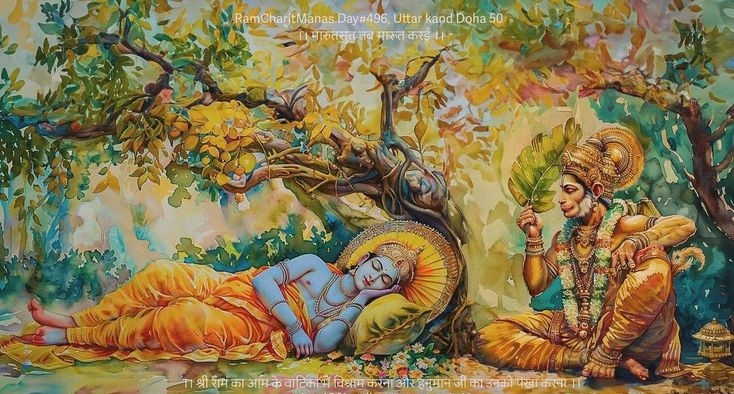
According to Valmiki’s Ramayana, Lord Hanuman reached the Ashok Vatika in Brahmamuhurta while searching for Mother Sita.

Where he heard the sound of chanting mantras of the knowers of Vedas and Yajna.
It is also mentioned in the scriptures –

वर्णं कीर्तिं मतिं लक्ष्मीं स्वास्थ्यमायुश्च विदन्ति।

ब्राह्मे मुहूर्ते संजाग्रच्छि वा पंकज यथा॥

By getting up in Brahma Muhurat, a person gets beauty, Lakshmi, intelligence, health, age, etc. By doing this, the body becomes beautiful like a lotus

That’s why you get success and prosperity.

According to Ayurveda, getting up and walking in Brahma Muhurta transmits Sanjeevani power in the body. This is the reason that the air flowing at this time is called nectar. Apart from this, this time is also said to be the best for study because when we wake up in the morning after resting at night, there is energy and freshness in the body and brain. The doors of major temples are also opened in Brahma Muhurta and there is a law to adorn and worship God in Brahma Muhurat.
Knowing the religious, mythological, and practical aspects and benefits of Brahmamuhurta, start waking up every day at this auspicious time, then you will get better results

A person who rises in Brahma Muhurat is successful, happy, and prosperous; why? Because getting up early gives you enough time to make tasks and plans throughout the day. So not only does life succeed. Everyone who is physically and mentally healthy can be happy and prosperous. The reason is his progress in the work he does. The student is successful in the examination. The boss is happy with the job-doer. Businessmen can earn well. The income of the sick person is affected, on the contrary, the expenses start increasing. Success kisses the feet of the one who makes good use of time and stays healthy. Therefore, if you want to remain healthy and successful, then get up in the Brahma Muhurat
There is a deep connection between Brahma Muhurat and nature. At this time, animals and birds wake up. His melodious voice begins. The lotus flower also blooms. In a way, nature also becomes vibrated in the Brahma Muhurat. It is a symbol of getting up, waking up. Nature gives us the message to get up in the Brahma Muhurat


प्रातारत्नं प्रातरिष्वा दधाति तं चिकित्वा प्रतिगृह्यनिधत्तो।

तेन प्रजां वर्धयमान आयू रायस्पोषेण सचेत सुवर:॥
– ऋग्वेद-1/125/1

The health of the person who wakes up before sunrise in the morning is good. That is why wise people do not waste this time. A person who wakes up early in the morning is healthy, happy, strong and long-lived

A cosmic day- routine


1.  3:00 am to 5:00 am –

At this time the life force is mainly in the lungs. Drink some lukewarm water and walk in the open air and do pranayama. At this time, long breathing develops lung function. They get oxygen and negative ions in abundance and the body becomes healthy and energetic. People who wake up in the Brahma Muhurat are intelligent and enthusiastic, and the life of those who sleep becomes dull.

2.  5:00 am to 7:00 am –

At this time the life force is mainly in the intestine. Defecation and bathing should be taken between waking up in the morning and 7 in the morning. Those who bowel after 7 in the morning dry up the stool by absorbing the fluid from the stool. It causes constipation and many other diseases

3.  7:00 p.m. to 9:00 p.m –

At this time the life force is mainly in the brain. The brain is especially active at this time. Therefore, apart from the morning, the lesson read in this period is quickly remembered. This has also been confirmed by modern exploration.


4.  9 pm to 11 p.m.:

At this time, the life force is mainly present in the spinal cord. At this time, resting on the back or the left side helps to absorb the strength received by the spinal cord. Sleep at this time provides the most relaxation. The awakening of this time tires the body and intellect. If food is eaten at this time, it remains in the stomach till morning, it is not digested and its decay produces harmful fluids which cause diseases by going into the intestines with acid. Therefore, it is dangerous to eat at this time


5.  11 p.m. to 1 p.m.:

At this time the life force is mainly present in the gall bladder. Awakening at this time causes bile disorders, insomnia, eye diseases, and early aging. At this time new cells are formed

6.  1 to 3 pm:

At this time, the life force is mainly in the liver. Microdigestion of food is the function of the liver. Awakening at this time spoils the liver and digestive system. If you keep awake at this time, then the body starts getting sleepy, the vision is dim and the body’s reactions are slow. Therefore, road accidents are more common at this time

Red Caution:

Sages and Ayurvedacharyas have said that eating without hunger is forbidden. Therefore, the quantity of food in the morning and evening should be such that one feels hungry openly during the above-mentioned meal time. Spread something on the ground and eat food sitting in Sukhasana. In this asana, the gastric fire remains illuminated due to the activation of the Muladhara chakra. Digestion is weak while sitting on a chair and eating food while standing does not happen at all. Therefore ‘buffet dinnerʹ should be avoided

To take advantage of the earth’s magnetic field, sleep only with the head in the east or south direction. Otherwise, there are problems like insomnia. To run the body’s biological clock properly, sleep with the light off at night. The research done in this context is shocking. Working or studying late at night and sleeping with the light on can cause severe health hazards by deactivating the biological clock. By sleeping in the dark, this biological clock runs properly. The cause of most of the diseases found nowadays is the chaotic routine and adverse diet. If we maintain our daily routine according to the biological clock of the body, then we will get the benefit of the activity of different organs of the body. In this way, a little awareness lays a new foundation for a healthy life

Need overall !

What could you try for the first time?

Lentent hit :

Due to stressful life in modern society, human beings are vulnerable to deadly diseases like high blood pressure, heart disease and cancer. Many diseases are destroyed by lifestyle improvement. Along with this, there is another easy solution, which does not have any side effects. You just need to do it regularly. This easy solution is the Gayatri Mantra, which has been tried for centuries. And nowadays it has also been put to the test of science.

1. If this mantra is read in any position i.e. while sitting, lying down or standing, then one gets equal benefit to

2. The mantra begins with the word Om- Pull the word Om as long as you can, without taking a breath. Draw the words “o” and “m” separately long.

3. After this, read or speak the remaining mantra as fast as you can with the correct pronunciation. Repeat the OM process every time. Keep repeating Om and Mantra continuously for five minutes.

4. Do this process every two hours for a month. In this way, do the awakening of a normal person 8 times in 16 hours. A total of 40 minutes are to be given in 24 hours.

5. After one month, the beneficial effect of this process will be seen. Now continue this process by doing it four times in 24 hours.

6. It is necessary to chant this mantra for five minutes at the time of getting up in the morning and at bedtime. After this, keep reciting this mantra regularly by fixing a fixed time only twice.

आत्मानं विद्धि”

Vasana Daha Tantra is a powerful spiritual practice rooted in the ancient wisdom of Bharat that aims to burn away the latent impressions (vasanas) accumulated from past experiences, desires, and karmic patterns. The term “Vasana” refers to the deep-seated tendencies and subconscious impressions that influence our thoughts, emotions, and actions. “Daha” means burning or purification, and “Tantra” signifies a structured method or practice. In essence, Vasana Daha Tantra is the process of purging or transforming these deep-rooted impressions, leading to liberation from mental and emotional conditioning, ultimately bringing one closer to spiritual enlightenment.

Process of Vasana Daha Tantra:


1. योगस्थ: कुरु कर्माणि =  Self- realisation:

The first step involves deep introspection and awareness of one’s thoughts, desires, and behaviors. Through meditation and mindfulness, you identify the underlying patterns and attachments that are obstructing spiritual growth. As the Bhagavad Gita states, “योगस्थ: कुरु कर्माणि” — remain established in yoga while performing actions, staying aware of the forces at play.

2. आत्मानं विद्धि = Acknowledge and Accept:

Once the asanas are identified, the next step is to fully acknowledge their presence without judgment. Accept that these impressions are part of the karmic cycle, and they need to be transformed, not resisted. The acceptance phase draws from the Upanishadic wisdom, “आत्मानं विद्धि” (Know thyself), recognizing the self in all its layers.

3. Purification through Reflection :

This step involves deep contemplation on the harmful or binding nature of these vasanas. By reflecting on their impermanence and the suffering they cause, the seeker gradually detaches from their influence. In this phase, spiritual texts like the “Shvetashvatara Upanishad” guide the seeker to view desires as fleeting and not inherent to the true self.

4.सर्वे कर्माखिलं पार्थ ज्ञाने परिसमाप्यते”=  Soul of Visualization:

A key technique of Vasana Daha Tantra is meditative visualization, where one mentally visualizes the vasanas burning in the fire of wisdom. The fire represents spiritual knowledge, often referred to as “Jnana Agni” (fire of knowledge). As stated in the Mundaka Upanishad, all actions are dissolved in the fire of wisdom.

5. तंत्र: Ritualistic Dissolution :

Engage in a ritual where you symbolically burn these impressions. This can involve the chanting of mantras, such as the powerful “Om Agnaye Namah” (Salutations to the fire element), while mentally offering the vasanas into an inner fire. This act strengthens the internal process of release and purification.

6. Affirmation of Liberation :  

 After the process of dissolution, affirm your liberation from the past tendencies. Repeat mantras like “सोऽहं” (I am That), affirming the unity of self with the divine consciousness. It reinforces the realization that you are beyond desires and karmic impressions.

7. तत्त्वमसि :  Feel the infinite :

The final stage is integrating this newfound freedom into daily life. You move forward with a clearer mind and a lighter heart, no longer governed by old vasanas. The Chandogya Upanishad says, real, I  remind you that the true self is infinite, pure, and free from conditioning.

Vasana Daha Tantra is a transformative spiritual practice that combines deep introspection, meditation, mantra, and ritual to dissolve the karmic impressions that bind us to the cycle of birth, death, and rebirth. By purifying these asanas, one can attain clarity, freedom, and a deeper connection to the divine. This method empowers the seeker to transcend habitual patterns and step into a higher state of consciousness, aligning with the true self eternal, blissful, and free.

Peaceful perspective: mindfulness for health.

What jobs have you had?

Food is not life

The most important thing that nature has put in the inner mind of all organisms is survival, meaning the first goal of all organisms is to survive, so we do everything necessary to survive and advance our consciousness with the subconscious mind, and when we do this work, a chemical is released in our brain which is called dopamine and this gives us happiness Is. Meaning Mother Nature has arranged that in whatever work we fulfill our minimum goal, we feel happy. Such as good food, music, etc.
Then the natural question arises that then why do we like such food which is more junk and unhealthy because it makes us sick, so it should not be natural

But no matter how hard we try, we plan the diet, and in the end, the mind keeps running behind the test. The reason for this is also our survival instinct because no matter how much material progress we have made, we are primitive humans who live in caves.
At that time after getting food, there was no guarantee of getting food the next time, and once the food came in front of him, he was forced to eat more and more because who does not know whether he could not get such food tomorrow or not and had to be hungry for many days, and at such times fat is most important because it keeps us alive in the lack of food. We also like sugar more for this reason because it gives us the energy to work immediately.
You can see the small child for this, how much trouble it is to feed him vegetables or something good, the same chocolate, candy, or junk food he likes the first time

But there is also a reason for this because you see that there is a war going on between Ukraine and Russia, there is a war against Israel and Palestine, and the availability of food has decreased due to the horrors of the war, no matter how much progress we have made, but only one bad event can take us back to the primitive age. And long lines for food and starvation can be forced to see the horrors of death.
So no matter how much progress we make materially, it is in our inner mind that if we do not get this food tomorrow, then eat it today, and all our diet plans become zero But what should we do now, and how to convince ourselves that now the quantity of food is available in abundance and we will not die of hunger.
For that, we have to raise our level a little which separates us from other animals, we have to convince ourselves that we have not come to this earth just to survive, our goal is very big. One way for this is Patanjali’s Yoga Sutra, which tells us that we can attain Godhood from the human body, and by moving on different levels, we can move out of the vicious cycle of survival and move forward on the path of self-welfare.

When we do pranayama and meditation, our consciousness gradually rises, then the system of the mind changes, and the pleasure that comes from good food or sex is automatically achieved manifold. Then external things do not affect it, that is why fasting, etc. was included in our traditions. So that we prepare ourselves slowly. If you consume the green leaves of peepal yourself in this series, then in a few days, as a result, the flow of electrical signals in your brain changes slightly, if you continue to progress in this way, then karmic bonds can also end, it supplies oxygen to the body It is not that one should meditate only for the attainment of God, it can also benefit in maintaining our diet plan, this is one of its many benefits. It is our journey from animality to humanity and tells us that our goal is not just to survive but to self-welfare, there are many ways to meditate, and you can choose from them according to you.

Bhagvat Gita said :

असंशयं महाबाहो मनो दुर्निग्रहं चलम्।
अभ्यासेन तु कौन्तेय वैराग्येण च गृह्यते।। 35।।

Sri Bhagavan said, “O Mahabaho! Indeed, the mind is fickle and difficult to be subdued, but O Arjuna, the son of Kunti! It is subdued by practice and detachment. So far, our efforts are on the surface and we try to stop the mind directly for not eating food or to leave a habit while the mind is not in your control

First of all, prayer –

1. Praying to God is the easiest and most suitable means, it increases the Sattva quality. The power of prayer is a tool that gives us inner strength.

2. Desi Indian cow should start consuming milk and ghee. This increases the Sattva quality.

3. Apart from this, the use of fruits and satvik food should be increased Whatever mantra you have received from the Guru, you should chant it or chant the name.

4. One should take 8 hours of sleep, but he should not take eight hours from twelve o’clock in the night to 8 in the morning, but try to get up by 6 o’clock, and slowly start getting up in Brahma Mahurat.

5. After that start doing pranayama and meditation, in pranayama, Anulom-Vilom, Bhastrika Pranayama can be done, after that meditation should be done. Start cow service, spend some time in the cowshed.

This will increase your Sattva quality. You can also start activities like donating to the deserving. Gradually, you will be able to balance sattvic qualities with your tamasic and majestic qualities

A new approach: H2o

What are you good at?

Water is energy.

Water is not only the most soluble substance, but it also contains everything. Whatever vessel you put it in, it happens. But, have you thought that water also contains our thoughts, emotions and energy?

Water and Energy:

Water absorbs the energy of the person with whom it comes in contact. Whether that energy is negative or positive, water adapts to it.

Water sensitivity:

Water is extremely sensitive to all kinds of thoughts. If you look at water molecules under a microscope, you will find that the composition of water varies according to ideas

Impact of Ideas:

The structure of water molecules in grief is different and different in happiness. The effect of prayer and the effect of hope or positive thought are also different. If one’s thought is positive, then the composition of the water kept near him will also be positive. If the thought is negative, the composition of the water will be the same.

A New Approach:

We can guess any person’s thoughts from the water bottle kept near him. With the help of this unique quality, you can also detect any negative force in your home or room

RO water purifier should be installed or not.

Many times the question comes that it will be right to install RO water purifier or it will be a mistake because then you will be able to drink outside water or not? Or if it removes all the minerals dissolved in water, then what do we do

Let us first understand the working of RO

1. Initial Filtration:

When water enters the RO system, it first passes through a pre-filter. This pre-filter works by removing large particles, dirt, sand, and sediment from the water. This is the first step so that the purification process of water can start correctly.

2. Active Carbon Filter Pre Carbon:

Next, the water passes through an activated carbon filter. This filter works to remove chlorine, pesticides and other chemicals present in the water. It also improves the taste and smell of water

3. Reverse Osmosis (RO) Membrane:

This is the most important stage. An RO membrane is a semipermeable membrane that allows water molecules to pass through small pores but excludes larger particles and chemicals. Dissolved salts, heavy metals and other impurities in the water get trapped in this membrane and clear water comes out.

4. Post-Carbon Filter:

The purified water from the RO membrane then passes through a post-carbon filter. This filter works by removing any residual odors or tastes present in the water, making the water even purer and drinkable.

5. UV (Ultra Violet) Filter:

 Some RO systems also have a UV filter. This UV light works to destroy bacteria, viruses and other microorganisms present in the water, making the water 100% pure and safe


6. TDS Adjuster:

 As people have become aware that we should not drink water of low TDS, then there is an extra membrane which again adds minerals to the water, so that TDS increases again. But if a machine does not have this membrane, then this adjuster mixes the unfiltered water again in clean water, which eliminates the basic purpose of this whole machine.

If we have our way, we will ask to remove RO from all houses, but at present rivers and groundwater have become highly polluted And with toxic chemicals and plastic particles dissolved in water, our measures can no longer separate them from water. Because of the excessive pesticide use in agriculture and factories, the amount of microplastics and aluminum in the water has also increased which cannot be removed by normal filters. But still those who are on the mountains and those who do not have farming or any factory on the banks of those rivers, those lucky people should not drink water without RO, if you drink RO water then no one can save you from being unwell. The rivers of the mountains carry with them the reserves of minerals and medicines in the water, their water is medicine.
To clean the river water, keep a vessel in the sun for an hour, there is no better antibacterial than the sun. Or boil once, then take alum and rotate it once in water to clean the waste. You can also use limestone and charcoal filters. But for those on the field, there is no option other than RO at the moment

How much TDS water should you drink?

TDS stands for Total Dissolved Solid. Now it is not necessary how much TDS is there, what is important is what is found in it?

By the way, even water of 500 TDS does not give problems and if arsenic, aluminum or fluoride is mixed in 50 TDS, then it can give trouble. To increase the life of the RO filter, an additional filter should be installed from the outside filter, and only the remaining 3 filters are necessary, the rest does not mean much. Another special thing nowadays the trend of copper tubes has increased, do not forget to use it. Please tell me how you liked the information and for similar information, you can follow me i.e. spirituality is beyond Science Should I take an alkaline machine or not?

Alkaline water machines are devices that increase the pH level of water, making it more alkaline. It is particularly claimed to provide health benefits.
These machines commonly use an electromagnetic or electrolysis process, where water is split into acidic and alkaline, which finally forms alkaline water and separates the rest of the acidic water.

It is said that drinking high pH water from this machine has many health benefits, but there is a big question that our stomach is acidic and even if we drink high pH water, it reacts with stomach acid and becomes neutral. What’s the use of that water after that?
In addition, it is important that the pH level of the blood is controlled by the body and is not affected by drinking water. Rather, the pH level of the blood depends on the calcium in the body. The best solution is that we can take gourd juice, or a pinch of lime in drinking water. Or the ashes proved in the yagna can also be mixed in water. You can make 100% alkaline water only from the remaining ashes of Yagya, in which you can keep 10 liters of water for two pinches of bhasma for 12 hours, after that you can use that water which is absolutely good.

The conciseness upgrade.

What does “having it all” mean to you? Is it attainable?

Knowledge of wisdom: The Asthavakra Gita :

कथं ज्ञानमवाप्नोति कथं मुक्तिर्भविष्यति।
वैराग्यं च कथं प्राप्तमेतद्ब्रूहि मम प्रभो॥

This verse, taken from the Ashtavakra Gita, poses important questions of the spiritual journey. It explores the path of knowledge, salvation, and detachment. To fully understand this, we need to delve deeper into the context of the Ashtavakra Gita and the story of Sage Ashtavakra, whose teachings highlight these spiritual endeavors

Knowledge of wisdom:

Ashtavakra Gita is a dialogue between Rishi Ashtavakra and King Janaka. It is a major treatise of the Advaita Vedanta tradition, which emphasizes the oneness of the soul and Brahman. The questions asked in the shloka reflect King Janaka’s deep spiritual understanding and desire to transcend the material and many forms of life

Sage Ashtavakra: Early Life and Cursed Deformities.

Ashtavakra, known for his intelligence and spiritual insight, was the son of Rishi Kahod and his wife Sujata. In the womb itself, he corrected his father by listening to his Veda recitation, as a result of which Kahod cursed him, causing Ashtavakra to be born with eight deformities. Despite this, Ashtavakra became a child of an extremely intelligent and spiritual nature. His mother Sujata taught him the scriptures and gave him a deep understanding of spiritual truth

कथं ज्ञानमवाप्नोति :

Knowledge is the recognition of the reality of the soul, which is attained not by external means but by self-observation, meditation, and the guidance of the enlightened master

कथं मुक्तिर्भविष्यति :

Liberation is liberation from the cycle of birth and death and the realization of oneness with the soul with Bramha.

वैराग्यं च कथं प्राप्तम :

Quietness differs from desires and material things, which are achieved through self-discipline, meditation, and spiritual understanding

Enlightenment is possible with self-observation, meditation, and the guidance of a knowledgeable Guru. Spiritual practices, moral life and enrichment of virtues pave the way for liberation. Disinterest can be achieved by developing a sense of contentment and satisfaction in the present. This verse guides us towards self-realization, inner peace, and the pursuit of ultimate freedom. The teachings of Ashtavakra inspire us to transcend the illusions of the material world and towards the attainment of true knowledge

As per Ramcharitmanas

सो सुखु करमु धरमु जरि जाऊ ।
जहँ न राम पद पंकज भाऊ ॥
जोगु कुजोगु ग्यानु अग्यानू ।
जहँ नहिं राम पेम परधानू ॥”

This couplet embodies the devotion and love of Lord Ramchandra, which highlights the importance of true religion and spiritual practice. It is an inspirational couplet that makes us understand the importance of truth, love, and spiritual practice. To achieve true happiness, we must remain single. It tells us that to achieve joy and happiness in life, we must walk the path of truth and justice. That is, to accept simplicity in life. Today we use and waste many things, which causes great harm to Mother Nature, it is an injustice, so simplicity is very important in life. It is in God’s love that the soul finds joy and true satisfaction. There is true happiness in knowledge, which is in the love of God
Teaches us the importance of truth, love, and spiritual practice. It reminds us of the importance of following the path of righteousness, attaining enlightenment, and being absorbed in the love of God. This emotional and spiritual couplet inspires us to the true path of search for truth, the importance of love, and joy

Lord Shiva: A Motivational Perspective on Spiritual Strength

Who would you like to talk to soon?

The Key to the Fullness of Life

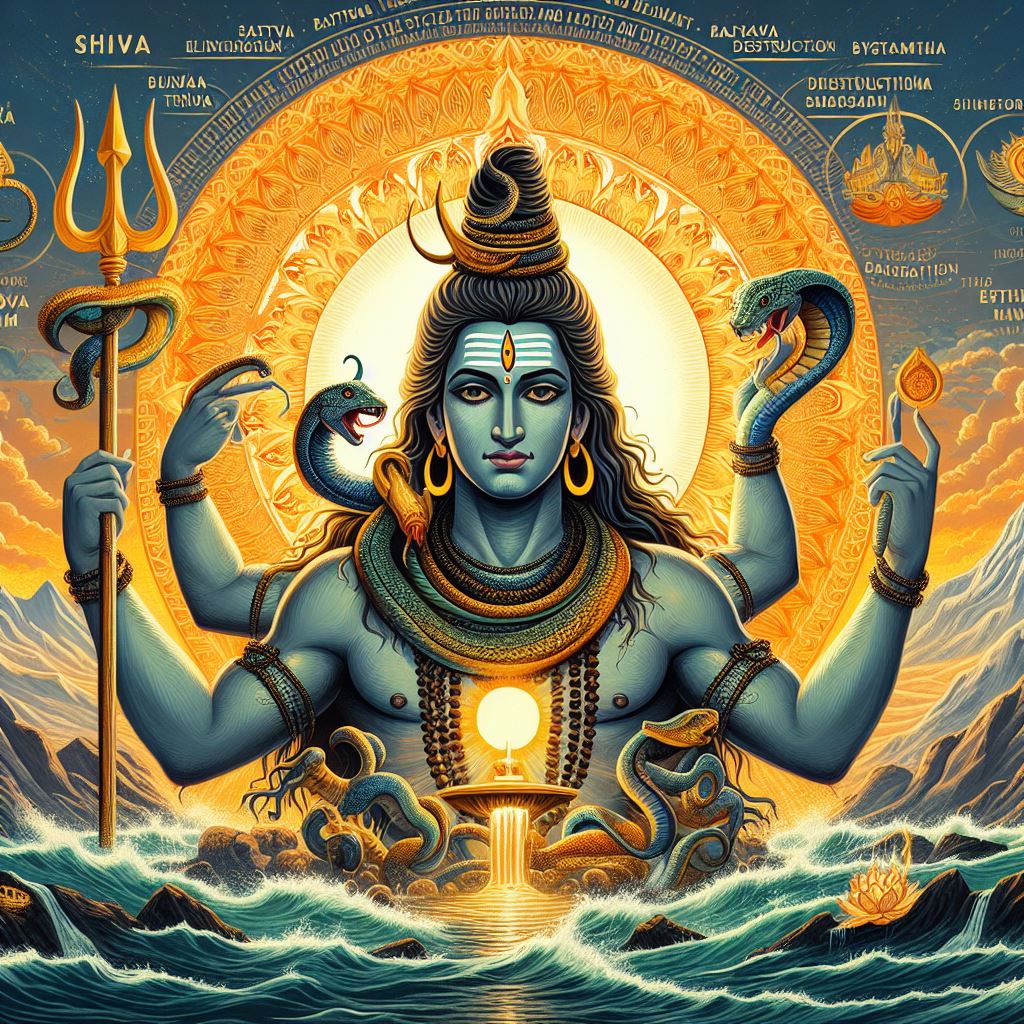
Lord Shiva has a special place in Indian culture and religion. He is not just a deity, but also a lifestyle, a philosophy, and a spiritual guide. Shiva is called Mrityunjaya, which means ‘beyond the last moment’. He is the god of destruction, which is necessary for the creation of the new creation. Surrender to them not only gives us satisfaction in material life but also paves the way for spiritual growth. The idea “Surrender to Shiva, and he will give you everything” is not just a religious statement, but a profound truth of life. Shiva means to join yourself, within your brain, there is a pea-sized pity gland and module whose form is similar to a Shivalinga and the serpent that is wrapped around Shiva is your speech. If you have control over your speech, then it is good, otherwise, it is also like some poison

Meaning of Shiva and His Symbolism:

Shiva means ‘benefactor’. They are Trinetradhars, whose third eye symbolizes knowledge, enlightenment, and destruction. They wear the serpent around their neck, symbolizing the cycle of life and death. Shiva’s damaru depicts the sound of creation and destruction, and the trident symbolizes three gunas – Sattva, Raja, and Tama. The Ganges flowing in their locks teaches us how to calm the difficulties and disturbances of life

Meaning of surrender to Shiva:

Surrendering to Shiva means renouncing one’s ego, selfishness,s and Maya and surrendering oneself to Shiva. This dedication is a symbol of deep faith and faith. When we offer our worries, sorrows, and joys at the feet of Shiva, we attain mental peace and contentment. This dedication helps us understand the truth of our lives and connects us to the true nature of our soul

Result of Dedication:

The most important consequence of surrendering to Shiva is that we go beyond material comforts and attain spiritual satisfaction. True reverence and devotion towards Lord Shiva make us get all the things that are necessary for our life. By the grace of Shiva, we get joy, peace, power, knowledge, and prosperity in life. He takes away all our sufferings and overwhelms us with His divine energy

Story: Shivabhakta Ravana

Ravana, who was a great Shiva devotee, pleased Shiva with his devotion and penance. Ravana performed rigorous penance to please Lord Shiva and eventually Shiva granted him a boon. This story teaches us that if we worship Shiva with a true heart and remain devoted to him, then Shiva fulfills us with all our wishes.

Ways to worship Shiva

1. Meditation and Yoga:

Remembering Shiva through meditation and yoga. It is an important step towards spiritual peace and self-realization.

2. Rudrabhishek:

This is a special puja in which water, milk, curd, ghee, honey, etc. are offered to the Shivalinga. This puja is very dear to Shiva.

3. Mahamrityunjay Mantra:

This mantra is chanted to bring peace, prosperity, and health to life. This mantra is a powerful medium to get the immense grace of Shiva.

4. Keeping your body healthy:

If you are on this earth, it is through your body. If your body system is healthy then Shiva will be happy in himself, you get complete knowledge of living life, it is necessary to understand every aspect of life

Incarnations of Bhagawan Shiva

1. Piplaad:
Helps devotees overcome Shani Dosha.

2. Nandi:
Considered an aspect of Shiva.

3. Veerbhadra:
Destroyed Daksha and his yagna.the fight between ego and real I

4. Bhairav:
Emerged during a fight between Brahma and Vishnu over superiority. Belong to creation and innovation.

5. Ashwatthama:
Born from the poison Shiva consumed during the Samudra Manthan, destined to kill oppressive Kshatriyas.

6. Sharabh:
Part bird and part lion.

7. Grihpati:
Born as the son of the Brahmin Vishwanar.

8. Rishi Durvasha:
Maintains universal discipline.

9. Hanuman:
Aided Shri Rama. This is the incarnation that is dedicated only to the Supreme Mighty Power

10. Brishabh:
Represents righteousness

11. Yatinath:
A peaceful form Journey of the inner soul.

12. Krishna Darshan:
Highlights the significance of religious rituals. Dedicate to love

13. Bhichhuwarya:
Protects all creatures.

14. Sureshwar:
Took the form of Indra to test a devotee.

15. Kiraat:
Tested Arjuna means surrender to Supreme Power.

16. Sunatnartak:
Asked for Parvati’s hand in marriage.

17. Yaksheshwar:
Removed false ego from the gods.

18. Avadhoot:
Crushed Indra’s arrogance. The meaning of surrendering to Lord Shiva is not just limited to religious rituals but it is a way of life, which leads us to freedom and liberation in the true sense. When we dedicate ourselves to Shiva in every aspect of our lives, we attain all the things that bring us perfection and contentment. Surrender to Shiva helps us understand the purpose of our lives and leads us to a deep, meaningful, and prosperous life

Version 2.0: The bugs of life do not affect me.

What is the legacy you want to leave behind?

Spirituality is beyond science: Divine Journey Towards the Real I”

मनस्वी म्रियते कामं कार्पण्यं न तु गच्छति।
अपि निर्वाणमायाति नानलो याति शीतताम्।।” 

(श्रीमद्भागवत 2, 50)

A person or seeker who is endowed with self-power does not only fear physical happiness and unhappiness but tends towards self-realization, he does not wait for happiness and unhappiness. This verse conveys the importance of courage, patience, and decision in life. It means that a person who is endowed with self-strength is engaged in his tasks, accomplishes them, and inherits them, but he does not worry whether he will succeed in achieving his efforts or not.  This verse has a message of inspiration and courage, which gives us the feeling of not being defeated by desires. This leads us to the point that like thought, we can motivate ourselves, and accumulating the power of faith can help us achieve our goals. The person who is endowed with self-confidence does not give up in any situation, but tends towards self-realization and is ready to face any kind of adversity

In a world often bustling with noise and distraction, the quest for inner peace and self-discovery has become a paramount pursuit for many. Amidst the chaos of everyday life, there exists a profound longing to reconnect with one’s true essence, to delve deep within and uncover the mysteries of the soul. This journey of self-exploration, known as Aadhyatm, transcends mere existence; it is a transformative odyssey that leads individuals toward profound spiritual awakening and enlightenment.

Aadhyatm is more than just a spiritual practice; it is a way of life a philosophy that seeks to unravel the intricacies of human consciousness and the cosmos. Rooted in ancient wisdom and timeless teachings, Aadhyatm invites seekers to embark on an inner pilgrimage, guided by the principles of introspection, mindfulness, and self-realization. Central to the Aadhyatm journey is the concept of “Atma,” or the soul the eternal, immutable essence that transcends the physical realm. Through practices such as meditation, yoga, and self-reflection, individuals endeavor to peel away the layers of ego and illusion, unveiling the radiant truth that lies at the core of their being. In this pursuit, the journey towards the soul becomes a sacred quest for unity with the divine—a journey towards wholeness, harmony, and liberation.

The path of Aadhyatm is as diverse as it is profound, encompassing a myriad of spiritual traditions, practices, and philosophies from around the world. Whether through the ancient wisdom of Vedanta, the mystical teachings of Sufism, or the contemplative practices of Buddhism, seekers are drawn to different paths, each offering a unique roadmap toward self-discovery and spiritual fulfillment.

Yet, regardless of the path chosen, the Aadhyatm journey is ultimately a deeply personal one—a voyage of inner exploration that transcends the confines of time and space. It is a journey that unfolds in moments of stillness and silence, as well as in life’s myriad experiences and challenges. It is a journey that requires courage, patience, and unwavering devotion a journey towards the deepest recesses of the heart, where the soul resides in eternal communion with the divine.

As individuals traverse the path of Aadhyatm, they may encounter moments of profound revelation, as well as moments of doubt and uncertainty. Yet, amidst the ebb and flow of their inner landscape, they remain steadfast in their commitment to self-discovery and spiritual growth. For in the journey towards the soul, every step taken, every obstacle overcome, becomes a sacred offering—a testament to the resilience of the human spirit and the infinite potential that lies within. Aadhyatm is not merely a destination to be reached, but a journey to be embraced a journey towards the deepest depths of our existence, where the light of the soul shines eternal. It is a journey of self-transcendence, of awakening to the infinite possibilities that lie within, and of realizing our innate connection to all of creation. As we embark on this sacred quest, may we be guided by the wisdom of the ages, the light of our inner truth, and the boundless love that permeates the universe.

Create new positive neuro pathways of ancient knowledge.

How do you feel about cold weather?

Gravity in Vaisheshika Sutra

It’s fascinating to explore how ancient Indian philosophies and texts may have addressed concepts akin to modern gravitational theory long before Newton’s time. The Vaisheshika Sutra by Rishi Kanada is particularly intriguing as it predates Newton by over two millennia and contains verses that seem to describe gravitational principles.

1. The Nature of Objects Falling to the Earth:

The Vaisheshika Sutra mentions that objects tend to fall towards the earth due to an inherent property or force. This aligns with the idea that there is an attractive force between the earth and other objects, which we now identify as gravity. This recognition of a force causing objects to fall to the ground is a fundamental aspect of gravitational theory.

2. The Stability and Movement of Celestial Bodies:

The sutras also discuss how the stability and movement of celestial bodies are influenced by this attractive force. This can be seen as an early conceptualization of how gravity governs the motion of planets and other celestial entities, akin to the principles described by Kepler and Newton.

Verse 5.1.7:
Discusses how substances move downward due to an inherent force.

Verse 5.2.4:
Addresses the concept of attraction between substances, hinting at a force akin to gravity.

Interpretation and Comparison:

While these ancient texts don’t provide the mathematical formulations that Newton did, they demonstrate a conceptual understanding of gravity’s effects. This understanding is significant, showing that the idea of gravity as an attractive force was observed and noted by ancient Indian philosophers. In ancient Indian philosophy, the idea of “Gurutva Aakarshana Shakti” captures the essence of gravitational pull. The term “Gurutva” (mass) and “Aakarshana” (attractive pull) together indicate an awareness of the relationship between mass and the force it exerts, reflecting a sophisticated understanding of natural forces.

The exploration of gravitational concepts in ancient Indian texts like the Vaisheshika Sutra highlights a rich history of scientific thought in India. These early discussions on gravity illustrate how ancient scholars were keen observers of nature and sought to understand the forces governing the physical world. While Newton’s laws provided a detailed mathematical framework for gravity, it is remarkable to recognize that the fundamental ideas about gravitational forces were present in human thought long before his time.

आत्मकर्म हस्तसंयोगाश्च । (V.S. 5.1.6)

The action of the body and its members is also in conjunction with the hand.

संयोगभावे गुरुत्वात्पतनम (V.S. 5.1.7)

In the absence of conjunction falling results from Gravity.

Concept of air fall

नोदनाद्यभिषोः कर्म तत्कर्मकारिताच्च
संस्कारादुत्तरं तथोत्तरमुत्तरं च ।। (V.S 5.1.17)

The first action of arrow is from impulse; the next is resultant energy produced by the first action, and similarly the next next shloka-

संस्काराभावे गुरुत्वात्पतनम (V.S. 5.1.18)

In the absence of resultant/propulsive energy generated by the action, falling results from Gravity.
Rishi Varahamihira who is also supposed to be lived in the 5th century BCE, mentioned the

following shloka in his Surya Sidhanta, 12th chapter 32 shloka-

मध्ये समन्तादण्डस्य भूगोलो व्योम्नि तिष्ठति ।
बिभ्राणः परमां शक्तिं ब्रह्मणो धारणात्मिकाम् ॥

This verse conveys that the spherical Earth remains positioned at the center of the universe in space due to a special kind of energy that prevents it from falling away and helps it remain stable. The term ‘energy’ referred to in the previous shloka was further elaborated by Bhaskaracharya, a mathematician who lived in the 12th century AD. In his book Sidhanta Shiromani, Bhaskaracharya provided an explanation for this energy and named it “gurutvakarshan shakti.”

आकृष्टिशक्तिश्च महि तय यत्।
खष्ठं गुरु स्वभिमुखं स्वशक्त्या ॥
आकृष्यते तत्पततीव भाति।
समेसमन्तात् क्व पतत्वियं खे ॥

This verse explains that the energy present within the Earth is the power of attraction, known as “aakrushti shakti”, (according to the Bhaskaracharya).  Due to this attractive force, the Earth pulls objects towards itself, and this power is inherent and natural to the Earth. As a result of this pull, every object on Earth appears to be falling downward. Bhaskaracharya did not stop there; he concludes the shloka with a question: where can this Earth fall down in space? This passage eloquently captures the profound understanding of gravity and celestial mechanics found in ancient Indian texts. Aryabhatta’s poetic reference in the Gitikapada likens the gravitational pull to the way smaller flowers are drawn towards the center of the Kadamba flower cluster, metaphorically depicting the force that ties everything to the Earth’s center.

Vadic mantra = Attributing stability of celestial body.

The cited Vedic mantras further elaborate on this concept, attributing the stability of celestial bodies and their movements to gravitational forces:

Rigveda 8.12.28 and 8.12.30

यदा ते हर्यता हरी वावृधाते दिवेदिवे।
आदित् ते विश्वा भुवनानि येमिरे ।।

speak of the Sun’s radiant energy causing the planets to move in their orbits and remain stable due to the Sun’s attraction.

हिरण्यपाणि: सविता विचर्षणिरुभे द्यावापृथिवी अन्तरीयते।
अपामीवां बाधते वेति सूर्यमभि कृष्णेन रजसा द्यामृणोति॥

describes the Sun as holding the Earth and other heavenly bodies, preventing collisions through its attractive force.

According to Atharvaveda 4.11.1

अनड्वान् दाधार पृथिवीमुत द्यामनड्वान् दाधारोर्वन्तरिक्षम्।
अनड्वान् दाधार प्रदिश: षडुवीर्रनड्वान् विश्वंभुवनमाविवेश॥

uses the analogy of a bull pulling a cart to illustrate how the Sun controls the movements of planets.

The Taittiriya branch of Krishna Yajurveda

मित्रोदाधार पृथिवीमुतद्याम। मित्रः कृष्टी:।

emphasizes the Sun’s role in holding the Earth in space through its attractive power, with the term “Kristheeh” highlighting this force of attraction. These texts reflect a sophisticated grasp of gravitational principles, recognizing the Sun’s critical role in maintaining cosmic order. This ancient wisdom, although fragmented over time, underscores the depth of scientific thought in early Indian civilization.

The Sanatan mortal for you !!

What sacrifices have you made in life?

In Shri Gita Ji, Lord Krishna has said,

आकिञ्चन्ये न मोक्षोऽस्ति किञ्चन्ये नास्ति बन्धनम्।

किञ्चन्ये चेतरे चैव जन्तुर्ज्ञानेन मुच्यते।।

This verse inspires a person to attain salvation through knowledge. It states that only by attaining knowledge can a person recognize his soul and have the means to attain salvation.  “Nothing is adoptable, and nothing is bondage.” And man can be liberated only by knowledge. That is, he gets true knowledge of the ultimate motion. Only then does that man’s confusion, fear, sleep, and laziness disappear.  This verse stimulates a person to attain salvation through knowledge and shows him the path of liberation from bondage. It states that only by attaining true knowledge can a person recognize his soul and have the means to attain salvation

Knowledge has an important place in the pursuit of the salvation of the soul of a person. It is through knowledge that a person comes to know the ideal of his selfishness and the universal truth. In Indian culture, knowledge is considered the path to salvation, which makes a person feel free from bondage.  Knowledge makes a person introverted, leads him to the truth, and makes him feel his true nature. With the attainment of knowledge, a person feels complete, due to which he gets freedom from worldly bondage and attains the height of self-reliance. Therefore, we should always be engaged in the search for knowledge, because knowledge gives us the feeling of true freedom and leads us towards salvation. Therefore, we have established that Spirituality is Beyond Science which keeps giving you the right knowledge on time

The Concept of Matter: A Create Your Zone


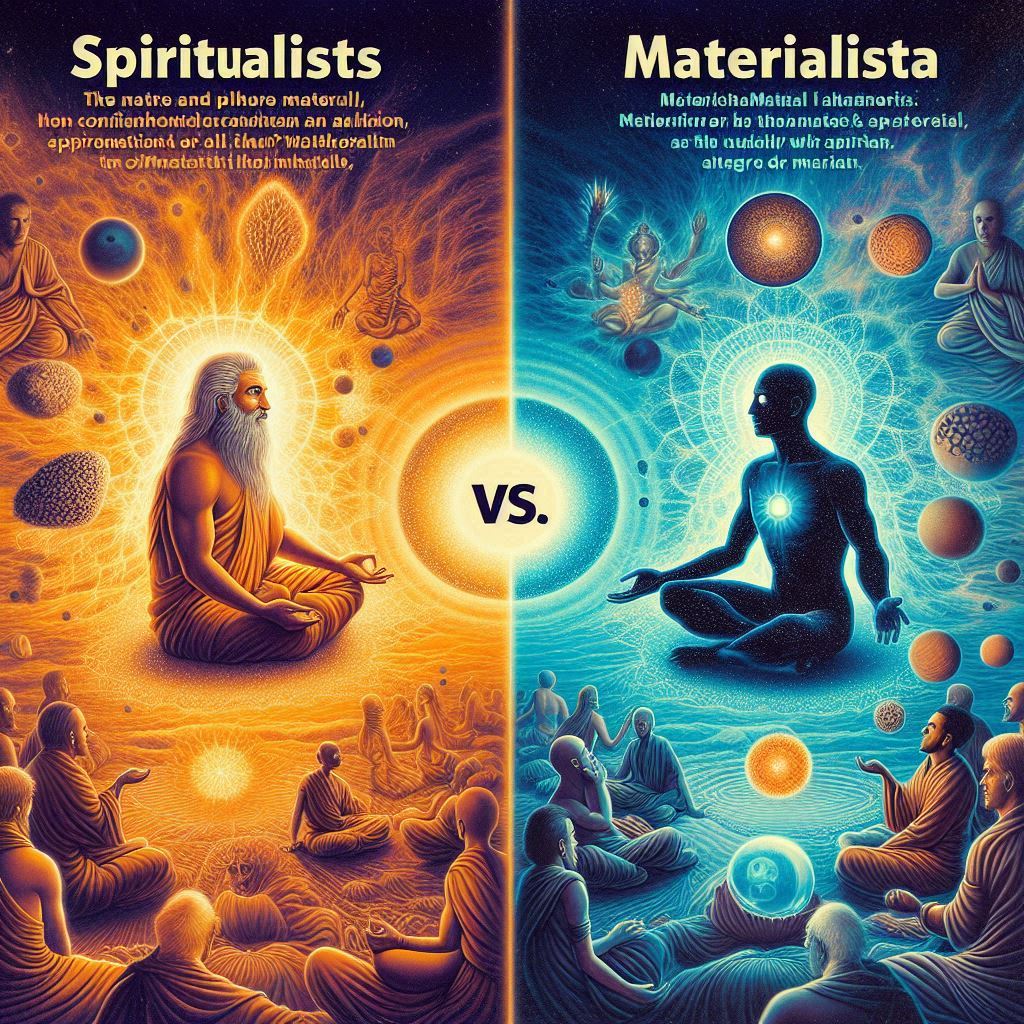
The debate between spiritualists and materialists about the nature and supremacy of matter and Aatma (Energy) is a longstanding one. This discussion intersects with both philosophical and physical perspectives.

1. The Philosophical Divide:
Spiritualists argue that Aatma, or energy, is the true reality, considering matter as an illusion or unreal. On the other hand, materialists assert that matter is the true reality and dismiss Aatma or spiritual energy as unreal.

2. Dynamic Character of Matter:
In the realm of Bhartiya (Indian) thought, some philosophers have postulated that matter is not static but dynamic. This perspective holds that matter possesses the capability to create, sustain, and destroy the universe, a view that aligns with the principles of modern physics.

3. Vaiśeṣika Darshan and Quantum Physics:
The Vaiśeṣika school of philosophy presents a view similar to quantum physics, proposing that the world originated from the combination of atoms, known as Paramāṇukāraṇatāvāda. This contrasts with the Advaita Vedānta belief in Brahmākaraṇatāvāda, which posits Brahman as the ultimate cause.

4. Atomic Combination:
Vaiśeṣika explains that initially, two atoms (paramāṇus) combine to form a dyadic compound (dvyaṇuka). Three dyadic compounds then form a triadic one (trasareṇu), leading to the creation of gross objects. This raises the question: how do unconscious atoms combine without a conscious force?

5. Sānkhya Perspective:
The Sāṁkhya philosophy offers an answer by suggesting that atoms possess intrinsic energy, enabling them to combine. This self-contained energy leads to the natural conjunction and disjunction of atoms, facilitating both creation and dissolution.

In essence, both philosophical and scientific traditions explore the dynamic and self-organizing nature of matter, albeit from different perspectives. This interface between philosophy and physics reveals a profound dialogue on the nature of reality.

यत्ब्रह्माण्डेतत्पिंडे

What’s the oldest things you’re wearing today?

The human body: A polygraph machine.

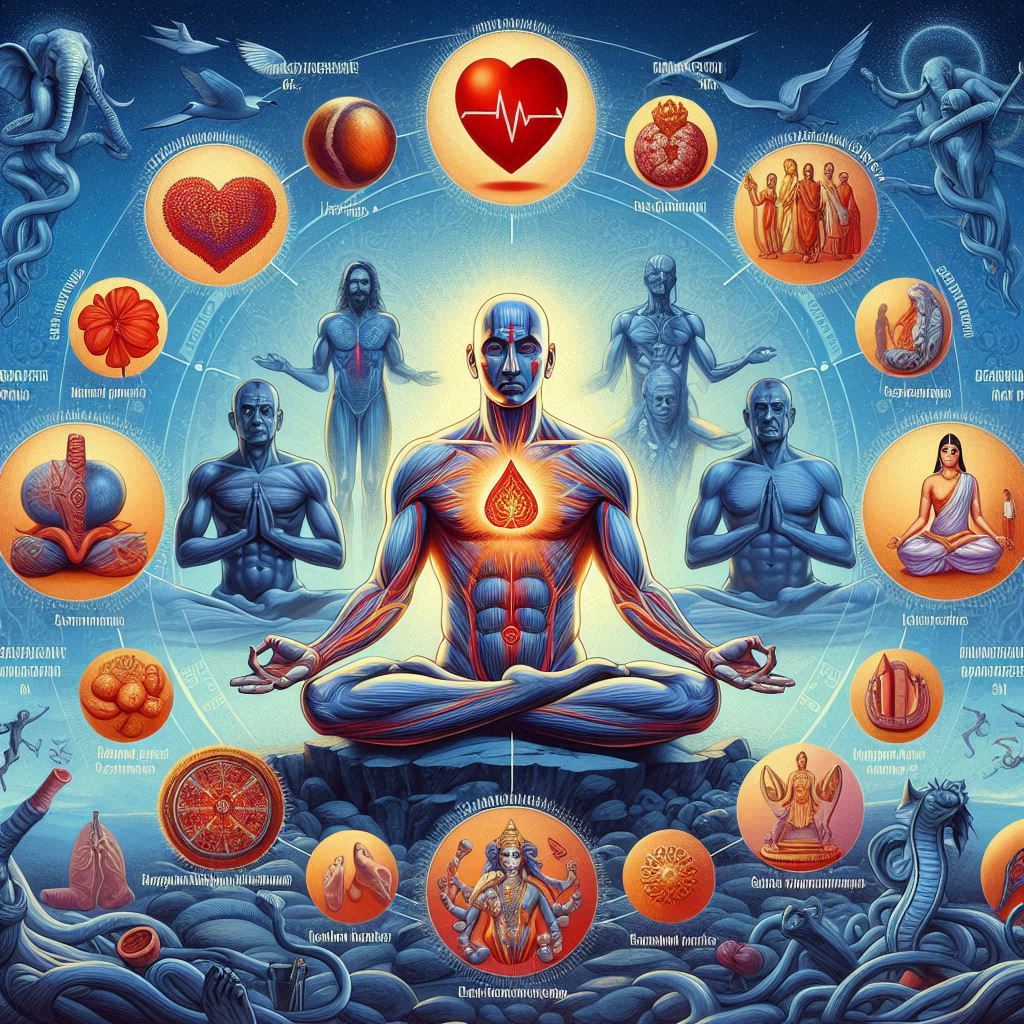
Measuring with your fingers, what is in this 96-finger-long human body is more than astonishing and mysterious. Our human body is based on breath, every part of it has its characteristics within itself, but we have never considered it. Although we are amazed at and evaluate things outside, we never pay attention to ourselves, or the functions of our body. If I had ever looked at it, I would have come to know how surprising to call and believe initially characteristic and functional our ordinary-looking organs are. With their help, we are living our rare human life

Uniqueness pervades our human body. Spiritual dignity and the subtle and causal entity of the body, which includes the panch kosha, the five pranas, the Kundalini superpower, the hexachakra, etc., is one aspect to consider their functions, but except for these functions, if we consider only the gross structure and its capacity, then everything looks wonderful in this area too. Vegetation, let alone human animal bodies, does not have those characteristics that are embodied in the small and large components of man. The artist has put all his art into its creation

From anatomy to the sensations of the mind and conscience, there is extraordinary work everywhere. If we imagine and look scientifically, we will find that the intelligence, skill, and hard work that Mother Nature spent in the construction of the human body was not done for any other body. Man is the most singular production of creation. There is no other wonder like this. It is the instrument and vehicle of the all-capable soul. The cells from which it is formed do not only contain animate atoms, but they have a storage capacity of up to 8 GB, so think how much capacity your body will have This increases the capacity and value of the human body even more. Solids, liquids and gases, water, oxygen, hydrogen, nitrogen, carbon silver, gold, iron, phosphorus, etc., whatever elements are in the earth and whatever is not in the earth, other planetary constellations are there, all that is also in the body in gross and subtle form. Just as the roots, leaves, and fruits of a tree are present in a wide expanse, in different areas of the body, similarly seeing the powers of different worlds and worlds exist, the scribe had said, that all the powers of the universe are present in the human body

Sun, Moon, Jupiter, Uttarayan, Dakshinayan Marg, Earth, Water, Fire, Sky, Air, Electricity, Magnetism, Gravity, etc. are all in the body. This whole cosmic world is contained within this body. Today’s scientists also believe that the characteristics and capabilities that nature has bestowed on man are not available to any animal body of creation According to the Garbhopanishad, the human body has 180 joints, 107 marmasthanas, 109 nerves, and 700 veins. There are 500 marrows, 306 bones, four and a half crore hairs, 8 pals heart, 12 pals tongue, one pasta bile, one adhak phlegm, one kudvashukra, and two pasta meds. Apart from this, the best instruments for taking food and expelling feces and urine are installed in this body, which is not in any other body

surprising to call and believe in the human body.

When you look at the physical body, the skin is first seen. According to physiology, the skin weight of each adult person is about 9 pounds, which is often three times more than the brain. This skin occupies more than 18 square feet of space. On a rough look, it looks like a waxy paper stuck on the body, but a closer look reveals that there is a whole elaborate factory running in it too Its area on the body is about 250 feet. The thinnest she is on the eyelids, 0.5 millimeters. The thickest of the soles of the foot is 6 millimeters. Generally, its thickness ranges from 0.3 to 300 millimeters. One square inch of skin usually contains a network of nerves 72 feet long. If the length of blood vessels is measured in the same space, then they are also spread with a network of 12-foot-long nerves. If the length of the blood vessels is measured in the same space, then they will not sit less than 12 feet. These blood vessels shrink in winter and dilate in summer so that the balance of body temperature is maintained. There are usually 300,000 sweat glands and countless tiny tiny pores on the surface of the skin. About a pound of sweat comes out of these pores every day. The sense fibers scattered inside the skin, if placed in a line, will be 45 miles long

A special type of oil called ‘sewage’ keeps coming out of the skin. It performs both the functions of protection and aesthetic enhancement. Its pigment cells produce a chemical called ‘melanin’. It keeps on painting the skin with white, dark brown, etc. colors. The skin appears to be one, but it can be divided into three thick categories, the upper skin, the inner skin, and the subcutaneous tissue. The lower layer contains blood vessels, nerves, and fat particles. Through these, the skin clings to the bones. Along with aging, when these fat particles start drying up, wrinkles start hanging on the skin

The inner skin consists of nerves, blood vessels, pores, sweat glands, and oil glands. These nerves can be called a type of sense carrier telephone wires. They transmit skin-touch sensations to the brain and convey the instructions there to the ingredients. The skin never lies. A lie detector, a lie detector or polygraph machine, works on the principle that the changes in the electrical pulsations and tension in the skin as a result of harmonic changes caused by the concealment reveal all the secrets

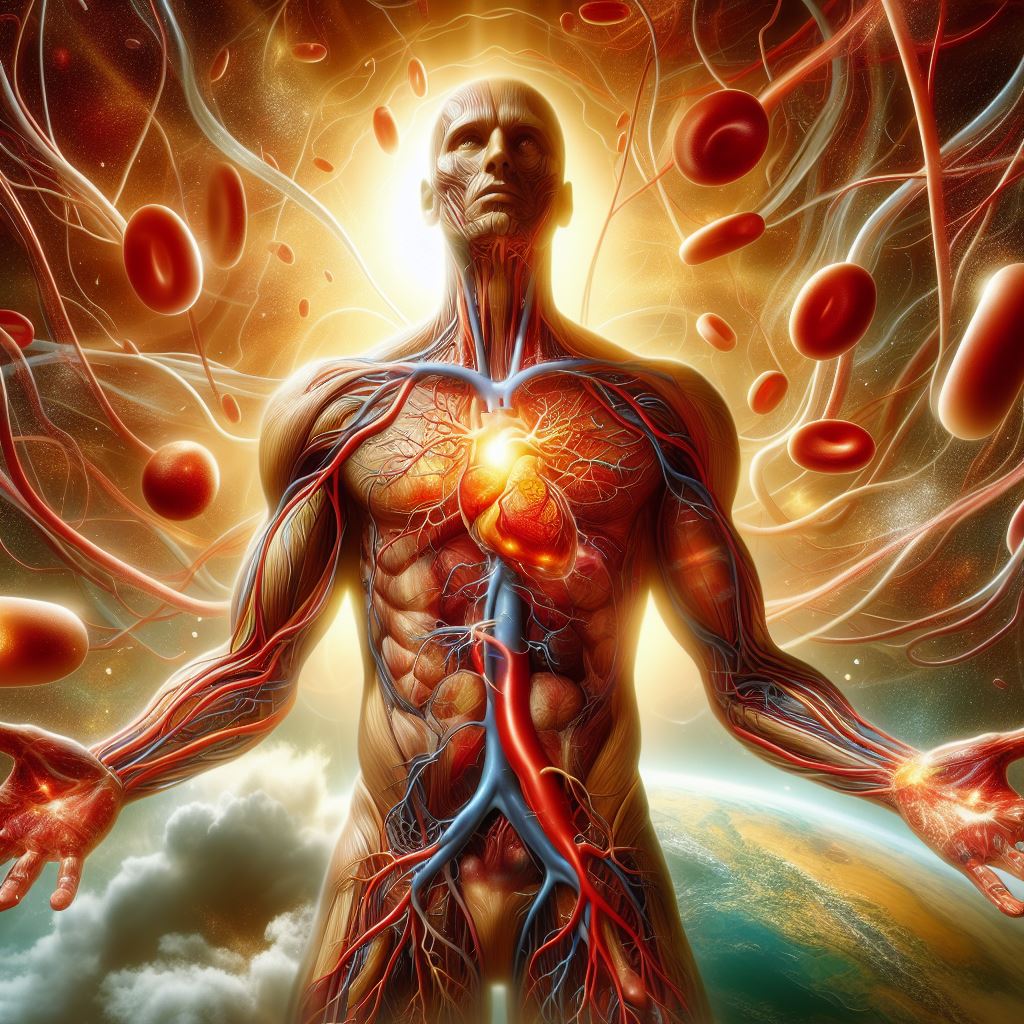
If this much labor has to be done once, then it will have to use as much energy as it will have to be used to lift 10 tons of load to 50 thousand feet above the ground. The temperature in the body is due to the heat produced by the bloodstream. The world of blood circulation is so well-organized and important that if it can be properly understood and its appropriate policy can be adopted, a strong and developed long life can be achieved. Skin, muscles, and blood circulation system are not only components of the body institution are also amazing and unique. God has filled this human body of 5 feet 6 inches with so many surprises that it should not be surprising to call and believe in the temple of the human body.