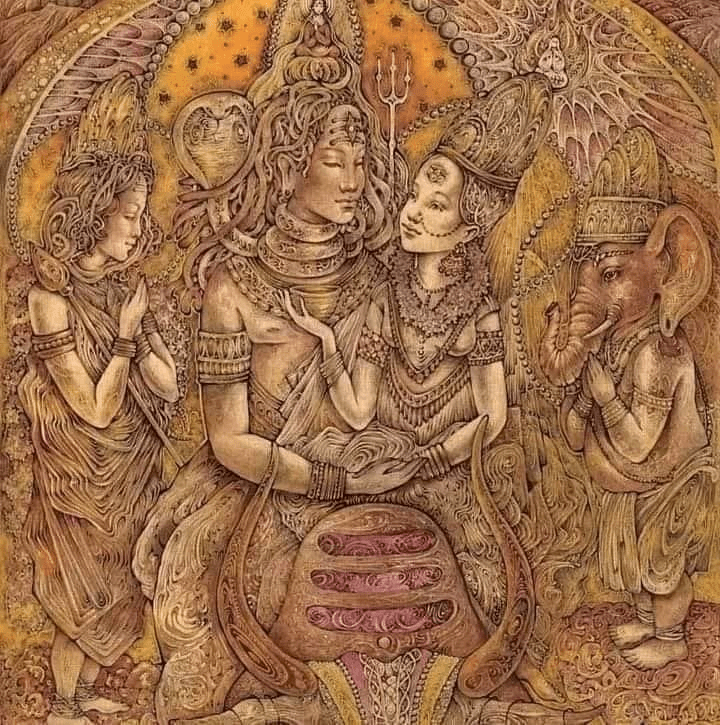
Thoughts and the Emergence of Destiny

What is your favorite form of physical exercise?

Journey from Thought to Destiny:

Journey from Thought to Destiny:
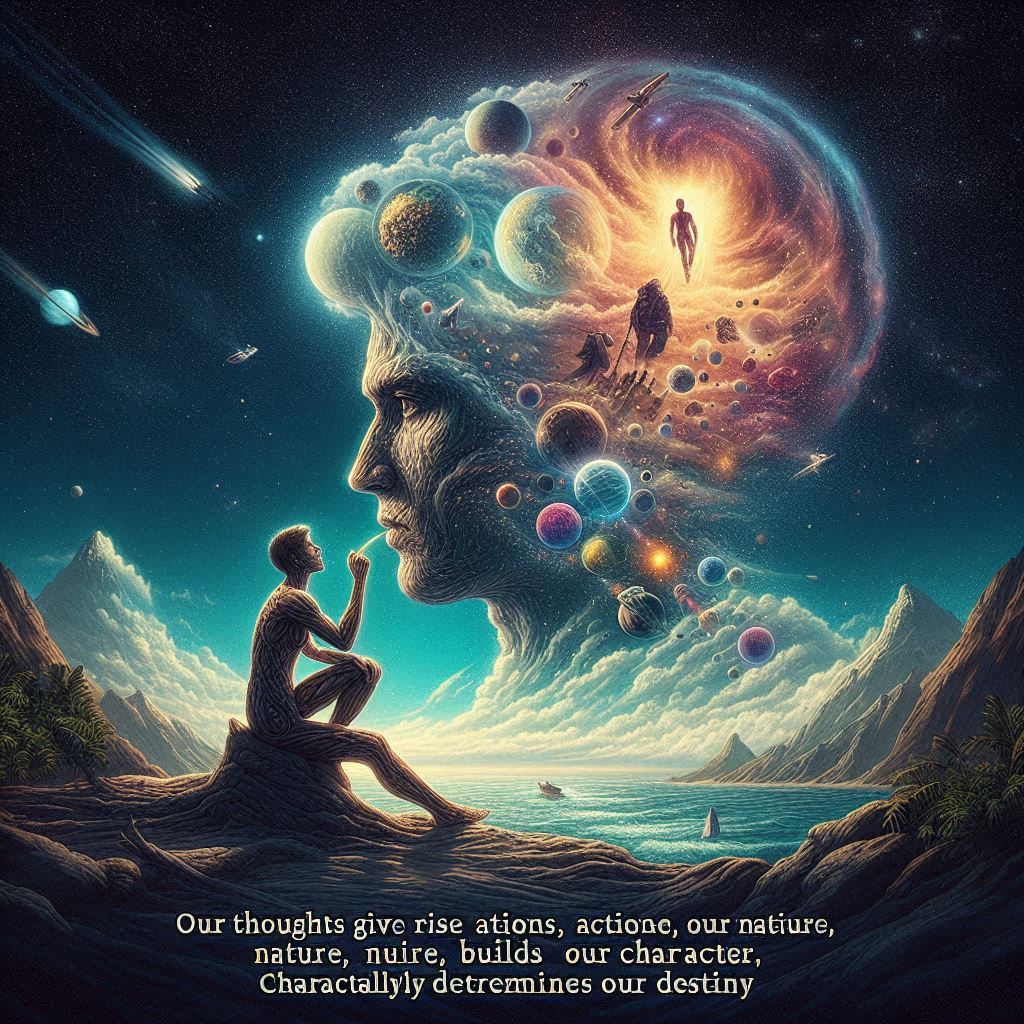
Our thoughts give rise to actions, actions shape our nature, nature builds our character, and character ultimately determines our destiny. This thought emphasizes that every stage of our life begins with our thoughts. When we hold a thought in our minds, it transforms into our actions. Our actions shape our nature, which in turn builds our character. Ultimately, our character determines our destiny or fate.

“The Power of Bhagwan Satyanarayana” is a Story from the Upanishads.
Once upon a time, there was a Brahmin who regularly worshipped Bhagwan Satyanarayana. He performed his rituals with devotion and kept his thoughts pure and sacred. One day, a sage asked him why he worshipped with such devotion and regularity.

The Brahmin replied, My thoughts are pure, which makes my actions pure as well. When I perform righteous actions, my nature becomes pure. And when my nature is pure, my character becomes noble. This improves my destiny, bringing me peace and prosperity. The sage said, Your understanding is in alignment with what is described in the Upanishads. Our thoughts guide our lives. Therefore, we must always keep our thoughts pure and positive. Thus, through his worship and the purity of his thoughts, the Brahmin not only improved his own life but also imparted a message to society that it is our thoughts that shape our destiny.

“Let your thoughts be the seeds of purity, your actions the blossoms of righteousness, your nature the fragrance of virtue, and your character the fruit of destiny.” This captures the essence of how our inner world shapes our outer reality. By nurturing pure thoughts, we lay the foundation for a life of integrity, peace, and fulfillment.

Central upnishad

1. ऋगवेद (Rig Veda) : प्रज्ञानं ब्रह्म

Pragnanam Brahm –
Brahm is intelligence, is a Defining aphorism (Lakshana Vakya)

2. यजुर्वेद (Yajur Veda) : अहं ब्रह्मास्मि

Aham Brahm Asmi –
I am Brahm, is an Experiential aphorism (Anubhava Vakya)

3. सामवेद (Sama Veda) : तत्त्वमसि

Tat Tvam Asi –
That you are, is a Teaching aphorism (Upadesha Vakya)

Sanatan scriptures.

What’s the biggest risk you’d like to take — but haven’t been able to?

Oldest religion texts.

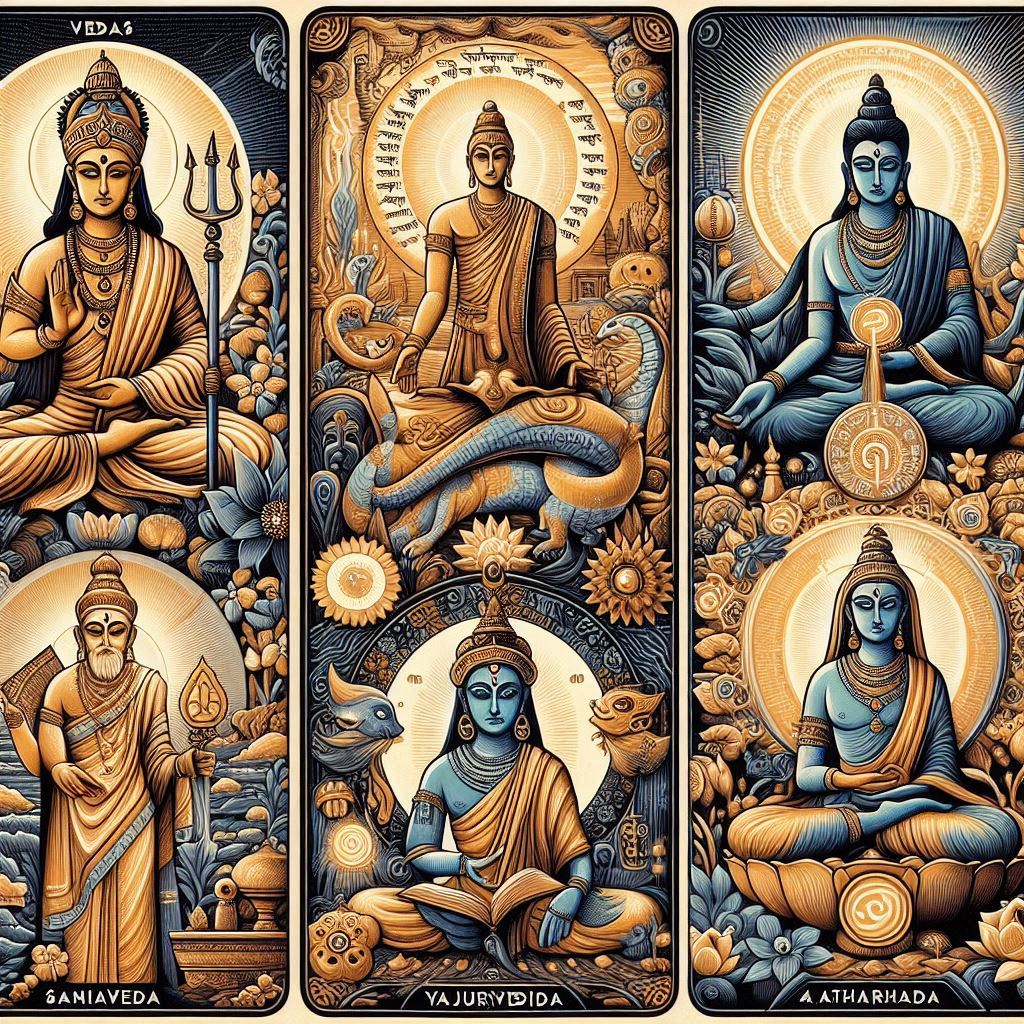
There are four Vedas and 108 Upanishads in Sanatan Dharma. The Vedas are considered to be the oldest religious texts. The four Vedas are as follows:

1. Rigveda

2. Yajurveda

3. Samaveda

4. Atharvaveda

These Vedas, as well as the Upanishads, are considered an important part of the Vedic literature. Profound philosophical and spiritual topics have been discussed in the Upanishads. Vedas and Upanishads are profound and ancient texts of Sanatan Dharma, in which the philosophical and religious principles related to life, universe, and ultimate truth have been described in detail

VEDAS (1,00,000 verses)

Divided & Organized into 4 Vedas by
Krsna Dvaipayana (Vedavyasa)

Whya Vedas .

1. Vedas:

The Vedas are considered as the most ancient and main texts of Sanatan Dharma. The Vedas are considered by the sages as “shruti” (knowledge gained by hearing. These were compiled by Maharishi Ved Vyasa. The purpose of the Vedas is to guide the four major goals of human life (Dharma, Artha, Kama, Moksha. This is Sanatan meaning that which has been going on continuously since time immemorial is in the real form, this is eternal

The four Vedas are as follows:

Rig Veda:

This is the oldest Veda and consists mainly of a compilation of richas (mantras) in the form of praise of the gods. It has around 10,552 mantras, which are used in the worship of various deities, prayers, and yajnas.


🔸Rigveda (21+ Shakhas)

▪️Available 1 Shakha

▪️Lost 20+ Shakhas

▪️Samhita

▪️Brahmana

▪️Aranyaka


Yajurveda:

It describes mantras and methods for sacrifices and rituals. It is divided into two parts: Krishna Yajurveda and Shukla Yajurveda. It mainly deals with ritualistic and ritualistic activities

Yajurveda (101+ Shakhas)

▪️Available 3-4 Shakhas

▪️Lost 97+ Shakhas

▪️Samhita

▪️Brahmana

▪️Aranyaka


Samaveda:

In this Veda, some mantras of Rigveda have been presented in musical form. It is seen by linking it with devotion and music. The mantras of Samaveda are used to accompany music in sacrifices and rituals.

Samaveda (1000+ Shakhas)

▪️Available 3 Shakhas

▪️Lost 997+ Shakhas

▪️Samhita

▪️Brahmana

▪️Aranyaka


Atharvaveda:

This Veda is slightly different from the other three. It describes mantras and methods related to witchcraft, medicine, healing, and social life. There are many mantras in it that throw light on all aspects of a person’s life

Atharvaveda (9+ Shakhas)

▪️Available 2 Shakhas

▪️Lost 7+ Shakhas

▪️Samhita

▪️Brahmana

▪️Aranyaka

The 108 Upanishads:

The Upanishads are called the last part of the Vedas or “Vedanta”. Their purpose is to clarify the search for enlightenment, Brahman, Atma, and the ultimate truth. The Upanishads mainly describe spiritual, philosophical and meditative topics. The doctrines of Vedanta are based on the Upanishads. Although the number of Upanishads is considered to be 108, some of the major and ancient Upanishads are as follows:


1. Total Shakhas: 1180

▪️10-15 Available

▪️Brahmanas

▪️Available 19-20

▪️Lost 1,111+

2. Samhitas :

▪️Available 9-10

▪️Lost 1,121+

3. Upanishads :
▪️Available 108

▪️Lost 1,023+

4. Aranyakas

▪️Available 7

▪️Lost 1,124


1. Ishopanishad:

It mentions the unity of the universe and the soul and considers the impermanence of karma and life.


2. Kathopanishad:

It is based on the dialogue of Yama and Nachiketa, explaining the mysteries of soul, death and salvation.


3. Mandukya Upanishad:

It analyzes the forms of Om and its three sounds. This Upanishad is a major source of Advaita Vedanta.


4. Chandogya Upanishad:

This Upanishad is related to the Samaveda and discusses in detail the Atman, Brahman and the methods of meditation


5. Brihadaranyaka Upanishad:

This is the largest Upanishad and considers the importance of the soul, rebirth, Brahman and knowledge.

Importance of Vedas and Upanishads:

The Vedas and Upanishads are the foundation of Indian religious, philosophical and spiritual traditions. These texts provide guidance on every aspect of human life, such as:

Spirituality:
The ultimate purpose of life is the union of the soul with Brahman (moksha), which is explained in depth in the Upanishads


Religion:
Duties and religious conduct have been described in the Vedas.

Yoga:
The path to purification and salvation of the soul is shown through meditation and yoga.

Karma:
The principle of karma and its consequences have been explained in detail in the Vedas and Upanishads.
Vedas and Upanishads are not only religious texts but also show the philosophical and spiritual path to understand and find solutions to the complexities of human life

You become what you think all day long.

Do lazy days make you feel rested or unproductive?

Why the tradition of getting up in Brahma Muhurat?

ब्रह्ममुहूर्ते या निद्रा सा पुण्यक्षयकारिणी”।

The last prahar of the night is called Brahma Muhurat. Our sages have given special significance to this Muhurat. According to him, this is the best time to quit sleeping. This is not to say that sleeping is wrong, but sleeping more time than necessary is harmful. By getting up in the Brahma Muhurat, one attains beauty, strength, knowledge, intelligence, and health. One should wake up about one and a half hours before sunrise in the Brahma Muhurat. This Brahman means the Supreme Element or the Supreme Soul. Muhurat means favorable time. The last pra har of the night i.e. 4 to 5.30 am is called Brahma Muhurat

The sleep of Brahma Muhurta is the destroyer of virtue.
In Sikhism, there is a very beautiful name for this time – “Amrit Vela”, through which the importance of this time itself is proved. This importance of devotion to God proves itself. This is the best time for devotion to God. By getting up at this time, man gets beauty, intelligence, health, etc. His mind remains calm, and his body is completely healthy. Getting up in Brahma Muhurat is very beneficial for our lives. This makes our body healthy and keeps us energetic throughout the day. This is a formula for staying healthy and successful that costs nothing. Only laziness needs to be abandoned


According to Valmiki’s Ramayana, Lord Hanuman reached the Ashok Vatika in Brahmamuhurta while searching for Mother Sita.

Where he heard the sound of chanting mantras of the knowers of Vedas and Yajna.
It is also mentioned in the scriptures –

वर्णं कीर्तिं मतिं लक्ष्मीं स्वास्थ्यमायुश्च विदन्ति।

ब्राह्मे मुहूर्ते संजाग्रच्छि वा पंकज यथा॥

By getting up in Brahma Muhurat, a person gets beauty, Lakshmi, intelligence, health, age, etc. By doing this, the body becomes beautiful like a lotus

That’s why you get success and prosperity.

According to Ayurveda, getting up and walking in Brahma Muhurta transmits Sanjeevani power in the body. This is the reason that the air flowing at this time is called nectar. Apart from this, this time is also said to be the best for study because when we wake up in the morning after resting at night, there is energy and freshness in the body and brain. The doors of major temples are also opened in Brahma Muhurta and there is a law to adorn and worship God in Brahma Muhurat.
Knowing the religious, mythological, and practical aspects and benefits of Brahmamuhurta, start waking up every day at this auspicious time, then you will get better results

A person who rises in Brahma Muhurat is successful, happy, and prosperous; why? Because getting up early gives you enough time to make tasks and plans throughout the day. So not only does life succeed. Everyone who is physically and mentally healthy can be happy and prosperous. The reason is his progress in the work he does. The student is successful in the examination. The boss is happy with the job-doer. Businessmen can earn well. The income of the sick person is affected, on the contrary, the expenses start increasing. Success kisses the feet of the one who makes good use of time and stays healthy. Therefore, if you want to remain healthy and successful, then get up in the Brahma Muhurat
There is a deep connection between Brahma Muhurat and nature. At this time, animals and birds wake up. His melodious voice begins. The lotus flower also blooms. In a way, nature also becomes vibrated in the Brahma Muhurat. It is a symbol of getting up, waking up. Nature gives us the message to get up in the Brahma Muhurat


प्रातारत्नं प्रातरिष्वा दधाति तं चिकित्वा प्रतिगृह्यनिधत्तो।

तेन प्रजां वर्धयमान आयू रायस्पोषेण सचेत सुवर:॥
– ऋग्वेद-1/125/1

The health of the person who wakes up before sunrise in the morning is good. That is why wise people do not waste this time. A person who wakes up early in the morning is healthy, happy, strong and long-lived

A cosmic day- routine


1.  3:00 am to 5:00 am –

At this time the life force is mainly in the lungs. Drink some lukewarm water and walk in the open air and do pranayama. At this time, long breathing develops lung function. They get oxygen and negative ions in abundance and the body becomes healthy and energetic. People who wake up in the Brahma Muhurat are intelligent and enthusiastic, and the life of those who sleep becomes dull.

2.  5:00 am to 7:00 am –

At this time the life force is mainly in the intestine. Defecation and bathing should be taken between waking up in the morning and 7 in the morning. Those who bowel after 7 in the morning dry up the stool by absorbing the fluid from the stool. It causes constipation and many other diseases

3.  7:00 p.m. to 9:00 p.m –

At this time the life force is mainly in the brain. The brain is especially active at this time. Therefore, apart from the morning, the lesson read in this period is quickly remembered. This has also been confirmed by modern exploration.


4.  9 pm to 11 p.m.:

At this time, the life force is mainly present in the spinal cord. At this time, resting on the back or the left side helps to absorb the strength received by the spinal cord. Sleep at this time provides the most relaxation. The awakening of this time tires the body and intellect. If food is eaten at this time, it remains in the stomach till morning, it is not digested and its decay produces harmful fluids which cause diseases by going into the intestines with acid. Therefore, it is dangerous to eat at this time


5.  11 p.m. to 1 p.m.:

At this time the life force is mainly present in the gall bladder. Awakening at this time causes bile disorders, insomnia, eye diseases, and early aging. At this time new cells are formed

6.  1 to 3 pm:

At this time, the life force is mainly in the liver. Microdigestion of food is the function of the liver. Awakening at this time spoils the liver and digestive system. If you keep awake at this time, then the body starts getting sleepy, the vision is dim and the body’s reactions are slow. Therefore, road accidents are more common at this time

Red Caution:

Sages and Ayurvedacharyas have said that eating without hunger is forbidden. Therefore, the quantity of food in the morning and evening should be such that one feels hungry openly during the above-mentioned meal time. Spread something on the ground and eat food sitting in Sukhasana. In this asana, the gastric fire remains illuminated due to the activation of the Muladhara chakra. Digestion is weak while sitting on a chair and eating food while standing does not happen at all. Therefore ‘buffet dinnerʹ should be avoided

To take advantage of the earth’s magnetic field, sleep only with the head in the east or south direction. Otherwise, there are problems like insomnia. To run the body’s biological clock properly, sleep with the light off at night. The research done in this context is shocking. Working or studying late at night and sleeping with the light on can cause severe health hazards by deactivating the biological clock. By sleeping in the dark, this biological clock runs properly. The cause of most of the diseases found nowadays is the chaotic routine and adverse diet. If we maintain our daily routine according to the biological clock of the body, then we will get the benefit of the activity of different organs of the body. In this way, a little awareness lays a new foundation for a healthy life

Global well- being

What quality do you value most in a friend?

Oh Nature

For the last several years, we have been seeing the heat increasing continuously, this year there is a lot of change in the heat, last year was also hot but this year it has reached 50 degrees in many places in Asia, and the mercury is also around 47 in India’s capital Delhi. Many people are saying that we cut trees due to which we have to see so much heat, we Indians have the habit of blaming everything. But is the temperature increasing due to the cutting of trees? 

Or is it a cycle, in which the role of human beings is very limited? The earth is 450 million years old, it has been 2 lakh years since man came, and it has been 300 years since man planted so-called factories, which is the main cause of global warming. In just 300 years, have we raised the temperature of the earth so much that we will be absorbed in the sea? If so, how many factories would have had to be set up at the end of the last ice age to melt ice? The last ice age came 25000 to 19000 thousand years ago the reason for its end is this cycle, which makes the earth hot or cold, like every 1 lakh years there is some change in the orbital path of the Earth’s Sun, and every 41000 years the axis of the earth tilts from 22.1 degrees to 24.5 degrees,  Apart from this, there are other cycles also. Which affects the winter heat

So planting our trees or not is not going to make any difference in the global warming of the earth, let me tell you a simple figure if you drive 5000 kilometers on a bike per year, then you will have to plant 23 big trees, which will reduce its carbon emission to zero, 70 trees for one AC and 200 trees if you drive a car. This is not possible for all of us, so do not burden yourself with global warming.  Yes, but you can plant trees, even one tree will give shelter to thousands of creatures, and will give shelter to you.

Purify the environment around you, purify your neighborhood, and reduce the temperature there, it does not affect global warming. Anyway, man has not advanced so technologically that he can have a huge impact on global warming, but, certainly, we will one day, our greed is only drying up the rivers and ponds, tomorrow when we dry up the oceans, then it will happen, now we have been able to dig only a few kilometers below the earth.  When we dig and reach the core of the earth, we will destroy it completely. Until then, stop worrying about global warming and enjoy eating fruits in the shade of the tree. Because the people who give us knowledge on global warming go in private jets and yachts and you cannot imagine how many millions of trees are cut in their greed, while the entire forest cannot compensate for the carbon emissions of their one journey

The limitations believe

Belonging to oneself means anchoring one’s identity and self-worth internally rather than externally. It involves understanding that your value is inherent and not contingent on others’ opinions, societal norms, or external achievements. This form of belonging is an intimate knowledge and acceptance of who you are, with all your strengths and flaws.

The Challenge of External Validation

In today’s interconnected world, where social media and societal expectations can heavily influence our sense of self, the pull towards external validation is strong. People often seek approval, love, and acceptance from others, using these external sources as mirrors to reflect their worth. While human connections are vital, an overreliance on them can lead to a fragile self-esteem that is easily shaken by criticism or rejection.


1. Self-Awareness:

Deeply understanding your thoughts, emotions, and motivations. This awareness helps you recognize patterns and triggers that lead to seeking external validation.

2. Self-Acceptance:

Embracing all aspects of yourself, including those you might perceive as negative. Self-acceptance fosters a stable foundation of self-worth that doesn’t waver with external circumstances.

3. Self-Compassion:

Treating yourself with the same kindness and understanding you would offer a friend. This practice helps mitigate self-criticism and promotes inner peace.

4. Authenticity:

Living in alignment with your true self, values, and beliefs. Authenticity requires courage, especially when it means diverging from societal expectations or risking disapproval from others.

When you belong to yourself, you cultivate a sense of inner peace and resilience. This self-belonging provides a stable foundation from which you can navigate life’s challenges and relationships. It allows you to engage with others from a place of wholeness rather than neediness, leading to healthier and more fulfilling connections.

Practice of positive


Mindfulness and Meditation:

These practices can help you connect with your inner self and develop a deeper understanding and acceptance of your thoughts and feelings.

Own golden Book

Writing about your experiences, thoughts, and emotions can provide clarity and insight into your inner world.

Therapy or Coaching:

Professional guidance can support your journey of self-discovery and self-acceptance.

The serious lines:

Learning to say no and setting healthy boundaries protects your sense of self from being overly influenced or drained by others. In a world where finding home in others is often emphasized, the art of belonging to oneself stands as a vital counterbalance. It is an empowering journey that nurtures inner strength and authenticity, allowing you to live a life that is true to your essence. By mastering this art, you create a personal sanctuary of self-acceptance and love, from which all other relationships can flourish healthily and meaningfully.

Lord Shiva: A Motivational Perspective on Spiritual Strength

Who would you like to talk to soon?

The Key to the Fullness of Life

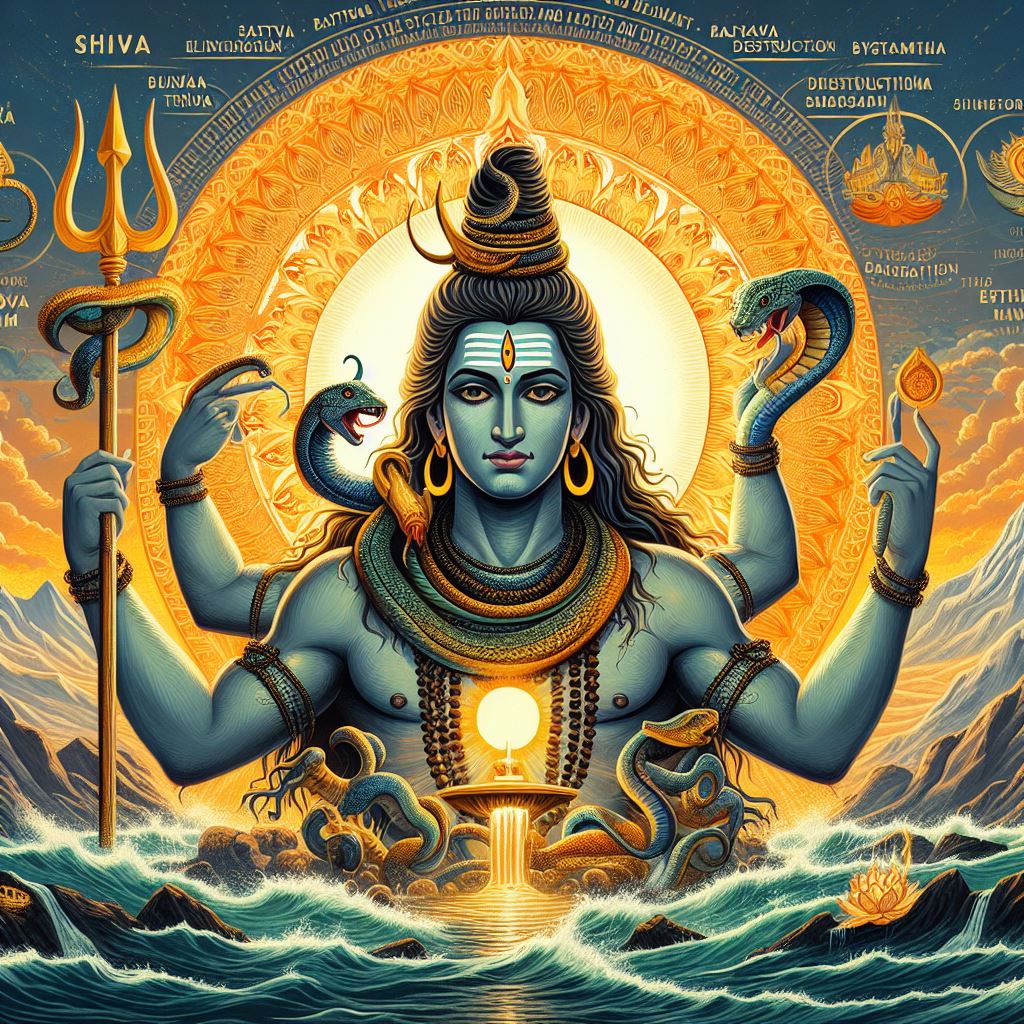
Lord Shiva has a special place in Indian culture and religion. He is not just a deity, but also a lifestyle, a philosophy, and a spiritual guide. Shiva is called Mrityunjaya, which means ‘beyond the last moment’. He is the god of destruction, which is necessary for the creation of the new creation. Surrender to them not only gives us satisfaction in material life but also paves the way for spiritual growth. The idea “Surrender to Shiva, and he will give you everything” is not just a religious statement, but a profound truth of life. Shiva means to join yourself, within your brain, there is a pea-sized pity gland and module whose form is similar to a Shivalinga and the serpent that is wrapped around Shiva is your speech. If you have control over your speech, then it is good, otherwise, it is also like some poison

Meaning of Shiva and His Symbolism:

Shiva means ‘benefactor’. They are Trinetradhars, whose third eye symbolizes knowledge, enlightenment, and destruction. They wear the serpent around their neck, symbolizing the cycle of life and death. Shiva’s damaru depicts the sound of creation and destruction, and the trident symbolizes three gunas – Sattva, Raja, and Tama. The Ganges flowing in their locks teaches us how to calm the difficulties and disturbances of life

Meaning of surrender to Shiva:

Surrendering to Shiva means renouncing one’s ego, selfishness,s and Maya and surrendering oneself to Shiva. This dedication is a symbol of deep faith and faith. When we offer our worries, sorrows, and joys at the feet of Shiva, we attain mental peace and contentment. This dedication helps us understand the truth of our lives and connects us to the true nature of our soul

Result of Dedication:

The most important consequence of surrendering to Shiva is that we go beyond material comforts and attain spiritual satisfaction. True reverence and devotion towards Lord Shiva make us get all the things that are necessary for our life. By the grace of Shiva, we get joy, peace, power, knowledge, and prosperity in life. He takes away all our sufferings and overwhelms us with His divine energy

Story: Shivabhakta Ravana

Ravana, who was a great Shiva devotee, pleased Shiva with his devotion and penance. Ravana performed rigorous penance to please Lord Shiva and eventually Shiva granted him a boon. This story teaches us that if we worship Shiva with a true heart and remain devoted to him, then Shiva fulfills us with all our wishes.

Ways to worship Shiva

1. Meditation and Yoga:

Remembering Shiva through meditation and yoga. It is an important step towards spiritual peace and self-realization.

2. Rudrabhishek:

This is a special puja in which water, milk, curd, ghee, honey, etc. are offered to the Shivalinga. This puja is very dear to Shiva.

3. Mahamrityunjay Mantra:

This mantra is chanted to bring peace, prosperity, and health to life. This mantra is a powerful medium to get the immense grace of Shiva.

4. Keeping your body healthy:

If you are on this earth, it is through your body. If your body system is healthy then Shiva will be happy in himself, you get complete knowledge of living life, it is necessary to understand every aspect of life

Incarnations of Bhagawan Shiva

1. Piplaad:
Helps devotees overcome Shani Dosha.

2. Nandi:
Considered an aspect of Shiva.

3. Veerbhadra:
Destroyed Daksha and his yagna.the fight between ego and real I

4. Bhairav:
Emerged during a fight between Brahma and Vishnu over superiority. Belong to creation and innovation.

5. Ashwatthama:
Born from the poison Shiva consumed during the Samudra Manthan, destined to kill oppressive Kshatriyas.

6. Sharabh:
Part bird and part lion.

7. Grihpati:
Born as the son of the Brahmin Vishwanar.

8. Rishi Durvasha:
Maintains universal discipline.

9. Hanuman:
Aided Shri Rama. This is the incarnation that is dedicated only to the Supreme Mighty Power

10. Brishabh:
Represents righteousness

11. Yatinath:
A peaceful form Journey of the inner soul.

12. Krishna Darshan:
Highlights the significance of religious rituals. Dedicate to love

13. Bhichhuwarya:
Protects all creatures.

14. Sureshwar:
Took the form of Indra to test a devotee.

15. Kiraat:
Tested Arjuna means surrender to Supreme Power.

16. Sunatnartak:
Asked for Parvati’s hand in marriage.

17. Yaksheshwar:
Removed false ego from the gods.

18. Avadhoot:
Crushed Indra’s arrogance. The meaning of surrendering to Lord Shiva is not just limited to religious rituals but it is a way of life, which leads us to freedom and liberation in the true sense. When we dedicate ourselves to Shiva in every aspect of our lives, we attain all the things that bring us perfection and contentment. Surrender to Shiva helps us understand the purpose of our lives and leads us to a deep, meaningful, and prosperous life

Version 2.0: The bugs of life do not affect me.

What is the legacy you want to leave behind?

Spirituality is beyond science: Divine Journey Towards the Real I”

मनस्वी म्रियते कामं कार्पण्यं न तु गच्छति।
अपि निर्वाणमायाति नानलो याति शीतताम्।।” 

(श्रीमद्भागवत 2, 50)

A person or seeker who is endowed with self-power does not only fear physical happiness and unhappiness but tends towards self-realization, he does not wait for happiness and unhappiness. This verse conveys the importance of courage, patience, and decision in life. It means that a person who is endowed with self-strength is engaged in his tasks, accomplishes them, and inherits them, but he does not worry whether he will succeed in achieving his efforts or not.  This verse has a message of inspiration and courage, which gives us the feeling of not being defeated by desires. This leads us to the point that like thought, we can motivate ourselves, and accumulating the power of faith can help us achieve our goals. The person who is endowed with self-confidence does not give up in any situation, but tends towards self-realization and is ready to face any kind of adversity

In a world often bustling with noise and distraction, the quest for inner peace and self-discovery has become a paramount pursuit for many. Amidst the chaos of everyday life, there exists a profound longing to reconnect with one’s true essence, to delve deep within and uncover the mysteries of the soul. This journey of self-exploration, known as Aadhyatm, transcends mere existence; it is a transformative odyssey that leads individuals toward profound spiritual awakening and enlightenment.

Aadhyatm is more than just a spiritual practice; it is a way of life a philosophy that seeks to unravel the intricacies of human consciousness and the cosmos. Rooted in ancient wisdom and timeless teachings, Aadhyatm invites seekers to embark on an inner pilgrimage, guided by the principles of introspection, mindfulness, and self-realization. Central to the Aadhyatm journey is the concept of “Atma,” or the soul the eternal, immutable essence that transcends the physical realm. Through practices such as meditation, yoga, and self-reflection, individuals endeavor to peel away the layers of ego and illusion, unveiling the radiant truth that lies at the core of their being. In this pursuit, the journey towards the soul becomes a sacred quest for unity with the divine—a journey towards wholeness, harmony, and liberation.

The path of Aadhyatm is as diverse as it is profound, encompassing a myriad of spiritual traditions, practices, and philosophies from around the world. Whether through the ancient wisdom of Vedanta, the mystical teachings of Sufism, or the contemplative practices of Buddhism, seekers are drawn to different paths, each offering a unique roadmap toward self-discovery and spiritual fulfillment.

Yet, regardless of the path chosen, the Aadhyatm journey is ultimately a deeply personal one—a voyage of inner exploration that transcends the confines of time and space. It is a journey that unfolds in moments of stillness and silence, as well as in life’s myriad experiences and challenges. It is a journey that requires courage, patience, and unwavering devotion a journey towards the deepest recesses of the heart, where the soul resides in eternal communion with the divine.

As individuals traverse the path of Aadhyatm, they may encounter moments of profound revelation, as well as moments of doubt and uncertainty. Yet, amidst the ebb and flow of their inner landscape, they remain steadfast in their commitment to self-discovery and spiritual growth. For in the journey towards the soul, every step taken, every obstacle overcome, becomes a sacred offering—a testament to the resilience of the human spirit and the infinite potential that lies within. Aadhyatm is not merely a destination to be reached, but a journey to be embraced a journey towards the deepest depths of our existence, where the light of the soul shines eternal. It is a journey of self-transcendence, of awakening to the infinite possibilities that lie within, and of realizing our innate connection to all of creation. As we embark on this sacred quest, may we be guided by the wisdom of the ages, the light of our inner truth, and the boundless love that permeates the universe.

Create new positive neuro pathways of ancient knowledge.

How do you feel about cold weather?

Gravity in Vaisheshika Sutra

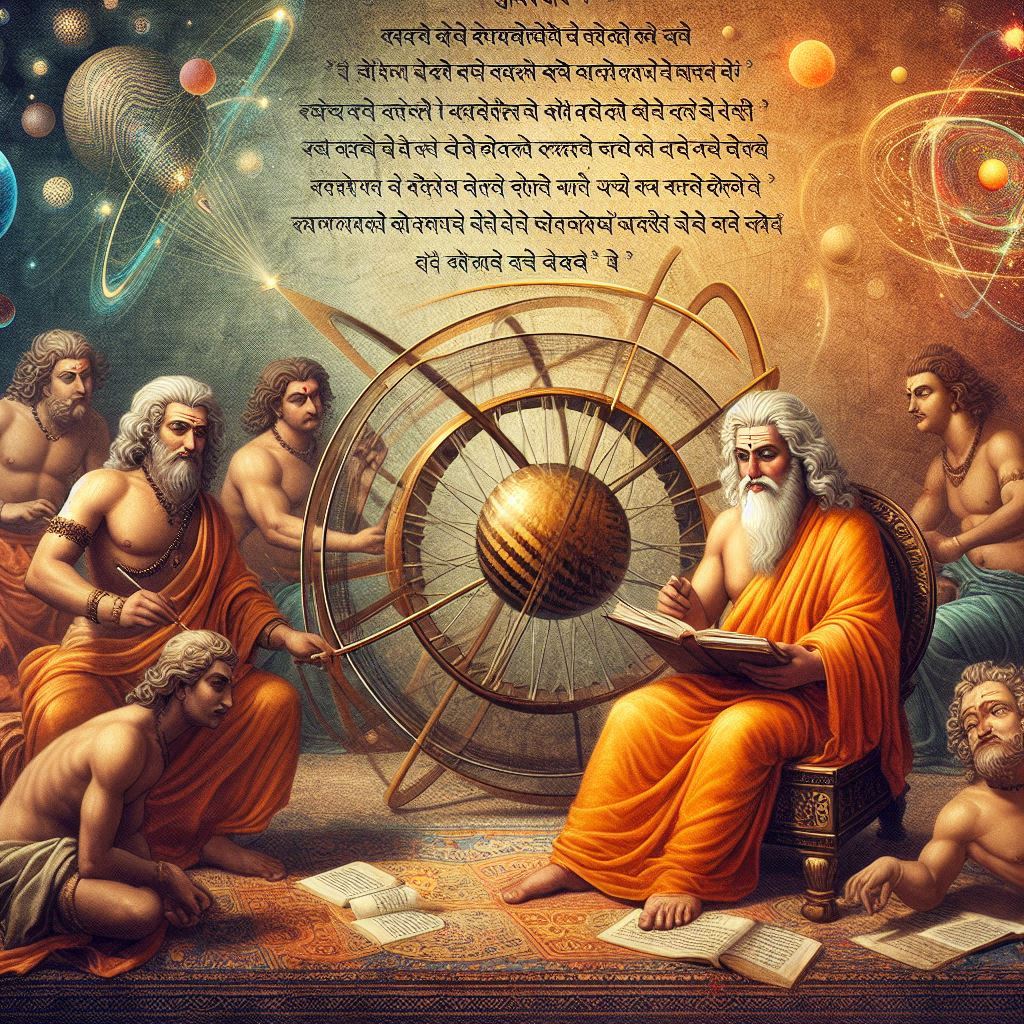
It’s fascinating to explore how ancient Indian philosophies and texts may have addressed concepts akin to modern gravitational theory long before Newton’s time. The Vaisheshika Sutra by Rishi Kanada is particularly intriguing as it predates Newton by over two millennia and contains verses that seem to describe gravitational principles.

1. The Nature of Objects Falling to the Earth:

The Vaisheshika Sutra mentions that objects tend to fall towards the earth due to an inherent property or force. This aligns with the idea that there is an attractive force between the earth and other objects, which we now identify as gravity. This recognition of a force causing objects to fall to the ground is a fundamental aspect of gravitational theory.

2. The Stability and Movement of Celestial Bodies:

The sutras also discuss how the stability and movement of celestial bodies are influenced by this attractive force. This can be seen as an early conceptualization of how gravity governs the motion of planets and other celestial entities, akin to the principles described by Kepler and Newton.

Verse 5.1.7:
Discusses how substances move downward due to an inherent force.

Verse 5.2.4:
Addresses the concept of attraction between substances, hinting at a force akin to gravity.

Interpretation and Comparison:

While these ancient texts don’t provide the mathematical formulations that Newton did, they demonstrate a conceptual understanding of gravity’s effects. This understanding is significant, showing that the idea of gravity as an attractive force was observed and noted by ancient Indian philosophers. In ancient Indian philosophy, the idea of “Gurutva Aakarshana Shakti” captures the essence of gravitational pull. The term “Gurutva” (mass) and “Aakarshana” (attractive pull) together indicate an awareness of the relationship between mass and the force it exerts, reflecting a sophisticated understanding of natural forces.

The exploration of gravitational concepts in ancient Indian texts like the Vaisheshika Sutra highlights a rich history of scientific thought in India. These early discussions on gravity illustrate how ancient scholars were keen observers of nature and sought to understand the forces governing the physical world. While Newton’s laws provided a detailed mathematical framework for gravity, it is remarkable to recognize that the fundamental ideas about gravitational forces were present in human thought long before his time.

आत्मकर्म हस्तसंयोगाश्च । (V.S. 5.1.6)

The action of the body and its members is also in conjunction with the hand.

संयोगभावे गुरुत्वात्पतनम (V.S. 5.1.7)

In the absence of conjunction falling results from Gravity.

Concept of air fall

नोदनाद्यभिषोः कर्म तत्कर्मकारिताच्च
संस्कारादुत्तरं तथोत्तरमुत्तरं च ।। (V.S 5.1.17)

The first action of arrow is from impulse; the next is resultant energy produced by the first action, and similarly the next next shloka-

संस्काराभावे गुरुत्वात्पतनम (V.S. 5.1.18)

In the absence of resultant/propulsive energy generated by the action, falling results from Gravity.
Rishi Varahamihira who is also supposed to be lived in the 5th century BCE, mentioned the

following shloka in his Surya Sidhanta, 12th chapter 32 shloka-

मध्ये समन्तादण्डस्य भूगोलो व्योम्नि तिष्ठति ।
बिभ्राणः परमां शक्तिं ब्रह्मणो धारणात्मिकाम् ॥

This verse conveys that the spherical Earth remains positioned at the center of the universe in space due to a special kind of energy that prevents it from falling away and helps it remain stable. The term ‘energy’ referred to in the previous shloka was further elaborated by Bhaskaracharya, a mathematician who lived in the 12th century AD. In his book Sidhanta Shiromani, Bhaskaracharya provided an explanation for this energy and named it “gurutvakarshan shakti.”

आकृष्टिशक्तिश्च महि तय यत्।
खष्ठं गुरु स्वभिमुखं स्वशक्त्या ॥
आकृष्यते तत्पततीव भाति।
समेसमन्तात् क्व पतत्वियं खे ॥

This verse explains that the energy present within the Earth is the power of attraction, known as “aakrushti shakti”, (according to the Bhaskaracharya).  Due to this attractive force, the Earth pulls objects towards itself, and this power is inherent and natural to the Earth. As a result of this pull, every object on Earth appears to be falling downward. Bhaskaracharya did not stop there; he concludes the shloka with a question: where can this Earth fall down in space? This passage eloquently captures the profound understanding of gravity and celestial mechanics found in ancient Indian texts. Aryabhatta’s poetic reference in the Gitikapada likens the gravitational pull to the way smaller flowers are drawn towards the center of the Kadamba flower cluster, metaphorically depicting the force that ties everything to the Earth’s center.

Vadic mantra = Attributing stability of celestial body.

The cited Vedic mantras further elaborate on this concept, attributing the stability of celestial bodies and their movements to gravitational forces:

Rigveda 8.12.28 and 8.12.30

यदा ते हर्यता हरी वावृधाते दिवेदिवे।
आदित् ते विश्वा भुवनानि येमिरे ।।

speak of the Sun’s radiant energy causing the planets to move in their orbits and remain stable due to the Sun’s attraction.

हिरण्यपाणि: सविता विचर्षणिरुभे द्यावापृथिवी अन्तरीयते।
अपामीवां बाधते वेति सूर्यमभि कृष्णेन रजसा द्यामृणोति॥

describes the Sun as holding the Earth and other heavenly bodies, preventing collisions through its attractive force.

According to Atharvaveda 4.11.1

अनड्वान् दाधार पृथिवीमुत द्यामनड्वान् दाधारोर्वन्तरिक्षम्।
अनड्वान् दाधार प्रदिश: षडुवीर्रनड्वान् विश्वंभुवनमाविवेश॥

uses the analogy of a bull pulling a cart to illustrate how the Sun controls the movements of planets.

The Taittiriya branch of Krishna Yajurveda

मित्रोदाधार पृथिवीमुतद्याम। मित्रः कृष्टी:।

emphasizes the Sun’s role in holding the Earth in space through its attractive power, with the term “Kristheeh” highlighting this force of attraction. These texts reflect a sophisticated grasp of gravitational principles, recognizing the Sun’s critical role in maintaining cosmic order. This ancient wisdom, although fragmented over time, underscores the depth of scientific thought in early Indian civilization.

यत्ब्रह्माण्डेतत्पिंडे

What’s the oldest things you’re wearing today?

The human body: A polygraph machine.

Measuring with your fingers, what is in this 96-finger-long human body is more than astonishing and mysterious. Our human body is based on breath, every part of it has its characteristics within itself, but we have never considered it. Although we are amazed at and evaluate things outside, we never pay attention to ourselves, or the functions of our body. If I had ever looked at it, I would have come to know how surprising to call and believe initially characteristic and functional our ordinary-looking organs are. With their help, we are living our rare human life

Uniqueness pervades our human body. Spiritual dignity and the subtle and causal entity of the body, which includes the panch kosha, the five pranas, the Kundalini superpower, the hexachakra, etc., is one aspect to consider their functions, but except for these functions, if we consider only the gross structure and its capacity, then everything looks wonderful in this area too. Vegetation, let alone human animal bodies, does not have those characteristics that are embodied in the small and large components of man. The artist has put all his art into its creation

From anatomy to the sensations of the mind and conscience, there is extraordinary work everywhere. If we imagine and look scientifically, we will find that the intelligence, skill, and hard work that Mother Nature spent in the construction of the human body was not done for any other body. Man is the most singular production of creation. There is no other wonder like this. It is the instrument and vehicle of the all-capable soul. The cells from which it is formed do not only contain animate atoms, but they have a storage capacity of up to 8 GB, so think how much capacity your body will have This increases the capacity and value of the human body even more. Solids, liquids and gases, water, oxygen, hydrogen, nitrogen, carbon silver, gold, iron, phosphorus, etc., whatever elements are in the earth and whatever is not in the earth, other planetary constellations are there, all that is also in the body in gross and subtle form. Just as the roots, leaves, and fruits of a tree are present in a wide expanse, in different areas of the body, similarly seeing the powers of different worlds and worlds exist, the scribe had said, that all the powers of the universe are present in the human body

Sun, Moon, Jupiter, Uttarayan, Dakshinayan Marg, Earth, Water, Fire, Sky, Air, Electricity, Magnetism, Gravity, etc. are all in the body. This whole cosmic world is contained within this body. Today’s scientists also believe that the characteristics and capabilities that nature has bestowed on man are not available to any animal body of creation According to the Garbhopanishad, the human body has 180 joints, 107 marmasthanas, 109 nerves, and 700 veins. There are 500 marrows, 306 bones, four and a half crore hairs, 8 pals heart, 12 pals tongue, one pasta bile, one adhak phlegm, one kudvashukra, and two pasta meds. Apart from this, the best instruments for taking food and expelling feces and urine are installed in this body, which is not in any other body

surprising to call and believe in the human body.

When you look at the physical body, the skin is first seen. According to physiology, the skin weight of each adult person is about 9 pounds, which is often three times more than the brain. This skin occupies more than 18 square feet of space. On a rough look, it looks like a waxy paper stuck on the body, but a closer look reveals that there is a whole elaborate factory running in it too Its area on the body is about 250 feet. The thinnest she is on the eyelids, 0.5 millimeters. The thickest of the soles of the foot is 6 millimeters. Generally, its thickness ranges from 0.3 to 300 millimeters. One square inch of skin usually contains a network of nerves 72 feet long. If the length of blood vessels is measured in the same space, then they are also spread with a network of 12-foot-long nerves. If the length of the blood vessels is measured in the same space, then they will not sit less than 12 feet. These blood vessels shrink in winter and dilate in summer so that the balance of body temperature is maintained. There are usually 300,000 sweat glands and countless tiny tiny pores on the surface of the skin. About a pound of sweat comes out of these pores every day. The sense fibers scattered inside the skin, if placed in a line, will be 45 miles long

A special type of oil called ‘sewage’ keeps coming out of the skin. It performs both the functions of protection and aesthetic enhancement. Its pigment cells produce a chemical called ‘melanin’. It keeps on painting the skin with white, dark brown, etc. colors. The skin appears to be one, but it can be divided into three thick categories, the upper skin, the inner skin, and the subcutaneous tissue. The lower layer contains blood vessels, nerves, and fat particles. Through these, the skin clings to the bones. Along with aging, when these fat particles start drying up, wrinkles start hanging on the skin

The inner skin consists of nerves, blood vessels, pores, sweat glands, and oil glands. These nerves can be called a type of sense carrier telephone wires. They transmit skin-touch sensations to the brain and convey the instructions there to the ingredients. The skin never lies. A lie detector, a lie detector or polygraph machine, works on the principle that the changes in the electrical pulsations and tension in the skin as a result of harmonic changes caused by the concealment reveal all the secrets

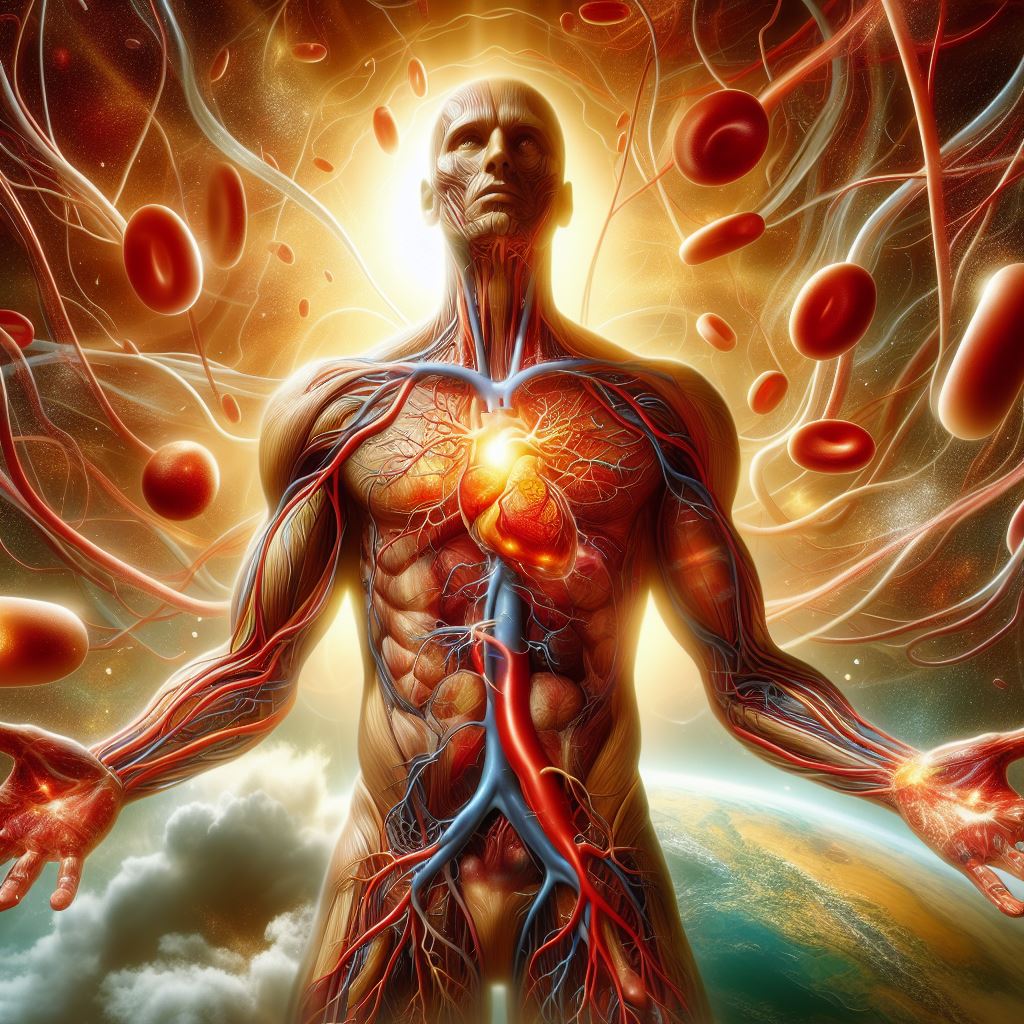
If this much labor has to be done once, then it will have to use as much energy as it will have to be used to lift 10 tons of load to 50 thousand feet above the ground. The temperature in the body is due to the heat produced by the bloodstream. The world of blood circulation is so well-organized and important that if it can be properly understood and its appropriate policy can be adopted, a strong and developed long life can be achieved. Skin, muscles, and blood circulation system are not only components of the body institution are also amazing and unique. God has filled this human body of 5 feet 6 inches with so many surprises that it should not be surprising to call and believe in the temple of the human body.

The answer NO

Are you superstitious?

What happens after the death of a person,

Bhagvad geeta, chapter 8, verse 16 –

आब्रह्मभुवनाल्लोकाः पुनरावर्तिनोऽर्जुन |
मामुपेत्य तु कौन्तेय पुनर्जन्म न विद्यते ||

Meaning- इस जगत् में सर्वोच्च लोक से लेकर निम्नतम सारे लोक दुखों के घर हैं, जहाँ जन्म तथा मरण का चक्कर लगा रहता है | किन्तु हे कुन्तीपुत्र! जो मेरे धाम को प्राप्त कर लेता है, वह फिर कभी जन्म नहीं लेता.

Purpose of Reincarnation:

According to Sanatan, the purpose of reincarnation is to provide opportunities for the atman to learn, grow, and evolve spiritually. Each life offers valuable lessons and challenges that help the soul progress toward self-realization and attaining Moksha. Samsara (संसार) is the process of passing one body to another throughout all species of life. Consciousness pervades all living beings, but it is only in human form that its active utilization is possible. Samsara, in essence, represents a transitory existence marked by impermanence, change, and the repetitive process of reincarnation or rebirth. It encompasses the complete sequence of earthly lives experienced by the atman. It is well-known that the atman is entrapped within the continuous “cycle” of life and death. Infinitely, the atman transcends from one embodiment to another, embodying the fundamental concept of saṃsara or reincarnation. According to Hinduism and Sanatan, the belief in the cycle of birth, death, and rebirth is known as reincarnation. Upon the death of the physical body, the individual’s soul, known as the atman, is believed to detach from the body and enter a new one.


The specific body the atman enters is believed to depend on various factors, including:

State of mind at the time of death: It is believed that the state of mind at the moment of death can influence the future birth. For example, a person who dies with a peaceful and virtuous state of mind may be reborn into a more favorable situation, while someone who dies with a disturbed or negative state of mind may experience a less desirable rebirth.

Unfulfilled desires :

Hinduism teaches that unfulfilled desires can carry over from one life to another. If a person has strong attachments or unfulfilled desires, it may impact their next birth. The nature of these desires can influence the circumstances and experiences in the subsequent life.

Karmic record :

Karma, the law of cause and effect, plays a crucial role in determining one’s future birth. The actions, intentions, and deeds performed in previous lives contribute to an individual’s karmic record. Positive actions and intentions lead to positive karma, while negative actions and intentions result in negative karma. The accumulated karma influences the circumstances and conditions of the next incarnation.

As per Shrimad Bhagavatam 7.2.41 :

“With time, every being receives a material body as per his corresponding actions.” There may be a question regarding whether the aatma immediately takes on a new body after death.
If a person dies an unnatural death, such as suicide or an accident, or has unfulfilled desires, it is believed that their atman may experience a different state or dimension known as loka, before reincarnation. The term “Pret Aatma” is often used to refer to the soul in such a state. It is believed that until the unfulfilled desires are resolved or the necessary conditions are met, the atman may not proceed to its next birth.

According to Shree Garud Puran 2.22.8

“One who dies by hanging, also through poison and weapon, one who commits suicide and also dies by cholera, etc. becomes a pret (ghost).” On the other hand, if a person dies a natural death with no unfulfilled desires, and if that individual does not attain moksha (liberation) for some reason (will explain when I will write on moksha), it is generally believed that their atman will go through the cycle of reincarnation. The reincarnation will be based on the karma of the person. Depending on the karma, an atman can take any of the following six forms of life-

◆ Aquatics:

This category includes beings that reside in water, such as fish, aquatic mammals, and other marine creatures.

◆ Reptiles and Insects:

This category comprises reptiles, insects, and other small crawling creatures.

Human:

Human life is considered the most privileged and valuable form of life in Hinduism. It is believed to provide the greatest potential for spiritual growth and realization.


Bhagavad Gita chapter 2, verse 27-

जातस्य हि ध्रुवो मृत्युर्ध्रुवं जन्म मृतस्य च |
तस्मादपरिहार्येऽर्थे न त्वं शोचितुमर्हसि ||

जिसने जन्म लिया है उसकी मृत्यु निश्चित है और मृत्यु के पश्चात् पुनर्जन्म भी निश्चित है | अतः अपने अपरिहार्य कर्तव्यपालन में तुम्हें शोक नहीं करना चाहिए


Samsara is a painful recurring cycle of-

Birth—> death’

disease—>old age—>

death—>Re-birth.

In Sanatan, the concept of heaven and hell is not seen as permanent destinations but rather as temporary realms of existence. The ultimate goal in Sanatan is to attain moksha, liberation from the cycle of birth and death.  Unlike Hinduism and Sanatan, religions like Islam and Christianity do not emphasize the belief in reincarnation. They generally teach that individuals have only one life on Earth, and after death, the soul is believed to go to either heaven or hell based on their actions and beliefs during their earthly life. Heaven is seen as a place of eternal bliss and closeness to God, while hell is viewed as a realm of eternal punishment.

Vocalization + Intention = Healing.

What are three objects you couldn’t live without?

Knowledge and you??

Knowledge is everywhere, in many forms, manifesting itself in the diverse nature of action. Nature presides over knowledge through its ingredients. The sages have presented knowledge in formulaic form, in figurative language, and in code style. How do we receive it? It is up to us. How capable is our intellect to absorb this knowledge, how effective is our education? This is how we know our abilities. Pure knowledge is Brahman in itself. Knowledge is not the monopoly of any one organism. Knowledge is for everyone. Knowledge is only in the possession of Brahma and Saraswati, the institutions of knowledge. The supreme god of knowledge is Shiva. All knowledge is contained in it. Knowledge is not ours. It is of nature. By the grace of nature, we become the possessors of it. It is necessary to thank Mother Nature, the giver of knowledge. Who are we to give knowledge? Nature gives knowledge to all of us through us. The more our receptive power, the more knowledge we receive and retain


1. Cutting off the tongue and offering it to the deity = that is, no wrong words come out of the mouth. Worshiping the Ishta by observing silence or expelling the tongue, doing penance.

2. Cutting off the head and offering it to the deity = canceling the ego = bowing the head = taking refuge. Surrender 100%.

3. Cutting off the leg and dedicating it to the Goddess = stopping running away = Worshiping the Ishta by remaining stable in one place = to be distinguished in immovable samadhi.

4. Offering to the Deity with eyes out = turning away from the outer world = being introverted = looking within = closing the outer eyes = gaining insight

5. Sacrifice of life = stoppage of the movement of breath = to be unconscious = to keep oneself in ultimate peace. Sacrifice your inner anger.

6. Drinking nectar = immersing in knowledge = increasing concentration

7 . To reside in Kashi = to attain knowledge and stay in it = to implement knowledge in life.

9. To live in Ayodhya = to live a life free from conflict.

10. To obtain the philosopher’s stone = to prove the harshest fire god who drinks the juice.

11. To remain in yoga sleep = to live a life free from all dualities or to be equanimous

Everything is energy vibrations.

“Sound is the carrier wave of consciousness” – Steven Halpern


By projecting the intent into sound, various experiences and effects can be created. For example; Two people can potentially make the same sound with different intents, and two can manifest different effects. One person can make a sound and project therapeutic energy into it, while another person can make the same sound with the opposite experience depending on the intent From our perspective, the intention to use sound healing as a tool may be the most important and powerful part of the formula. Here’s a good formula for reference.

Vocalization + Intention = Healing.

If vocalization is the physical equivalent of sound, visibility is the spiritual equivalent of sound, and together they form the result of sound.
Thus, equally another formula;

Vocalization + Visualization = cosmic medicine