The conciseness upgrade.

What does “having it all” mean to you? Is it attainable?

Knowledge of wisdom: The Asthavakra Gita :

कथं ज्ञानमवाप्नोति कथं मुक्तिर्भविष्यति।
वैराग्यं च कथं प्राप्तमेतद्ब्रूहि मम प्रभो॥

This verse, taken from the Ashtavakra Gita, poses important questions of the spiritual journey. It explores the path of knowledge, salvation, and detachment. To fully understand this, we need to delve deeper into the context of the Ashtavakra Gita and the story of Sage Ashtavakra, whose teachings highlight these spiritual endeavors

Knowledge of wisdom:

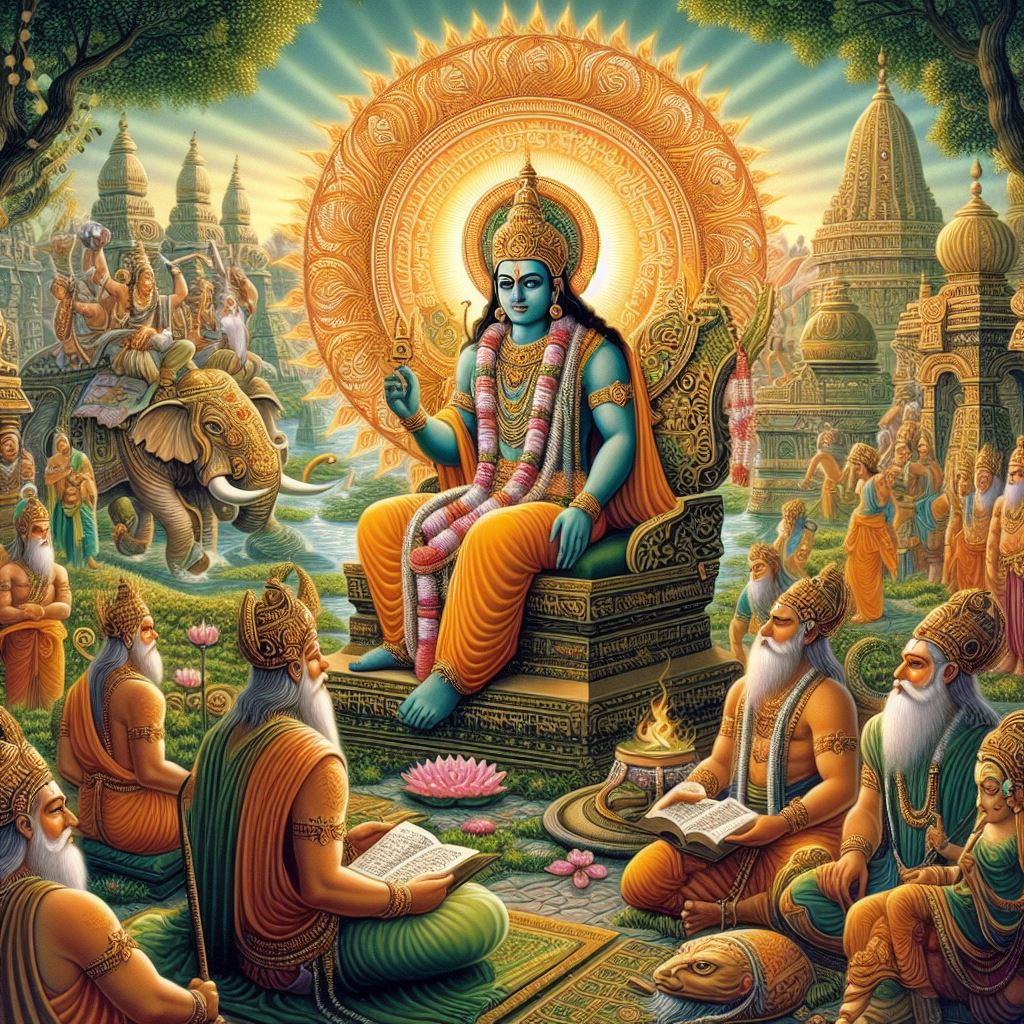
Ashtavakra Gita is a dialogue between Rishi Ashtavakra and King Janaka. It is a major treatise of the Advaita Vedanta tradition, which emphasizes the oneness of the soul and Brahman. The questions asked in the shloka reflect King Janaka’s deep spiritual understanding and desire to transcend the material and many forms of life

Sage Ashtavakra: Early Life and Cursed Deformities.

Ashtavakra, known for his intelligence and spiritual insight, was the son of Rishi Kahod and his wife Sujata. In the womb itself, he corrected his father by listening to his Veda recitation, as a result of which Kahod cursed him, causing Ashtavakra to be born with eight deformities. Despite this, Ashtavakra became a child of an extremely intelligent and spiritual nature. His mother Sujata taught him the scriptures and gave him a deep understanding of spiritual truth

कथं ज्ञानमवाप्नोति :

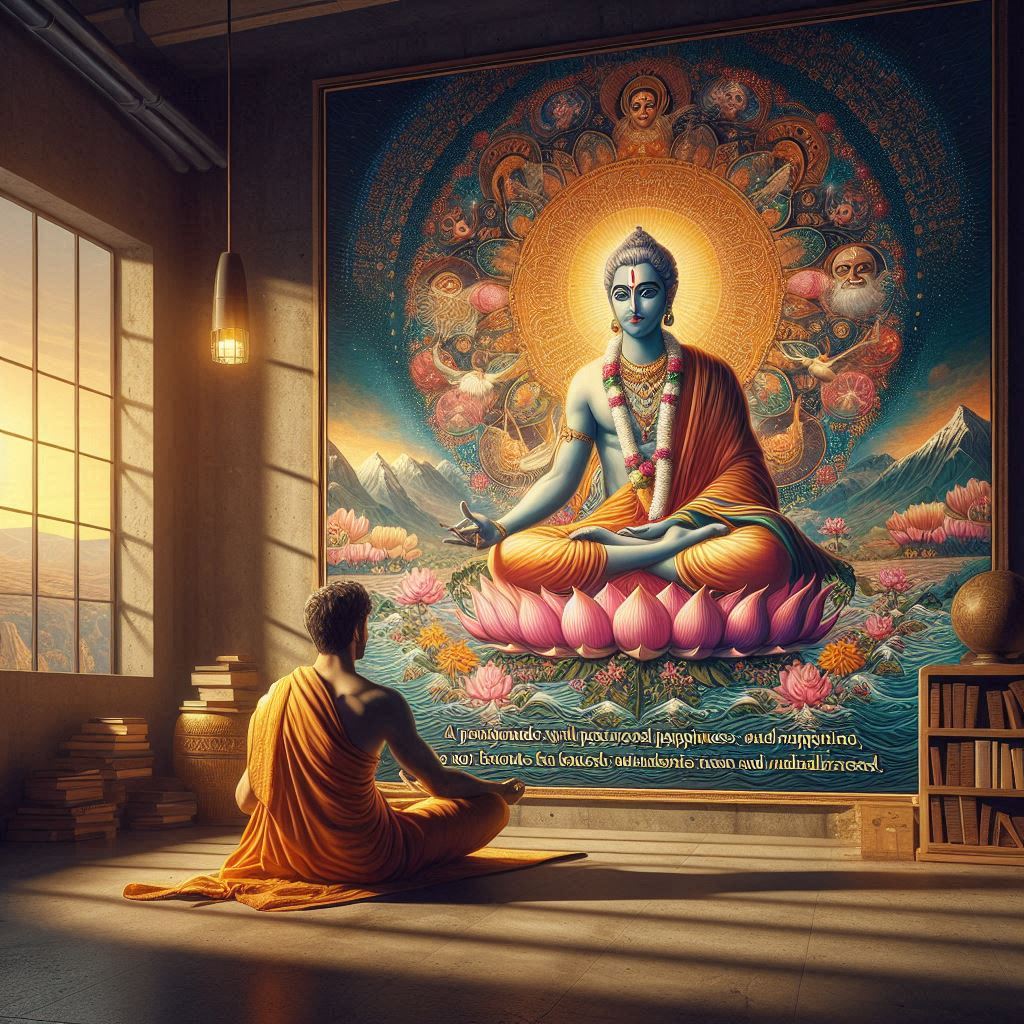
Knowledge is the recognition of the reality of the soul, which is attained not by external means but by self-observation, meditation, and the guidance of the enlightened master

कथं मुक्तिर्भविष्यति :

Liberation is liberation from the cycle of birth and death and the realization of oneness with the soul with Bramha.

वैराग्यं च कथं प्राप्तम :

Quietness differs from desires and material things, which are achieved through self-discipline, meditation, and spiritual understanding

Enlightenment is possible with self-observation, meditation, and the guidance of a knowledgeable Guru. Spiritual practices, moral life and enrichment of virtues pave the way for liberation. Disinterest can be achieved by developing a sense of contentment and satisfaction in the present. This verse guides us towards self-realization, inner peace, and the pursuit of ultimate freedom. The teachings of Ashtavakra inspire us to transcend the illusions of the material world and towards the attainment of true knowledge

As per Ramcharitmanas

सो सुखु करमु धरमु जरि जाऊ ।
जहँ न राम पद पंकज भाऊ ॥
जोगु कुजोगु ग्यानु अग्यानू ।
जहँ नहिं राम पेम परधानू ॥”

This couplet embodies the devotion and love of Lord Ramchandra, which highlights the importance of true religion and spiritual practice. It is an inspirational couplet that makes us understand the importance of truth, love, and spiritual practice. To achieve true happiness, we must remain single. It tells us that to achieve joy and happiness in life, we must walk the path of truth and justice. That is, to accept simplicity in life. Today we use and waste many things, which causes great harm to Mother Nature, it is an injustice, so simplicity is very important in life. It is in God’s love that the soul finds joy and true satisfaction. There is true happiness in knowledge, which is in the love of God
Teaches us the importance of truth, love, and spiritual practice. It reminds us of the importance of following the path of righteousness, attaining enlightenment, and being absorbed in the love of God. This emotional and spiritual couplet inspires us to the true path of search for truth, the importance of love, and joy

Lord Shiva: A Motivational Perspective on Spiritual Strength

Who would you like to talk to soon?

The Key to the Fullness of Life

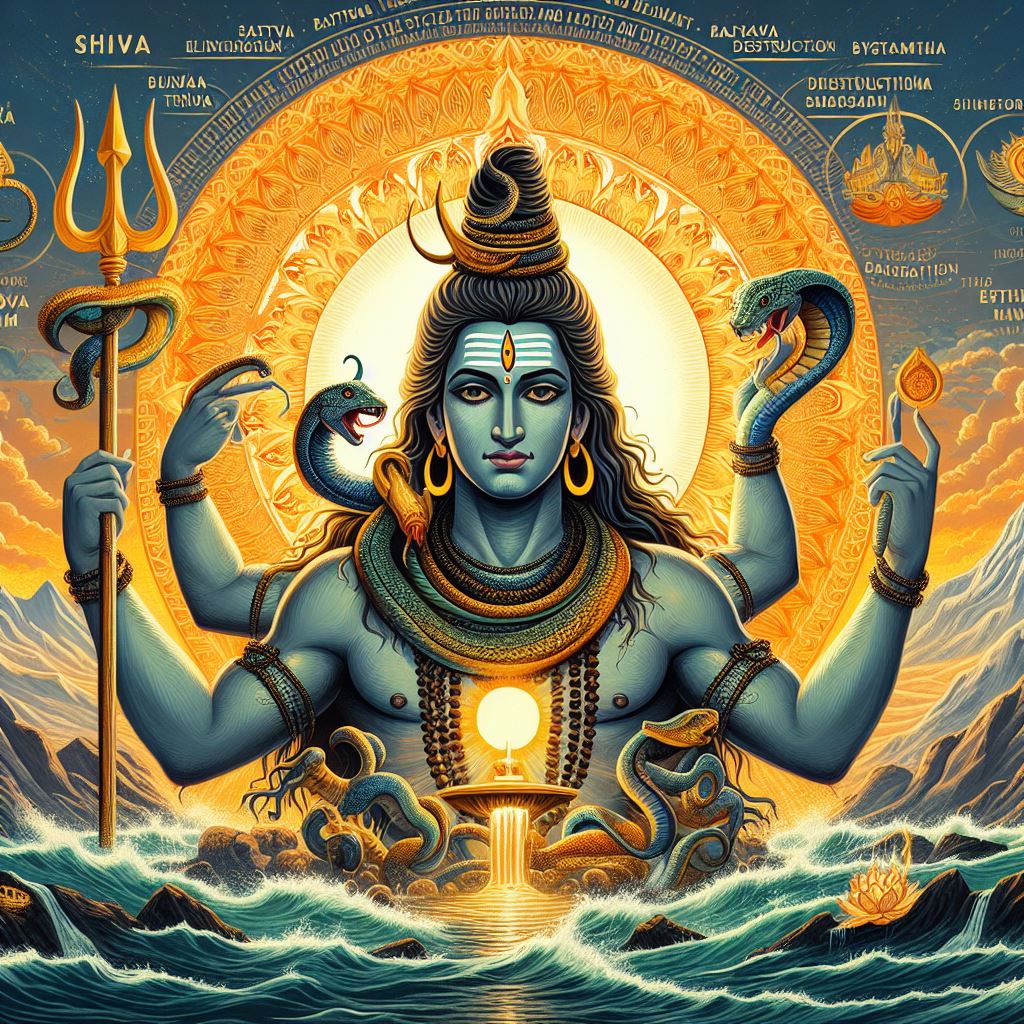
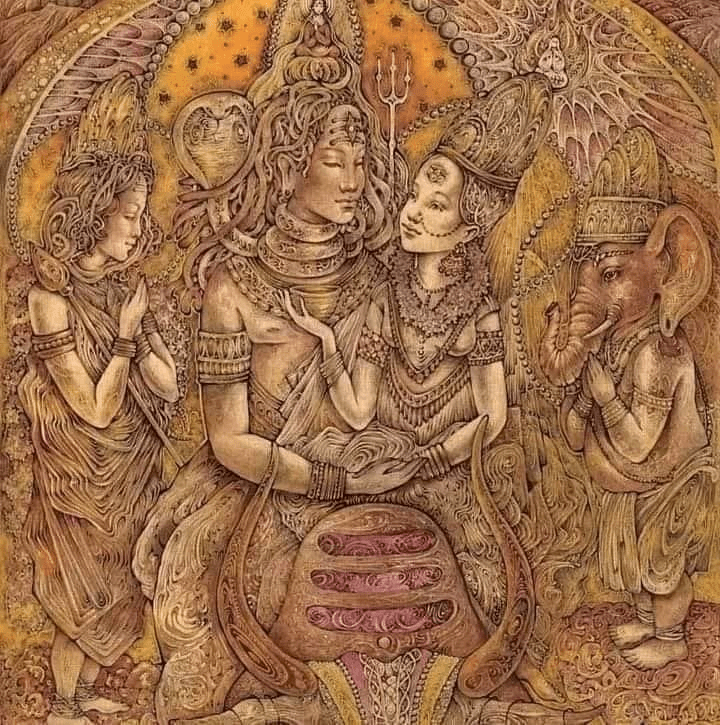
Lord Shiva has a special place in Indian culture and religion. He is not just a deity, but also a lifestyle, a philosophy, and a spiritual guide. Shiva is called Mrityunjaya, which means ‘beyond the last moment’. He is the god of destruction, which is necessary for the creation of the new creation. Surrender to them not only gives us satisfaction in material life but also paves the way for spiritual growth. The idea “Surrender to Shiva, and he will give you everything” is not just a religious statement, but a profound truth of life. Shiva means to join yourself, within your brain, there is a pea-sized pity gland and module whose form is similar to a Shivalinga and the serpent that is wrapped around Shiva is your speech. If you have control over your speech, then it is good, otherwise, it is also like some poison

Meaning of Shiva and His Symbolism:

Shiva means ‘benefactor’. They are Trinetradhars, whose third eye symbolizes knowledge, enlightenment, and destruction. They wear the serpent around their neck, symbolizing the cycle of life and death. Shiva’s damaru depicts the sound of creation and destruction, and the trident symbolizes three gunas – Sattva, Raja, and Tama. The Ganges flowing in their locks teaches us how to calm the difficulties and disturbances of life

Meaning of surrender to Shiva:

Surrendering to Shiva means renouncing one’s ego, selfishness,s and Maya and surrendering oneself to Shiva. This dedication is a symbol of deep faith and faith. When we offer our worries, sorrows, and joys at the feet of Shiva, we attain mental peace and contentment. This dedication helps us understand the truth of our lives and connects us to the true nature of our soul

Result of Dedication:

The most important consequence of surrendering to Shiva is that we go beyond material comforts and attain spiritual satisfaction. True reverence and devotion towards Lord Shiva make us get all the things that are necessary for our life. By the grace of Shiva, we get joy, peace, power, knowledge, and prosperity in life. He takes away all our sufferings and overwhelms us with His divine energy

Story: Shivabhakta Ravana

Ravana, who was a great Shiva devotee, pleased Shiva with his devotion and penance. Ravana performed rigorous penance to please Lord Shiva and eventually Shiva granted him a boon. This story teaches us that if we worship Shiva with a true heart and remain devoted to him, then Shiva fulfills us with all our wishes.

Ways to worship Shiva

1. Meditation and Yoga:

Remembering Shiva through meditation and yoga. It is an important step towards spiritual peace and self-realization.

2. Rudrabhishek:

This is a special puja in which water, milk, curd, ghee, honey, etc. are offered to the Shivalinga. This puja is very dear to Shiva.

3. Mahamrityunjay Mantra:

This mantra is chanted to bring peace, prosperity, and health to life. This mantra is a powerful medium to get the immense grace of Shiva.

4. Keeping your body healthy:

If you are on this earth, it is through your body. If your body system is healthy then Shiva will be happy in himself, you get complete knowledge of living life, it is necessary to understand every aspect of life

Incarnations of Bhagawan Shiva

1. Piplaad:
Helps devotees overcome Shani Dosha.

2. Nandi:
Considered an aspect of Shiva.

3. Veerbhadra:
Destroyed Daksha and his yagna.the fight between ego and real I

4. Bhairav:
Emerged during a fight between Brahma and Vishnu over superiority. Belong to creation and innovation.

5. Ashwatthama:
Born from the poison Shiva consumed during the Samudra Manthan, destined to kill oppressive Kshatriyas.

6. Sharabh:
Part bird and part lion.

7. Grihpati:
Born as the son of the Brahmin Vishwanar.

8. Rishi Durvasha:
Maintains universal discipline.

9. Hanuman:
Aided Shri Rama. This is the incarnation that is dedicated only to the Supreme Mighty Power

10. Brishabh:
Represents righteousness

11. Yatinath:
A peaceful form Journey of the inner soul.

12. Krishna Darshan:
Highlights the significance of religious rituals. Dedicate to love

13. Bhichhuwarya:
Protects all creatures.

14. Sureshwar:
Took the form of Indra to test a devotee.

15. Kiraat:
Tested Arjuna means surrender to Supreme Power.

16. Sunatnartak:
Asked for Parvati’s hand in marriage.

17. Yaksheshwar:
Removed false ego from the gods.

18. Avadhoot:
Crushed Indra’s arrogance. The meaning of surrendering to Lord Shiva is not just limited to religious rituals but it is a way of life, which leads us to freedom and liberation in the true sense. When we dedicate ourselves to Shiva in every aspect of our lives, we attain all the things that bring us perfection and contentment. Surrender to Shiva helps us understand the purpose of our lives and leads us to a deep, meaningful, and prosperous life

Version 2.0: The bugs of life do not affect me.

What is the legacy you want to leave behind?

Spirituality is beyond science: Divine Journey Towards the Real I”

मनस्वी म्रियते कामं कार्पण्यं न तु गच्छति।
अपि निर्वाणमायाति नानलो याति शीतताम्।।” 

(श्रीमद्भागवत 2, 50)

A person or seeker who is endowed with self-power does not only fear physical happiness and unhappiness but tends towards self-realization, he does not wait for happiness and unhappiness. This verse conveys the importance of courage, patience, and decision in life. It means that a person who is endowed with self-strength is engaged in his tasks, accomplishes them, and inherits them, but he does not worry whether he will succeed in achieving his efforts or not.  This verse has a message of inspiration and courage, which gives us the feeling of not being defeated by desires. This leads us to the point that like thought, we can motivate ourselves, and accumulating the power of faith can help us achieve our goals. The person who is endowed with self-confidence does not give up in any situation, but tends towards self-realization and is ready to face any kind of adversity

In a world often bustling with noise and distraction, the quest for inner peace and self-discovery has become a paramount pursuit for many. Amidst the chaos of everyday life, there exists a profound longing to reconnect with one’s true essence, to delve deep within and uncover the mysteries of the soul. This journey of self-exploration, known as Aadhyatm, transcends mere existence; it is a transformative odyssey that leads individuals toward profound spiritual awakening and enlightenment.

Aadhyatm is more than just a spiritual practice; it is a way of life a philosophy that seeks to unravel the intricacies of human consciousness and the cosmos. Rooted in ancient wisdom and timeless teachings, Aadhyatm invites seekers to embark on an inner pilgrimage, guided by the principles of introspection, mindfulness, and self-realization. Central to the Aadhyatm journey is the concept of “Atma,” or the soul the eternal, immutable essence that transcends the physical realm. Through practices such as meditation, yoga, and self-reflection, individuals endeavor to peel away the layers of ego and illusion, unveiling the radiant truth that lies at the core of their being. In this pursuit, the journey towards the soul becomes a sacred quest for unity with the divine—a journey towards wholeness, harmony, and liberation.

The path of Aadhyatm is as diverse as it is profound, encompassing a myriad of spiritual traditions, practices, and philosophies from around the world. Whether through the ancient wisdom of Vedanta, the mystical teachings of Sufism, or the contemplative practices of Buddhism, seekers are drawn to different paths, each offering a unique roadmap toward self-discovery and spiritual fulfillment.

Yet, regardless of the path chosen, the Aadhyatm journey is ultimately a deeply personal one—a voyage of inner exploration that transcends the confines of time and space. It is a journey that unfolds in moments of stillness and silence, as well as in life’s myriad experiences and challenges. It is a journey that requires courage, patience, and unwavering devotion a journey towards the deepest recesses of the heart, where the soul resides in eternal communion with the divine.

As individuals traverse the path of Aadhyatm, they may encounter moments of profound revelation, as well as moments of doubt and uncertainty. Yet, amidst the ebb and flow of their inner landscape, they remain steadfast in their commitment to self-discovery and spiritual growth. For in the journey towards the soul, every step taken, every obstacle overcome, becomes a sacred offering—a testament to the resilience of the human spirit and the infinite potential that lies within. Aadhyatm is not merely a destination to be reached, but a journey to be embraced a journey towards the deepest depths of our existence, where the light of the soul shines eternal. It is a journey of self-transcendence, of awakening to the infinite possibilities that lie within, and of realizing our innate connection to all of creation. As we embark on this sacred quest, may we be guided by the wisdom of the ages, the light of our inner truth, and the boundless love that permeates the universe.

prime sacred book.

List the people you admire and look to for advice…

𝙇𝙚𝙨𝙨𝙤𝙣𝙨 𝙩𝙤 𝙗𝙚 𝙡𝙚𝙖𝙧𝙣𝙩 𝙛𝙧𝙤𝙢 𝙍𝙞𝙜 𝙑𝙚𝙙.

1) एकं सद् विघ्रा बहुधा वदन्ति। (1.164.46)
Inelligent people call or know Prabhu  by many names.

2) एको विश्वस्य भुवनस्य राजा॥ (6.36.4)
He is the only ruler of all the Lokas.

3) यस्तन्न वेद किमृचा करिष्यति॥ (1.164.39)
One who does not know the Brahm, he has no power to know Vedas.

4) सं गच्छध्वं सं वदध्वम्। (10. 191.2)
Walk together and talk together.

5) शुद्धाः पूता भवत यज्ञियासः॥ (10.18.2)
Become pure & pious and devote your life towards service to others.

6) स्वस्ति पन्थामनु चरेम। (5. 51.15)
Let us trod on welfare path.

7) देवानां सख्यमुप सेदिमा वयम्॥ (1.89.2)
Let us be friendly with Godly (Intelligent) people.

8) उप सर्प मातरं भूमिम्। (10.18.10)
Serve your motherland.

9) भद्रंभद्रं क्रतुमस्मासु धेहि। (1. 123.13)
Oh, Prabhu! Help us to adorn the resolution of Happiness and Welfare along with Knowledge and deed.

Lesson of Yajurveda .

1) भद्रं कर्णेभिः शृणुयाम। (15. 21)

Let our Ears listen to gentle & courteous words.

2) स ओतः प्रोतश्च विभूः प्रजासु॥ (32.8)
That all encompassing Prabhu is totally engulfed within us.

3) मा गृधः कस्य स्विद् धनम्॥ (40.1)
Do not become greedy for the wealth of others.

4) मित्रस्य चक्षुषा समीक्षामहे।। (36.18)
Let us be mutually friendly with everyone.

5) तमेव विदित्वाति मृत्युमेति॥ (31.18)
Only after knowing the Brahm, one can dodge Death.

6) ऋतस्य पथा प्रेत। (7.45)
Walk on the path of truth.

7) तन्मे मनः शिवसङ्कल्पमस्तु॥
(34.1)
My mind has the best resolutions.

According to SAM VEDAS

1) अध्वरे सत्यधर्माणं कविं अग्रिं उप स्तुहि। (32)
Always praise the Agni in a Yagya that is non-violent and publishes Truth & Dharma

2) ऋचा वरेण्यं अवः यामि॥ (48)
I aspire the best protection from Ved mantras.

3) मन्त्रश्रुत्यं चरामसि॥ (176)
We should do only those things which are mentioned in Ved mantras.

4) ऋषीणां सप्त वाणीः अभि अनूषत्॥ (577)
Speak the seven versed voice of the Rishi’s, that is Ved.

5) अमृताय आप्यायमानः दिवि उत्तमानि श्रवांसि धिष्व।।(603)
In order to achieve Moksha for your progress, Earn the best reputation in Dhyulok.

6) यज्ञस्य ज्योतिः प्रियं मधु पवते। (1031)
The flame of a Yagya produces cherished and sweet emotions in us.

What does it mean to communicate with consciousness?


When we begin to communicate with consciousness, the question that comes to our mind is, who am I, and what is important to me? We get answers to all these questions only by communicating with consciousness and we get so much power in our mind that we can make life with purpose by making changes in our lives. Consciousness is an inner feeling or voice that guides a human being purely or worthy of his actions. How consciousness works depends on our desire to know and on the process of finding something unique. To communicate with consciousness, we have to resort to spiritual practice We will be able to feel deeply everything available through Lord Shiva and we will be able to get answers to all the questions we ask ourselves. In this way, consciousness can be developed rapidly through self-realization. By communicating with consciousness, we have unique thoughts that develop our potential. In the process of meditation and cultivation, we understand new and specific perspectives that develop our strengths. By communicating with consciousness, we develop our thoughts and decide the way to increase our potential

Pay attention to system

Describe a positive thing a family member has done for you.

The atomic habits.

Your results are a measure of your habits. Your earned wealth is a backward measure of your financial habits. Your weight is proof of your eating habits. Your knowledge is a backward example of your learning habits. What you repeat is what you get. Atomic Habits, a successful book by James Clear, is the most comprehensive guide on how to change your habits and get better every day. This brief note based on the book is written in two parts. Part one helps us understand the importance of our habits and why they matter. More importantly, it provides answers to a series of how to Which naturally come in terms of forming good habits and breaking bad habits.  In the second part of the note, six important ideas, concepts, and principles are summarized that will help the reader form the habits he wants

Part One – What?  Why?  How come

Part One – What?  Why?  How come

– What is a habit?
– Why do habits matter?
– How do habits work?
How to start a new habit?
– How to create better habits?
– How to break bad habits?
– How to enjoy habits that are hard?

What is a habit?

Habits + Deliberate Practice = Perfect”


Habits are mental shortcuts. A habit is a routine or behavior that is performed repeatedly and most of the time automatically. When you face a problem repeatedly, your brain starts doing the process of solving it. Your habits are a set of automated solutions that solve the problems you face regularly. The ultimate aim of habits is to solve life’s problems with as little energy and effort as possible. A habit is a behavior that has been repeated enough times to become automatic. If you find yourself struggling to form a good habit or break a bad habit, it’s not because you’ve lost your ability to improve. This is often because you have not yet crossed what James Clear calls the plateau of latent potential.  When you finally break the plateau of latent potential, people will call it an overnight success.  Habits are the compound interest of self-improvement The advantage of habits is that we can do anything without thinking. The downside is that we stop paying attention to small mistakes. Reflection and review is a process that allows you to be mindful of your performance over time.  The more firmly we hold on to an identity, the harder it becomes to move on.

Why do habits matter?

Identification -> processes -> results

Habits form our identity.  Our actions define who we are.  Our habits are a reflection of our identity.  The more we repeat a behavior, the more we strengthen the identity associated with that behavior. 

1. Changes in your results.  This means changing your results, for example, losing weight.

2. Edit your processes.  This means changing your habits and systems: for example, developing a daily exercise routine and diet

3. Change your identity.  It means changing your beliefs: changing the way you see yourself and those around you.  For example, if you exercise regularly, you are reinforcing the identity of someone fit and healthy

With outcome-based habits, the focus is on what you want to achieve.  With identity-based habits, the focus is on who you want to be.  James Clear argues that the best way to change your identity is to focus on changing your habits.  By starting with small, easy habits, we can gradually create a new identity that is more aligned with our goals.  True behavior change is identity change.  You can choose and start a habit because of motivation, but you will stick to it only when it becomes a part of your identity.  The real reason habits matter is not because they can give you better results (although they can), but because they can change your perceptions of you

How do habits work?


Hints -> longing -> feedback -> rewards

The main components of habit formation are:

1. Signal: It prompts your brain to start a behavior.  It’s a little bit of information that predicts the reward.

2. Craving: It is the motivation behind every habit.  Without the will, we have no reason to act.

3. Feedback: It’s the same habit you play;  It can take the form of a thought or action.

4. Reward: The ultimate goal of every habit

Habit formation is the process by which a behavior becomes progressively more automatic through repetition.  How long you’ve been doing a habit isn’t as important as how many times you’ve done it. You can do something three times in thirty days or three hundred times.  Frequency will always make a difference. Habits are attractive when we associate them with positive emotions and unattractive when we associate them with negative emotions

How to start a new habit?

After [current habit], I will take [new habit].’

One of the best ways to create a new habit is to identify the current habit you already do every day and then top your new behavior on top.  This is called habit stacking.  The two most common signs are time and place.  Creating an intention to implement is a strategy you can use to associate a new habit with a specific time and place.  Habit stacking is a strategy you can use to associate a new habit with an existing habit

The formula for adding a habit is:

After [the present habit], I will take [the new habit].’

The environment plays a crucial role in shaping human behavior. By making small changes in the context, significant changes can be observed in behavior over time. The key to creating new habits is to pay attention to the signs in your environment that promote good habits. Gradually, your habits become associated with the entire context, making it easier to form new habits. If you’re trying to change your habits, consistency is key. Taking small steps, even if they aren’t significant, will help you reach your goal eventually. It’s essential to choose small, healthy options that will help you achieve your goals in the long run. Goals are good for setting direction, but systems are best for making progress. Systems focus on the mechanisms that lead to the desired outcomes, making it easier to achieve the desired results.

Human electricity

What are 5 everyday things that bring you happiness?

You know ??

Electricity is everywhere, even in the human body. Our cells are specialized to conduct electrical currents.
Electricity is required for the nervous system to send signals throughout the body and to the brain, making it possible for us to move, think, and feel.

how do cells control electrical currents?

The elements in our bodies, like sodium, potassium, calcium, and magnesium, have a specific electrical charge. Almost all of our cells can use these charged elements, called ions, to generate electricity. The contents of the cell are protected from the outside environment by a cell membrane. This cell membrane is made up of lipids that create a barrier that only certain substances can cross to reach the cell interior.
Not only does the cell membrane function as a barrier to molecules, it also acts as a way for the cell to generate electrical currents. Resting cells are negatively charged on the inside, while the outside environment is more positively charged. There’s a slight imbalance between +ive and -ive ions inside and outside the cell. Cells can achieve this charge separation by allowing charged ions to flow in and out through the membrane. The flow of charges across the cell membrane is what generates electrical currents.

Cells control the flow of specific charged elements across the membrane with proteins that sit on the cell surface and create an opening for certain ions to pass through. These proteins are called ion channels. When a cell is stimulated, it allows positive charges to enter the cell through open ion channels. The inside of the cell then becomes more +ively charged, it triggers further electrical currents that can turn into electrical pulses, called action potentials. Our bodies use certain patterns of action potentials to initiate the correct movements, thoughts, and behaviors.

The art of drink water 🌊

In Ayurveda, the way of drinking water is considered crucial for maintaining overall health and well-being.
Here are some guidelines from Ayurveda mentioned in “Ashtang Hridayam” by “Acharya Vagbhatta” on how to drink water:

Drink Room Temperature Water:

Ayurveda recommends drinking water at room temperature. Very cold or ice-cold water can douse the digestive fire (Agni) and hinder the digestive process.

Sip, Don’t Guzzle:

Rather than drinking a large glass of water all at once, Ayurveda suggests sipping water slowly throughout the day. This aids in better digestion and absorption.

Prefer in Small Quantities:

According to Ayurveda drinking water in small quantities multiple times a day is better than consuming large quantities in one go. This helps the body to absorb the water more efficiently.

Avoid Water During Meals:

Ayurveda advises against drinking water during meals as it can dilute the digestive juices and impair digestion. It’s recommended to wait at least 30 minutes after a meal before drinking water.

Herbal Infusions:

Drinking herbal teas or infusions made from spices like cumin, coriander, and fennel seeds is common in Ayurveda. These infusions not only hydrate but also have medicinal properties.

Surya Namaskar: The  Consciousness science.

Describe something you learned in high school.

Observation and Learning from Nature:

We are in the midst of a worldwide Yog revolution.  For many, it is about health and well-being but that is only a portal that leads to the understanding of the self and its relationship with the body. Although the roots of Yoga lie in the Vedas, most read Patanjali’s Yog-sutra for a systematic exposition of the nature of the mind. The text is logical and it questions the naive understanding of the world. According to it, there is a single reality and the multiplicity we see in it is a consequence of the projections of our different minds. Therefore to obtain knowledge one must experience reality in its most directness.

Clock of twelve 🕛

Sun is the largest source of energy. For this reason, the ancient sages used to worship the sun. ‘Surya Namaskar’ means bowing to the Sun i.e. Sun Salutation. If you are starting yoga, then the practice of ‘Surya Namaskar’ is the best for this. It gives you the benefit of 12 yoga asanas simultaneously and that is why it is also called the best yoga asana. Yoga, exercise and physical movement are not only important to keep the body healthy but also to keep the mind fit. By practicing the 12 steps of Surya Namaskar every day, the mind becomes active and concentrated.  When should Surya Namaskar be performed Surya Namaskar is best if done at sunrise. This asana should be done on an empty stomach early in the morning while looking at the sun. The reason for this is that along with positive energy, the brightness of the morning sun provides many benefits to health.


Surya Namaskar is made up of 12 yoga asanas

1• Pranamasana

Stand straight facing the sun and join both legs, keeping the waist straight. Now bring the hands near the chest and make a state of bowing by joining both palms.

2. Hasta Uttanasana – (Raised Arms Pose)

Stand in the first position and raise your hands above the head and keep it straight. Now move the hands backwards in the state of bowing and bend the waist backwards.

3. Padahastasana – (Standing Forward Bend)

Now exhale slowly and touch the toes of the feet with hands while bending forward. At this time your head should meet the knees. 

4. Ashwa Sanchalanasana (Equestrian Pose)

Breathe slowly and stretch the straight leg backwards. The knee of the straight leg should meet the ground. Now bend the other leg from the knee and keep the palms straight on the ground. Keep the head towards the sky.

5. Dandasana (Staff Pose)

Now while exhaling, keep both hands and feet in a straight line and come to the position of push-up.

6. Ashtanga Namaskara – Eight Limbed pose or Caterpillar pose

Now while breathing, join your palms, chest, knees and feet to the ground. Stay in this position and hold the breath. 

7. Bhujangasana (Cobra Pose)

Now place the palms on the ground and tilt the head back towards the sky as much as possible while joining the stomach to the ground.

8. Adho Mukha Svanasana – (Downward-facing Dog Pose)

It is also called Parvatasana. For its practice, keep your legs straight on the ground and raise the hip upwards. While exhaling, keep the shoulders straight and the head inwards.

9. Ashwa Sanchalanasana (Equestrian Pose)

Breathe slowly and stretch the straight leg backwards. The knee of the straight leg should meet the ground. Now bend the other leg from the knee and keep the palms straight on the ground. Keep the head towards the sky.

10. Padahastasana – (Hand Under Foot Pose)

Now exhale slowly and touch the toes of the feet with hands while bending forward. At this time your head should be met with the knees

11• Hastuttanasana (Raised Arms Pose)

Stand in the first position and raise your hands above the head and keep it straight. Now move the hands backwards in the state of bowing and bend the waist backwards. During this time you will make the shape of a half moon. This asana is also called Ardhachandrasana.

12. Pranamasana – The Prayer Pose

Stand straight facing the sun and join both legs, keeping the waist straight. Now bring the hands near the chest and make a state of bowing by joining both palms. .

SPIRITUAL RESPONSIBILITY.

The Vedic texts claim to be Atmavidya, “know real I ” or “consciousness science” and they also provide a framework to decode its narrative, establishing its central concern with consciousness.  In the Vedic view, the reality is unitary at the deepest level since otherwise there would be chaos.  Since language is linear, whereas the unfolding of the universe takes place in a multitude of dimensions,  language is limited in its ability to describe reality. Because of this limitation, reality can only be experienced and never described fully. All descriptions of the universe lead to logical paradoxes.

People used nature as a way to find inspiration and establish spiritual connections. The interdependence of all life and the notion that the individual (atman) and the universe (Brahman) are one are central themes in many Bhartiya philosophies.  Agriculture:  In an agrarian society, existence depends on an awareness of the environment. For the community’s sustenance, Gurukuls imparted agricultural skills, such as crop production and the science of seasons.  Observation and Learning from Nature:  Natural phenomena were frequently employed as metaphors and symbols in the teaching of a variety of subjects. It was thought that one of the best ways to teach wisdom was by studying nature

believed to be 72,000

If you could be a character from a book or film, who would you be? Why?

Balance energy channel.


मनो हि द्विविधं प्रोक्तं शुद्धं चाशुद्धमेव च।
अशुद्धं कामसंकल्पं शुद्धं कामविवर्जितम्॥
मन एव मनुष्याणां कारणं बन्धमोक्षयोः ।
बन्धाय विषयासक्तं मुक्त्यै निर्विषयं स्मृतम् ॥
यतो निर्विषयस्यास्य मनसो मुक्तिरिष्यते ।
अतो निर्विषयं नित्यं मनः कार्यं मुमुक्षुणा ॥

There are two kinds of mind, pure mind and egoist mind. That in which the thoughts of desires arise is an impure mind, and in which all these desires have been completely lacking, that is the pure mind. The mind is the main cause of bondage and salvation of all human beings. In the worlds, the attachment mind is said to be the cause of bondage and the mind without thoughts is the cause of moksha. It is only when the enjoyment is devoid of the thought that this mind merges. Therefore, the one who desires liberation should always keep his mind away from objects. After this, when the attachment to desires is removed from the mind and it becomes stable in the heart and attains the feeling of ecstasy, then it attains that supreme status.

The Magic

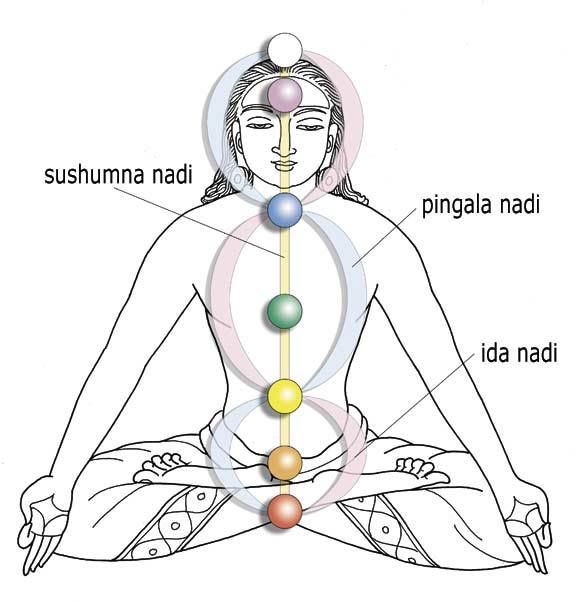
Anulom Vilom Pranayama is an ancient yogic technique that has been practiced for thousands of years. Modern research has shown that this practice has several physical, mental, and physiological benefits. Anulom Vilom Pranayama can improve respiratory health by increasing lung capacity, reducing inflammation in the airways, and improving oxygenation of the blood.  Anulom Vilom Pranayama reduces stress and anxiety by activating the parasympathetic nervous system, which is responsible for the “rest and digest” response. Anulom Vilom Pranayama can improve cognitive function by increasing blood flow to the brain and improving oxygenation. This can lead to increased focus, concentration, and mental clarity. Anulom Vilom Pranayama can balance the energy channels in the body, which can help to promote overall well-being. In Ayurveda, the energy channels are known as nadis, and there are believed to be 72,000 of them in the body.  Anulom Vilom Pranayama can improve cardiovascular health by reducing blood pressure and improving circulation. It can also help to lower cholesterol levels and reduce the risk of heart disease.

Change the creation.

What’s something most people don’t understand?

Fear and you !!

Humans find opportunities even in circumstances according to time. And this is the mantra of success. Every challenge can be overcome by this principle. Life is to be beyond fear in life. Man’s journey is to do something on this earth, which he can get a worthy opportunity for his future generation as a good example. It is true that as human beings in this world, we should never consider anyone weak. Time and situation can change at any time. But this is also true if we live fearlessly with self-respect, then such a situation never comes, due to which we have to be afraid

Lord Shri Ram was never afraid of any kind of situation in his life but went ahead and respected the situation. Even if they have to face sudden adversity. And over time, the circumstances that were against them also adopted them. In any case, time is the most powerful, and change is its nature. No matter how many big demons he encountered, how to build a bridge over the sea, to keep the promises given to Sugriva and Vibhishana, Lord Rama remained relaxed and fearless in every situation. And he succeeded in making every big situation an opportunity

It was his personality that the smallest creature or the biggest creature bowed down before him by coming into his presence. His biggest characteristic was to control anger in his nature. They would have more trouble than problems when they saw someone worried. And he used to relieve her anxiety immediately with his sweet smile. Anyway, with whom Lord Rama himself is, what fear and concern in this life because Lord Shri Ram is the existence and he is the creation.

Vocalization + Intention = Healing.

What are three objects you couldn’t live without?

Knowledge and you??

Knowledge is everywhere, in many forms, manifesting itself in the diverse nature of action. Nature presides over knowledge through its ingredients. The sages have presented knowledge in formulaic form, in figurative language, and in code style. How do we receive it? It is up to us. How capable is our intellect to absorb this knowledge, how effective is our education? This is how we know our abilities. Pure knowledge is Brahman in itself. Knowledge is not the monopoly of any one organism. Knowledge is for everyone. Knowledge is only in the possession of Brahma and Saraswati, the institutions of knowledge. The supreme god of knowledge is Shiva. All knowledge is contained in it. Knowledge is not ours. It is of nature. By the grace of nature, we become the possessors of it. It is necessary to thank Mother Nature, the giver of knowledge. Who are we to give knowledge? Nature gives knowledge to all of us through us. The more our receptive power, the more knowledge we receive and retain


1. Cutting off the tongue and offering it to the deity = that is, no wrong words come out of the mouth. Worshiping the Ishta by observing silence or expelling the tongue, doing penance.

2. Cutting off the head and offering it to the deity = canceling the ego = bowing the head = taking refuge. Surrender 100%.

3. Cutting off the leg and dedicating it to the Goddess = stopping running away = Worshiping the Ishta by remaining stable in one place = to be distinguished in immovable samadhi.

4. Offering to the Deity with eyes out = turning away from the outer world = being introverted = looking within = closing the outer eyes = gaining insight

5. Sacrifice of life = stoppage of the movement of breath = to be unconscious = to keep oneself in ultimate peace. Sacrifice your inner anger.

6. Drinking nectar = immersing in knowledge = increasing concentration

7 . To reside in Kashi = to attain knowledge and stay in it = to implement knowledge in life.

9. To live in Ayodhya = to live a life free from conflict.

10. To obtain the philosopher’s stone = to prove the harshest fire god who drinks the juice.

11. To remain in yoga sleep = to live a life free from all dualities or to be equanimous

Everything is energy vibrations.

“Sound is the carrier wave of consciousness” – Steven Halpern


By projecting the intent into sound, various experiences and effects can be created. For example; Two people can potentially make the same sound with different intents, and two can manifest different effects. One person can make a sound and project therapeutic energy into it, while another person can make the same sound with the opposite experience depending on the intent From our perspective, the intention to use sound healing as a tool may be the most important and powerful part of the formula. Here’s a good formula for reference.

Vocalization + Intention = Healing.

If vocalization is the physical equivalent of sound, visibility is the spiritual equivalent of sound, and together they form the result of sound.
Thus, equally another formula;

Vocalization + Visualization = cosmic medicine