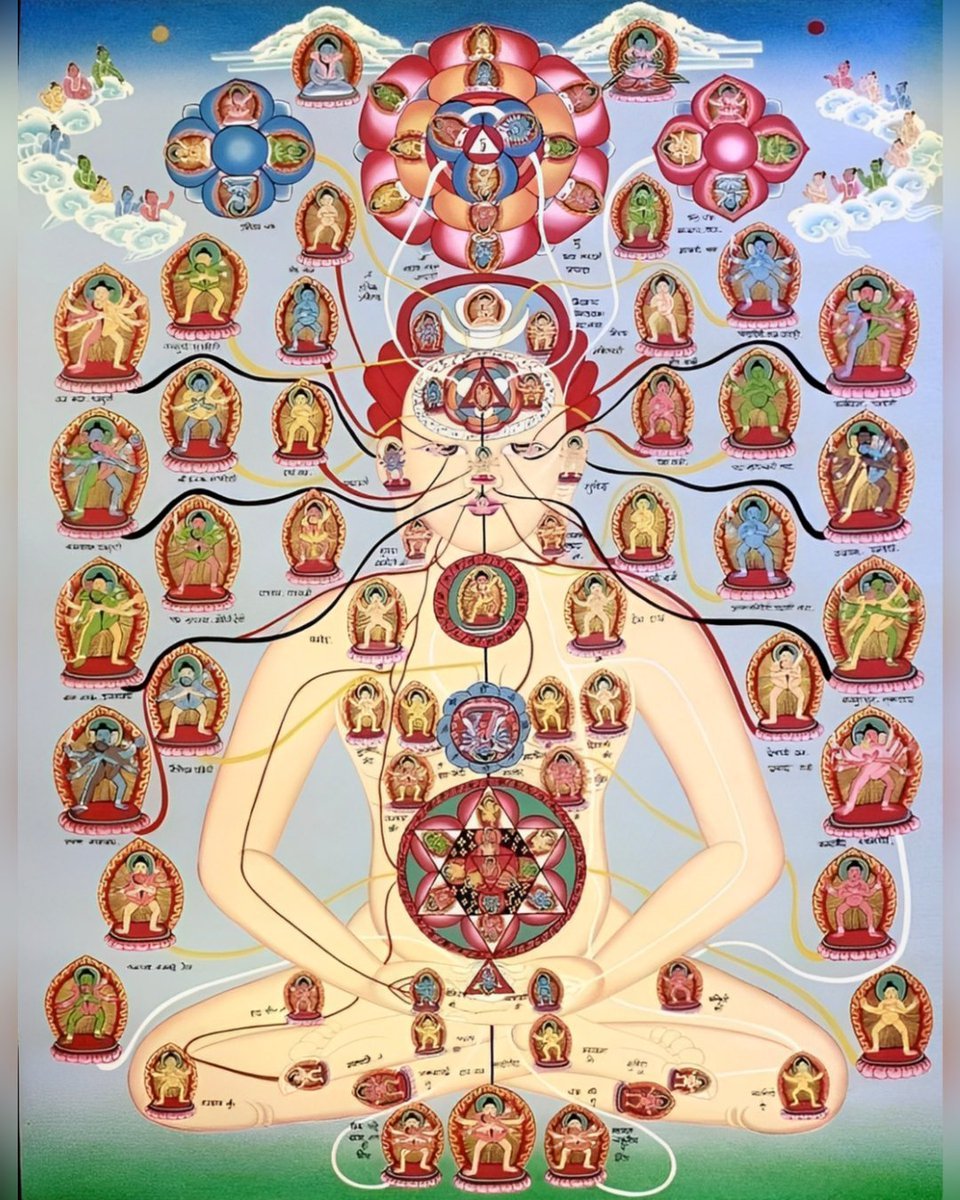
Create new positive neuro pathways of ancient knowledge.

How do you feel about cold weather?

Gravity in Vaisheshika Sutra

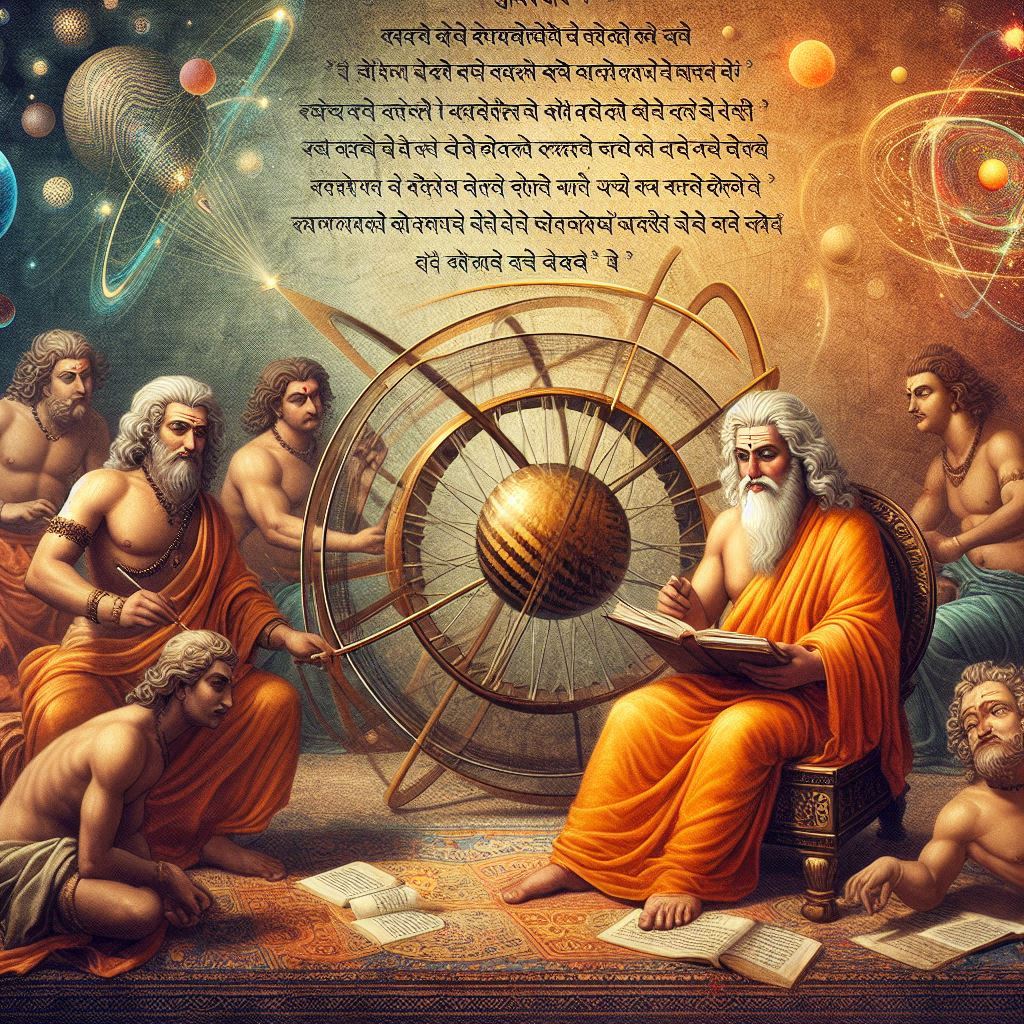
It’s fascinating to explore how ancient Indian philosophies and texts may have addressed concepts akin to modern gravitational theory long before Newton’s time. The Vaisheshika Sutra by Rishi Kanada is particularly intriguing as it predates Newton by over two millennia and contains verses that seem to describe gravitational principles.

1. The Nature of Objects Falling to the Earth:

The Vaisheshika Sutra mentions that objects tend to fall towards the earth due to an inherent property or force. This aligns with the idea that there is an attractive force between the earth and other objects, which we now identify as gravity. This recognition of a force causing objects to fall to the ground is a fundamental aspect of gravitational theory.

2. The Stability and Movement of Celestial Bodies:

The sutras also discuss how the stability and movement of celestial bodies are influenced by this attractive force. This can be seen as an early conceptualization of how gravity governs the motion of planets and other celestial entities, akin to the principles described by Kepler and Newton.

Verse 5.1.7:
Discusses how substances move downward due to an inherent force.

Verse 5.2.4:
Addresses the concept of attraction between substances, hinting at a force akin to gravity.

Interpretation and Comparison:

While these ancient texts don’t provide the mathematical formulations that Newton did, they demonstrate a conceptual understanding of gravity’s effects. This understanding is significant, showing that the idea of gravity as an attractive force was observed and noted by ancient Indian philosophers. In ancient Indian philosophy, the idea of “Gurutva Aakarshana Shakti” captures the essence of gravitational pull. The term “Gurutva” (mass) and “Aakarshana” (attractive pull) together indicate an awareness of the relationship between mass and the force it exerts, reflecting a sophisticated understanding of natural forces.

The exploration of gravitational concepts in ancient Indian texts like the Vaisheshika Sutra highlights a rich history of scientific thought in India. These early discussions on gravity illustrate how ancient scholars were keen observers of nature and sought to understand the forces governing the physical world. While Newton’s laws provided a detailed mathematical framework for gravity, it is remarkable to recognize that the fundamental ideas about gravitational forces were present in human thought long before his time.

आत्मकर्म हस्तसंयोगाश्च । (V.S. 5.1.6)

The action of the body and its members is also in conjunction with the hand.

संयोगभावे गुरुत्वात्पतनम (V.S. 5.1.7)

In the absence of conjunction falling results from Gravity.

Concept of air fall

नोदनाद्यभिषोः कर्म तत्कर्मकारिताच्च
संस्कारादुत्तरं तथोत्तरमुत्तरं च ।। (V.S 5.1.17)

The first action of arrow is from impulse; the next is resultant energy produced by the first action, and similarly the next next shloka-

संस्काराभावे गुरुत्वात्पतनम (V.S. 5.1.18)

In the absence of resultant/propulsive energy generated by the action, falling results from Gravity.
Rishi Varahamihira who is also supposed to be lived in the 5th century BCE, mentioned the

following shloka in his Surya Sidhanta, 12th chapter 32 shloka-

मध्ये समन्तादण्डस्य भूगोलो व्योम्नि तिष्ठति ।
बिभ्राणः परमां शक्तिं ब्रह्मणो धारणात्मिकाम् ॥

This verse conveys that the spherical Earth remains positioned at the center of the universe in space due to a special kind of energy that prevents it from falling away and helps it remain stable. The term ‘energy’ referred to in the previous shloka was further elaborated by Bhaskaracharya, a mathematician who lived in the 12th century AD. In his book Sidhanta Shiromani, Bhaskaracharya provided an explanation for this energy and named it “gurutvakarshan shakti.”

आकृष्टिशक्तिश्च महि तय यत्।
खष्ठं गुरु स्वभिमुखं स्वशक्त्या ॥
आकृष्यते तत्पततीव भाति।
समेसमन्तात् क्व पतत्वियं खे ॥

This verse explains that the energy present within the Earth is the power of attraction, known as “aakrushti shakti”, (according to the Bhaskaracharya).  Due to this attractive force, the Earth pulls objects towards itself, and this power is inherent and natural to the Earth. As a result of this pull, every object on Earth appears to be falling downward. Bhaskaracharya did not stop there; he concludes the shloka with a question: where can this Earth fall down in space? This passage eloquently captures the profound understanding of gravity and celestial mechanics found in ancient Indian texts. Aryabhatta’s poetic reference in the Gitikapada likens the gravitational pull to the way smaller flowers are drawn towards the center of the Kadamba flower cluster, metaphorically depicting the force that ties everything to the Earth’s center.

Vadic mantra = Attributing stability of celestial body.

The cited Vedic mantras further elaborate on this concept, attributing the stability of celestial bodies and their movements to gravitational forces:

Rigveda 8.12.28 and 8.12.30

यदा ते हर्यता हरी वावृधाते दिवेदिवे।
आदित् ते विश्वा भुवनानि येमिरे ।।

speak of the Sun’s radiant energy causing the planets to move in their orbits and remain stable due to the Sun’s attraction.

हिरण्यपाणि: सविता विचर्षणिरुभे द्यावापृथिवी अन्तरीयते।
अपामीवां बाधते वेति सूर्यमभि कृष्णेन रजसा द्यामृणोति॥

describes the Sun as holding the Earth and other heavenly bodies, preventing collisions through its attractive force.

According to Atharvaveda 4.11.1

अनड्वान् दाधार पृथिवीमुत द्यामनड्वान् दाधारोर्वन्तरिक्षम्।
अनड्वान् दाधार प्रदिश: षडुवीर्रनड्वान् विश्वंभुवनमाविवेश॥

uses the analogy of a bull pulling a cart to illustrate how the Sun controls the movements of planets.

The Taittiriya branch of Krishna Yajurveda

मित्रोदाधार पृथिवीमुतद्याम। मित्रः कृष्टी:।

emphasizes the Sun’s role in holding the Earth in space through its attractive power, with the term “Kristheeh” highlighting this force of attraction. These texts reflect a sophisticated grasp of gravitational principles, recognizing the Sun’s critical role in maintaining cosmic order. This ancient wisdom, although fragmented over time, underscores the depth of scientific thought in early Indian civilization.

Learn to utilize the tools that God offers to you

How do you balance work and home life?

The path of the mystic.

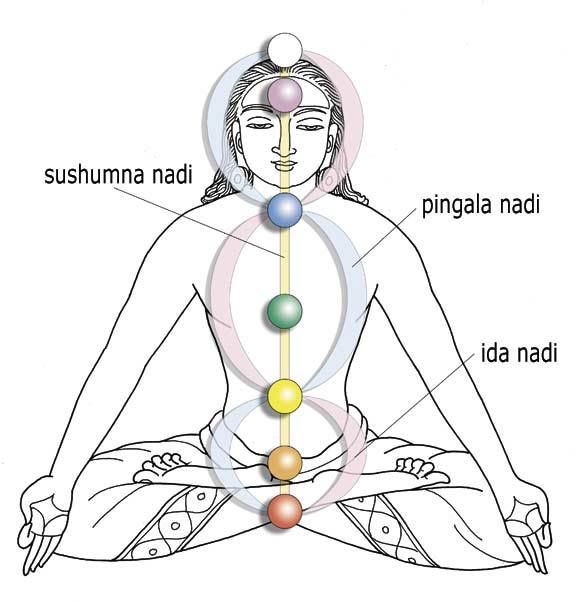
Spinal cord – The spinal cord is a part of the human body that is one to one and a half feet long. There are holes in the entire spinal cord, and 31 groups of nerves come out of it, the outer part is made of gray-colored material and the inner part is made of white matter. In the middle is the path of Sushumna Nadi. The spinal cord is the main function in keeping the human body upright. These nodes are located in our backside. There are 24 casseroles prominently in this backbone. These casseroles have holes from the inside. There are two ladies on either side of it. The left pulse is related to the nostril from the left side, it is called the lunar (ida) nadi. The second pulse remains on the right side, which is related to the nostril (hole) on the right side, it is called the Sun (Pingala) nadi. In between these two is the subtle Sushumna nadi. It involves subtle life. Physical vitality circulates in it.

The main centers of the body are connected to this spinal cord by nerves. Some are vital vessels, some are blood vessels. Similarly, something is going to give a sense of consciousness. To protect the 24 vertebrates from rubbing, a grease-like substance is filled in the middle of each vertebra. In which, due to disorder, there is pain in the waist or the uselessness of the lower part, etc

Similarly, by keeping feet in the lower and higher levels, the distance between these glands decreases or increases. So the body starts aching and the breathing process also starts getting interrupted. If the breath moves through the Ida nadi, then there is an effect of coolness in the body. Due to excessive movement of Pingala nadi, the body is affected by heat. According to pulse experts, it takes 1 hour to change one vowel or pulse from another to another. When both the nadis breathe equally, Sushumna comes from the nadi. When the Kaseru of Sushumna gets immobilized for some reason, there is a difference in breathing. For this reason, there is a difference in the subtle fibers of the body and the body becomes a victim of many diseases

Prevention of the spinal cord by rubbing the spinal cord – If there is a decrease in the spinal cord, the patient should do yoga of the spinal cord. Apart from this, the patient should lie down on the stomach and apply oil to the spine while on an empty stomach in the morning and massage it slowly. Do this sequence for 8-10 minutes, doing this for 4-5 days calms the disorders in the body. This action of yogis which keeps the spine straight and restraint on prana in the prana duct pulse makes them yogis, so calling the spine healthy is very helpful in the path of yoga.

Modern medical science is appreciated in many ways. Some of its things are commendable. But there is a huge incompleteness in its structure, in its entire system. If we consider the fact, then the truth is understood, the students of modern medicine acquire all their knowledge based on the dead body, but they try this acquired knowledge on the living body. The dead body is devoid of various barriers of bio-energy, life energy, electromagnetic energy, psycho-energy, and emotional energy, diseases occurring in the body, and mental diseases arise from the deviation in the variety of these energy flows. If the doctor lacks proper knowledge of all these, then his treatment will be said to be incomplete

In the science of yoga, the stars and constellations are different centers of life and diversity of energy. By knowing them, not only can life be known correctly, but it can also be properly utilized. For example, if those who have nurtured the center of life in their eyes look at someone, it will seem as if happiness is pouring in. The sight of such a person fills the person in front of you with joy In the science of inter-travel, knowledge of these body structures is found based on the spinal cord in the course of yoga practice. The structure of the body is as complex as it is enigmatic. The human body is very delicate and delicate. It contains millions of cells and thousands of nerves. All these have a very correct, strange, and automated system. The scientific community of the modern age has created very complex mechanical systems. But if you compare it with the body, they are nothing

The Sanatan mortal for you !!

What sacrifices have you made in life?

In Shri Gita Ji, Lord Krishna has said,

आकिञ्चन्ये न मोक्षोऽस्ति किञ्चन्ये नास्ति बन्धनम्।

किञ्चन्ये चेतरे चैव जन्तुर्ज्ञानेन मुच्यते।।

This verse inspires a person to attain salvation through knowledge. It states that only by attaining knowledge can a person recognize his soul and have the means to attain salvation.  “Nothing is adoptable, and nothing is bondage.” And man can be liberated only by knowledge. That is, he gets true knowledge of the ultimate motion. Only then does that man’s confusion, fear, sleep, and laziness disappear.  This verse stimulates a person to attain salvation through knowledge and shows him the path of liberation from bondage. It states that only by attaining true knowledge can a person recognize his soul and have the means to attain salvation

Knowledge has an important place in the pursuit of the salvation of the soul of a person. It is through knowledge that a person comes to know the ideal of his selfishness and the universal truth. In Indian culture, knowledge is considered the path to salvation, which makes a person feel free from bondage.  Knowledge makes a person introverted, leads him to the truth, and makes him feel his true nature. With the attainment of knowledge, a person feels complete, due to which he gets freedom from worldly bondage and attains the height of self-reliance. Therefore, we should always be engaged in the search for knowledge, because knowledge gives us the feeling of true freedom and leads us towards salvation. Therefore, we have established that Spirituality is Beyond Science which keeps giving you the right knowledge on time

The Concept of Matter: A Create Your Zone


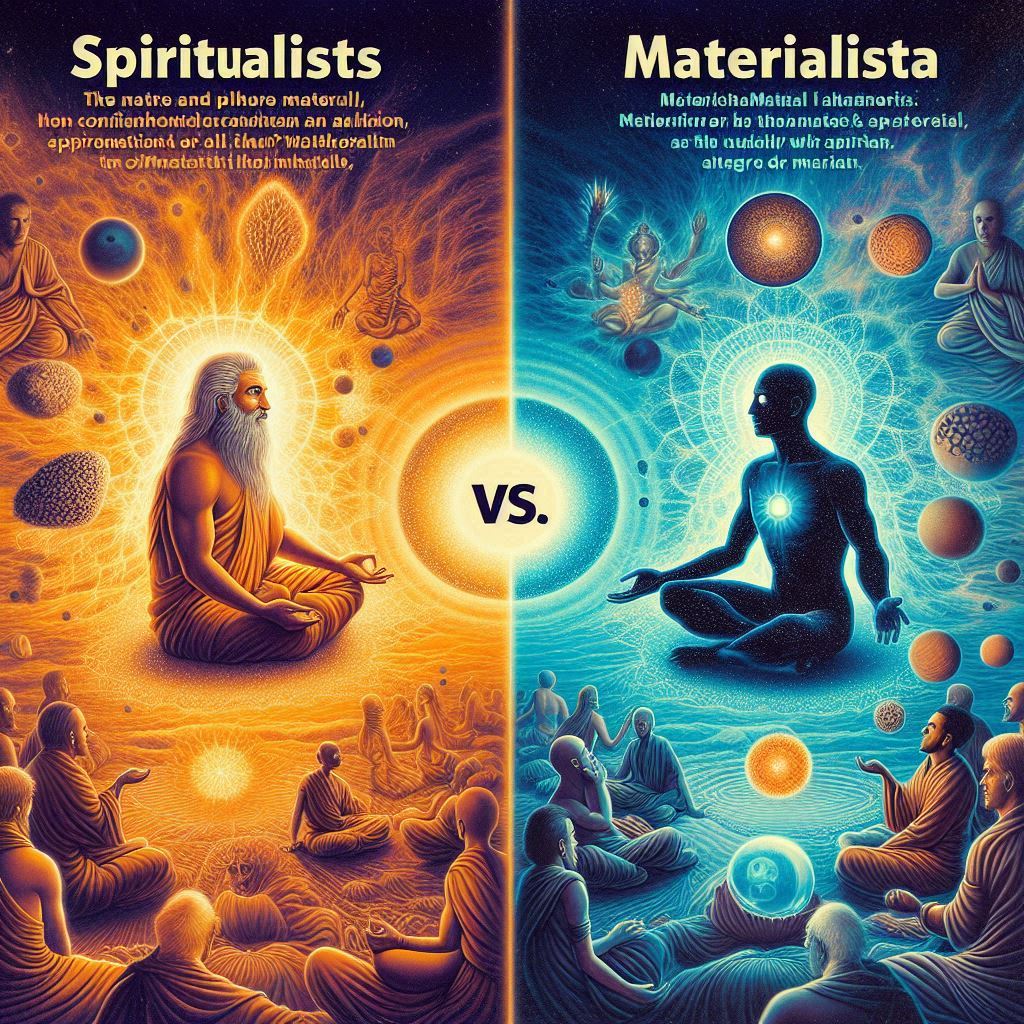
The debate between spiritualists and materialists about the nature and supremacy of matter and Aatma (Energy) is a longstanding one. This discussion intersects with both philosophical and physical perspectives.

1. The Philosophical Divide:
Spiritualists argue that Aatma, or energy, is the true reality, considering matter as an illusion or unreal. On the other hand, materialists assert that matter is the true reality and dismiss Aatma or spiritual energy as unreal.

2. Dynamic Character of Matter:
In the realm of Bhartiya (Indian) thought, some philosophers have postulated that matter is not static but dynamic. This perspective holds that matter possesses the capability to create, sustain, and destroy the universe, a view that aligns with the principles of modern physics.

3. Vaiśeṣika Darshan and Quantum Physics:
The Vaiśeṣika school of philosophy presents a view similar to quantum physics, proposing that the world originated from the combination of atoms, known as Paramāṇukāraṇatāvāda. This contrasts with the Advaita Vedānta belief in Brahmākaraṇatāvāda, which posits Brahman as the ultimate cause.

4. Atomic Combination:
Vaiśeṣika explains that initially, two atoms (paramāṇus) combine to form a dyadic compound (dvyaṇuka). Three dyadic compounds then form a triadic one (trasareṇu), leading to the creation of gross objects. This raises the question: how do unconscious atoms combine without a conscious force?

5. Sānkhya Perspective:
The Sāṁkhya philosophy offers an answer by suggesting that atoms possess intrinsic energy, enabling them to combine. This self-contained energy leads to the natural conjunction and disjunction of atoms, facilitating both creation and dissolution.

In essence, both philosophical and scientific traditions explore the dynamic and self-organizing nature of matter, albeit from different perspectives. This interface between philosophy and physics reveals a profound dialogue on the nature of reality.

यत्ब्रह्माण्डेतत्पिंडे

What’s the oldest things you’re wearing today?

The human body: A polygraph machine.

Measuring with your fingers, what is in this 96-finger-long human body is more than astonishing and mysterious. Our human body is based on breath, every part of it has its characteristics within itself, but we have never considered it. Although we are amazed at and evaluate things outside, we never pay attention to ourselves, or the functions of our body. If I had ever looked at it, I would have come to know how surprising to call and believe initially characteristic and functional our ordinary-looking organs are. With their help, we are living our rare human life

Uniqueness pervades our human body. Spiritual dignity and the subtle and causal entity of the body, which includes the panch kosha, the five pranas, the Kundalini superpower, the hexachakra, etc., is one aspect to consider their functions, but except for these functions, if we consider only the gross structure and its capacity, then everything looks wonderful in this area too. Vegetation, let alone human animal bodies, does not have those characteristics that are embodied in the small and large components of man. The artist has put all his art into its creation

From anatomy to the sensations of the mind and conscience, there is extraordinary work everywhere. If we imagine and look scientifically, we will find that the intelligence, skill, and hard work that Mother Nature spent in the construction of the human body was not done for any other body. Man is the most singular production of creation. There is no other wonder like this. It is the instrument and vehicle of the all-capable soul. The cells from which it is formed do not only contain animate atoms, but they have a storage capacity of up to 8 GB, so think how much capacity your body will have This increases the capacity and value of the human body even more. Solids, liquids and gases, water, oxygen, hydrogen, nitrogen, carbon silver, gold, iron, phosphorus, etc., whatever elements are in the earth and whatever is not in the earth, other planetary constellations are there, all that is also in the body in gross and subtle form. Just as the roots, leaves, and fruits of a tree are present in a wide expanse, in different areas of the body, similarly seeing the powers of different worlds and worlds exist, the scribe had said, that all the powers of the universe are present in the human body

Sun, Moon, Jupiter, Uttarayan, Dakshinayan Marg, Earth, Water, Fire, Sky, Air, Electricity, Magnetism, Gravity, etc. are all in the body. This whole cosmic world is contained within this body. Today’s scientists also believe that the characteristics and capabilities that nature has bestowed on man are not available to any animal body of creation According to the Garbhopanishad, the human body has 180 joints, 107 marmasthanas, 109 nerves, and 700 veins. There are 500 marrows, 306 bones, four and a half crore hairs, 8 pals heart, 12 pals tongue, one pasta bile, one adhak phlegm, one kudvashukra, and two pasta meds. Apart from this, the best instruments for taking food and expelling feces and urine are installed in this body, which is not in any other body

surprising to call and believe in the human body.

When you look at the physical body, the skin is first seen. According to physiology, the skin weight of each adult person is about 9 pounds, which is often three times more than the brain. This skin occupies more than 18 square feet of space. On a rough look, it looks like a waxy paper stuck on the body, but a closer look reveals that there is a whole elaborate factory running in it too Its area on the body is about 250 feet. The thinnest she is on the eyelids, 0.5 millimeters. The thickest of the soles of the foot is 6 millimeters. Generally, its thickness ranges from 0.3 to 300 millimeters. One square inch of skin usually contains a network of nerves 72 feet long. If the length of blood vessels is measured in the same space, then they are also spread with a network of 12-foot-long nerves. If the length of the blood vessels is measured in the same space, then they will not sit less than 12 feet. These blood vessels shrink in winter and dilate in summer so that the balance of body temperature is maintained. There are usually 300,000 sweat glands and countless tiny tiny pores on the surface of the skin. About a pound of sweat comes out of these pores every day. The sense fibers scattered inside the skin, if placed in a line, will be 45 miles long

A special type of oil called ‘sewage’ keeps coming out of the skin. It performs both the functions of protection and aesthetic enhancement. Its pigment cells produce a chemical called ‘melanin’. It keeps on painting the skin with white, dark brown, etc. colors. The skin appears to be one, but it can be divided into three thick categories, the upper skin, the inner skin, and the subcutaneous tissue. The lower layer contains blood vessels, nerves, and fat particles. Through these, the skin clings to the bones. Along with aging, when these fat particles start drying up, wrinkles start hanging on the skin

The inner skin consists of nerves, blood vessels, pores, sweat glands, and oil glands. These nerves can be called a type of sense carrier telephone wires. They transmit skin-touch sensations to the brain and convey the instructions there to the ingredients. The skin never lies. A lie detector, a lie detector or polygraph machine, works on the principle that the changes in the electrical pulsations and tension in the skin as a result of harmonic changes caused by the concealment reveal all the secrets

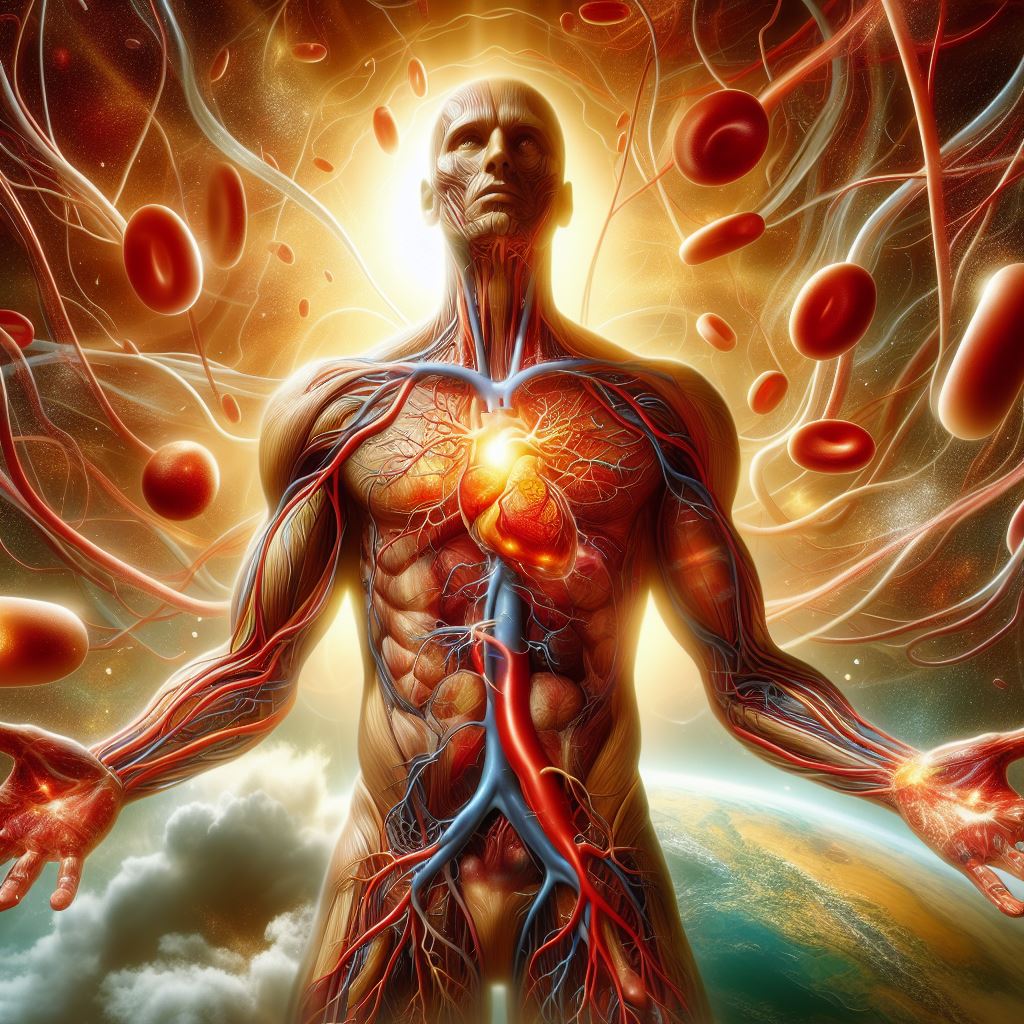
If this much labor has to be done once, then it will have to use as much energy as it will have to be used to lift 10 tons of load to 50 thousand feet above the ground. The temperature in the body is due to the heat produced by the bloodstream. The world of blood circulation is so well-organized and important that if it can be properly understood and its appropriate policy can be adopted, a strong and developed long life can be achieved. Skin, muscles, and blood circulation system are not only components of the body institution are also amazing and unique. God has filled this human body of 5 feet 6 inches with so many surprises that it should not be surprising to call and believe in the temple of the human body.

prime sacred book.

List the people you admire and look to for advice…

𝙇𝙚𝙨𝙨𝙤𝙣𝙨 𝙩𝙤 𝙗𝙚 𝙡𝙚𝙖𝙧𝙣𝙩 𝙛𝙧𝙤𝙢 𝙍𝙞𝙜 𝙑𝙚𝙙.

1) एकं सद् विघ्रा बहुधा वदन्ति। (1.164.46)
Inelligent people call or know Prabhu  by many names.

2) एको विश्वस्य भुवनस्य राजा॥ (6.36.4)
He is the only ruler of all the Lokas.

3) यस्तन्न वेद किमृचा करिष्यति॥ (1.164.39)
One who does not know the Brahm, he has no power to know Vedas.

4) सं गच्छध्वं सं वदध्वम्। (10. 191.2)
Walk together and talk together.

5) शुद्धाः पूता भवत यज्ञियासः॥ (10.18.2)
Become pure & pious and devote your life towards service to others.

6) स्वस्ति पन्थामनु चरेम। (5. 51.15)
Let us trod on welfare path.

7) देवानां सख्यमुप सेदिमा वयम्॥ (1.89.2)
Let us be friendly with Godly (Intelligent) people.

8) उप सर्प मातरं भूमिम्। (10.18.10)
Serve your motherland.

9) भद्रंभद्रं क्रतुमस्मासु धेहि। (1. 123.13)
Oh, Prabhu! Help us to adorn the resolution of Happiness and Welfare along with Knowledge and deed.

Lesson of Yajurveda .

1) भद्रं कर्णेभिः शृणुयाम। (15. 21)

Let our Ears listen to gentle & courteous words.

2) स ओतः प्रोतश्च विभूः प्रजासु॥ (32.8)
That all encompassing Prabhu is totally engulfed within us.

3) मा गृधः कस्य स्विद् धनम्॥ (40.1)
Do not become greedy for the wealth of others.

4) मित्रस्य चक्षुषा समीक्षामहे।। (36.18)
Let us be mutually friendly with everyone.

5) तमेव विदित्वाति मृत्युमेति॥ (31.18)
Only after knowing the Brahm, one can dodge Death.

6) ऋतस्य पथा प्रेत। (7.45)
Walk on the path of truth.

7) तन्मे मनः शिवसङ्कल्पमस्तु॥
(34.1)
My mind has the best resolutions.

According to SAM VEDAS

1) अध्वरे सत्यधर्माणं कविं अग्रिं उप स्तुहि। (32)
Always praise the Agni in a Yagya that is non-violent and publishes Truth & Dharma

2) ऋचा वरेण्यं अवः यामि॥ (48)
I aspire the best protection from Ved mantras.

3) मन्त्रश्रुत्यं चरामसि॥ (176)
We should do only those things which are mentioned in Ved mantras.

4) ऋषीणां सप्त वाणीः अभि अनूषत्॥ (577)
Speak the seven versed voice of the Rishi’s, that is Ved.

5) अमृताय आप्यायमानः दिवि उत्तमानि श्रवांसि धिष्व।।(603)
In order to achieve Moksha for your progress, Earn the best reputation in Dhyulok.

6) यज्ञस्य ज्योतिः प्रियं मधु पवते। (1031)
The flame of a Yagya produces cherished and sweet emotions in us.

What does it mean to communicate with consciousness?


When we begin to communicate with consciousness, the question that comes to our mind is, who am I, and what is important to me? We get answers to all these questions only by communicating with consciousness and we get so much power in our mind that we can make life with purpose by making changes in our lives. Consciousness is an inner feeling or voice that guides a human being purely or worthy of his actions. How consciousness works depends on our desire to know and on the process of finding something unique. To communicate with consciousness, we have to resort to spiritual practice We will be able to feel deeply everything available through Lord Shiva and we will be able to get answers to all the questions we ask ourselves. In this way, consciousness can be developed rapidly through self-realization. By communicating with consciousness, we have unique thoughts that develop our potential. In the process of meditation and cultivation, we understand new and specific perspectives that develop our strengths. By communicating with consciousness, we develop our thoughts and decide the way to increase our potential

Surya Namaskar: The  Consciousness science.

Describe something you learned in high school.

Observation and Learning from Nature:

We are in the midst of a worldwide Yog revolution.  For many, it is about health and well-being but that is only a portal that leads to the understanding of the self and its relationship with the body. Although the roots of Yoga lie in the Vedas, most read Patanjali’s Yog-sutra for a systematic exposition of the nature of the mind. The text is logical and it questions the naive understanding of the world. According to it, there is a single reality and the multiplicity we see in it is a consequence of the projections of our different minds. Therefore to obtain knowledge one must experience reality in its most directness.

Clock of twelve 🕛

Sun is the largest source of energy. For this reason, the ancient sages used to worship the sun. ‘Surya Namaskar’ means bowing to the Sun i.e. Sun Salutation. If you are starting yoga, then the practice of ‘Surya Namaskar’ is the best for this. It gives you the benefit of 12 yoga asanas simultaneously and that is why it is also called the best yoga asana. Yoga, exercise and physical movement are not only important to keep the body healthy but also to keep the mind fit. By practicing the 12 steps of Surya Namaskar every day, the mind becomes active and concentrated.  When should Surya Namaskar be performed Surya Namaskar is best if done at sunrise. This asana should be done on an empty stomach early in the morning while looking at the sun. The reason for this is that along with positive energy, the brightness of the morning sun provides many benefits to health.


Surya Namaskar is made up of 12 yoga asanas

1• Pranamasana

Stand straight facing the sun and join both legs, keeping the waist straight. Now bring the hands near the chest and make a state of bowing by joining both palms.

2. Hasta Uttanasana – (Raised Arms Pose)

Stand in the first position and raise your hands above the head and keep it straight. Now move the hands backwards in the state of bowing and bend the waist backwards.

3. Padahastasana – (Standing Forward Bend)

Now exhale slowly and touch the toes of the feet with hands while bending forward. At this time your head should meet the knees. 

4. Ashwa Sanchalanasana (Equestrian Pose)

Breathe slowly and stretch the straight leg backwards. The knee of the straight leg should meet the ground. Now bend the other leg from the knee and keep the palms straight on the ground. Keep the head towards the sky.

5. Dandasana (Staff Pose)

Now while exhaling, keep both hands and feet in a straight line and come to the position of push-up.

6. Ashtanga Namaskara – Eight Limbed pose or Caterpillar pose

Now while breathing, join your palms, chest, knees and feet to the ground. Stay in this position and hold the breath. 

7. Bhujangasana (Cobra Pose)

Now place the palms on the ground and tilt the head back towards the sky as much as possible while joining the stomach to the ground.

8. Adho Mukha Svanasana – (Downward-facing Dog Pose)

It is also called Parvatasana. For its practice, keep your legs straight on the ground and raise the hip upwards. While exhaling, keep the shoulders straight and the head inwards.

9. Ashwa Sanchalanasana (Equestrian Pose)

Breathe slowly and stretch the straight leg backwards. The knee of the straight leg should meet the ground. Now bend the other leg from the knee and keep the palms straight on the ground. Keep the head towards the sky.

10. Padahastasana – (Hand Under Foot Pose)

Now exhale slowly and touch the toes of the feet with hands while bending forward. At this time your head should be met with the knees

11• Hastuttanasana (Raised Arms Pose)

Stand in the first position and raise your hands above the head and keep it straight. Now move the hands backwards in the state of bowing and bend the waist backwards. During this time you will make the shape of a half moon. This asana is also called Ardhachandrasana.

12. Pranamasana – The Prayer Pose

Stand straight facing the sun and join both legs, keeping the waist straight. Now bring the hands near the chest and make a state of bowing by joining both palms. .

SPIRITUAL RESPONSIBILITY.

The Vedic texts claim to be Atmavidya, “know real I ” or “consciousness science” and they also provide a framework to decode its narrative, establishing its central concern with consciousness.  In the Vedic view, the reality is unitary at the deepest level since otherwise there would be chaos.  Since language is linear, whereas the unfolding of the universe takes place in a multitude of dimensions,  language is limited in its ability to describe reality. Because of this limitation, reality can only be experienced and never described fully. All descriptions of the universe lead to logical paradoxes.

People used nature as a way to find inspiration and establish spiritual connections. The interdependence of all life and the notion that the individual (atman) and the universe (Brahman) are one are central themes in many Bhartiya philosophies.  Agriculture:  In an agrarian society, existence depends on an awareness of the environment. For the community’s sustenance, Gurukuls imparted agricultural skills, such as crop production and the science of seasons.  Observation and Learning from Nature:  Natural phenomena were frequently employed as metaphors and symbols in the teaching of a variety of subjects. It was thought that one of the best ways to teach wisdom was by studying nature

believed to be 72,000

If you could be a character from a book or film, who would you be? Why?

Balance energy channel.


मनो हि द्विविधं प्रोक्तं शुद्धं चाशुद्धमेव च।
अशुद्धं कामसंकल्पं शुद्धं कामविवर्जितम्॥
मन एव मनुष्याणां कारणं बन्धमोक्षयोः ।
बन्धाय विषयासक्तं मुक्त्यै निर्विषयं स्मृतम् ॥
यतो निर्विषयस्यास्य मनसो मुक्तिरिष्यते ।
अतो निर्विषयं नित्यं मनः कार्यं मुमुक्षुणा ॥

There are two kinds of mind, pure mind and egoist mind. That in which the thoughts of desires arise is an impure mind, and in which all these desires have been completely lacking, that is the pure mind. The mind is the main cause of bondage and salvation of all human beings. In the worlds, the attachment mind is said to be the cause of bondage and the mind without thoughts is the cause of moksha. It is only when the enjoyment is devoid of the thought that this mind merges. Therefore, the one who desires liberation should always keep his mind away from objects. After this, when the attachment to desires is removed from the mind and it becomes stable in the heart and attains the feeling of ecstasy, then it attains that supreme status.

The Magic

Anulom Vilom Pranayama is an ancient yogic technique that has been practiced for thousands of years. Modern research has shown that this practice has several physical, mental, and physiological benefits. Anulom Vilom Pranayama can improve respiratory health by increasing lung capacity, reducing inflammation in the airways, and improving oxygenation of the blood.  Anulom Vilom Pranayama reduces stress and anxiety by activating the parasympathetic nervous system, which is responsible for the “rest and digest” response. Anulom Vilom Pranayama can improve cognitive function by increasing blood flow to the brain and improving oxygenation. This can lead to increased focus, concentration, and mental clarity. Anulom Vilom Pranayama can balance the energy channels in the body, which can help to promote overall well-being. In Ayurveda, the energy channels are known as nadis, and there are believed to be 72,000 of them in the body.  Anulom Vilom Pranayama can improve cardiovascular health by reducing blood pressure and improving circulation. It can also help to lower cholesterol levels and reduce the risk of heart disease.

Are We Living In A Computer Program?

How has technology changed your job?

Simulation Hypothesis.

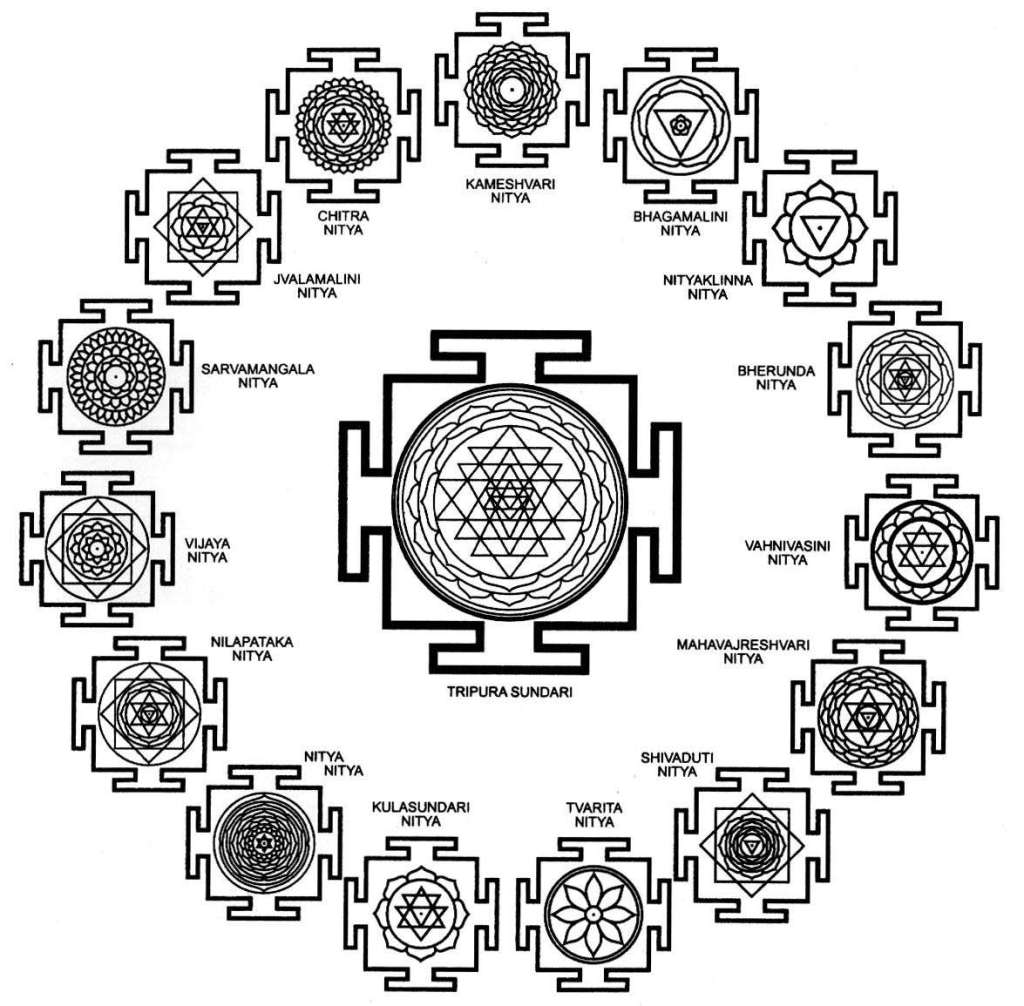
Man-made the image of the deity based on his imagination. For this reason, the picture of the form of the deities is different at each place. There are thousands of types of pictures of Ganesh, Lakshmi, Kali, Shiva, and Vishnu, there are thousands of types of idols. In Sanatan culture, tantra has special importance i.e. technology. Therefore, it has been clearly stated in Tantra Sadhana and Tantra Science that the literal form of any deity is the mantra and its form is the yantra.

Each instrument has some special lines, triangles, points, and circles. These three are present in every instrument and they are composed according to geometrical science. No line is crooked, nor are the sides of a triangle separated, and dots

Therefore, you can draw a picture of a deity based on your imagination, but the yantra is constructed only based on definite principles and calculations. After this, life is consecrated in it by special mantras, then that yantra is not a normal sketch but becomes a manifestation of power and divine energy. What is the secret behind this tantrokta creation?  This is necessary to understand. Each point, triangle, and circle have an important place in tantra science.

The point is a drop but it is given a special place in the system because the sound is produced from the point and the sound symbolizes the sky element. If we look at our vision, everything in space appears to be a dot. Therefore, according to tantra science, the point is an indicator of entry, an indicator of a beginning. When a point is moved forward, a line is formed when it moves with a simple speed. The straight line represents the desireless sense of the point and in the desired state this line curves, forming a triangle.

Our Sanatan Tantra science believes in the truth that when there was nothing before the emergence of this world, then from where did the creation begin? Of course, it started from the point. The point is that when there was nothing, there was a point in the universe and when everything also dissolves into a point, the point is also the form of emergence and also the form of merger. From the starting point to the endpoint. That is why there was a lot of thought in the tantra texts whether the point is Shiva or the point is power. The conclusion was that the points are a form of power, and there is also a solid basis behind it


What is Simulation Theory?

Simulation theory says that we are all likely living in an extremely powerful computer program, directed by an entity outside of our physical comprehension and controlled by a superior being. It also means that humans are not real beings, but instead predetermined constructs of the digital world. The theory also suggests that the physical laws affecting our reality are algorithms, and what we experience, is created by the computational processes.

What does Sanatan’s Philosophy say about the Simulation theory?

Well, Sanatan philosophy gives many theories regarding the creation, out of which the two major theories are-

1. Nasadiya suktam- a creation that came out from formless, nirgun Brahman. (Already explained).


2. Purusha suktam- a creation which is created by the god (Swagun Brahman). If we go by the Purusha suktam it gives us a detailed idea about the simulation.

But it is just one aspect of Purusha suktam.

According to the Rig Veda 6.47.18-

रूपं-रूपं परतिरूपो बभूव तदस्य रूपं परतिचक्षणाय |

न्द्रो मायाभिः पुरुरूप ईयते युक्ता हयस्य हरयःशता दश ||

Meaning- In every figure he has been the mode: this is his only form for us to look at. Indra assumes many form by his Maya.

Maya is something that doesn’t exist in reality but we all are bound to it, just like the simulation which we cannot see but our life is bound to it.

As per the Bhagavad Gita, 7.14-

दैवी ह्येषा गुणमयी मम माया दुरत्यया |
मामेव ये प्रपद्यन्ते मायामेतां तरन्ति ते ||

Meaning – “My lord  ( bhagavan shree maha Vishnu) divine energy Maya, consisting of the three modes of nature, is very difficult to overcome. But those who surrender unto Me cross over it easily.”

According to the Atharva Veda 19.53.3, it states the universe, being a projection in space-time-

पूर्ण कुम्भोदिः काल आहितस्तं वै पश्यामो बहुदा नु सन्तः ।

A full pot has been placed in time and it is that which we see manifoldly.

Also, Brahma Samhita states that Bhagawan Maha-Vishnu reclines in the water of the ocean in a state called yoga-nidra. Thus, it is said that the universal creation is nothing but the dream of Maha-Vishnu. He is said to create and destroy innumerable universes in his dream.  But, as we know creation and destruction are the two aspects of this universe. After the destruction, it is very difficult for any programmer to rewrite such a complex and huge program again and again. Hence, to prevent that one needs to have backup and the following mantra of Rig Veda gives us a clue regarding the backup-

सूरय्याचन्द्रमसौ धाता यथा पूर्वमकल्पयत् I
दिवं च पृथ्वीं  च अंतरिक्षमथो स्वः   II  10.190.3  II

Meaning- “The Ordainer created the sun and moon like those of previous cycles. He formed in order Heaven and Earth, the regions of the air, and light.”  Going by scientific research, It was Nick Bostrom who is a Faculty of Philosophy, at Oxford University, published a research paper, “ARE YOU LIVING IN A COMPUTER SIMULATION?”, in 2003 and coined this whole simulation hypothesis.

His theory was also backed by elonmusk, @NASA when in a podcast with Joe Rogan, Musk said “If you assume any rate of improvement at all, games will eventually be indistinguishable from reality” before concluding “that it’s most likely we’re in a simulation. The biggest question here is whether every program is a set of codes and have we found any such codes that can back this hypothesis?
Interestingly, James Gates, an MIT graduate who has dedicated his life researching on string theory and simulation theory, claims that he has found such code. He claims that he has identified what appears to be actual computer code embedded in the equations of string theory that describe the fundamental particles of our universe. 

The Guru

Who was your most influential teacher? Why?

Shri Panchadashnam Juna Akhara: An Important Tapassthan |

In ancient times, Akhara was a group of saints and saints of India who worked for the protection of the nation and the protection of religion in situations against Raj Dharma in times of crisis. The sadhus of the Akhara also used to use their weapons to protect both the nation and religion from this type of crisis. That is why there was a ground for the wrestlers under the akhara, in which all the members of the arena used to practice more than one trick in terms of keeping the body strong and protecting themselves in times of crisis. He also used to learn weapons. Even in the present time, some Akharas are still ready to bring people on the right path with knowledge, etc. when the nation is in crisis. They are ready at all times to serve the country and humanity

In Kumbh, the largest fair in India, these Akharas still participate with full dedication and take a royal bath. These Akharas would have a president whose election is subject to a complex process. The Akhara system occupies an important place in Indian culture, whose main purpose is to conduct religious and social functions. Shri Panchdashnam Juna Akhara is one of the major Akharas of India, which plays an important role during the Maha Kumbh Mela. This Akhara is located in Haridwar of Uttarakhand state and is famous for its religious and social programs. The history of Shri Panchadashnam Juna Akhara is very ancient. It finds a very prominent place during the Mahakumbh Mela, where millions of devotees consider it as their religious organization. The name of this akhara is “Juna”, as it is traditionally associated with the Juna sect, in which the company of ascetics and spiritual practice play an important role. These are the names of the Dashnami sect: Giri, Parvat, Sagar, Puri, Bharati, Saraswati, Van, Aranya, Tirtha and Ashram. Out of the 7 Akharas, Juna Akhara is their special arena. The rank of Mahamandaleshwar is the highest in any akhara

The main objective of Shri Panchadashnam Juna Akhara is to encourage public struggle and spiritual growth through meditation, penance, religious education, and service. The members of this akhara are devout in meditation and penance and study various religious texts.
Members of Sri Panchadashnam Juna Akhara regularly participate in religious programs, social service campaigns, and meditation houses. It organizes meditation and religious activities that help seekers towards spiritual growth and understanding the spiritual message The importance of this akhara is special in Indian culture, as it provides a path of spiritual growth to seekers along with conducting religious and social functions. Shri Panchdashnam Juna Akhara enjoys deep reverence and respect in society for its religious message and service efforts. Earlier it was known as Bhairav Akhara because at that time his presiding deity was Bhairav, which is a form of Shiva. At present, the presiding deity of this akhara is Lord Dattatreya, who is Rudravatara. There are also Avahanas, Alkhiya, and Brahmacharis under this akhara. It is said that Juna Akhara is the largest among the 7 Akharas of the Shiva Sanyasi sect, which has about 5 lakh Naga Sadhus and Mahamandaleshwar Sanyasis Most of these sadhus are Naga Sadhus. There are mahants according to different regions. Juna Akhara was established in 1145 when the first monastery was established at Karnaprayag in Uttarakhand. It is also called Bhairav Akhara. Its presiding deity is Shiva and Rudravatar is Guru Dattatreya God. Their center is believed to be at Hanuman Ghat in Varanasi and their ashram is near the Maya temple of Haridwar. The headquarters of Shri Panchdashnam Juna Akhara is located in Varanasi

Through this Akhara, seekers awaken their spiritual sensibility and do the work of service for society. In this form, Shri Panchadashnam Juna Akhara is an important part of Indian culture, which plays an active role in developing society through spirituality and service. At present, the Acharya of the Akhara is Mahamandaleshwar Swami Avdheshanand Giri Maharaj and the International Patron Shrimahant Harigiri Acharya Swami Parmatmanand of Shri Panch Dashnam Juna Akhara established Mrityunjaya Ashram in Tedinim in Kashi and Kankhal in 1921. According to the tradition of Juna Akhara, the Akhara is run by a 17-member committee. The presiding deity of the Akhara is Lord Dattatreya. Maa Mayadevi Temple, Anand Bhairav Temple, Shri Harihar Mahadev Parad Shivling Mahadev Temple are under this akhara

It is also described in all historical and religious books. The rules of the Akhara are very strict and the Akhara loves discipline about them. Sadhus who do not follow the rules are shown the way out. At present, there are more than five lakh sadhus in the Akhara, with the largest number of Naga monks. There are more than 120 Mahamandaleshwars in the arena at present. Whose splendor is the pride of Yatra Kumbh Mela and gives it grandeur and divinity Shri Panch Dashnam Juna Akhara does a lot of work for social reform. After the recognition of transgenders as a third gender by the Supreme Court, the Akhara not only gave the Kinnar Akhara a place in its akhara to bring them into the mainstream of society but also allowed them to put the religious flag and take a royal bath with them. In Haridwar Kumbh, Shripanch Dashnam Juna Akhara along with Agni and Ahvaan Akhara also take out their Peshwai and also take a royal bath with the same. Shri Panch Dashnam Juna Akhara was the first to take a bath while taking a Mahashivratri bath at Haridwar Kumbh. In which the saint Mahatmas of Agni and Ahvaan Akhara bathed with him and the members of Kinnar Akhara also shahi snshan with them.


Shri Panch Dashnam Juna Akhara was established in Samvat 1202 (Year-1145) Kartik Sudi 10 Tuesday in Karnaprayag of Devbhoomi Uttarakhand by Sundar Giri Maharaj, Dalpat Giri Maharaj, Laxman Giri Maharaj, Raghunath Giri Maharaj, Baikunth Giri Maharaj, Shankar Puri Maharaj Avadhuta, Veni Puri Avadhuta, Swami Dayavan, Swami Raghunath Van, Swami Prayag Bharti and Swami Neelkanth Bharti. It is also called Shri Panchayati Dashnam Junadatta Akhara or Bhairav Akhara. Their headquarters center is at Bada Hanuman Ghat in Varanasi Shri Panch Dashnam Juna Akhara has a special system of arrangement. This Akhara is a complete society where a committee of all the elder members of 52 families of sadhus is formed. All these people elect the chairman for the akhara. Once an election is held, the post belongs to the elected persons for life. These elections are held during the Kumbh Mela. In the Maharshi of the akhadas, from Mahant to Ashtakaushal Mahant and Kotwal are appointed.
The name of “Juna Akhara” is known as “Panch Dashnam Juna Akhara” because it belongs to the Panchdashnam sect. The Panchdashnam sect is a major saint sect in which the traditional number of saints is 15.

Hence, it is known as “Panch Dashnam Juna Akhara”, which signifies the 15 nomenclatures of this sect. “The 15 nomenclatures of the sect” means that the sect consists of 15 main saints, who are called by different names. These saints impart spiritual teachings, guide people, and contribute to the service of society during their lives. The initiation of the names of these 15 saints is accompanied by a specific Sanskrit word that represents their spiritual tradition This group of saints organizes various sects and saint sects and assimilates them as a social and spiritual community. Through the spiritual education and guidance of these saints, people gain religious knowledge and confidence

Universe within you !!

What strategies do you use to cope with negative feelings?

The saptarishi

Man’s biggest problem is frustration. This frustration has made him angry, impatient, and jealous. The question to consider is that as modernity has developed along with civilization, frustration has also increased in the same proportion, whereas the opposite should have happened. After all, what is the reason that today’s man is so frustrated and mentally weak

On reflection, the answer is that the outer world of present man is separate from his universe, his inner world, and his body. The two are not in harmony whereas the reality is that the inner world is reflected in the external world. As is our internal environment, we create the outer world. This can be illustrated by an example. If your officer’s mood is bad on a day, then on that day the whole office is a little scared because those officers can get angry without any reason. A crowd of frightened passive people gathers around the person who gets angry quickly. But those frightened people are passive wrathful, there will be a chance to vent their anger on others. Due to this, frustration is increasing in greater measure, and every person, society, and country is bound to pay for it

Just as we are inside, so we create the outer world. The solution is inside, it has always been within us, just we do not know about it. In Indian spirituality, it is believed that whatever is in the universe is in the body, that is, the outside world is not aware of the inner world because no god or sage is located outside.

Rather it is located inside. This idea has come in Yajurveda as follows –

सार ऋषयः प्रतिहताः
शरीरे साम रक्षन्ति सदम प्रमादम् साप्तापः
स्वपतो लोकभीयुस्तत्र जागृतो अस्वप्नजो सत्रसदोच देषौ।।

According to Yajurveda, seven sages are located in this body and are constantly protecting it. In the dormant state, these seven sages pervading the body attain the living soul. But two gods are beyond dreams, always awake, whose names are Prana and Apana. There are seven sages – five are the sense organs, the sixth is the mind and the intellect is the element. The meaning of the sage in this verse is not a living awakened person but reasoning, a life force. The whole world is full of life force. Therefore, the establishment of sage elements in the senses and mind has been described in Yajurveda.

Vashishta:

The word Vashishta has subdued. Those who control everyone are Vashishta. Prana is such an element in the human body, which subdues everyone. Prana has control over the whole body, if the prana leaves the body, then what is the value of the body?

Bharadwaja:

Bharadwaja means to fill the force. The divine power of the mind can be filled only by force and this filling is Bharadwaja. If the mind is weak, the body becomes weak. No matter how savage a depressed person may be, he cannot do anything.

Jamadagni:

Jamadagni means bright fire and light. In this sense, the divine, radiant power is installed in the eyes of the sage Jamadagni. An eye without light or fire can do nothing. Let the eyes be so bright that they destroy the impure deed at the sight of it, and the Bhadram Pashyam… Jamadagni Rishi is needed to keep the eyes bright and radiant so that it becomes meaningful.

Vishwamitra:

The power of the sage is to be attained. Shrotra means the power of the ears. Vishwamitra means, the friend of all, if you have the power of Vishwamitra in your ears, then you will not be ready for anyone’s lowly words, i.e. bhadram karnebhih shrnuyam… You will always follow to listen to words of benevolence.  If Vishwakarma Rishi is established in speech, then the essence of the world will be in your favor. All his work will be accomplished. Vishwakarma means the one who creates all work with skill and beauty. It is a matter to think that if the abode of Vishwakarma is in your hands, then it is elevated, but why in speech


Reasoning or thinking is called power. In any creation, first the mind is active, then the intellect, then the speech, then the hand. First, the mind is made to do the work, after that, the intellect makes a policy about how it will be done, then the speech makes it a practical plan, and finally, the body executes it. In any composition, if the end is in action, the beginning is always in the mind, the mind controls our emotions. Perhaps for this reason, when Brahma started creating this world, he started with mental creation, and Maithuni, or anatomical creation came later There is a lot of tumult in our inner world at present. Our thinking power has become numb, due to which frustration and anger are increasing in our life, if we want to get rid of them, then the solution is only in contemplation, not in worrying because in contemplation the sage resides, the sage itself is the power of thinking. When the thinking power is awakened, man embarks on his inner journey where he finds answers to all those untold and unanswered questions.