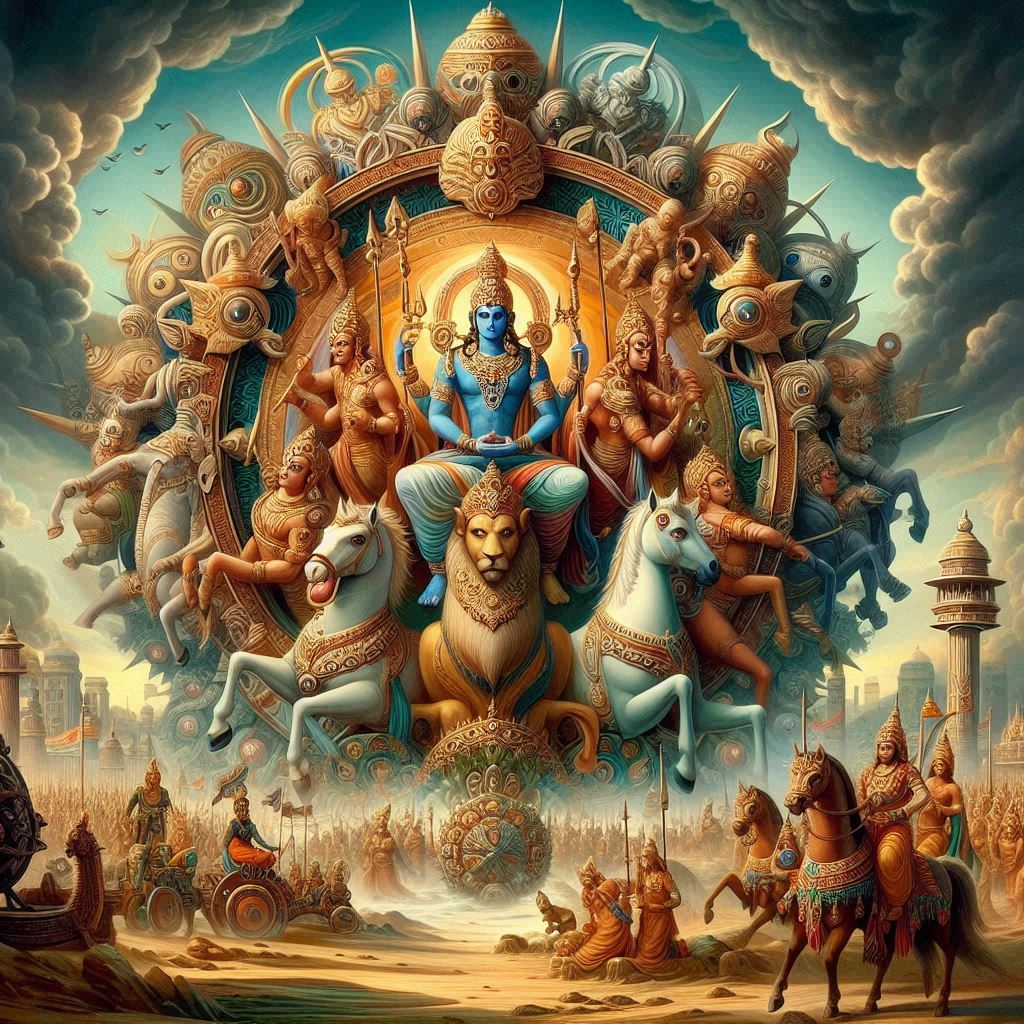
अहं वैश्वानरो भूत्वा प्राणिनां देहमाश्रितः।

What’s the hardest decision you’ve ever had to make? Why?

Do We Really Know the Right Way to Eat?


The 8 Timeless Ayurvedic Rules Most People Break Every Day

We eat every day, yet very few of us truly understand how to eat.
Thousands of years ago, Maharshi Charaka explained the correct method of eating—simple, spiritual, and rooted in deep biological wisdom.
But today, almost 99% of people break the very first rule without even realizing it.

At Dakshinamurthy Ayurveda Pvt. Ltd., we believe that before any treatment begins, lifestyle and diet must align with nature.
Ayurveda teaches us that food is not just fuel—it is energy, consciousness, and medicine.

Let’s revisit the eight golden rules of eating, with the spiritual depth they deserve.

1. “Ushnam” — Eat Warm, Fresh Food

Warm, freshly prepared food carries prana, the subtle life force.
Reheated, frozen, or processed foods lose this vitality and become heavy for the body and dull for the mind.

Nature creates everything fresh—why should our meals be any different?


2. “Snigdham” — Include Healthy Oils (Ghee, Natural Fats)

Our body is made of seven tissues, and six of them require unctuousness to stay nourished.
A little ghee or natural oil supports digestion, skin health, mental calmness, and longevity.

But just like a lamp cannot burn without a strong flame, oil cannot digest without strong digestive fire.


3. “Matravat” — Eat the Right Quantity

Ayurveda says:

50% solid food

25% liquids

25% left empty


When you eat the right amount, the body feels light, steady, and alert—never sleepy or heavy.

Eating with awareness is an act of self-respect.


4. “Jīrne” — Eat Only After the Previous Meal Digests

When undigested and fresh food mix together, toxins (ama) are formed.
This leads to bloating, acidity, gas, and chronic metabolic issues.

Digestion is not just a process—it’s a sacred transformation turning food into consciousness.


5. “Deshe Deshe” — Eat in a Calm Environment

Food absorbs the energy around you.

Eating while scrolling your phone, watching TV, or in a stressful environment disturbs both the mind and the digestive system.

A peaceful space creates a peaceful stomach.


6. “Sarvopakaranayuktam” — Include All Six Tastes

Ayurveda teaches that every meal should include:

Sweet

Sour

Salty

Pungent

Bitter

Astringent


A balanced plate leads to a balanced mind.

At Dakshinamurthy Ayurveda Pvt. Ltd., we follow this ancient principle while creating authentic Ayurvedic formulations.


7. Neither Too Fast, Nor Too Slow

Eating too fast increases Vata and disrupts the natural rhythm of digestion.
Eating too slowly makes food cold and heavy.

Chewing 32 times brings sensory pleasure, mindfulness, and effortless digestion.
Your stomach doesn’t have teeth your mouth does.


8. Eat with a Quiet, Grateful Mind

“अजल्पं, अहसनं, तन्मना भुञ्जीत”


“Ajalpam, Ahāsanam, Tanmanā Bhunjīta”
Eat without talking, laughing, or distraction.

Food turns into your breath, your strength, your thoughts.
Honor it.
Bless it.
Be present with it.

This is not just eating this is a spiritual practice.

Ayurveda and the Bhagavad Gita are deeply intertwined they both describe the human being as a sacred meeting point of body, mind, and divine consciousness. The Gita reminds us that true healing begins within. In Chapter 15, Verse 14, Lord Krishna declares: “Aham Vaishvanaro Bhutva Praninam Deham Ashritah”

“I become the Vaishvanara fire within the bodies of all living beings, and with this digestive fire, I digest the four kinds of food.” Ayurveda calls this same force Jatharagni, the sacred digestive fire that governs health, vitality, and mental clarity. When this inner fire is strong, our body transforms food into energy and consciousness; when it weakens, disease takes root. The Gita also teaches principles that mirror Ayurvedic wisdom moderation in food, steadiness of mind, and the discipline of sattvic living. Together, they show that eating is not just a physical act but a spiritual one, where the divine fire within meets the nourishment provided by nature.


Why Dakshinamurthy Ayurveda Believes in These Ancient Rules

At Dakshinamurthy Ayurveda Pvt. Ltd., we don’t just make Ayurvedic products
we carry forward a lineage of healing where food is the first medicine and lifestyle is the real treatment.

Whether it’s our authentic herbal formulations or our health-focused content, our mission is simple:

Bring ancient Ayurvedic wisdom back into modern life pure, practical, and powerful.

When you eat right, nature becomes your healer.

🌺 Vishnu Sahasranamam — The Divine Harmony of Science and Spirituality 🌺

Do you need time?

There is power in every name, and infinite divinity in a thousand.”


The Vishnu Sahasranamam is one of the most sacred hymns in Hindu tradition — a compilation of 1,000 divine names of Lord Vishnu, each revealing profound truths about the Universe, consciousness, and human evolution.
Every name carries a deep philosophical and spiritual significance, reflecting the limitless attributes of the Divine.


🌿 Structure (Samhita)

The text consists of 1,000 names, each describing the many forms, qualities, and cosmic functions of Lord Vishnu.
It is traditionally recited in the early morning or evening, when the mind is calm and receptive to higher vibrations.


🕉️ Opening Meditation Verse (Dhyan Shloka)

Before chanting, devotees meditate on Lord Vishnu through this sacred verse:

🏵️ Shantaakaaram Bhujagashayanam Padmanaabham Suresham
Vishvaadhaaram Gaganasadrisham Meghavarnam Shubhaangam
Lakshmikantam Kamalanayanam Yogibhirdhyaanagamyam
Vande Vishnum Bhavabhayaharam Sarvalokaikanatham 🏵️


This verse invokes peace, stability, and divine energy — preparing the mind and space for spiritual connection.

Scientific Significance of Vishnu Sahasranamam

The Vishnu Sahasranamam is not just a spiritual chant — it’s a fusion of sound therapy, meditation, neuroscience, and psychology.
Let’s explore how science supports its timeless wisdom 👇


1️⃣ Sound and Vibration

Every Sanskrit syllable generates a unique vibrational frequency.
When the thousand names are recited rhythmically, these vibrations resonate through the cells of the body and neurons of the brain.

🔹 Studies show that mantra chanting activates Alpha and Theta brain waves, which promote deep relaxation, focus, and inner peace.


2️⃣ Mental Health

Regular chanting reduces Cortisol (the stress hormone) and cultivates calmness.
Much like positive affirmations, the repetition of divine names reprograms the subconscious mind with peace and positivity.

🔹 Practitioners often experience reduced anxiety, depression, and emotional restlessness.


3️⃣ Heart and Breathing Benefits

The Sahasranamam is chanted slowly and rhythmically — creating a natural breathing balance.
This leads to regulated heartbeat, improved oxygen flow, and deeper respiration.

🔹 Research shows positive effects on blood pressure and heart rate variability, indicating improved cardiovascular health.


4️⃣ Neuroscience and Memory

Chanting the thousand names enhances both memory and concentration.
Sanskrit verses stimulate the Left Hemisphere (logic) and Right Hemisphere (creativity) of the brain simultaneously.

🔹 This dual activation enhances learning ability, focus, and cognitive balance.


5️⃣ Power of Collective Chanting

When recited in a group, the Sahasranamam creates a resonant field of sound energy.
This field purifies the atmosphere and unites the participants in a shared vibration of peace and devotion.

🔹 Collective chanting amplifies emotional harmony, unity, and a sense of universal connection.

Where Science Meets Divinity


The Vishnu Sahasranamam is far more than a sacred hymn — it is a scientific process for healing the mind, balancing the body, and elevating the soul.

When we chant the names of the Divine, we align ourselves with the rhythm of the Universe.
Spend a few moments each day with the sacred sound of Vishnu Sahasranamam —
and experience peace, awareness, and divine resonance flowing through every breath.

The celestial sounds: Frequency of cosmic power.

In the beginning was the Sound — and that Sound was OM.


Sound is not just heard; it is felt.
From the vibrations of the universe to the beating of the human heart, every frequency carries intelligence, energy, and consciousness.
Among all languages, Sanskrit (संस्कृत) stands as the oldest — a language built upon the laws of vibration (ध्वनि) and resonance (कंपन).


🔱 The Vibrational Power of Beej Mantras

Each Beej (seed) mantra carries a unique sound frequency that connects to a particular cosmic energy.
When these syllables are chanted, they create resonant frequencies that align our body, mind, and DNA with universal harmony.

Mantra Vibrational Frequency (Hz) Cosmic Essence

OM (ॐ) 7.83 –  10Hz Universal Cosmic Vibration
Gam (गं) 14 Hz Remover of Obstacle.
Hleem (ह्लीं) 20-22 Hz Energy Transformation
Hreem (ह्रीं) 26 – 30  Hz Divine Illumination, Shakti Power

Sreem (श्रीं) 45 Hz Abundance & Prosperity (prosperity Energy)

These sacred frequencies are not random sounds — they are mathematical vibrations of consciousness that interact with the molecular patterns of life itself.


🕉️ OM — The Sound of the Universe

OM (ॐ) is the primordial vibration, the first sound that emerged at the birth of the cosmos.
It encompasses all frequencies and dimensions of sound — from the inaudible to the infinite.

The frequency of OM is 7.83 Hz, identical to the Schumann Resonance, the natural frequency of the Earth’s electromagnetic field.
“When we chant OM, we resonate with the planet’s heartbeat.”

Humans with a two-strand DNA structure cannot hear frequencies below 20 Hz, which is why the sound of OM is felt, not heard.
However, its vibrations are registered by the heart, brain, and energy field of the body — synchronizing us with the rhythm of the universe. Ancient Maharishis with 12-strand DNA could perceive these cosmic sounds during deep meditation or Samadhi.
Through them, the Beej Mantras were heard, not invented — they were divinely received frequencies of creation.

🧬 Sound, DNA, and the Science of Healing


Modern research is beginning to validate what ancient sages already knew:
Sound, intention, and frequency can alter biological structures.

Damaged chromosomes can be repaired through specific vibrations.

DNA responds to sound and language when infused with intention.

Each cell contains the infinite potential of the human blueprint — from creation to regeneration.


Your DNA not only holds genetic information — it acts as a quantum antenna, capable of sending and receiving energy through a universal etheric network.
When we chant mantras with focus and devotion, we activate scalar waves within the DNA’s Mobius supercoil, allowing energy transfer at a molecular level.

Negative emotions disrupt this signaling, while spiritual vibrations realign it, leading to healing and expansion of consciousness.


🌌 The Connection Between DNA, Astrology, and Cosmic Resonance

Vedic seers understood that the frequencies that govern our planets and DNA are interlinked.
This is why Vedic Astrology (Jyotish) uses 36 compatibility points (Guna Milan) to assess vibrational harmony between two individuals — essentially comparing their DNA resonance before marriage.

When you meditate, your DNA aligns with galactic frequencies that rain upon Earth — connecting you to higher states of awareness.
At this level, energy flows directly from the quantum field into your metabolic and cellular processes, energizing your body and awakening your spirit.


The Eternal Language of Light and Sound

Sanskrit mantras are not mere words — they are encoded vibrations of universal intelligence.
They carry the blueprint of creation, health, and divine consciousness within every syllable.

When you chant a mantra like OM, you are not praying to the universe
you are vibrating as the universe.

“Mantra is not a repetition; it is a resonance with eternity.”


🌿 Written with reverence for sound, science, and spirit.
– Dakshinamurthy Ayurveda Pvt. Ltd. | Cosmic Medicine & Healing Research

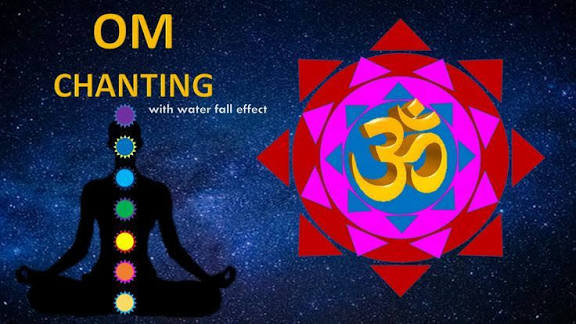
Experience the deepest state of meditation.

What historical event fascinates you the most?

The Cosmic Sound of Healing and Consciousness

Long before telescopes, microphones, or brain scans, the Vedas declared that sound is the foundation of creation. That primordial vibration the sound that began it all  is ॐ (Oṃ). Modern science now recognizes that the universe itself vibrates. From the smallest atom to the largest galaxy, everything is in motion — everything hums with energy.
The sages of India heard this cosmic hum thousands of years ago and called it “Oṃ”  the sound of the universe.


The Three Sounds — AA, UU, and MMAA

When we chant Oṃ slowly and consciously, it unfolds in three parts:

Sound Pronunciation Symbolic Meaning Physical Resonance

AA (अ) As in “father” (Waking state)
material world, body consciousness Vibrates in navel and chest — activates lower chakras

UU (उ) As in “put” (Dream state)
inner world, mental awareness Vibrates in throat and heart — harmonizes the middle chakras

MMAA (म्) As in “hum” (closed lips)
Deep sleep state — merging into silence Vibrates in head and crown — awakens higher centers


When the sound fades into silence, that silence is called “Turiya” — the fourth state, pure consciousness beyond sound.

The Science Behind Oṃ


🧠 1. Brain Synchronization and Calm

Modern neuroscience confirms that chanting Oṃ produces measurable changes in the brain:

fMRI and EEG studies (IIT Delhi, 2018; Frontiers in Human Neuroscience, 2011) show that Oṃ chanting deactivates the amygdala — the brain’s fear center.
→ This reduces stress, anxiety, and anger.

Oṃ increases alpha and theta brain waves, which induce deep relaxation, creativity, and meditation.

The vibration stimulates the vagus nerve, activating the parasympathetic system, the body’s natural “rest and heal” mode. In essence, Oṃ acts like a natural neural reset button.


💓 2. Heart and Breath Coherence

When you chant Oṃ, your breathing slows to about 6 breaths per minute —
the body’s resonant frequency for maximum oxygen efficiency.

Heart rate, blood pressure, and respiration become synchronized — a state known as cardiorespiratory coherence.

The result: calm mind, balanced emotions, and improved immunity.

3. Cellular Healing and Vibration

Recent studies in sonocytology show that each cell emits sound frequencies.
When exposed to rhythmic vibrations like Oṃ, these micro-oscillations come into harmonious alignment —
restoring cellular balance and promoting self-repair.

In Ayurveda, this state is called Sattva — the natural harmony of body and mind.


🌠 4. Frequency of the Cosmos

The tone of Oṃ (≈ 136.1 Hz) corresponds to the frequency of Earth’s orbit around the Sun —
known as the “AUM tone” in Indian classical music (Sa note).

Chanting Oṃ therefore synchronizes your body’s vibration with the planet’s resonance —
aligning you with the cosmic rhythm of nature.


🔮 5. The Pineal Gland and Inner Light

The humming “M” sound creates vibration in the skull, gently stimulating the pineal gland, the ancient “third eye.”
This gland regulates melatonin, the hormone that governs sleep, biological rhythm, and intuition.
Regular Oṃ chanting enhances clarity, emotional stability, and inner luminosity.

⚛️ The Quantum Connection

Physics tells us that the universe emerged from a primordial vibration — the Big Bang.
The Upanishads said the same:

“From Oṃ the universe expands, by Oṃ it exists, and into Oṃ it dissolves.”
This means Oṃ is not just a sound — it is the blueprint of existence itself. Every particle, every heartbeat, every breath carries that same sacred rhythm.


OM — The Supreme Name of the Divine

OM (AUM) is not merely a sound — it is the essence of the entire universe.
This sacred syllable is the vibration through which the Vedas, Upanishads, and Bhagavad Gita revealed the highest truth of existence.
The chanting, remembrance, and meditation of OM purify the soul, stabilize the mind, and sharpen the power of memory.


🌸 OM in the Vedas

Every Vedic mantra begins and ends with OM.
The Manusmriti (2/74) declares that a Brahmachari (spiritual student) should begin and conclude his study with OM, for:

If OM is not uttered at the beginning, learning gradually fades away,
and if not uttered at the end, it does not remain stable.Thus, OM is both the seed and the seal of divine knowledge.


🔺 Nachiketa’s Question in the Kathopp Upanishad

The Kathopp  Upanishad narrates how Nachiketa, the young seeker, asked Yama, the Lord of Death:

“O Revered One, tell me — what is the most essential truth in this universe?”

Yama replied:

> “That sacred name which the Vedas glorify,
which ascetics uphold through celibacy and discipline,
that supreme name is OM — the highest name of the Divine.”


He further said:

“OM is indeed Brahman itself.
Whoever realizes this sacred syllable,
all their noble desires are fulfilled.”

— Kathopp Upanishad 2/16

The Path of OM in the Yajurveda

The Path of OM in the Yajurveda

The Yajurveda proclaims:

“There is no path to conquer death and attain liberation
other than the path of OM.”
This makes it clear — OM is not just a spiritual practice,
it is the gateway to moksha (liberation).


The Vision of the Rigveda

The Rigveda (6/45/26) beautifully expresses:

“O Divine Lord! Your friendship is eternal and unbreakable.
You are the giver of cows to the one who desires cows,
and horses to the one who desires horses.”

to the one who meditates upon OM,
all rightful desires and needs are fulfilled in due harmony.


🔆 OM Meditation in the Prashna Upanishad

Sage Pippalāda reveals:

“He who constantly meditates on the Supreme Being
through the threefold sound of OM
becomes radiant like the sun.”

— Prashna Upanishad 5/5


✨ The Chhandogya Upanishad’s Vision

Even the Devas (celestial beings) attained immortality through OM:

“Those who took refuge in the imperishable, fearless sound of OM
themselves became immortal and fearless.”

— Chhandogya Upanishad 2/4/4


Lord Krishna’s Teaching in the Bhagavad Gita

In the Bhagavad Gita, Lord Krishna tells Arjuna:

“He who, at the time of death,
remembers the one-syllabled Brahman
OM attains the supreme state of liberation.”

— Bhagavad Gita 8/13


🌺 The Mundaka Upanishad on OM

“Through the chanting of OM,
the knots of the heart are loosened,
all doubts are destroyed,
and all karmas are dissolved.

— Mundaka Upanishad 2/28


🌕 OM — The Eternal Among the Ephemeral

The Katha Upanishad (5/13) declares:

“OM is the eternal among the transient,
the One among the many.
It fulfills the highest desires of those
who perceive it within their own soul.
Only such wise ones attain supreme peace.”


⚛️ OM — The Primordial Cause

In the Yajurveda (40/8) it is said:

“This OM is eternal, all-pervading, subtle, and imperishable. It is the cause of all living beings.
It has no body, no lineage, no organs.
It is pure, stainless, self-existent, and its own master.”

Om as a medicine


“Oṃ”  heals by resonance, not reaction.
It doesn’t fight disease — it restores harmony.


Unlike external medicines that act chemically,
Oṃ heals energetically — through vibration, coherence, and awareness.

Just a few minutes of chanting daily can:

1. Reduce stress and anxiety

2. Improve concentration and memory

3. Balance hormonal activity

4. Enhance emotional well-being

5. Deepen spiritual awareness


A.  How to Practice Oṃ Meditation

1. Sit comfortably with your spine straight.


2. Take a deep breath.


3. Inhale gently and exhale chanting Aaaa…Uuuu…Mmmm… slowly.


4. Feel the vibration rising from navel → chest → head.


5. After “M,” rest in silence for a few seconds — that is Turiya, the space of pure consciousness.


6. Repeat 9–21 times.


Oṃ is not a religion  it is pure vibration, the sound of life itself. It unites the physical, mental, and spiritual dimensions of being into a single, harmonious resonance. Chanting Oṃ is not about sound — it is about becoming the silence from which all sound arises. Through Oṃ, the ancient rishis offered us not just a mantra, but a cosmic medicine
one that heals the body, steadies the mind, and awakens the soul. “In every heartbeat, in every breath the universe whispers Oṃ.”

“गतिस्त्वं गतिस्त्वं त्वमेका भवानी।”

Tell us about a time when you felt out of place.

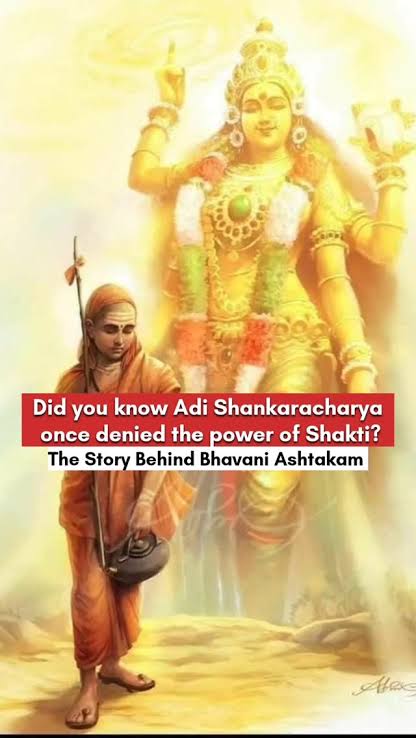
When Shankaracharya Discovered the Power of Shakti

Adi Shankaracharya is known as the master of Advaita Vedanta. But there’s a story from his life that shows us true wisdom is only complete when it embraces Shakti, the divine energy.

During his travels in Kashmir, Shankaracharya set out to refute the Shakta tradition. But soon his health broke down. With no strength left, he lay beneath a tree. At that moment, a cowherd woman passed by, carrying a pot of curd.

Thirsty and weak, Shankaracharya asked her for some curd. She replied:
“Come and take it yourself.”

He answered:
“I have no strength left to walk to you.”

Smiling, the woman said:
“Without Shakti, you cannot even move a single step. And yet you came here to deny Her?”

In that instant, Shankaracharya realized that this was not an ordinary woman—it was the Divine Mother Herself. His pride melted away, and with deep devotion he cried:
“Gatistvam gatistvam tvameka Bhavani”
(“O Mother, You alone are my refuge, my only path.”)

From this moment came the beautiful hymn Bhavani Ashtakam.

Shiva and Shakti are not separate.

Shiva is stillness; Shakti is movement.

The sun is nothing without its rays; the moon is nothing without its light.

Shiva is incomplete without Shakti.


This is the essence of Advaita—the oneness of Shiva and Shakti.

Shumbhamkari kali : The Supreme Consciousness of Life and Longing

What is your career plan?

The Colorless Midnight: Sri Ramakrishna’s Journey

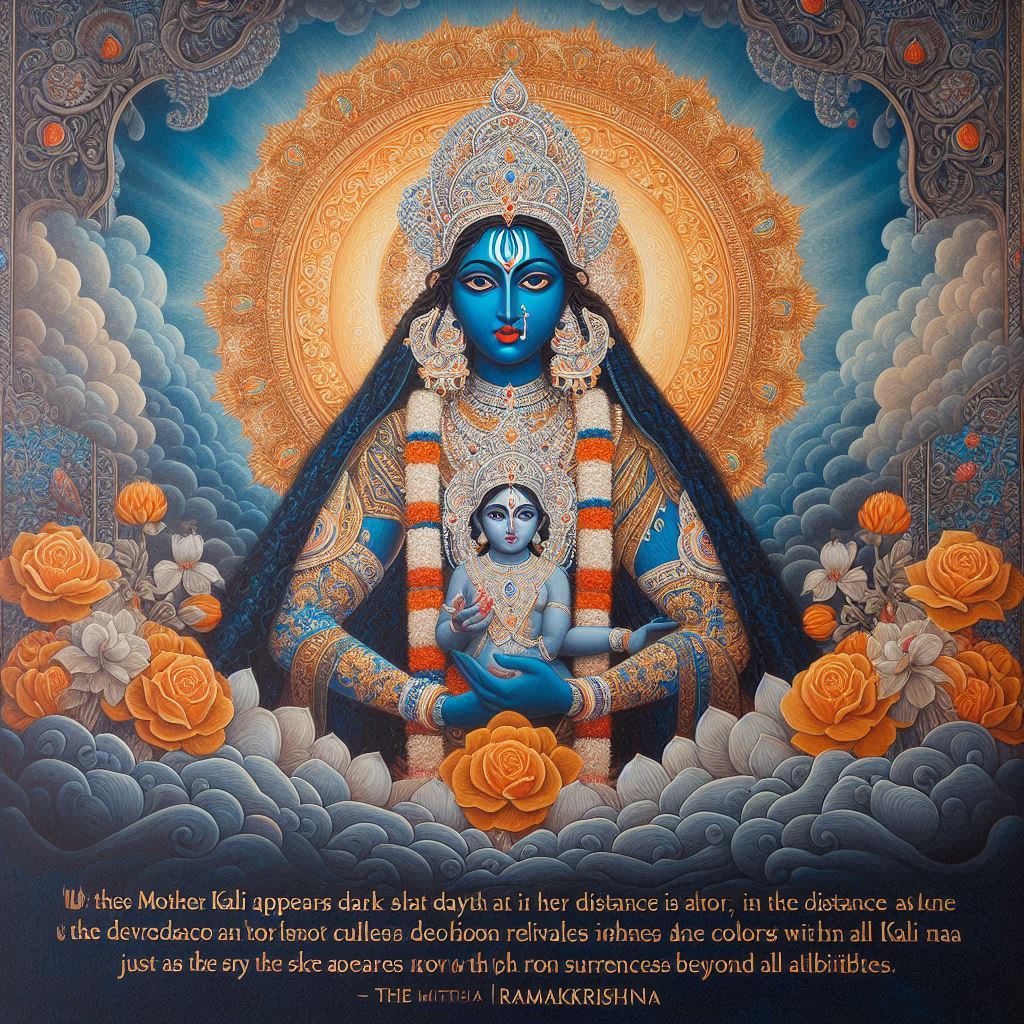
Kali Maa is more than a fierce deity, She is the embodiment of Ultimate Reality, Brahman itself. Though many see maa only as the goddess of destruction, She is also the loving Universal Mother, worshipped in countless forms. Sri Ramakrishna Paramahamsa, with tears streaming down his face, would often declare that his beloved Bhavatarini Kali of Dakshineswar was none other than the Supreme Brahman in motherly form. His divine visions and profound devotion led him to proclaim with childlike simplicity: “What the Vedas call Brahman, I call Mother.”

Though Tantra was widely practiced in Bengal during his time, Sri Ramakrishna cautioned against its misinterpretations. He emphasized pure Bhakti, selfless devotion as the surest path to Mother Kali’s embrace. For him, She existed beyond all dualities, being both the formless Absolute and the manifest universe, both Brahman and Maya simultaneously.

Sri Ramakrishna experienced Kali Maa in Her various aspects: as Maha Kali, the primordial power before creation, as gentle Syama Kali, who accepts worship in homes, as Raksha Kali, the divine protectress in times of danger, and as Smasana Kali, the fierce goddess of the cremation grounds who destroys all illusions.

His most illuminating teaching was that Mother Kali appears dark only from a distance, but in the intimate embrace of devotion, She reveals Herself as colorless beyond all attributes. Just as the sky appears blue from afar yet has no color when one is immersed within it. Sri Ramakrishna taught that to truly know Kali Maa, one must surrender completely at Her lotus feet. She is not merely a symbol but the living presence of love, power, and absolute truth. Through his life and ecstatic visions, he demonstrated that Mother Kali’s grace flows most abundantly to those who approach Her with the innocent trust of a child calling for its mother.

The Supreme Consciousness of Life.

Kali Maa is the MahaPrana (great life energy) that flows through everything. She represents our deepest wish to live forever, which isn’t just human arrogance, but a fundamental part of our soul’s connection to supreme consciousness.

Kali Maa embodies our most profound longing, to love everything and feel connected to all of life’s supreme consciousness. She is the hidden force behind our desires, always pushing us to seek something more meaningful. When we feel unhappy or restless with what we have, it’s Kali Maa’s ascending force working to expand our understanding and take us beyond our current limits. Her energy is like a gentle but powerful current of that moves us towards deeper experiences. She helps us see that there’s always something more beautiful and profound waiting to be discovered, encouraging us to grow, transform, and reach for a higher understanding of life’s supreme consciousness.

The universe will reflect that back to you.

You have three magic genie wishes, what are you asking for?

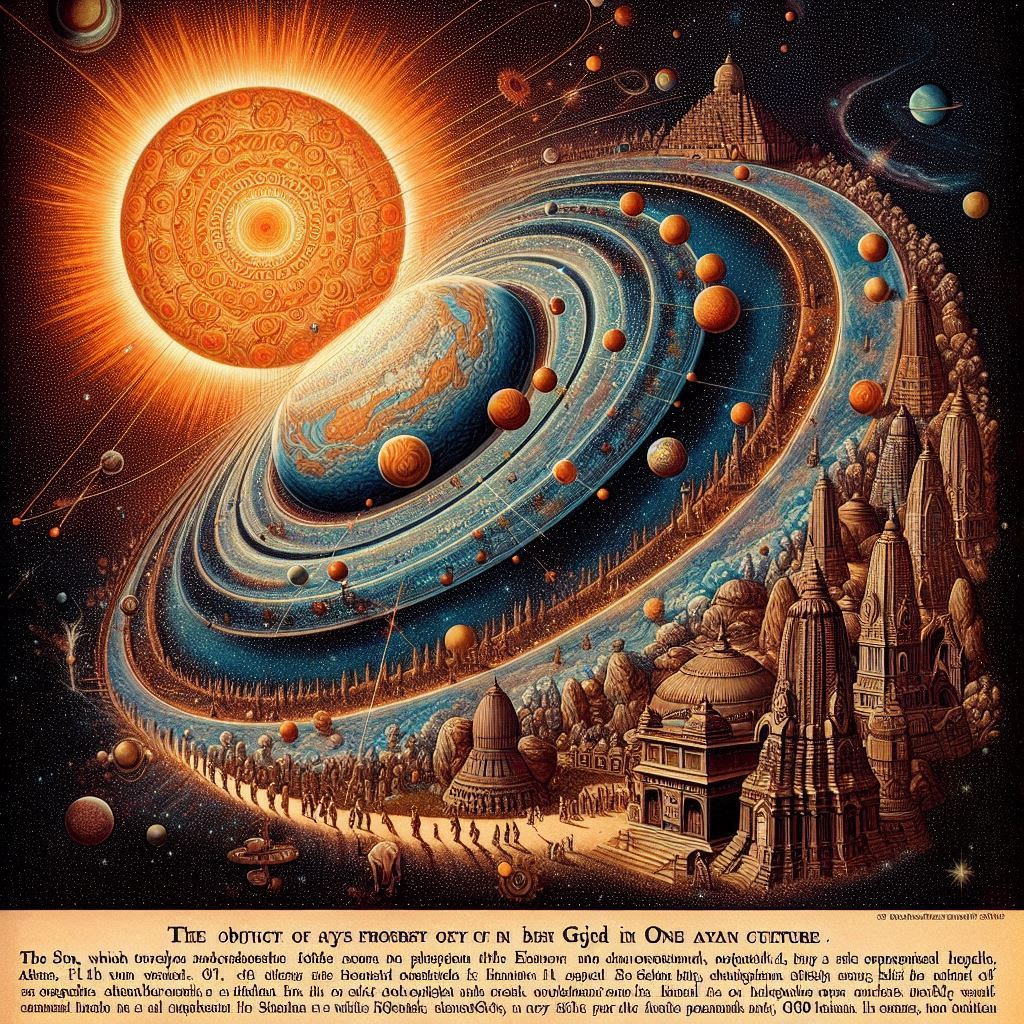
Speed of Sun = 2000 yojanas + 2 kos (Asha yojana) per moment .


The Sun, which travels a distance of nine crores fifty-one lakh yojanas in one Ahoratri at such a rapid speed, is considered to be God in Sanatan culture. No object in this galaxy remains unreasonable; it is the foremost duty of every human being to respect them. One thing is clear from the description so far: the expansion of the solar system is nine crores and fifty-one lakh yojanas, and the orbital path of the earth is also the same. The Earth completes this distance in one Samvatsar, and the Sun completes this distance in one Ahoratra. The speed of the Sun is 20005 Yojanas per moment and the speed of the Earth is 26055 Yojanas per day.

Each body (mah) has two spines… 1 axial spine, and 2 revolution spines.

Each month rotates around its axis and moves bently, walking on a circuitous path. This inclination is considered by modern scientists to be 23 degrees. Just as the Earth has two spines, the Sun has two spines. The Sun rotates on its axis and completes one cycle in one Ahorattra, i.e. 9,51,00,000 yojanas. The Sun moves on its rotational path and revolves around the pole, taking one cycle to complete a cycle. These are the two spines of the Sun. Similarly, Dhruva also has two Meru. All the bodies are comprised of pairs of meru. Thanking these bodies is an important task. 

1.  The backbone that supports the structure of the body. It is also called the spinal cord.

2.  The life cycle of a living entity is also the journey from birth to death. Every living thing, every sun, constellation, star, and moon, is connected by two spines.

It’s a season. Ritaye Namah. Why does the sun move? Why does the earth collapse? Why does it spin? Walking is the sun’s destiny. It is the nature of the earth to revolve. Rotation is the destiny of the planets. The destiny which is narrated through the medium, the same destiny has also tied the planets. Everyone has an activity. They have an impact on mankind. The mood disposition is based on this object

The sun is moving, the earth is moving. They are all God. If the Lord does not act, how can the living entity be engaged in Kriya? Instinct is life. Retirement is death. God is a living being active. Therefore, nature has the status of a mother. Self-actions are religions. Acting according to one’s nature is Swadharma. Nature is pre-attained, from birth, from past birth, from destiny. Disposition cannot be changed. Nature is strong. It is our welfare to do natural actions. There is success in natural actions. Therefore, one should be engaged in natural action.

True infinite

यतः प्रवृत्तिः भूतानां येन सर्वमिदं जगत् ।

स्व कर्मणा तमभ्यर्च्य सिद्धि विन्दति मानव ॥

(गीता १८/४६)

We have our origin from the earth, we have our origin from us. The sun is the earth from the earth, the sun rises from the sky element and the sun is self-evident. Therefore, the sun rotates on its axis and performs its work, and sadhana, the pole traveling in its orbit, worships the sky. The earth worships itself while traveling on its axis and also worships the sun dancing around the sun. We worship ourselves in samadhi (suptatastha) and worship the five bhutas through daily activities. In doing so, the opening of the Surya Siddha, i.e., Anahad Chakra and the flow of infinite love, is a pleasant experience of spiritual life. There is a ritual of sadhana in the root of the earth element, which is the place of Lord Ganesha. Our Lord is the soul (Sun). The Lord of the Sun (Jyoti) is the sky (void. That is why it is said to be ego emptiness. I have very little capacity to put into words this universe and this beautiful Mother Nature.

On reaching the Supreme Stage, the yogi realizes that He is his own God. The goal of everyone’s life is to know oneself and believe in God. The sun is worshipping itself; the earth is doing its sadhana, which is based on tolerance. The creature is meditating. All are self-centered. This self-center is tied to some other center. The second is also tied to a third. Third, there is no end to a fourth, and so on. To make ends meet, we consider someone who is not bound by anyone. Therefore, Shiva is infinite

Mystery behind MAHABHARATA

What’s something most people don’t know about you?

The Scientific Tradition of Bharat


From the scientific point of view, there has been a tradition of study and research since ancient times in Bharat.

Many Rishis like;
Bhrigu,
Vashistha,
Bharadwaj,
Attri,
Garg,
Shaunak,
Shukra,
Narad,
Chakrayan, Dhundinath, Nandeesh, Kashyap, Agastya, Parshuram, Drona, etc. They spent their entire lives working in different fields. Many different Rishi Maharishis worked in many different fields of aeronautics, astrology, astronomy, chemistry, military science, and all other walks of life.

Brahmastra: The King Of The Astras
V/S Vajra: The Hardest Among All Divine Weapons

First of all, you must know that all our ancient weapons were divided into two categories. According to the Ramayana, Bala Kanda

1. Shastra-

It is a weapon that is handheld or, you can say, a weapon that is used for cutting or wounding, like a sword, lance mace, etc.

2. Astra-

A projectile weapon invoked by reciting hymns like Agneyastra, Pashupatastra, etc. Astra Vidyas were only taught to strict discipline & deserving students, & passed only to the right person. The video was never written down to prevent the misuse of it as they were very powerful.
Among these astras, Brahmastra is considered to be the most powerful astra that has been ever used by anyone. It is the weapon of Bhagawan Brahma, the creator, and like other astras, it is invoked with a special mantra, and then one can use it to destroy anything that is created by Bhagawan Brahma.  The Brahmastra does refer to a special arrow, but an ordinary arrow can also be given the same power using the mantra, and as mentioned in Ramayana, Shree Rama had even used the mantra on blades of grass.
Of the sage Dadhichi. At the request of Bhagawan Shiva, Sage Dhadhichi donated his body. It was originally made for the destruction of the demon Vithrasur.

Bhagawan Vishwakarma had made a weapon with Dadhichi’s bones and Bhagawan Shiva had named the weapon Vajra. Later it was handed over to Bhagawan Indra.

According to Bhagavad Gita 10.28-

आयुधानामहं वज्रं धेनूनामस्मि कामधुक्।
प्जनश्चास्मि कन्दर्पः सर्पाणामस्मि वासुकिः।। 

Here Shri Krishna says to Arjuna that of the weapons, he is the Vajra. So you can imagine the hardness of vajra. 

Properties of the vajra-

Nothing can withstand its splendor, and It shines brightly with the light of a crore of suns, and it resembles the fire that shone at the dissolution of the world. Its fangs extend to a yojana (10 miles) in length, and its tongue, too, is most horrible. It resembles the night of destruction at the end of the world and is covered with 100 knots. Its breadth amounts to five yojanas and its length to 10 yojanas. Its periphery is covered with sharp points; in color, it resembles lightning; a broad, strong handle is fixed to it. Its movements are four in number.

Why Mahabharata???

In Mahabharata, you will only hear the name of the Chakras. But the War of the Mahabharata has a variety of war creations. The side or opposition to fighting the war may be according to your question. The creation of the man means how the troops should be erected in front. It is visible in the sky when it is composed. Like the Eagle’s person, So from the sky, the eagle will appear as a soldier to look at the bird. A waning cycle when seeing chakras from the sky The military creations are visible. Comey knows about certain special creations.


1.  Garuda Singh –

Gauruda You have a picture of a bird. This is the vehicle of the giant bird Lord Vishnu. Soldiers in the war queued up in front of the opposition force this way that is erected by the sky so that the shape of a thundered bird is visible. It is called the Garuda man

In the Mahabharata, it was composed of Bhisham’s grandfather.

2.  The bullying:-

The bullying is a species of the Saras. The issue was the size of a bird. This is the same as the one in the Mahabharata. The creation of the person was by the name.

3.  Tommuch:-

Makar is a charred creature named Capricorn in ancient times. The head of Makar then had horns like crocodiles but goats like goats on the head; The snake was like a body, a fish or peafowl, such as a tail and a panther. Vedic literature is often referred to in the Vedingilla and Capricorn. But possibly The creation of the same means it will not be from Capricorn. Mahabharata was the creation of this issue.

4.  The turtle: The tortoise:-

There is a force in the army. The meaning of Chandra is the same as you understand. Military Creations When it was semi-lunar, it was called a form of circular, pod. Arjun was composed in response to the Garuda
Mandalasa, the meaning of the stratosphere, is a spherical or circular form. The issue was formed in circular form. The aura was made by Bhishya Nathimah in India. The Pandas in response to the Arran It was a distinction of creation of the issue.

5.  Chakras:-

The military making of the chakras is visible as a moving cycle when they see the chakras. It’s a way to look at the wheel in it, But the way out of the exit is not to be noticed. You will see a spiral, just the same way it is.

Creation of this issue in Mahabharata in the cycle:-

After the ruthless killing of Abhimanyu in the Mahabharata war, Arjun was sworn in yesterday. It will be killed before sunset. Then Guru-kānacharya created this issue to save Jayarh. But Lord Krishna He was cleverly removed and struck by the other of him and was killed

Vajra is a kind of weapon It was of two types –

Kulish and Ashani. The three parts above it are made diagonally. The middle part is thin. But it is very weighty. Its shape is like the thunderbolt of Indra Dev. In the Mahabharata, this array was created by Arjuna.

Aurami Array: –

In response to the Vraja Array of Pandavas, Bhishma composed the Aurmi Aryuha. In this array, the whole army was decorated like the sea. Just as waves appear in the sea, the Kaurava army attacked the Pandavas in the same shape. Shringataka Array: Arjuna created the Shringataka Arraya in response to the Aurami array of the Kauravas. This array looked like a building. It is probably called an array with three summits. … Apart from this, mention of the Sarvatobhadra and Suparna Array is also found

Version 2.0: The bugs of life do not affect me.

What is the legacy you want to leave behind?

Spirituality is beyond science: Divine Journey Towards the Real I”

मनस्वी म्रियते कामं कार्पण्यं न तु गच्छति।
अपि निर्वाणमायाति नानलो याति शीतताम्।।” 

(श्रीमद्भागवत 2, 50)

A person or seeker who is endowed with self-power does not only fear physical happiness and unhappiness but tends towards self-realization, he does not wait for happiness and unhappiness. This verse conveys the importance of courage, patience, and decision in life. It means that a person who is endowed with self-strength is engaged in his tasks, accomplishes them, and inherits them, but he does not worry whether he will succeed in achieving his efforts or not.  This verse has a message of inspiration and courage, which gives us the feeling of not being defeated by desires. This leads us to the point that like thought, we can motivate ourselves, and accumulating the power of faith can help us achieve our goals. The person who is endowed with self-confidence does not give up in any situation, but tends towards self-realization and is ready to face any kind of adversity

In a world often bustling with noise and distraction, the quest for inner peace and self-discovery has become a paramount pursuit for many. Amidst the chaos of everyday life, there exists a profound longing to reconnect with one’s true essence, to delve deep within and uncover the mysteries of the soul. This journey of self-exploration, known as Aadhyatm, transcends mere existence; it is a transformative odyssey that leads individuals toward profound spiritual awakening and enlightenment.

Aadhyatm is more than just a spiritual practice; it is a way of life a philosophy that seeks to unravel the intricacies of human consciousness and the cosmos. Rooted in ancient wisdom and timeless teachings, Aadhyatm invites seekers to embark on an inner pilgrimage, guided by the principles of introspection, mindfulness, and self-realization. Central to the Aadhyatm journey is the concept of “Atma,” or the soul the eternal, immutable essence that transcends the physical realm. Through practices such as meditation, yoga, and self-reflection, individuals endeavor to peel away the layers of ego and illusion, unveiling the radiant truth that lies at the core of their being. In this pursuit, the journey towards the soul becomes a sacred quest for unity with the divine—a journey towards wholeness, harmony, and liberation.

The path of Aadhyatm is as diverse as it is profound, encompassing a myriad of spiritual traditions, practices, and philosophies from around the world. Whether through the ancient wisdom of Vedanta, the mystical teachings of Sufism, or the contemplative practices of Buddhism, seekers are drawn to different paths, each offering a unique roadmap toward self-discovery and spiritual fulfillment.

Yet, regardless of the path chosen, the Aadhyatm journey is ultimately a deeply personal one—a voyage of inner exploration that transcends the confines of time and space. It is a journey that unfolds in moments of stillness and silence, as well as in life’s myriad experiences and challenges. It is a journey that requires courage, patience, and unwavering devotion a journey towards the deepest recesses of the heart, where the soul resides in eternal communion with the divine.

As individuals traverse the path of Aadhyatm, they may encounter moments of profound revelation, as well as moments of doubt and uncertainty. Yet, amidst the ebb and flow of their inner landscape, they remain steadfast in their commitment to self-discovery and spiritual growth. For in the journey towards the soul, every step taken, every obstacle overcome, becomes a sacred offering—a testament to the resilience of the human spirit and the infinite potential that lies within. Aadhyatm is not merely a destination to be reached, but a journey to be embraced a journey towards the deepest depths of our existence, where the light of the soul shines eternal. It is a journey of self-transcendence, of awakening to the infinite possibilities that lie within, and of realizing our innate connection to all of creation. As we embark on this sacred quest, may we be guided by the wisdom of the ages, the light of our inner truth, and the boundless love that permeates the universe.

Create new positive neuro pathways of ancient knowledge.

How do you feel about cold weather?

Gravity in Vaisheshika Sutra

It’s fascinating to explore how ancient Indian philosophies and texts may have addressed concepts akin to modern gravitational theory long before Newton’s time. The Vaisheshika Sutra by Rishi Kanada is particularly intriguing as it predates Newton by over two millennia and contains verses that seem to describe gravitational principles.

1. The Nature of Objects Falling to the Earth:

The Vaisheshika Sutra mentions that objects tend to fall towards the earth due to an inherent property or force. This aligns with the idea that there is an attractive force between the earth and other objects, which we now identify as gravity. This recognition of a force causing objects to fall to the ground is a fundamental aspect of gravitational theory.

2. The Stability and Movement of Celestial Bodies:

The sutras also discuss how the stability and movement of celestial bodies are influenced by this attractive force. This can be seen as an early conceptualization of how gravity governs the motion of planets and other celestial entities, akin to the principles described by Kepler and Newton.

Verse 5.1.7:
Discusses how substances move downward due to an inherent force.

Verse 5.2.4:
Addresses the concept of attraction between substances, hinting at a force akin to gravity.

Interpretation and Comparison:

While these ancient texts don’t provide the mathematical formulations that Newton did, they demonstrate a conceptual understanding of gravity’s effects. This understanding is significant, showing that the idea of gravity as an attractive force was observed and noted by ancient Indian philosophers. In ancient Indian philosophy, the idea of “Gurutva Aakarshana Shakti” captures the essence of gravitational pull. The term “Gurutva” (mass) and “Aakarshana” (attractive pull) together indicate an awareness of the relationship between mass and the force it exerts, reflecting a sophisticated understanding of natural forces.

The exploration of gravitational concepts in ancient Indian texts like the Vaisheshika Sutra highlights a rich history of scientific thought in India. These early discussions on gravity illustrate how ancient scholars were keen observers of nature and sought to understand the forces governing the physical world. While Newton’s laws provided a detailed mathematical framework for gravity, it is remarkable to recognize that the fundamental ideas about gravitational forces were present in human thought long before his time.

आत्मकर्म हस्तसंयोगाश्च । (V.S. 5.1.6)

The action of the body and its members is also in conjunction with the hand.

संयोगभावे गुरुत्वात्पतनम (V.S. 5.1.7)

In the absence of conjunction falling results from Gravity.

Concept of air fall

नोदनाद्यभिषोः कर्म तत्कर्मकारिताच्च
संस्कारादुत्तरं तथोत्तरमुत्तरं च ।। (V.S 5.1.17)

The first action of arrow is from impulse; the next is resultant energy produced by the first action, and similarly the next next shloka-

संस्काराभावे गुरुत्वात्पतनम (V.S. 5.1.18)

In the absence of resultant/propulsive energy generated by the action, falling results from Gravity.
Rishi Varahamihira who is also supposed to be lived in the 5th century BCE, mentioned the

following shloka in his Surya Sidhanta, 12th chapter 32 shloka-

मध्ये समन्तादण्डस्य भूगोलो व्योम्नि तिष्ठति ।
बिभ्राणः परमां शक्तिं ब्रह्मणो धारणात्मिकाम् ॥

This verse conveys that the spherical Earth remains positioned at the center of the universe in space due to a special kind of energy that prevents it from falling away and helps it remain stable. The term ‘energy’ referred to in the previous shloka was further elaborated by Bhaskaracharya, a mathematician who lived in the 12th century AD. In his book Sidhanta Shiromani, Bhaskaracharya provided an explanation for this energy and named it “gurutvakarshan shakti.”

आकृष्टिशक्तिश्च महि तय यत्।
खष्ठं गुरु स्वभिमुखं स्वशक्त्या ॥
आकृष्यते तत्पततीव भाति।
समेसमन्तात् क्व पतत्वियं खे ॥

This verse explains that the energy present within the Earth is the power of attraction, known as “aakrushti shakti”, (according to the Bhaskaracharya).  Due to this attractive force, the Earth pulls objects towards itself, and this power is inherent and natural to the Earth. As a result of this pull, every object on Earth appears to be falling downward. Bhaskaracharya did not stop there; he concludes the shloka with a question: where can this Earth fall down in space? This passage eloquently captures the profound understanding of gravity and celestial mechanics found in ancient Indian texts. Aryabhatta’s poetic reference in the Gitikapada likens the gravitational pull to the way smaller flowers are drawn towards the center of the Kadamba flower cluster, metaphorically depicting the force that ties everything to the Earth’s center.

Vadic mantra = Attributing stability of celestial body.

The cited Vedic mantras further elaborate on this concept, attributing the stability of celestial bodies and their movements to gravitational forces:

Rigveda 8.12.28 and 8.12.30

यदा ते हर्यता हरी वावृधाते दिवेदिवे।
आदित् ते विश्वा भुवनानि येमिरे ।।

speak of the Sun’s radiant energy causing the planets to move in their orbits and remain stable due to the Sun’s attraction.

हिरण्यपाणि: सविता विचर्षणिरुभे द्यावापृथिवी अन्तरीयते।
अपामीवां बाधते वेति सूर्यमभि कृष्णेन रजसा द्यामृणोति॥

describes the Sun as holding the Earth and other heavenly bodies, preventing collisions through its attractive force.

According to Atharvaveda 4.11.1

अनड्वान् दाधार पृथिवीमुत द्यामनड्वान् दाधारोर्वन्तरिक्षम्।
अनड्वान् दाधार प्रदिश: षडुवीर्रनड्वान् विश्वंभुवनमाविवेश॥

uses the analogy of a bull pulling a cart to illustrate how the Sun controls the movements of planets.

The Taittiriya branch of Krishna Yajurveda

मित्रोदाधार पृथिवीमुतद्याम। मित्रः कृष्टी:।

emphasizes the Sun’s role in holding the Earth in space through its attractive power, with the term “Kristheeh” highlighting this force of attraction. These texts reflect a sophisticated grasp of gravitational principles, recognizing the Sun’s critical role in maintaining cosmic order. This ancient wisdom, although fragmented over time, underscores the depth of scientific thought in early Indian civilization.

Vedic cybersecurity

Write about a few of your favorite family traditions.

katpayadi Number

There is also a science in the scriptures of Indian spirituality by which you can keep your PIN safe and confidential. The name of that vidya is “Katpayadi Sankhya Vidya” Many of us forget our password, or ATM PIN, due to which we write it down somewhere, but if that piece of paper gets into someone’s hands or is lost, then there is trouble, but our password or PIN No. We can easily remember it by “katpayadi number”

Katapayadi” is an ancient Indian method of easily remembering numbers in the form of words or verses. In India, scientific/technical/astronomical texts were written in verse form, so to express numbers in the form of words, Indian thinkers came up with a solution in the form of ‘katpayadi’. The earliest available evidence of the use of the Katapyadi system is found in the description “Laghubhaskaraya” written by “Sankaranarayana”. The following verse of “Sadratnamala” composed by “Sankaravarman” explains this method
The classical proof of this is presented before you,

नज्ञावचश्च शून्यानि संख्या: कटपयादय:।
मिश्रे तूपान्त्यहल् संख्या न च चिन्त्यो हलस्वर: ॥


Meaning: NA, GHA, and VA represent zero.] The remaining nine digits are represented by consonant letters beginning with AA, TA, IA, and YA. In a combined consonant, only the latter will be taken. Consonants without vowels will be omitted.

discuss what is its usefulness in modern times and how to do it?


Katpayadi number– is a scriptural method of summarizing the number by letters, each number is represented by a few letters such as,

1 – A, T, P, Y
2 – B, B, F, R
3 – C, D, B, L
4 – D, D, B, V
5 – E, N, M, SH
6 – F, R, SH
7 – G, Th, S
8 – H, D, H
9 – I, D
0-J, NA, A, AA, E, E, U, OO, RI, L, A, AI, O, AU


Our Acharyas used them in Sanskrit sentences such as Gauh = 3, SriH = 2, etc.

For this, leave the existing quantity in the middle. The vowel is acceptable if it is at the beginning of the word, otherwise (unacceptable). For example, my ATM PIN is 0278 – but sometimes by remembering the number, we get confused whether it was 0728 or 0278. This also happens often with many people, these are ways to avoid them. Like any four-letter Sanskrit word for ATM PIN, keep that word only in your mind, do not tell anyone

For example–

Ibhastutyah = 0461

GanapatiH = 3516

Gajeshan = 3850

Narasimha = 0278

Janardanaḥ = 8080

Sudhyupasyaḥ = 7111

Shakuntala = 5163

Sitaram: = 7625

Choose any word from your own :
Remember any such word and immediately change the “katpayadi Number” to use your ATM PIN etc.